Phase 2: During — Recognize the signs and evacuate without delay
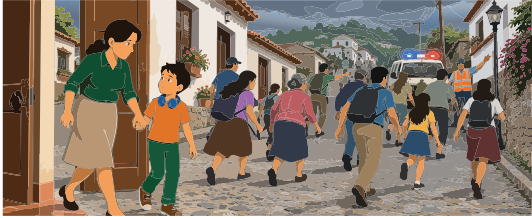
During a tsunami threat, the time available to reach safety can be extremely short. In the case of a tsunami generated close to the coast, the first waves may arrive within minutes, and there may not be enough time to receive an official warning.
For this reason, during this phase no time should be lost trying to confirm the danger first hand, watching the sea, gathering belongings, or waiting for further instructions, when clear natural signs of a possible tsunami are already present.
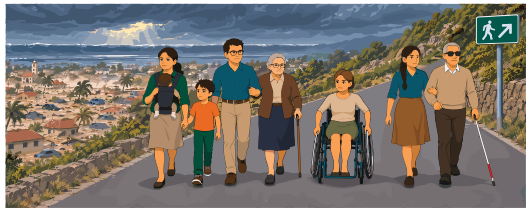
The priorities are:
- recognize the natural or official warning signs immediately;
- protect yourself from the earthquake first, if it is still happening;
- evacuate as soon as possible toward a safe zone;
- move away from the coast, beaches, ports, river mouths, rivers, estuaries, canals and any other channels through which water could enter;
- follow the evacuation routes and the instructions of the local authorities;
- help, when possible without risking your own life, children, the elderly, people with disabilities, and others who need assistance;
- remain outside the danger zone until the right authorities clearly indicate that it is safe to return.
2.1Recognize the signs and act immediately
Anyone in a coastal area exposed to tsunamis should know two kinds of warning: natural warnings and official warnings.
Natural warnings
The main natural signs that may indicate an approaching tsunami are:
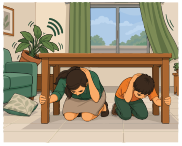
A strong or prolonged earthquake.
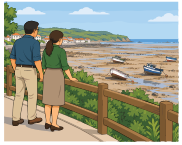
A sudden, abnormal change in sea level, which may appear as water rapidly receding or rising.
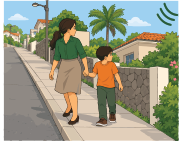
An unusual, loud noise or roar coming from the sea.
If an earthquake is happening, protect yourself from the shaking first. As soon as you can move safely, begin evacuating immediately.

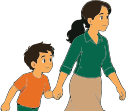
Do not wait for a siren, a phone message, a social media post or confirmation from the authorities if the natural signs clearly indicate a possible tsunami.
Official warnings
If the authorities issue a tsunami evacuation order or instruction, follow the official instructions immediately.
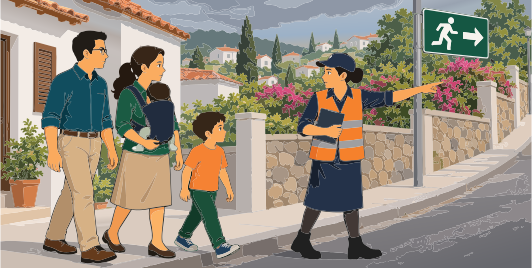
Do not delay your departure in order to check personally what is happening at sea.
During the emergency, stay informed through the official systems available —radio, mobile telephone, public alert systems, sirens or other means established locally— provided that doing so does not delay your evacuation.


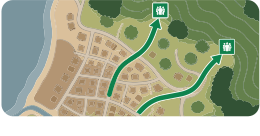
Conditions can vary considerably from one place to another. For that reason, the instructions of the local authorities and the official hazard and evacuation maps take priority over general references to distance or height.
2.2Evacuate toward a safe zone
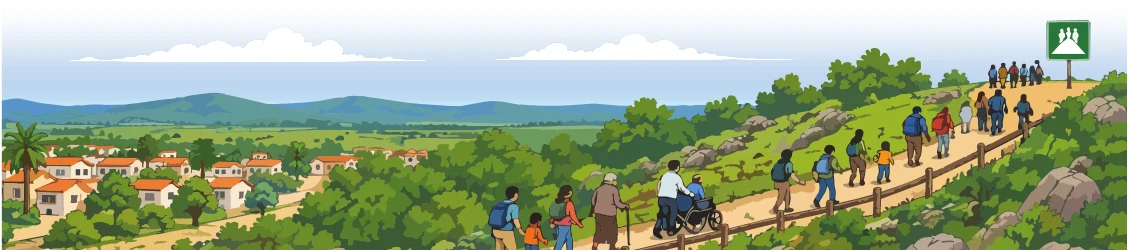
The fundamental objective is not to reach the same distance or height everywhere, but to leave the area susceptible to tsunami flooding and reach the safe area established for that community. Therefore:
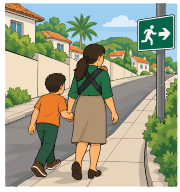
Follow the official evacuation routes where these are available.
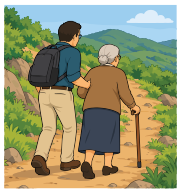
Head for high ground or inland, away from the danger zone.
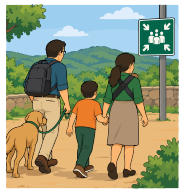
Use the meeting points or safe areas established in advance by the authorities.
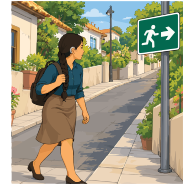
Where evacuation signs exist, follow them.
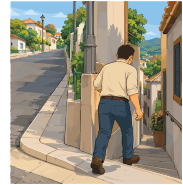
Do not stray unnecessarily from the route.
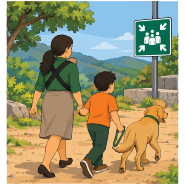
Keep moving until you reach the safe zone.
2.3Evacuation: on foot whenever possible
In general terms, evacuation on foot should be the preferred option when possible and when established by the local evacuation plan. After an earthquake there may be:
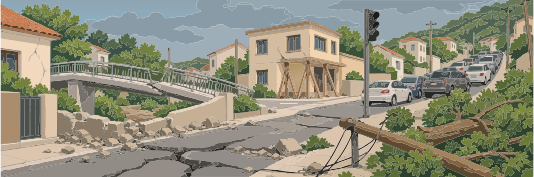
- blocked streets;
- cracks or deformations in the pavement;
- damaged bridges;
- fallen poles, trees or objects;
- traffic lights out of service;
- unstable buildings or structures;
- large concentrations of vehicles;
- traffic jams.

Evacuate on foot whenever you can do so safely.

Use the pedestrian routes identified in advance.

Do not use a car simply to carry belongings or to avoid walking.
Do not block evacuation routes or access reserved for emergency services.
EXCEPTIONS
An absolute ban on the use of vehicles should not be established for all people and all locations.
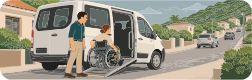
In certain circumstances, local plans may provide for vehicle evacuation, particularly where distances are very long, where there are people with reduced mobility or other specific needs, or where geographical and infrastructure characteristics require it. In those cases, the instructions and procedures established by the local authorities must be followed.
2.4Do not waste time gathering belongings
If there is an immediate tsunami danger, evacuate with whatever you have available at that moment. If the emergency backpack or kit is ready and you can pick it up without delaying the evacuation, take it.
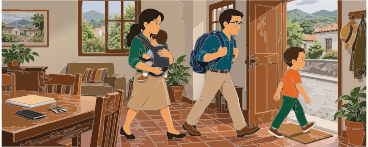
Do not waste time:
- looking for money;
- gathering documents that are not ready to be carried immediately;
- collecting clothing;
- looking for phones, chargers or other devices;
- retrieving toys or personal belongings;
- securing property;
- going back into a home or building to recover belongings.
2.5Never go near the sea to watch the tsunami
One of the most dangerous behaviors during a tsunami threat is heading for the beach, the port, the seafront, a river mouth or any other coastal point to watch the phenomenon, take photographs or record video.
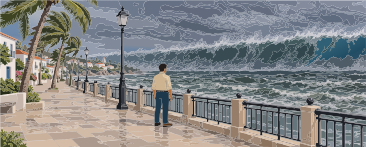
If you observe an abnormal withdrawal of the sea, do not approach the shore or the exposed seafloor.
If you can see a mass of water approaching from a danger zone, your absolute priority must be to keep moving away and reach safety.
Do not stop to photograph, film or live stream the phenomenon.
Do not allow others in your care to do so.
2.6Also stay away from rivers, estuaries, canals, ports, and river mouths
The danger of a tsunami is not limited to the shoreline.
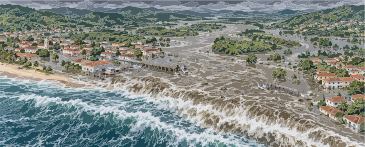
Waves and currents can travel inland through:
- river mouths;
- rivers;
- estuaries;
- canals;
- bays;
- ports;
- coastal lagoons;
- other channels connected to the sea.
For this reason, do not use river banks or canals as evacuation routes, unless they form part of a route expressly established as safe by the authorities.
2.7If you cannot reach a safe zone: vertical evacuation
The first option must always be to reach, by the established routes, a safe zone outside the flood area. However, a tsunami may be imminent and a person may not have enough time to reach high ground or move far enough inland.
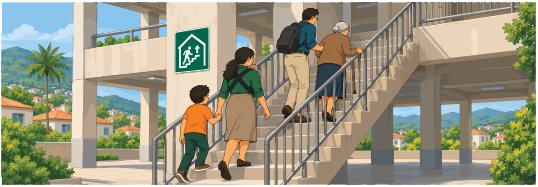
In those circumstances, vertical evacuation may constitute a last-resort alternative, provided the city has a structure identified or considered appropriate for that purpose.
Do not assume that any three-story building or concrete structure is automatically safe from a tsunami.
Where buildings or structures officially designated for vertical evacuation exist:
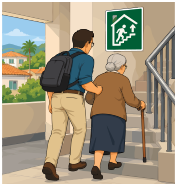
Go to the nearest one.
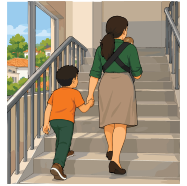
Use the stairs.
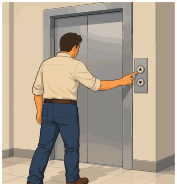
Do not use elevators.
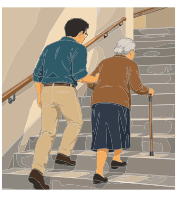
Climb to the levels established as safe.
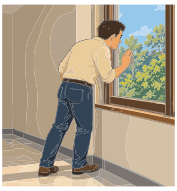
Stay away from windows and other items that could break.
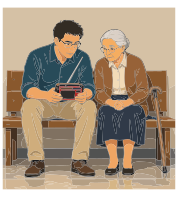
Stay in place until you receive instructions from the authorities.
2.8If the water reaches you
The absolute priority is to avoid this situation through an early evacuation. A person caught in tsunami waters faces extremely violent currents, rapid flooding, and numerous objects and debris capable of causing serious or fatal injuries. If, despite evacuating, the water reaches you:
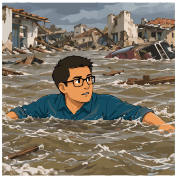
Try to stay afloat.
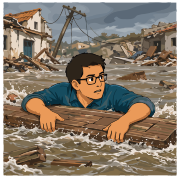
If you can, hold on to a floating object that is sufficiently sturdy.
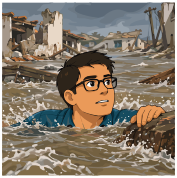
Try to keep your head above the water.
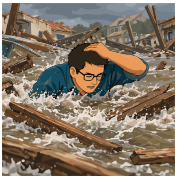
Protect yourself from being struck by debris and structures as much as possible.
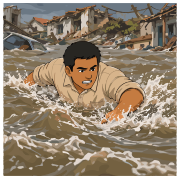
Do not waste your energy trying to fight directly against a strong current.
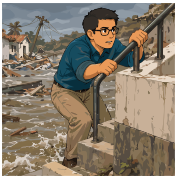
If you manage to reach a stable structure or a high point, try to get to safety.
2.9A tsunami is not necessarily a single wave
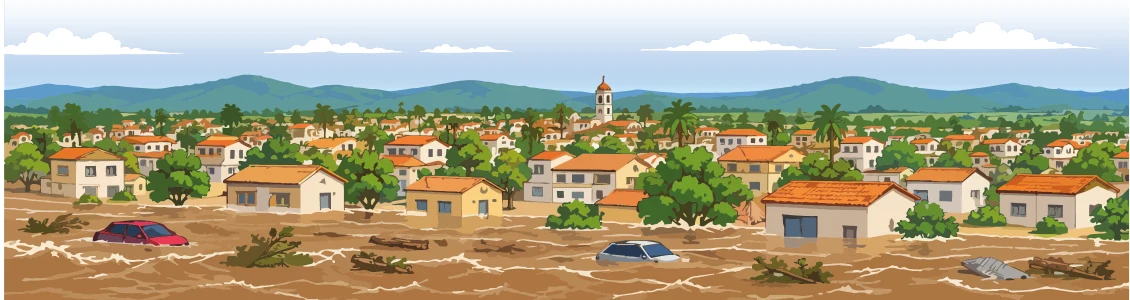
Do not consider the emergency over after seeing the first wave or after the water recedes. A tsunami may consist of a series of successive waves and currents, and the first wave will not necessarily be the largest. Dangerous conditions can continue for many hours. Therefore:
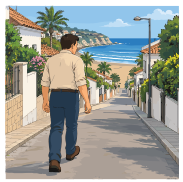
Do not go back to the beach.
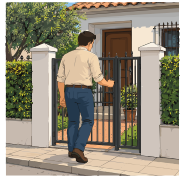
Do not return to your home if it is inside the evacuated zone.
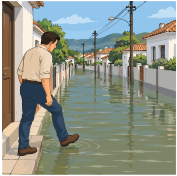
Do not cross flooded areas.
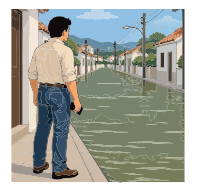
Do not approach to look at the damages.
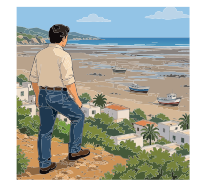
Do not interpret the water receding as the end of the threat.
2.10Minors
During a tsunami threat, children and adolescents need clear instructions and firm guidance from the adults responsible for them. There are two priorities:
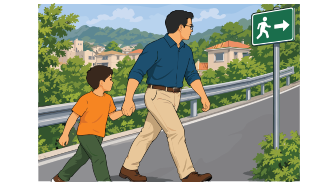
Guarantee their immediate physical evacuation.
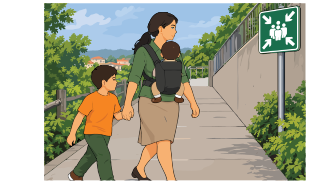
Prevent separations, delays and behavior driven by fear or confusion.
Evacuating with babies and young children
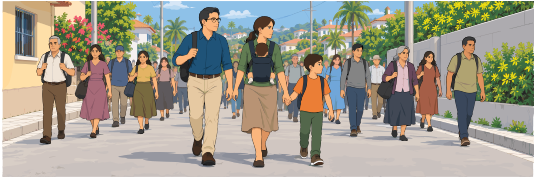
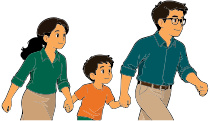
Young children must remain under the direct control of a responsible adult at all times. During the evacuation:
- Keep young children holding your hand;
- do not let them run ahead of the group or fall behind;
- if a child cannot move quickly enough, help them or carry them;

- babies should be carried in the safest and quickest way available;
- if an appropriate baby-carrier is already prepared and immediately available, you may use it;

- do not waste time looking for strollers, carriers or other items that are not immediately available;
- take particular care with cracks, debris, glass, wires, damaged structures and other consequences of the earthquake that may have caused the tsunami.

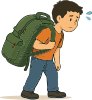
Adults should avoid loading children unnecessarily with baggage that could hinder their movement.
If a child's emergency backpack is already prepared, is light and does not affect the child's ability to evacuate, they may carry it. However, the speed and safety of the evacuation take priority over carrying any belongings.

Prevent separations
In crowded places, an evacuation can produce confusion and separate family members. Therefore:
- Keep physical contact with young children;
- make sure each minor stays with the adult or group assigned in advance;
- do not allow a child to leave the evacuation route to look for family, friends, pets or belongings;
- do not change route or meeting point unnecessarily;
- once the safe zone is reached, keep the group together and take a count of the people in your care.
2.11How to respond to a child's fear or panic
Sirens, shouting, earthquake damage, crowds and other stimuli can provoke intense fear.
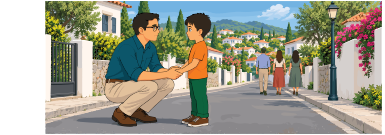
Simple phrases can be used, such as:
"We are going to the safe place."
"Give me your hand."
"Stay with me."
The responsible adult should:
- Speak in a firm, calm voice;
- use short instructions;
- keep the child focused on the evacuation;
- avoid conversations about possible deaths, destruction or other consequences while moving;
- prevent the child from stopping to look at the sea;
- keep moving toward the safe zone.
IF THE CHILD FREEZES AND FEAR PREVENTS THEM FROM CONTINUING
- Establish direct verbal contact;
- give the instructions one at a time;
- physically help them to continue if you can do so safely;
- if the child is small and it becomes necessary, carry them;
- do not stay in place trying to persuade them with lengthy explanations.

2.12Do not go back for toys, objects or pets
During a real evacuation, do not allow a minor to try to go back for a toy, a backpack, a phone, or any other object of emotional importance.
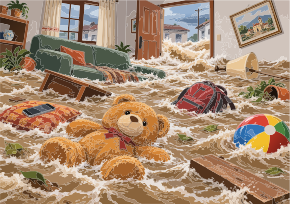
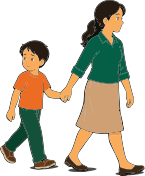


Likewise, do not allow them to leave the route to chase a pet that has escaped.
Explain to them in advance, and if necessary, remind them during the emergency, that people are the priority and objects can be replaced.
If something is lost during the evacuation, keep going.
2.13If the minors are in a school, educational center, temple, club or other institution
When a tsunami threatens while minors are in the care of an institution, the emergency and evacuation plan established for that establishment must be applied.
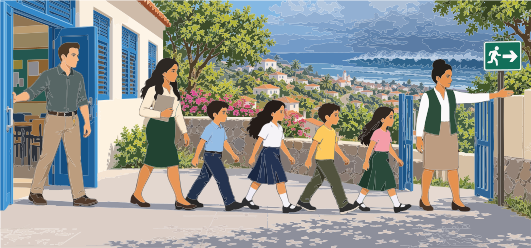
Institutional staff in charge must:
- Begin the evacuation according to the established procedure;
- lead the minors along the planned route;
- take the records or lists of people only if they are immediately available and if doing so does not delay the evacuation;
- keep the groups together;
- take headcounts when conditions allow it;
- prioritize assistance to those who need additional support;
- prevent minors from leaving the group;
- head to the previously established safe point or meeting point;
- keep the minors under supervision until a safe reunification can take place according to institutional procedure.
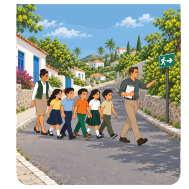
Parents and family members responsible
If the child is already under the protection of an institution that is carrying out its evacuation plan, family members must not enter an area threatened by a tsunami to pick them up.
Doing so may:
- expose the family member to the tsunami;
- increase traffic;
- interfere with the evacuation;
- cause the child and their family to head for different places;
- make reunification more difficult afterward.
Family members must follow the official instructions and the reunification procedure established by the institution.
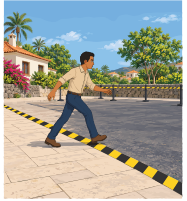
2.14Vertical evacuation with minors
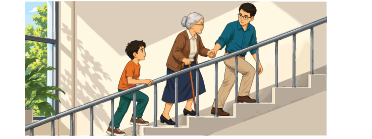
If it is not possible to leave the area susceptible to flooding and an appropriate vertical evacuation structure must be used:
- Keep children with the adults in charge of them;
- use the stairs;
- do not use elevators;
- keep children away from edges, broken windows, unstable elements and areas presenting a risk of falling;
- help those who have the greatest difficulty moving first, without causing pushing or blocking the stairs;
- reach the level or safety area established;
- take a headcount when possible;
- remain there until the authorities indicate it is safe to leave the place.
2.15People with disabilities and people with assistance needs
An inclusive evacuation must recognize that people have different abilities and needs.
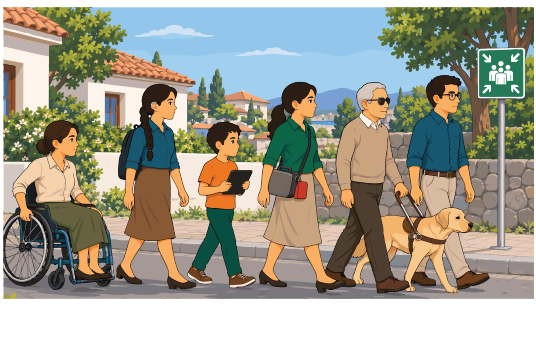
A person may need assistance related to:
- mobility;
- vision;
- hearing;
- communication;
- comprehension;
- orientation;
- transportation;
- use of medical equipment;
- medications;
- service animals;
- personal assistance;
- other functional needs.
2.16Personal or institutional support network
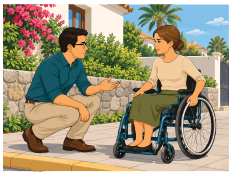
People who may need assistance to evacuate should have a support system and a pre-arranged procedure in place from the preparedness stage.
During an immediate tsunami threat, a system that forces other people to travel into a dangerous area to collect someone must not be improvised, unless this forms part of a safe procedure established beforehand and circumstances allow it to be carried out.
If you are part of a person's support network:
- follow the previously agreed procedure;
- contact them when possible without delaying your own evacuation;
- provide the planned assistance;
- do not expose yourself unnecessarily to the tsunami;
- do not leave a safe zone to re-enter a threatened area.
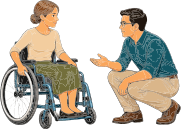
2.17People with reduced mobility
Needs can vary considerably; some people may use:
- manual wheelchair;
- powered wheelchair;

- cane;
- walker;


- crutches;
- prosthetics;
- other mobility devices.


Do not remove a wheelchair, cane, prosthetic or other assistive device unless it is truly necessary to get past an obstacle or avoid immediate danger.
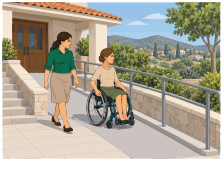
If a route proves inaccessible:
- use the accessible alternative provided in the plan;
- request help where it is available;
- follow the person's own instructions on how to assist them;
- avoid lifting or carrying a person unnecessarily.
IF PHYSICAL TRANSFER IS ESSENTIAL
- Do not improvise potentially dangerous carrying techniques.
- Incorrect handling can cause falls, spinal injuries, joint damage or injuries both to the person being evacuated and to those trying to help.
- If there is immediate danger and no other alternative, ask the person —when they can communicate— to indicate the safest way to move them, and use the help of several people if available.
2.18Powered wheelchairs and other equipment
Do not assume that a powered wheelchair will necessarily be unusable after an earthquake. If it works and the route is passable, it may still be the safest and fastest means of mobility for the person.
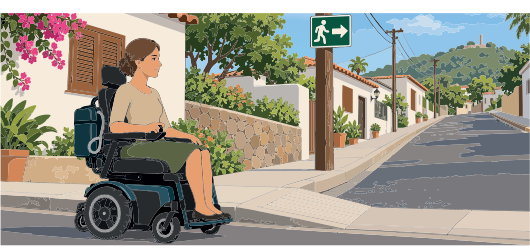
However, emergency plans should provide alternatives for situations where:
- there is no power;
- the equipment is damaged;
- there are stairs;
- the usual route is obstructed;
- another means of evacuation must be used.
2.19People with visual impairments
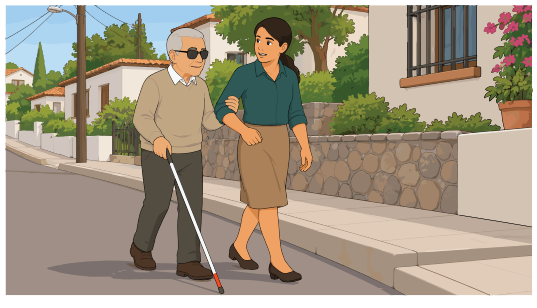
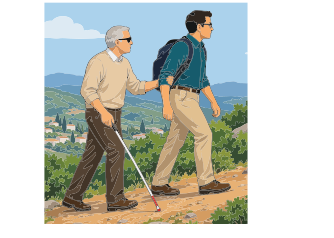
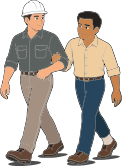
Do not take hold of or pull a person with a visual impairment without warning them.
Identify yourself and offer help.
If they accept assistance:
- Ask how they prefer to be guided;
- normally you can offer your arm so they can hold on and walk slightly behind you;
- briefly describe obstacles, steps, changes in level, changes of direction and other hazards;
- use clear indications such as "step up", "debris ahead" or "we are turning right";
- do not separate the person from their cane, service animal or other mobility aid, unless there is an immediate safety need.
2.20Deaf people and people with hearing impairments
Do not assume that a siren or a message broadcast over loudspeakers was perceived.
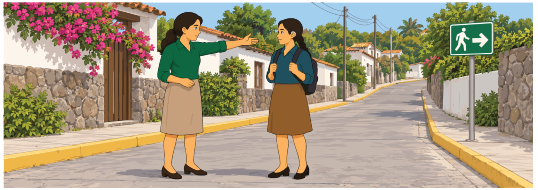
To communicate an evacuation:
- Establish eye contact;
- use clear gestures;
- point out the direction of evacuation;
- use short written messages when necessary;
- use the communication system the person normally uses, provided it is available and does not delay the evacuation.
A written emergency message can be as simple as: "TSUNAMI — EVACUATE NOW — FOLLOW ME."
If the person uses sign language and someone trained to communicate with them is available, use that resource.
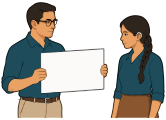
2.21People with intellectual, cognitive or developmental disabilities and neurodivergent people
Noise, sirens, shouting, crowds, unexpected physical contact, and the sudden change in routine may cause disorientation, anxiety or overstimulation.
USE:
- short, concrete instructions;
- one instruction at a time;
- language familiar to the person;
- clear gestures where these are useful;
- the company of someone familiar, when possible;
- communication or regulation items that are immediately available and do not delay the evacuation.
A written emergency message can be as simple as:
“GIVE ME YOUR HAND.”
“COME WITH ME.”
“WE HAVE TO LEAVE NOW.”
“WE ARE GOING TO THE SAFE PLACE.”
Avoid shouting unnecessarily, giving several orders at once, or providing complex explanations.
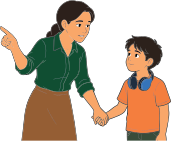 “We have to leave now.”
Physical contact and restraint
Wrapping a person tightly in a blanket must not be used as a general recommendation. Physical immobilization or restraint can increase distress, make breathing difficult, cause a fall, or interfere with the evacuation.
Use physical contact only when necessary, to prevent an immediate hazard, or when it forms part of the support strategies known and accepted for that person.
If a regulation or comfort object is immediately available and helps the person keep evacuating, it may be taken, provided it causes no delay and does not hinder movement.
2.22Older adults and other people who need assistance
Assistance must not be limited exclusively to people with a recognized disability.
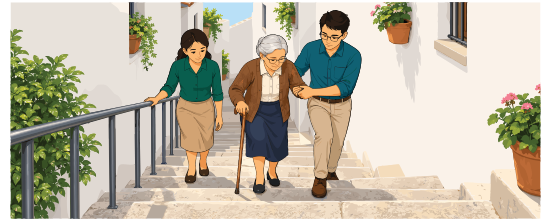
Others who may also need help:
- older adults;
- people with temporary injuries;
- pregnant women;
- people with respiratory or cardiovascular difficulties;
- people who may have difficulty finding their way;
- people who do not understand the language used in the alerts;
- visitors unfamiliar with the area;
- people who are alone and need support to evacuate.
When you can help them without compromising your own evacuation:
- clearly communicate that there is a danger;
- point them toward the safe direction;
- accompany them where necessary;
- adapt your pace when circumstances allow;
- request additional help if it is available.
2.23Pets and service animals
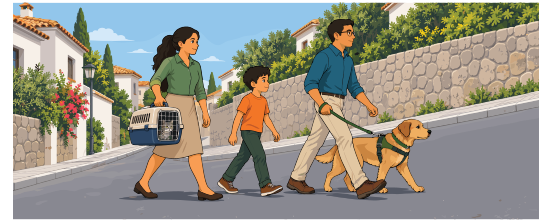
Pets are part of many households and must be included in emergency planning. However, during an immediate tsunami threat there is a fundamental rule: the evacuation of people must not be delayed in a way that exposes their lives to danger in order to recover, chase, or move an animal.
If the pet is with you and you can evacuate it immediately, take it.

DOGS
Whenever possible:
- use a leash;
- preferably use a secure harness if the animal is already used to one;
- keep it under control;
- avoid retractable leashes during an evacuation in a crowd;
- do not let it move freely.
A frightened animal can behave unpredictably even if it is normally docile.
Do not establish a rule requiring a large dog to be muzzled simply because of its size. A muzzle may be appropriate for certain animals already accustomed to wearing one, or where there is a known risk of biting, but putting one on for the first time during an emergency can be difficult and cause more stress. That decision should be part of the owner's plan in advance.

CATS AND SMALL ANIMALS
When possible, they should be carried in a suitable, secure box, bag, or carrier.
Do not waste time looking for a carrier if the danger is immediate and doing so substantially delays the evacuation.
The way the animal is moved must be adapted to the circumstances without compromising the safety of people.
2.24Do not go back for a pet that has escaped
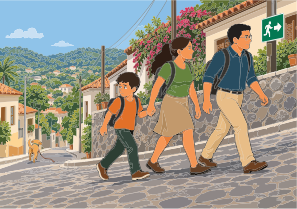
If a pet gets loose and runs toward the danger zone, do not go back toward the coast or abandon the evacuation to chase it when doing so could put your life or the lives of others at risk.
Keep moving toward the safe zone.
Report the animal afterward, when conditions allow a search to be organized safely.
Likewise, if the pet was left inside a home or building, and returning means entering a threatened area again, do not go back for it.
2.25If a pet makes the evacuation extremely difficult
Do everything reasonably possible to evacuate the animal without dangerously delaying your departure.
However, if a person faces an immediate threat and an animal makes it physically impossible to continue toward a safe place, protecting human life must be prioritized.
Children, people with disabilities, other family members, institutional staff or third parties must not be exposed to a tsunami in an attempt to carry an animal that cannot be moved in those circumstances.
2.26Pets during a vertical evacuation
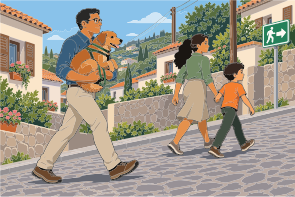
If a suitable vertical evacuation structure accepts animals, and you can bring them without compromising the evacuation:
- Keep the dog on a leash or under control;
- keep cats and small animals inside their carriers when possible;
- prevent animals from interfering with stairs and circulation routes;
- keep them away from edges and other places they could fall from;
- try to keep them separate from other animals when there is a risk of fighting.
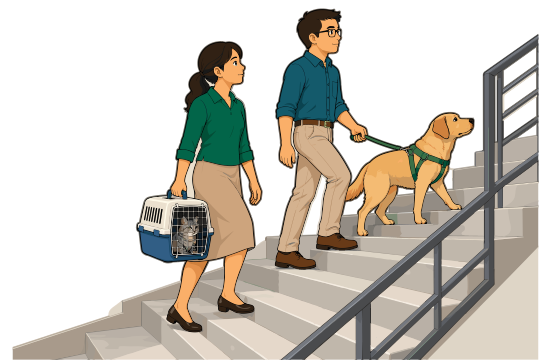
Do not automatically tie a pet to railings, pipes or other parts of the structure. Those elements may not be sturdy, may be needed as pathways, or may themselves become a hazard.
SERVICE ANIMALS
Service animals must stay with the person they assist whenever circumstances allow.
They must not be treated simply as pets, since they may perform essential functions relating to the person's mobility, orientation, alerts, or other needs.
2.27General principle for institutions
In churches, temples, clubs, associations, community centers, social organizations and other private institutions, the responsibility during a tsunami threat is to put the plan prepared before the emergency into action, not to improvise a new one.
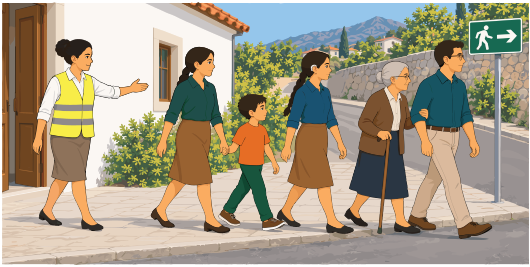
The designated staff in charge must:
- recognize and communicate the threat immediately;
- order the evacuation where appropriate;
- direct people toward the planned exits and routes;
- prevent crowding;
- prevent people from going back for belongings;
- assist those who need additional help;
- keep the emergency routes clear;
- check, when possible and without delaying departure, that the areas have been evacuated;
- move to the safe point established in advance;
- take the headcount there;
- report missing people or those who require assistance;
- keep everyone outside the threat zone until the authorities authorize the return.
2.28If you are in a vehicle
If you are in an area threatened by a tsunami when you receive an alert or recognize natural warning signs, do not stay in your vehicle waiting to see what happens. Follow the evacuation routes and procedures established for your area.
If traffic is moving along and the authorities allow or direct vehicle evacuation, continue to the safe zone, following official instructions. However, if you encounter:
- severe congestion;
- blocked roads;
- damage to the roadway;
- obstacles caused by the earthquake;
- a situation where staying in the vehicle is clearly delaying your evacuation
and a safe pedestrian route exists that will get you to the safe zone more quickly, leave the vehicle, as far as possible, where it will not block evacuation routes, and continue on foot.
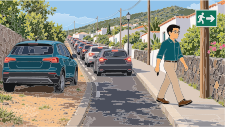
Never try to drive a vehicle through an area that is already flooding.
2.29If you are on a beach or very close to the sea
If you feel a strong or prolonged earthquake, observe an abnormal change in sea level, hear an unusual noise coming from the ocean, or receive an evacuation order: leave the coast immediately.
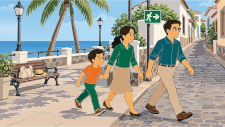
Do not wait to:
- see a wave;
- confirm the news on the internet;
- receive a call;
- collect your belongings;
- finish a recreational activity;
- take photographs or videos;
- find everyone you know who might be in the area.
Head immediately for the established safe area.
2.30Tourists, visitors and people unfamiliar with the area
People visiting a coastal area may not know:
- the areas susceptible to flooding;
- the evacuation routes;
- safe locations;
- the local signage;
- the location of high ground;
- the alert systems used in the community.
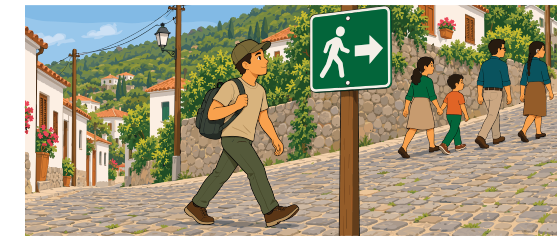
If you do not know the area and there is a tsunami threat:
- Look for and immediately follow the evacuation signage;
- follow the instructions of the authorities and emergency personnel;
- observe where the organized evacuation is heading;
- move away from the coast;
- head for high ground or inland when you have no other information;
- do not stay where you are trying to find out details that will delay your departure.
If you are in a hotel, tourist establishment, campsite, resort or other facility, follow the establishment's evacuation plan whenever it is compatible with the official instructions.
Language barriers must not prevent evacuation. Institutions located in exposed areas should have understandable signage, pictograms and procedures that can also guide those who do not speak the local language.


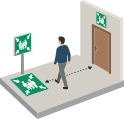
2.31People in ports, marinas, docks, and harbor areas
Ports, marinas, docks, river mouths, and other coastal facilities can experience extremely dangerous currents during a tsunami.
If you are on land inside a port or marina and there is a tsunami threat:
- Leave the coastal area immediately;
- follow the established evacuation route;
- do not stay on the dock trying to secure a boat;
- do not go back to recover equipment;
- do not go near the water to observe changes in sea level.
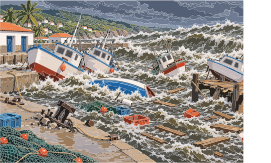
Do not try to board a boat from land as an improvised method of evacuation.
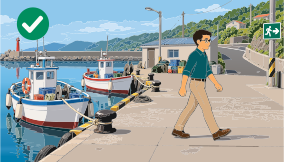
2.32If you are in a building near the coast
If you receive an evacuation order or recognize natural tsunami signs, do not stay in a building located inside a threatened area simply because the construction looks solid. When there is time to do so, evacuate by the established route toward the safe zone.
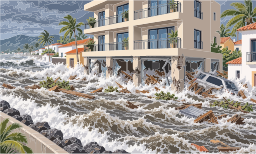
Do not use elevators after an earthquake or during an emergency evacuation when there is a risk of:
- power outages;
- system failures;
- structural damage;
- becoming trapped.
2.33If you are on a boat
The appropriate response for a person already at sea is not necessarily the same as for a person on land. A tsunami can behave very differently in deep water than it does near the coast, in harbors, and in shallow water. For this reason, no single universal rule should be set for all boats.
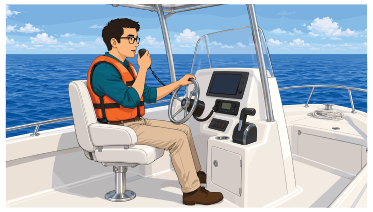
If you are at sea and receive a tsunami warning:
- Follow the instructions of the competent maritime and port authorities;
- use the official maritime communication channels;
- assess your location, how much time you have, the depth of the water, and local conditions;
- do not automatically try to return to port without knowing the current instructions;
- nor should you attempt to head out to sea without a plan if the authorities have not instructed you to or if conditions do not allow you to do so safely.
The instructions of the competent maritime authority take priority.
2.34If you are in an institution with a large number of people
In churches, temples, clubs, associations, community centers, educational establishments and other institutions, a disorganized evacuation can create additional risks. The previously designated people in charge must immediately assume their roles.
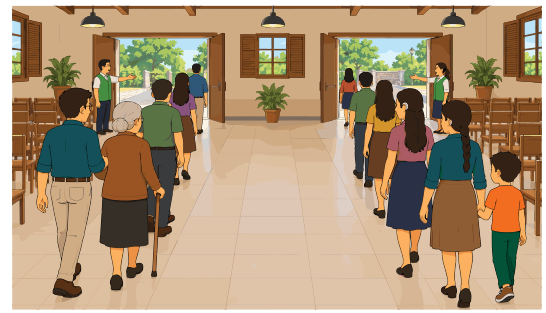
THE ORDER MUST BE UNMISTAKABLE
Use short, direct messages, for example:
"TSUNAMI ALERT. WE MUST EVACUATE NOW. FOLLOW THE DESIGNATED ROUTE."
Do not give speeches or lengthy explanations before beginning the evacuation.
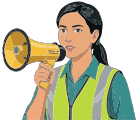
During the exit:
- Open and keep the planned exits available;
- direct the flow of people toward the established routes;
- avoid pushing and uncontrolled running;
- prevent people from going back for belongings;
- keep doors, hallways, stairs and evacuation routes clear;
- assist people who need support;
- keep children with the adults responsible for them;
- prevent groups from gathering in entrances or exits;
- continue toward the safe zone without stopping unnecessarily.
2.35Avoid panic without minimizing the danger
During an evacuation, communication must combine urgency, clarity, and control. Do not shout contradictory messages or spread unconfirmed information.
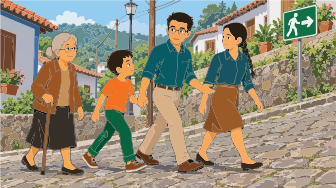
Use operational instructions:
"We must evacuate now."
"Follow this route."
"Do not go back."
"Keep going until we reach the safe zone."
Avoid using expressions that minimize the situation if you have no official information to support them, such as:
- "Nothing is going to happen."
- "It is only a precaution."
- "There is no danger."
2.36Communications during the evacuation
Communication is important, but it must not delay the evacuation.
If there is immediate danger:
- evacuate;
- stay informed through official media when you can do so while moving or once the safe zone has been reached;
- contact family when circumstances allow.
Do not stay inside the threatened area:
- making long calls;
- posting on social media;
- recording videos;
- looking for news;
- trying to verify rumors.
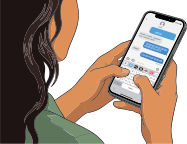
When possible, brief text messages can be useful to tell family that you are evacuating or are already somewhere safe.
Do not spread information from unknown sources. During an emergency, rumors and false messages can cause unnecessary movements of people and disrupt the official response.
2.37Do not rely exclusively on your mobile phone
Telecommunications networks can:
- become saturated;
- be interrupted;
- suffer power outages;
- lose coverage;
- work intermittently after an earthquake.
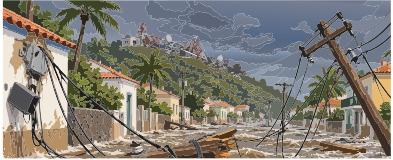
2.38If aftershocks happen during the evacuation
After a strong earthquake, aftershocks can happen while people are moving.
If new shaking happens:
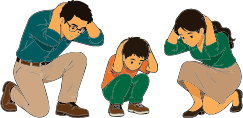
- protect yourself immediately from objects that could fall;
- move away, when possible, from facades, poles, wires, walls, and damaged structures;
- watch out for landslides on sloping ground;
- when the shaking stops and you can move safely again, continue the evacuation.
2.39If you find injured people during the evacuation
Help when you can do so without becoming trapped in the danger zone. If a person can walk:
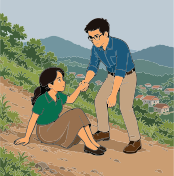
Help them up when it is safe,
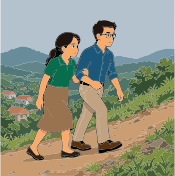
accompany them,
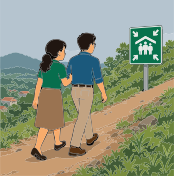
continue toward the safe zone.
If a person cannot move:
- Request help from other people or from the emergency services when these are available;
- use the means of transport provided in the emergency plan, if any exist;
- do not carry out maneuvers you are not trained for, unless there is an immediate danger that makes moving them essential.
2.40If you observe a sudden withdrawal of the sea
An abnormal, rapid withdrawal of the water can be a natural tsunami sign.

- Do not go closer.
- Do not walk on the exposed seafloor.
- Do not collect fish, objects, boats or anything else.
- Do not stay to photograph or film.
- Do not wait to see what happens next.
2.41If the first wave appears small
Do not interpret a first low wave as a sign that the danger is over.
A tsunami generally consists of a series of waves and oscillations in sea level; the later waves may be larger than the earlier ones.
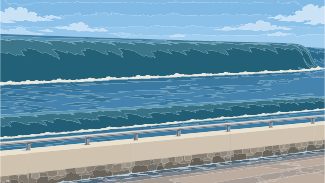
Even when a wave does not look large, the associated currents can be strong enough to:
- knock people over;
- move vehicles;
- drag boats;
- destroy structures;
- carry large quantities of debris.
2.42Do not go back when the water recedes
After a wave, the water may withdraw again toward the sea.
Do not go back to:

check on homes;

look for belongings;

look for vehicles;

photograph the destruction;

inspect damage;

locate pets;

help move objects.
Behaviors to avoid
During a tsunami threat or impact:
- DO NOT go to the beach to watch the phenomenon.
- DO NOT wait to see a wave before evacuating.
- DO NOT wait for an official alert when clear natural danger signs already exist.
- DO NOT go back for belongings.
- DO NOT re-enter an evacuated area.
- DO NOT leave a safe route to look for family members who are in the care of another institution.
- DO NOT chase a pet toward a danger zone.
- DO NOT use elevators during a vertical evacuation after an earthquake.
- DO NOT assume that any tall building constitutes a safe refuge.
- DO NOT cross flooded areas.
- DO NOT drive toward the water.
- DO NOT go near rivers, canals, river mouths, or ports to watch the tsunami.
- DO NOT spread rumors or unverified information.
- DO NOT stop the evacuation to record, photograph, or live stream the phenomenon.
- DO NOT go back after the first wave.
- DO NOT consider the emergency over until the competent authorities announce it.
2.43Essential survival rules
In the face of a tsunami threat, remember:
- PROTECT YOURSELF FROM THE EARTHQUAKE. If an earthquake is still happening, protect yourself from the shaking first. Evacuate as soon as you are able to safely do so.
- RECOGNIZE THE NATURAL SIGNS. A strong or prolonged earthquake, a sudden and abnormal change in sea level, and a loud noise coming from the ocean can all constitute natural warnings.
- DO NOT WAIT. If you recognize natural tsunami signs in an exposed area, evacuate immediately.
- MOVE AWAY FROM THE COAST. Head for the established safe zone, following the official evacuation routes.
- GO TO HIGH GROUND OR INLAND. If no local information is available, move away from the coast and go as high and as far inland as you can.
- EVACUATE ON FOOT WHEN POSSIBLE. Avoid contributing to traffic jams. Respect, however, the specific evacuation procedures established for the area and the needs of people who require transportation.
- DO NOT GO BACK FOR ANYTHING. Do not return for money, documents, phones, vehicles, clothing, toys, personal belongings, or pets when doing so means heading back toward the danger.
- HELP WITHOUT BECOMING ANOTHER VICTIM. Assist children, older adults, people with disabilities, injured people, and anyone else who needs support, when you can do so without putting your own life at risk.
- DO NOT GO TO LOOK AT THE TSUNAMI. If you can see it from a danger zone, you must keep moving away.
- THE FIRST WAVE MAY NOT BE THE LARGEST. A tsunami can produce multiple dangerous waves and currents over a prolonged period.
- STAY IN THE SAFE ZONE. Do not interpret the water receding as the end of the emergency.
- RETURN ONLY WHEN AUTHORIZED. Do not leave the safe zone until the competent authorities expressly announce that the threat has ended and that it is safe to return.
DURING A TSUNAMI, EVERY MINUTE COUNTS
Survival depends largely on recognizing the danger quickly and carrying out the actions that were prepared in advance without delay.
Do not wait to see the tsunami.
Do not go near the sea.
Do not waste time trying to save property.
Do not improvise routes when an evacuation plan exists.
Do not leave a safe zone because the first wave has apparently passed.
Recognize the signs. Evacuate immediately. Move away from the coast. Find a safe zone. Help those who need it when you can do so without putting yourself in danger. Do not go back until the authorities say it is safe.
Downloads
© 2026 by Centro del Reino de Paz y Justicia is licensed under Creative Commons Attribution-NonCommercial-NoDerivatives 4.0 International (CC BY-NC-ND 4.0). To view a copy of this license, visit creativecommons.org/licenses/by-nc-nd/4.0.