Phase 1: Before — Planning, prevention, and preparedness
Advance preparation is one of the most effective tools for protecting life against a tsunami. In tsunamis of nearby origin, the time available to evacuate can be as short as a few minutes, and it is possible that the waves will arrive before an official alert is issued or received.
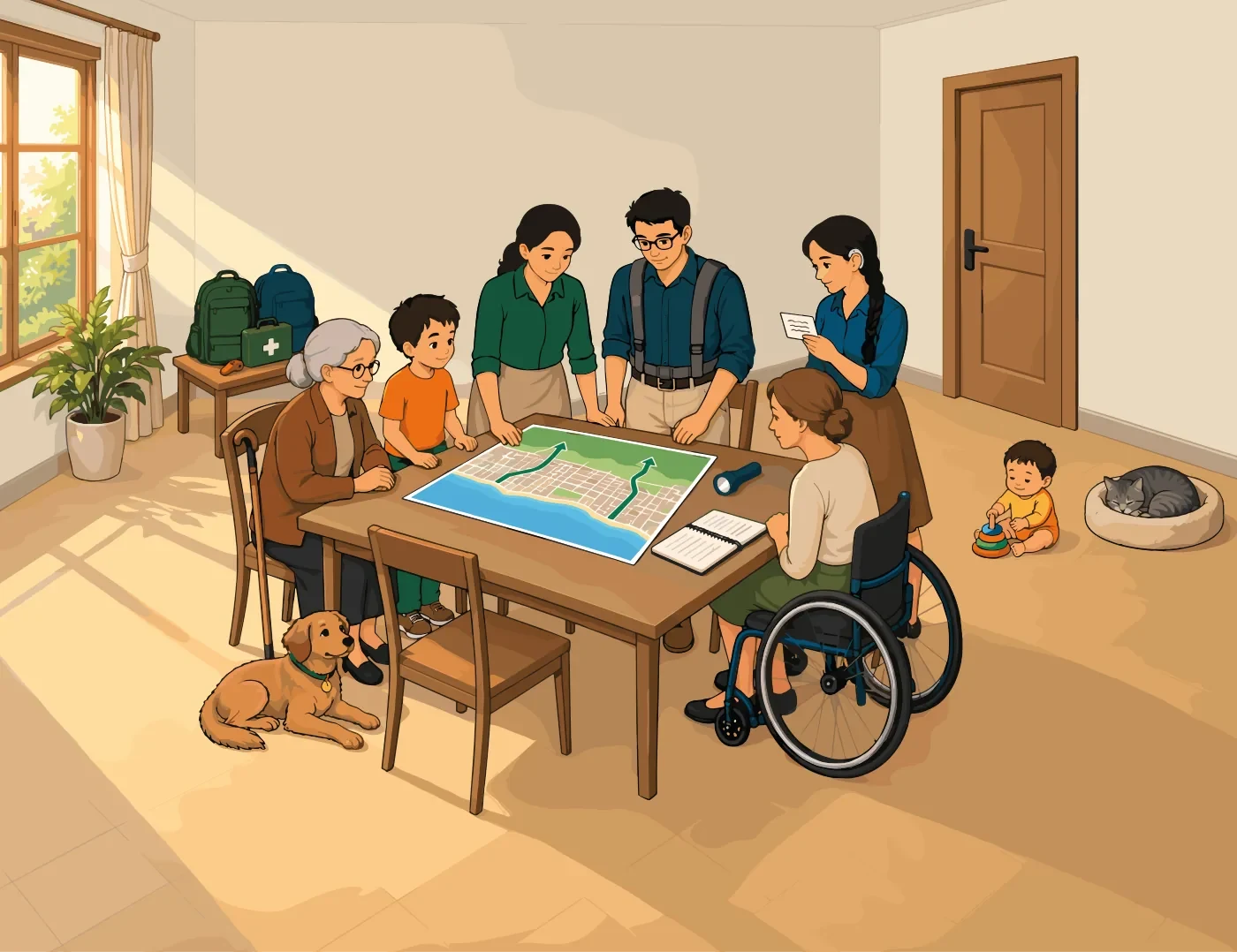
For this reason, preparation must not begin when the threat appears. It must be done in advance by knowing the risk, identifying safe zones, planning evacuation routes, preparing essential supplies, organizing the family and the community, and running regular drills.
Fundamental principle: when facing a tsunami, the absolute priority is saving lives. No object, vehicle, document, pet or piece of property justifies delaying an evacuation.
1.1Know the risk of where you are
Every person who lives, works, studies, stays, or has activities in a coastal area must find out in advance whether they are inside a zone susceptible to tsunami flooding.
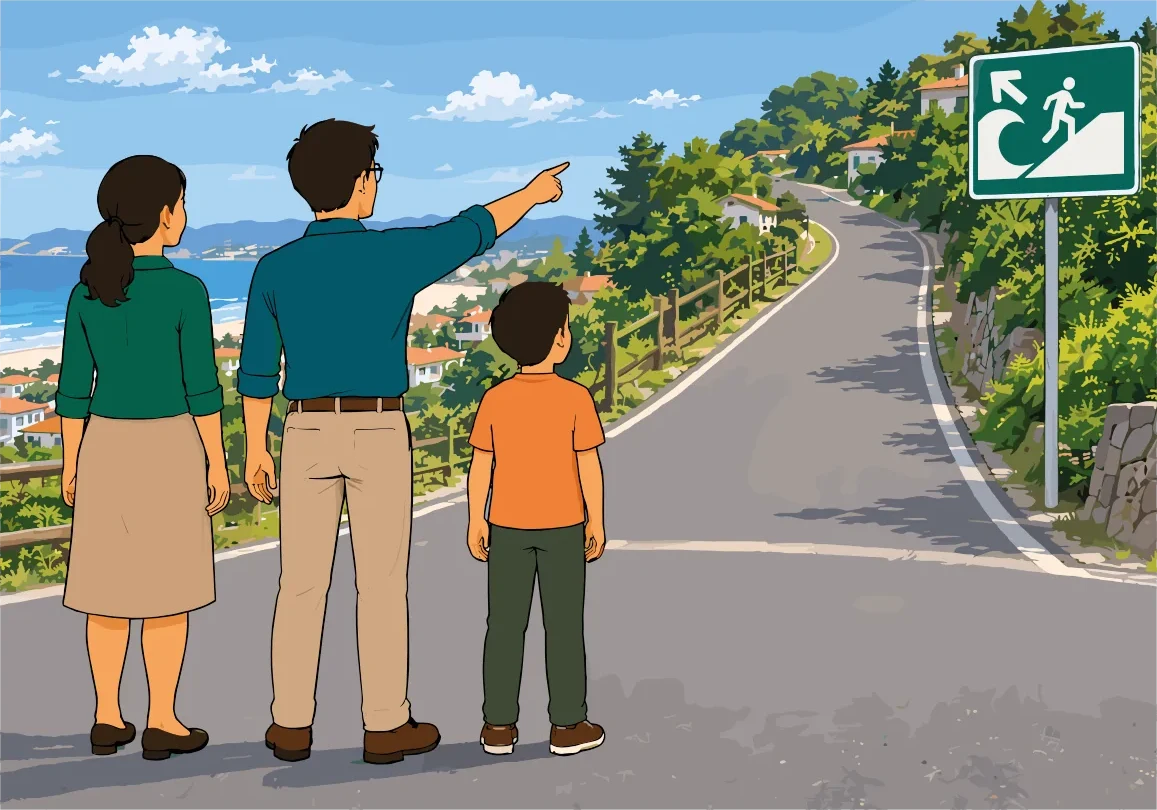
Consult the official maps
Identify:
- the zones officially considered at risk of tsunami threat or flooding;
- the evacuation zone limits;
- the official evacuation routes;
- high ground or safe areas;
- the meeting points established by the authorities;
- the buildings or structures officially designated for vertical evacuation, where these exist;
- the alternative routes that can be used if the main route is blocked.
As an international reference for preparedness, where no local information is available, you may consider heading for a place located approximately 30 meters above sea level or as far inland as possible. However, this reference does not replace the official hazard and evacuation maps for each locality.

Know your surroundings
Everyone in the household or institution must physically know the evacuation routes. It is not enough to look at them on a map. Physically walk the routes and identify:

Streets and paths that lead to high ground.

Bridges, tunnels or narrow passages that could become unusable.

Walls, poles, trees, signs, glass, facades or other elements that could fall after an earthquake.

Sectors susceptible to landslides or slippage.

Waterways that should be avoided.
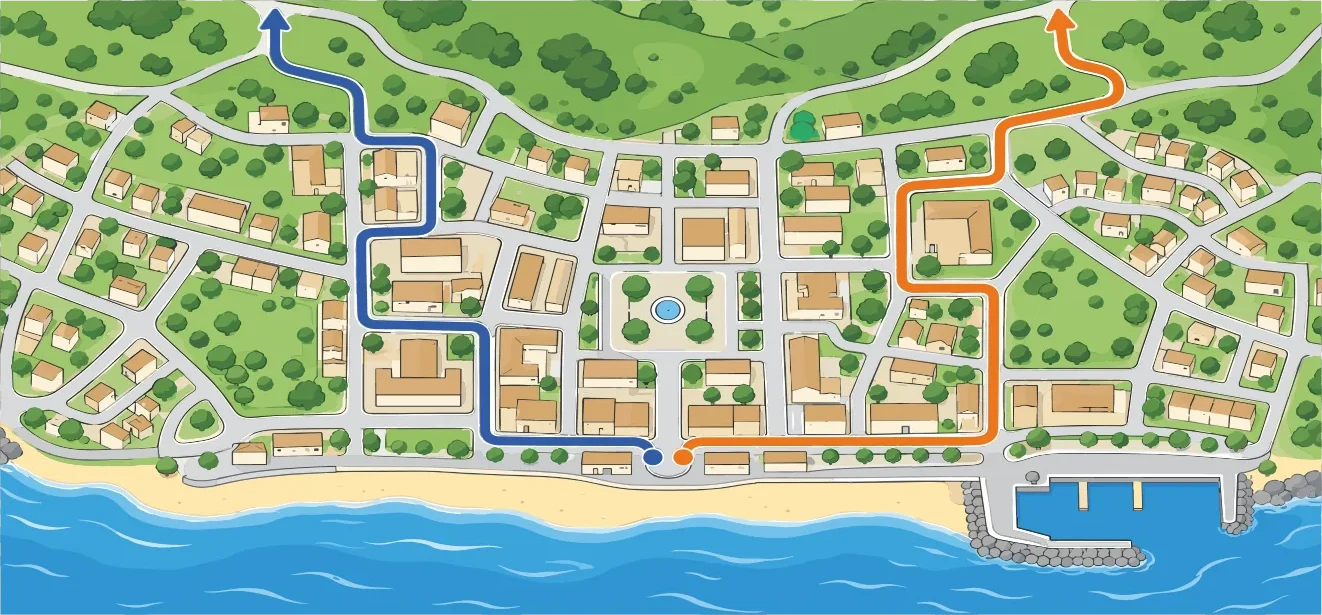
Possible alternative routes.
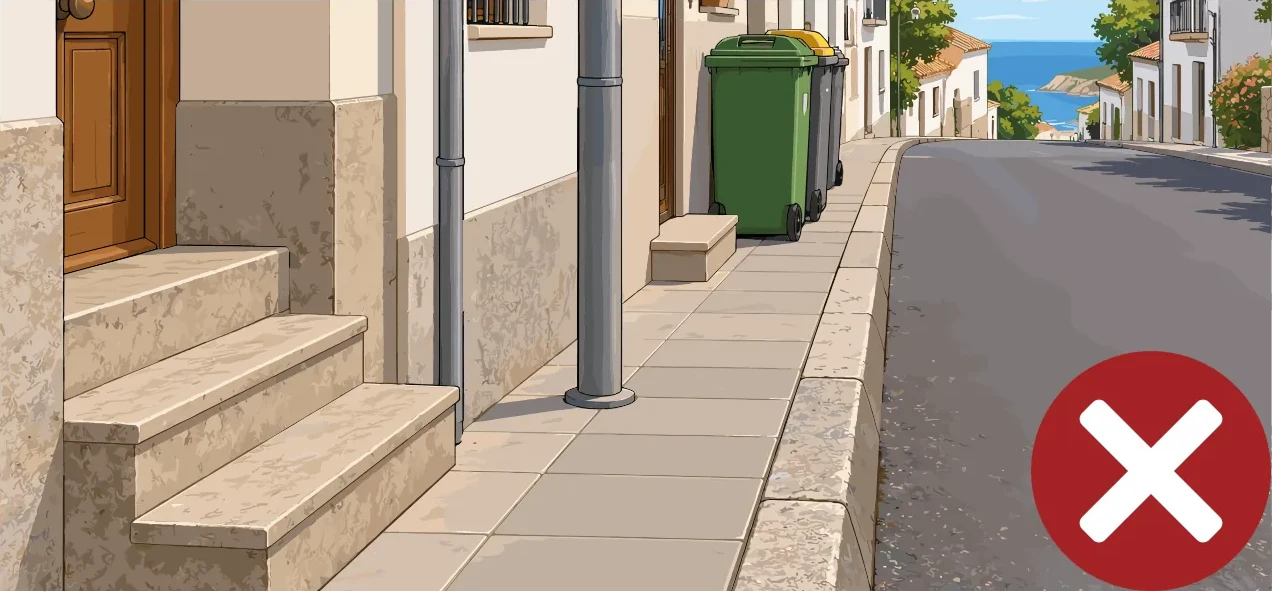
Obstacles that could make it harder for children, older adults or people with disabilities to move.
1.2Plan an evacuation that is mainly on foot
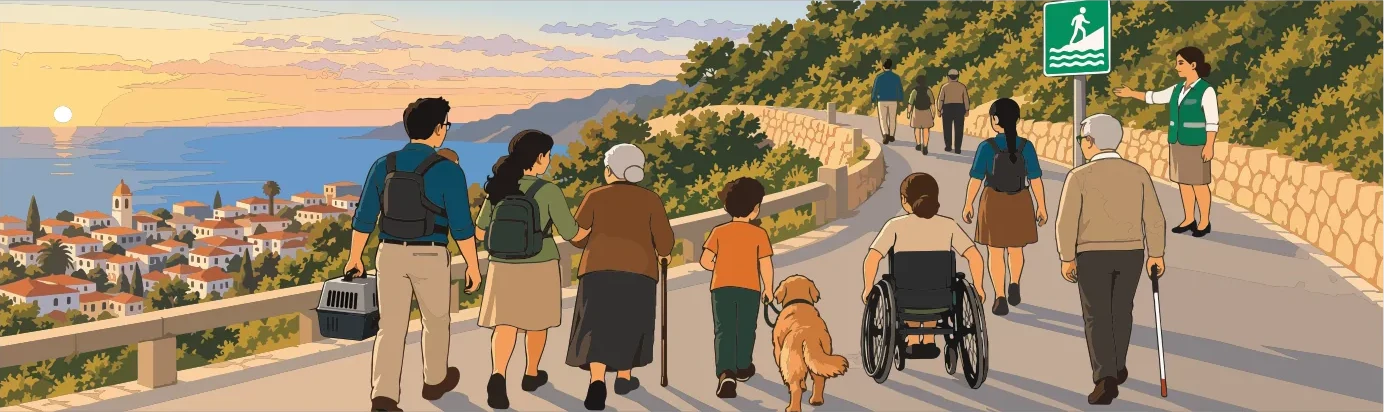
Planning must start from the assumption that evacuation on foot will be necessary. After an earthquake, there may be damaged streets, debris, downed power lines, traffic congestion, traffic lights out of service and blocked routes. The mass use of vehicles can create traffic jams and delay both your own evacuation and that of other people.
For that reason:
- Determine a main route on foot;
- establish at least one alternative route;
- know how long each route takes;
- adapt the pace to the member who moves the slowest;
- do not plan an evacuation that depends exclusively on a vehicle;
- practice the route regularly.
1.3Identify the evacuation signs in advance
Everyone must become familiar with the signage that exists in their community.
Learn to recognize signs for:

Tsunami Danger or Threat Zone;
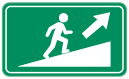
Tsunami Evacuation Route;

direction;

Safe Zone;

Meeting Point;

Vertical Evacuation, where these exist.
1.4Plan a vertical evacuation where applicable
Horizontal evacuation to high ground and out of the threatened zone must be the priority option whenever it can be done in time.
Where no accessible high ground exists, or where the time available is not enough, some communities have structures specifically assessed or appointed for vertical evacuation.
Before an emergency:
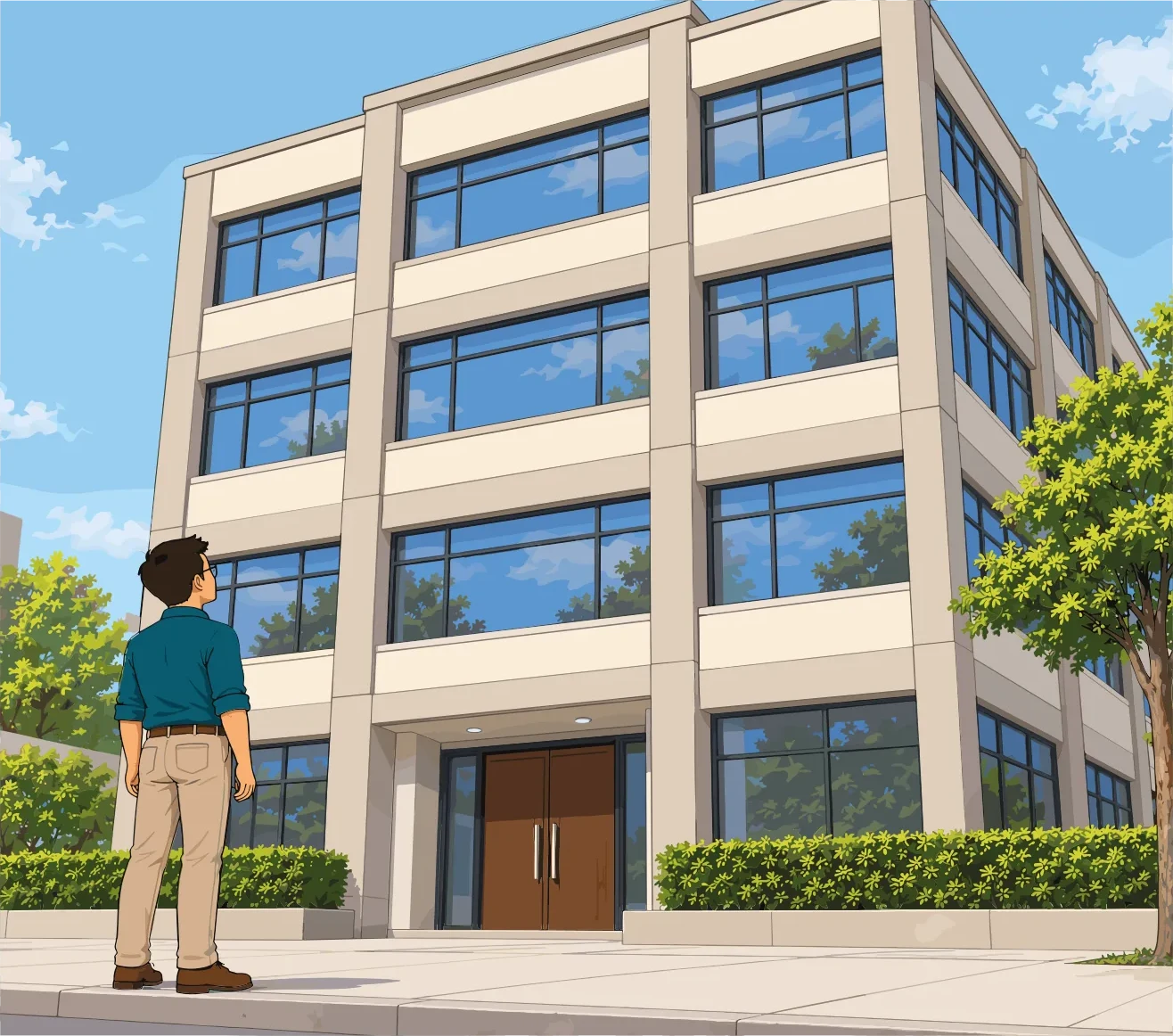
Identify the structures officially appointed for vertical evacuation;

know their access points;
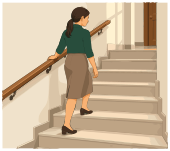
determine which stairs should be used;
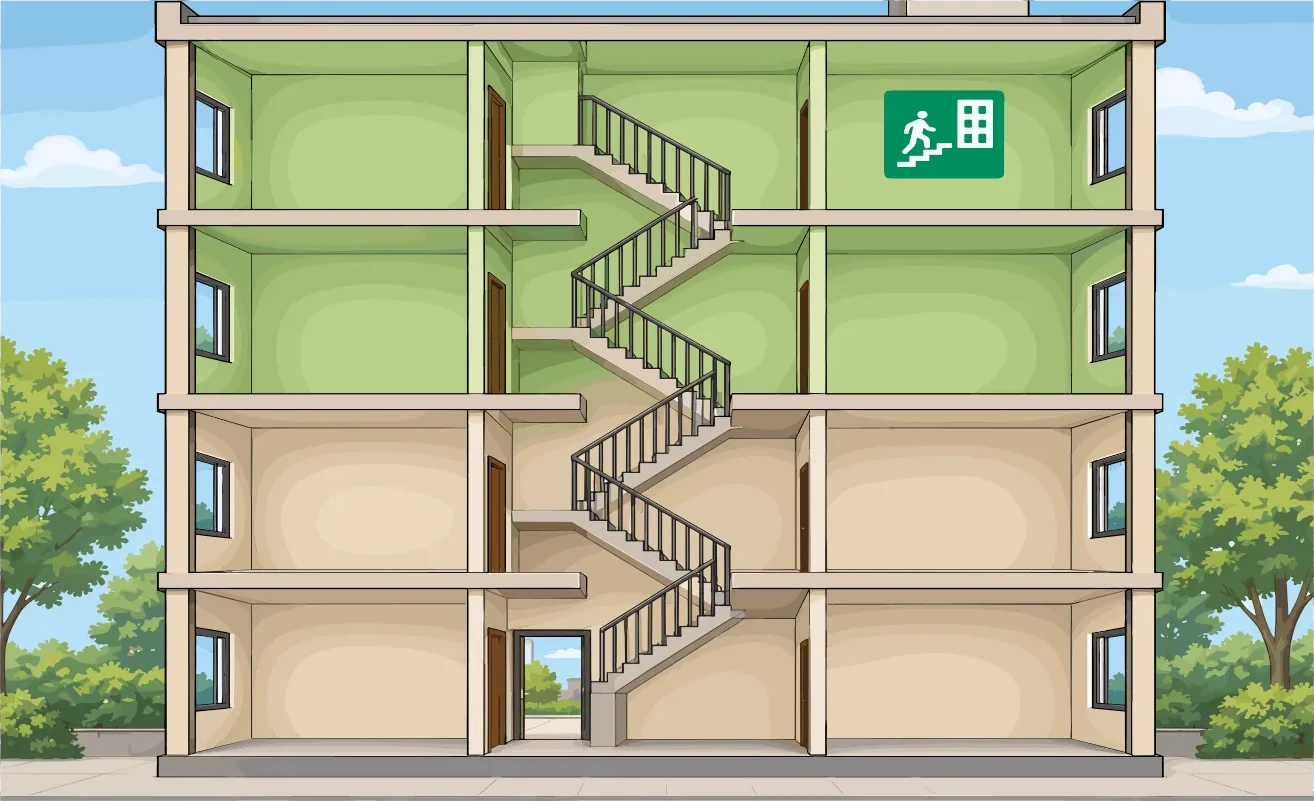
find out which levels are established as safe zones;
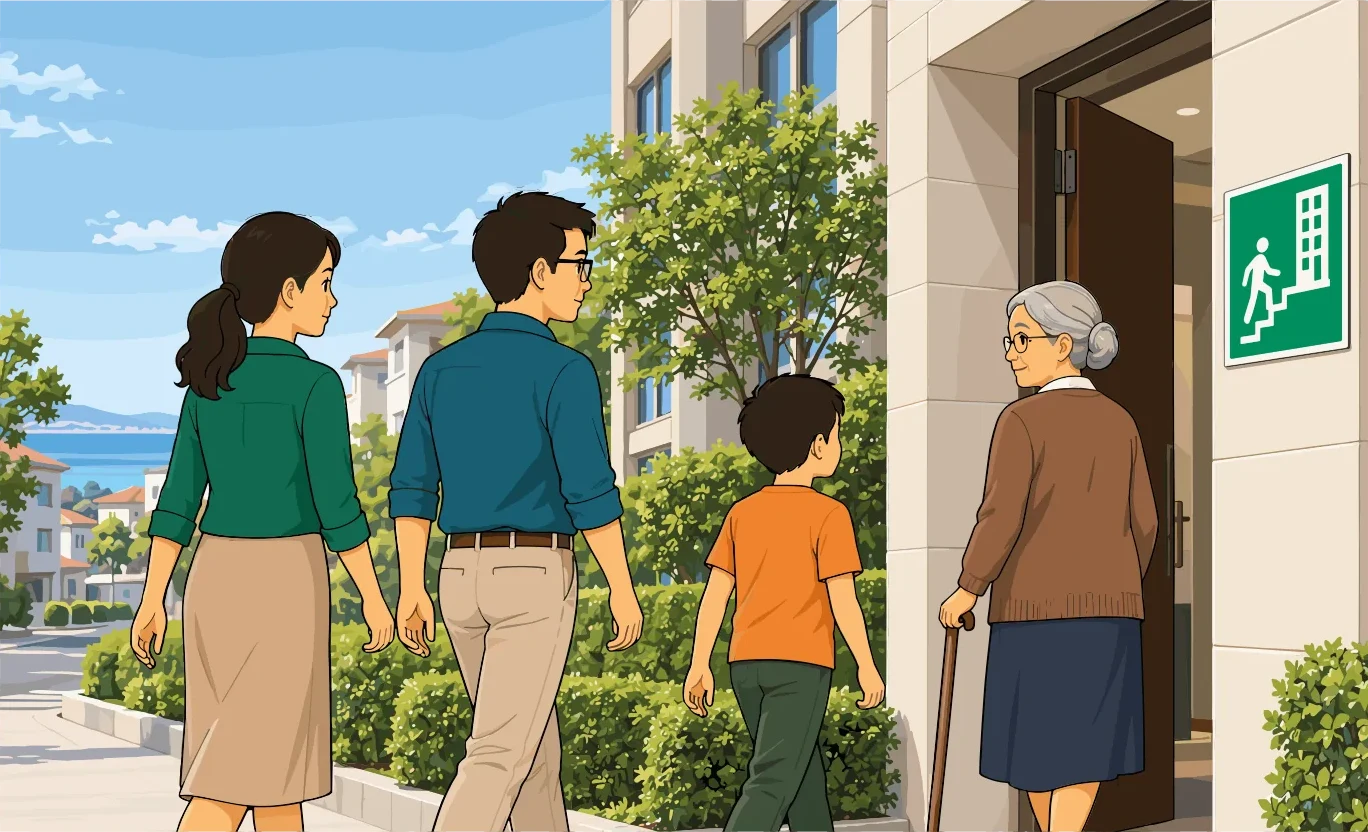
make sure all family or institution members know how to reach them.

Where no officially designated structures exist and it is impossible to leave the threat zone, a tall, sturdy, reinforced-concrete building can serve as a last-resort option, but its use will depend on the characteristics of the threat and of the structure.
Never wait until the tsunami arrives to decide where you will make a vertical evacuation.
1.5Recognize natural warning signs
A tsunami can arrive before any siren, phone message or official announcement. For this reason, everyone, including children, must know the main natural signs.
A strong or prolonged earthquake
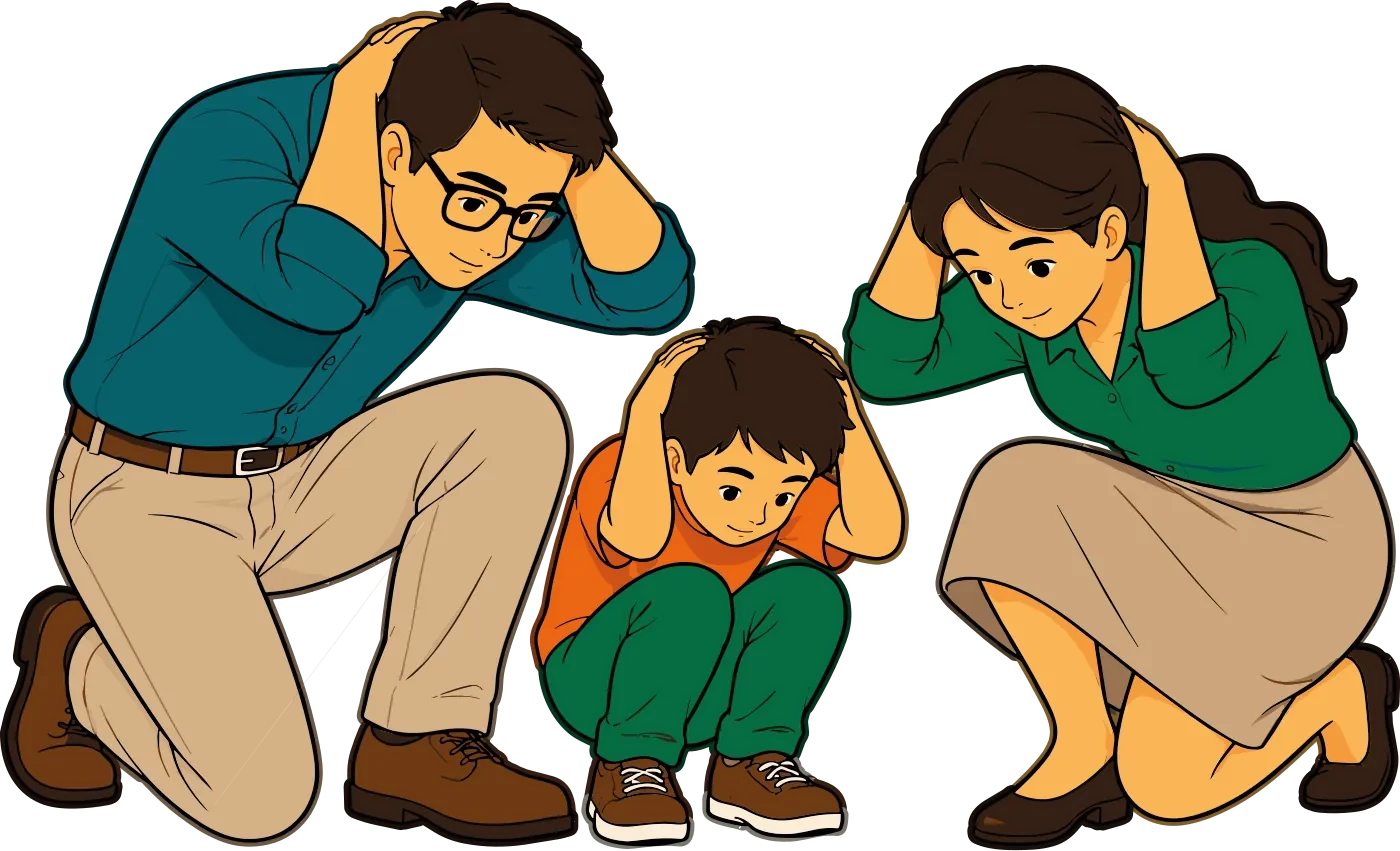
If you are near the coast and feel an earthquake strong enough or long enough to be clearly abnormal, consider that there may be a tsunami risk.
During the seismic shaking, protect yourself from the earthquake first. When you can move safely, get ready to evacuate immediately toward a safe zone.
A sudden, abnormal change in sea level
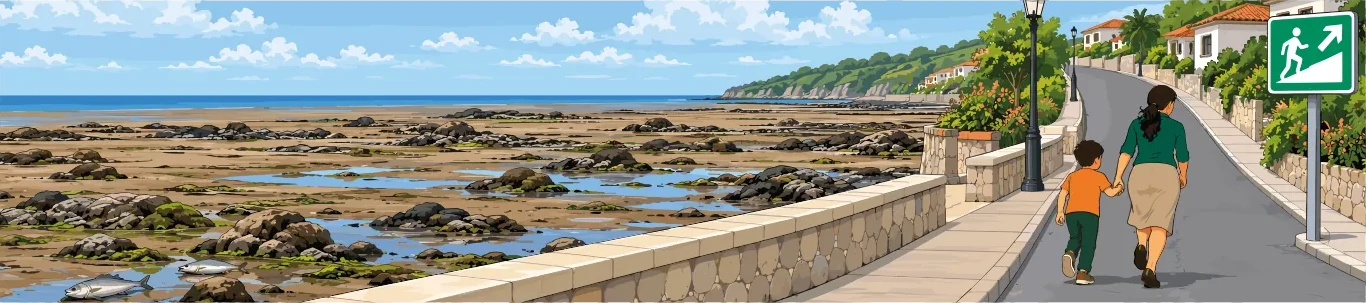
- The sea can withdraw rapidly, and leave exposed areas of the seabed, rocks, reefs or animals.
- The opposite can also happen: the water level can rise suddenly.
- If you observe sudden and unusual behavior of the ocean, move away from the coast immediately.
- Never get close to observe the phenomenon, take photographs, film, collect fish or objects, or check whether a wave is coming.
An unusual or intense noise coming from the sea
A loud roar coming from the ocean, often described as similar to the sound of a train or an aircraft, can be a natural sign of a tsunami.
1.6Know the official alert systems
Natural signs and official alerts complement one another. Neither should be ignored.
Before an emergency, find out which systems your area uses:
sirens;

emergency alerts on mobile phones;

SMS messages;

radio;

television;
official apps;

loudspeakers;

local authorities;

civil protection or emergency management services.
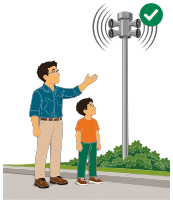
If sirens exist, learn their different signals and how the periodic tests are conducted.
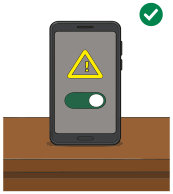
Keep the phone's emergency alerts turned on when the local system allows it.
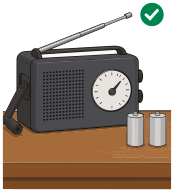
Also have a battery-powered or hand-crank portable radio, because mobile phone networks, electricity and internet can fail or become overloaded.
1.7Prepare the family or household plan
Families can end up separated when an emergency occurs.
The plan must establish in advance:

Who accompanies young children;
who helps older adults;
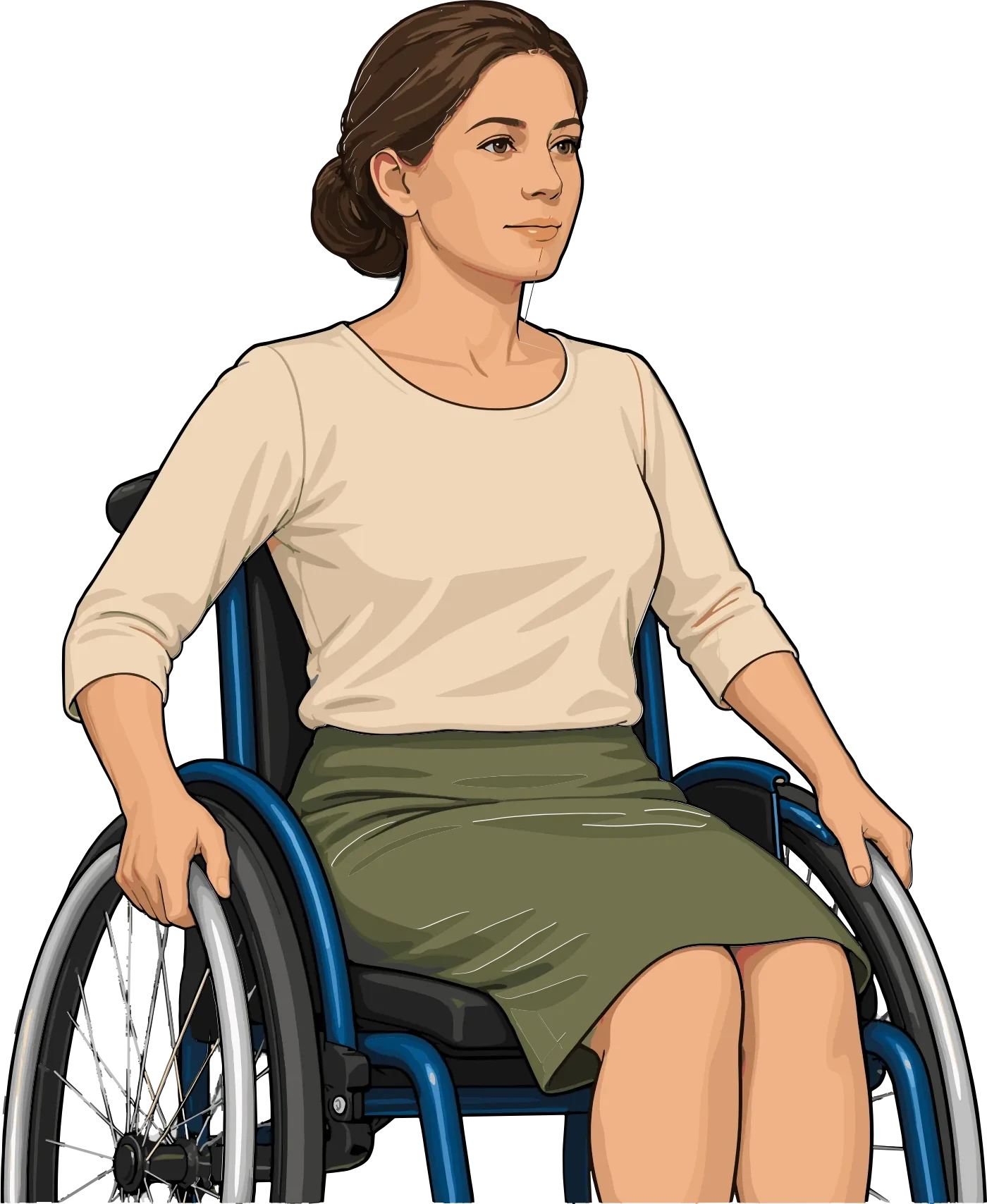
who assists people with disabilities;
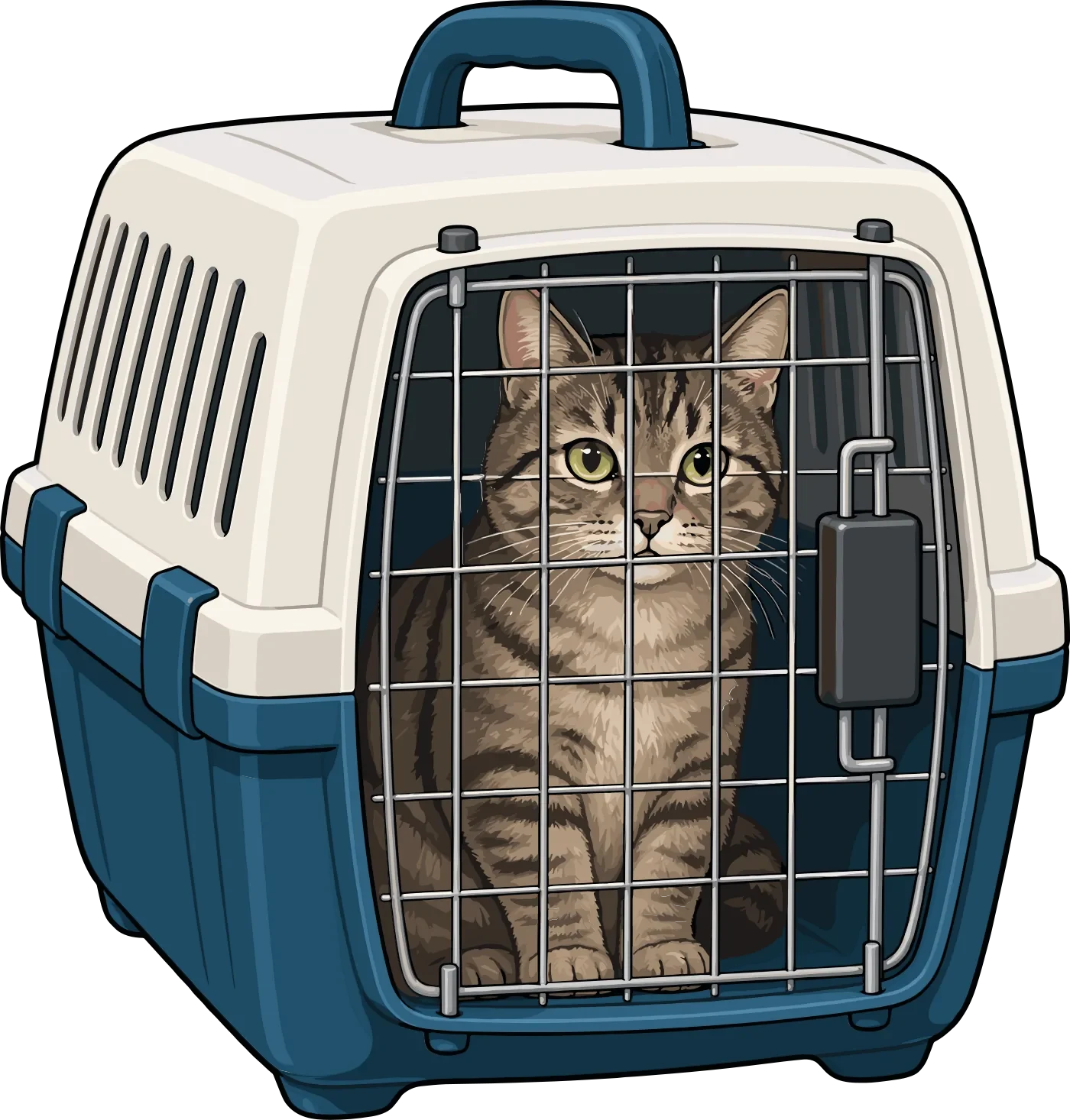
how pets will be evacuated without delaying the exit;

what the meeting point is;
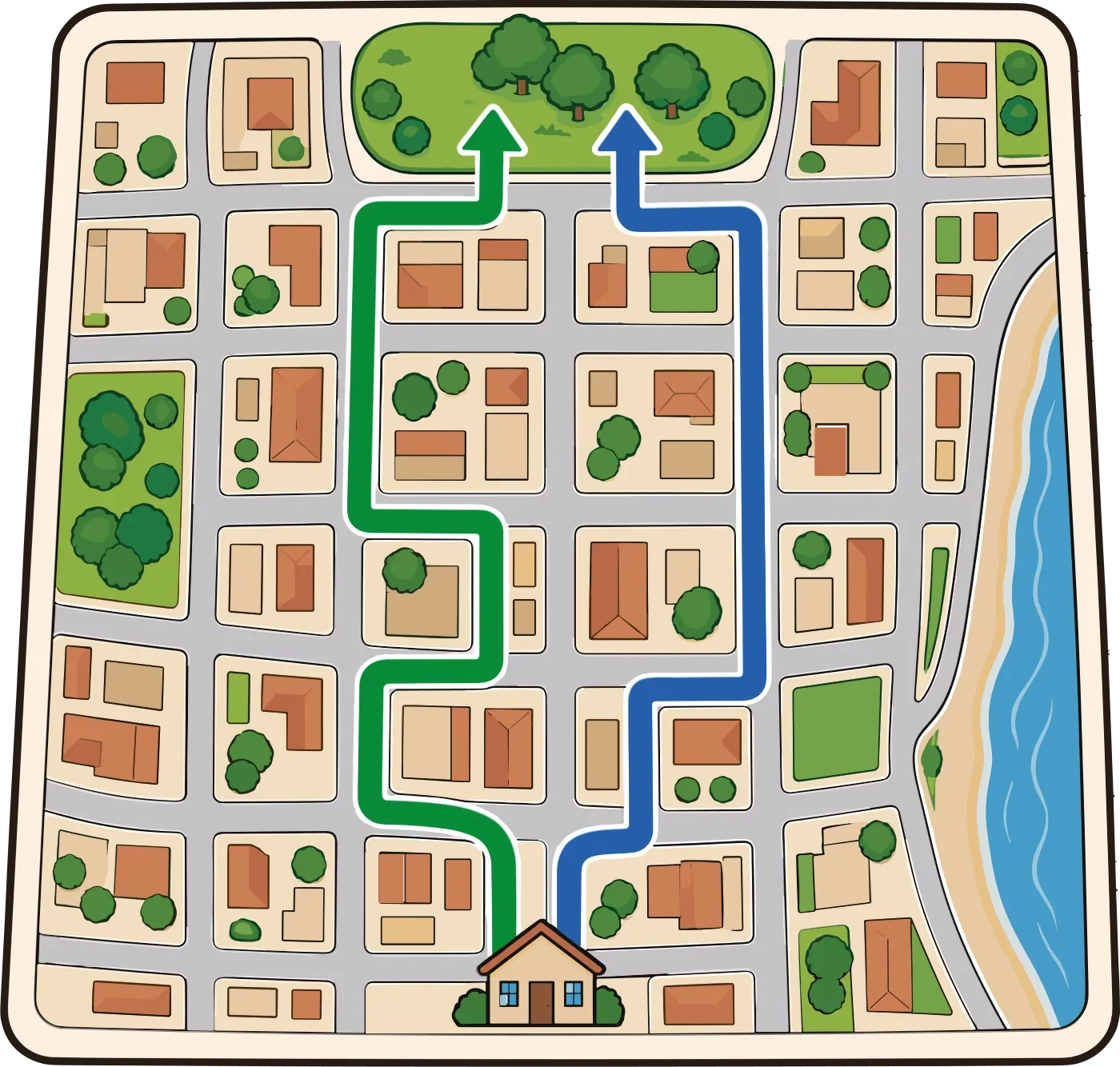
which is the main route; which is the alternative route;

who is the external emergency contact; what each member will do if the family is separated.
Establish a safe meeting point
Designate a specific place outside the threat zone, preferably on high ground and clearly identifiable.
Everyone must know it.
Designate an external emergency contact
Choose a trusted person who lives outside the potentially affected area.
Every member should know:
- their name;
- their phone number;
- alternate ways of contacting them.


After an emergency, text messages may be more effective than calls when networks are congested.

Contact information should also be kept in writing, because relying exclusively on the phone's memory can be a problem if the phone is lost, broken, or runs out of battery.
1.8Prepare the emergency backpack
The backpack must be kept in an accessible place, known by everyone, preferably close to the usual exit route, without blocking it.
It must be sturdy, easy to carry and, when possible, waterproof, or contain sensitive items inside airtight bags.
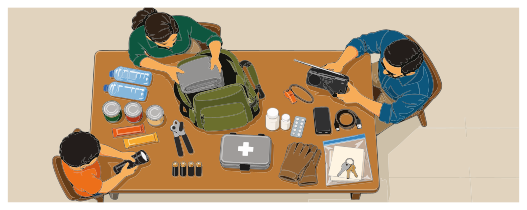
According to each family's needs, include:
- drinking water;
- non-perishable, ready-to-eat food;
- manual can opener, when necessary;
- essential personal medications;
- first aid kit;
- flashlight;
- spare batteries;
- battery-powered or hand-crank portable radio;
- whistle;
- charged power bank;
- charging cables;
- basic hygiene items;
- masks suitable for dusty environments;
- gloves;
- thermal blanket or light coat;
- cash in small denomination bills;
- protected copies of important documents;
- written list of emergency phone numbers;
- necessary keys;
- specific items for children, older adults, people with disabilities and pets.
Periodically check:
- water;
- food;
- medications;
- expiration dates;
- battery condition;
- power bank's charge;
- changes in phone numbers, documents and family needs.
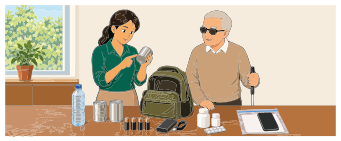
1.9Specific preparation for children and adolescents
Minors need to understand the danger without receiving unnecessarily alarming information. Preparation should build knowledge, confidence and simple responses.
Teach them what a tsunami is
Explain, using words appropriate for their age, that a tsunami can behave like an extremely fast and powerful flood, and that it does not necessarily look like a single "giant wave".
Children must especially understand that:
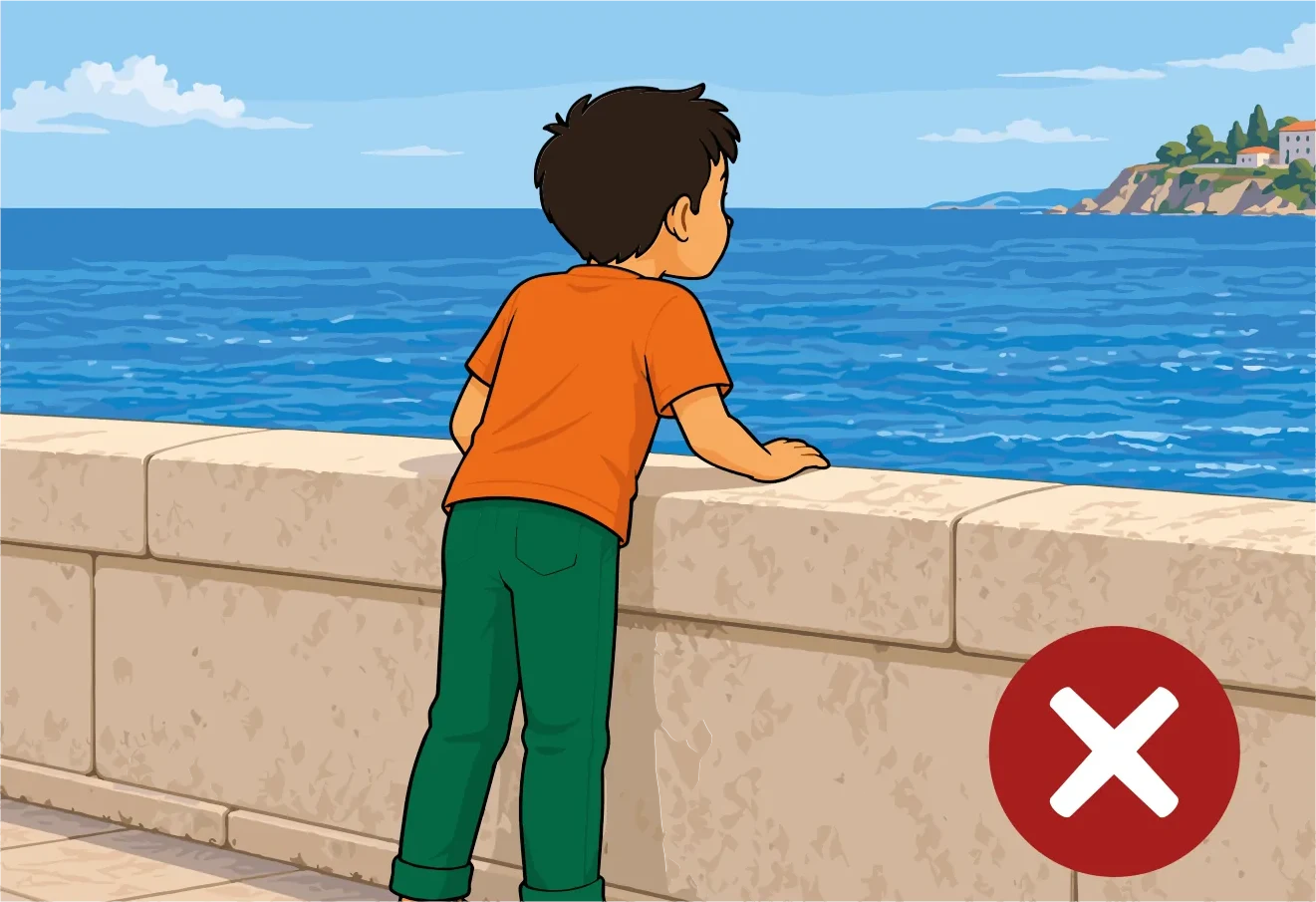
they must never go near the sea to look;
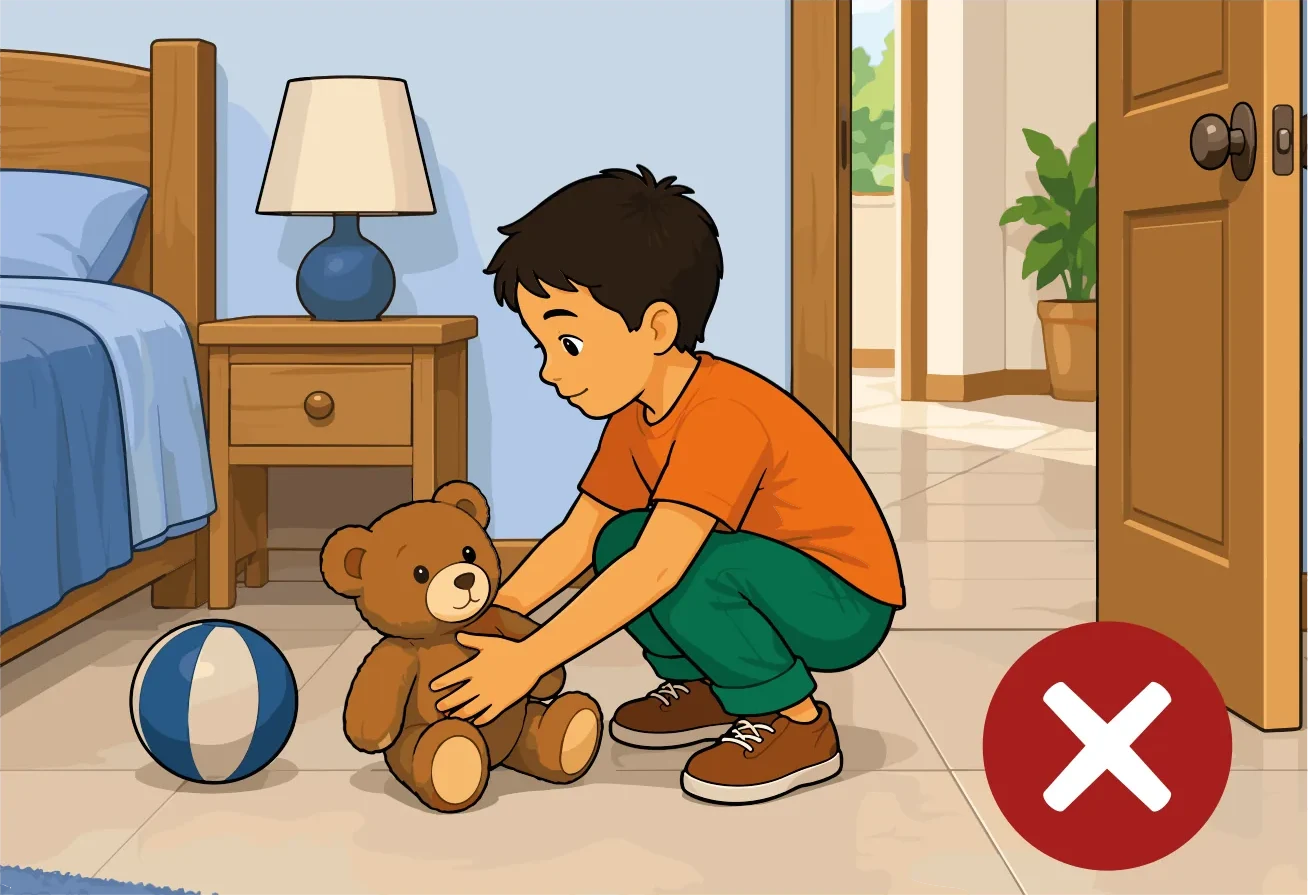
they must never go back for toys or belongings;
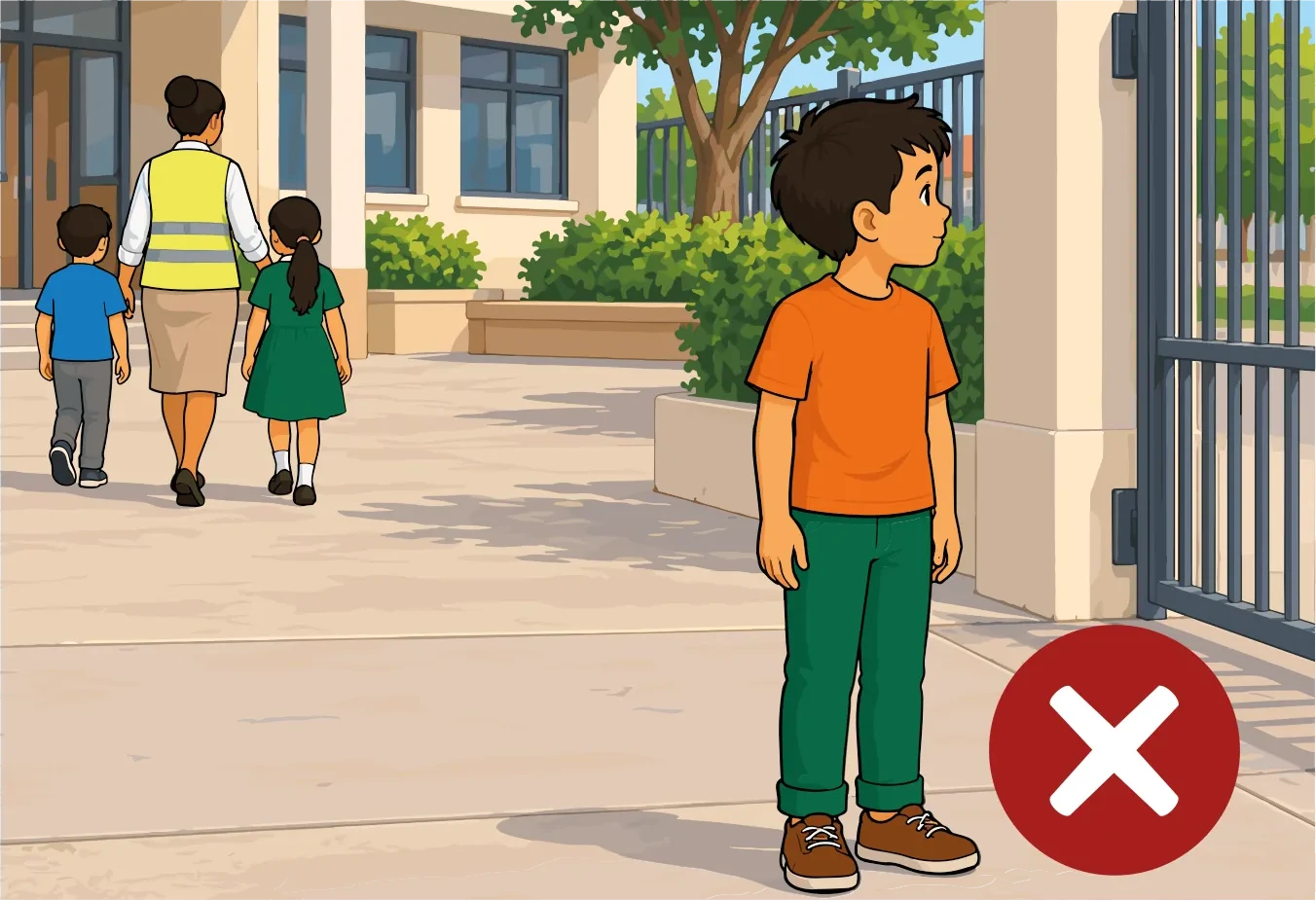
they must never wait for their parents if they are in the care of the school or another adult;
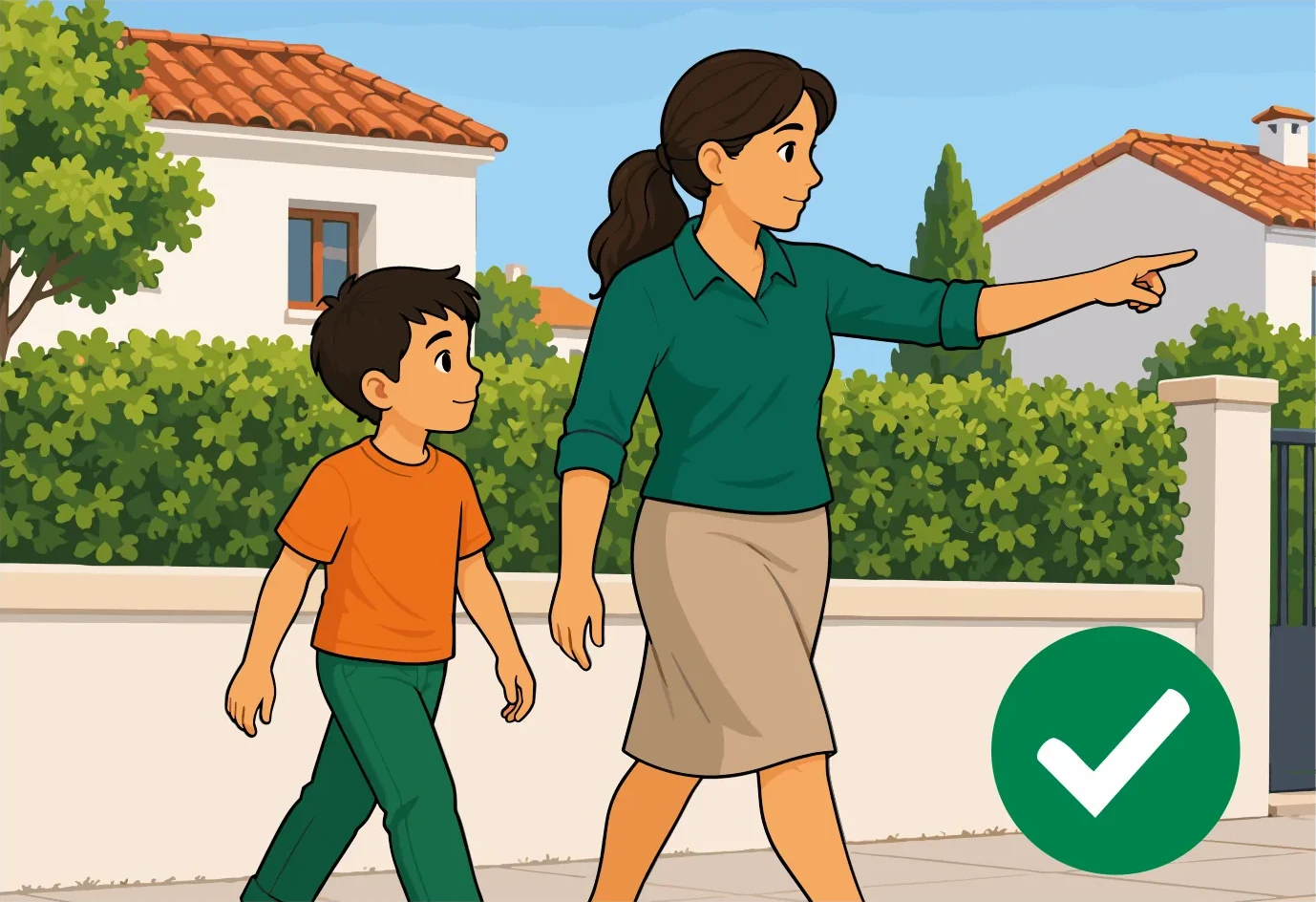
they must follow the instructions of the responsible adult immediately.
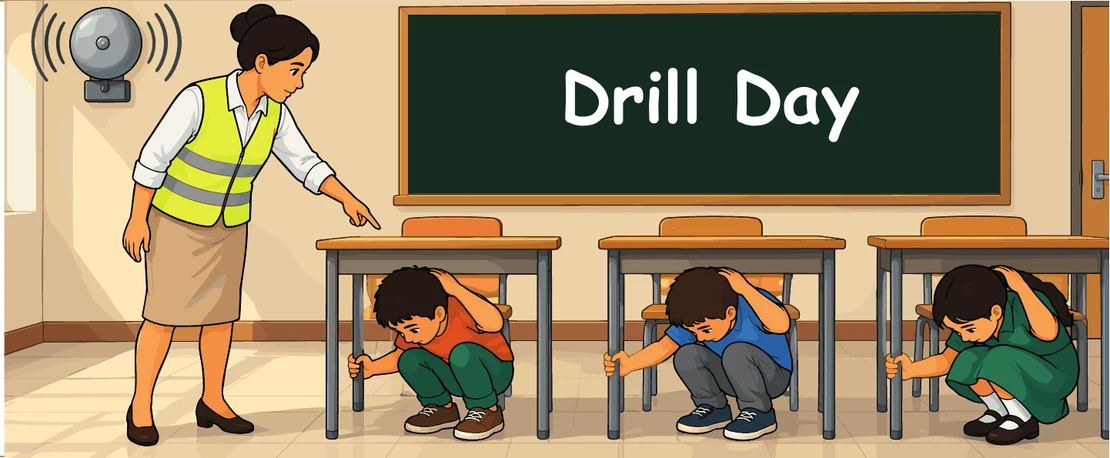
Familiarize them with the alarms
Loud sounds can cause fear or confusion. During drills and educational activities, let children become familiar in advance, when possible, with the sounds of:

sirens;

alarms;

phone alerts;

public address systems.
They must understand that an alarm means act, not hide or freeze.
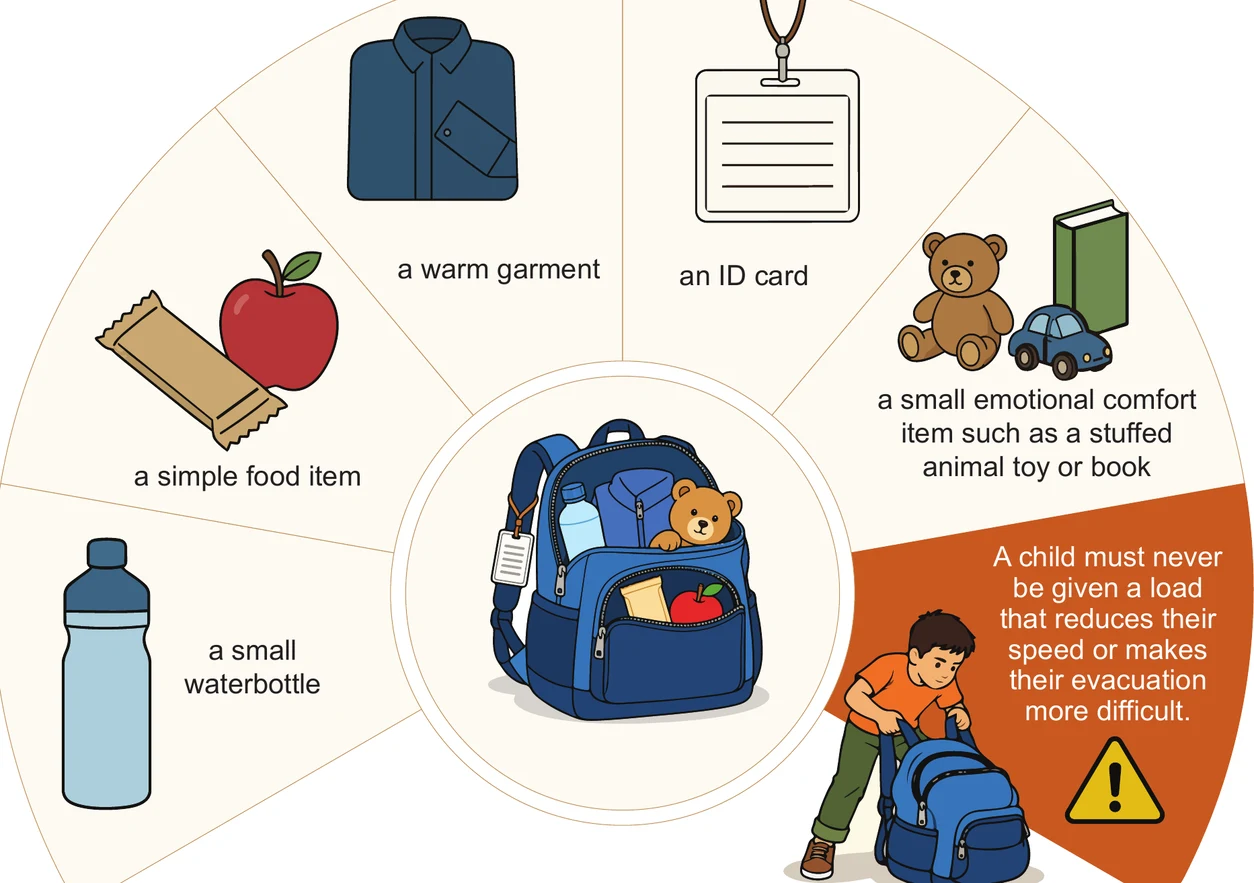
Prepare a light backpack for the child
Children who are old enough and capable enough can have a small, light backpack. It may contain:
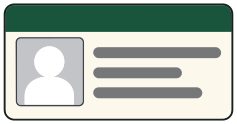
Identification (ID) card
The card should be waterproof and include, where applicable:
- full name;
- age;
- name and phone number of parents, guardians or those responsible;
- external emergency contact;
- important allergies;
- essential medications;
- relevant medical information that could be necessary for their care.
Blood type may be included if it is properly documented, but it does not replace the medical testing necessary before a transfusion.
Practice the route

The child should progressively learn:
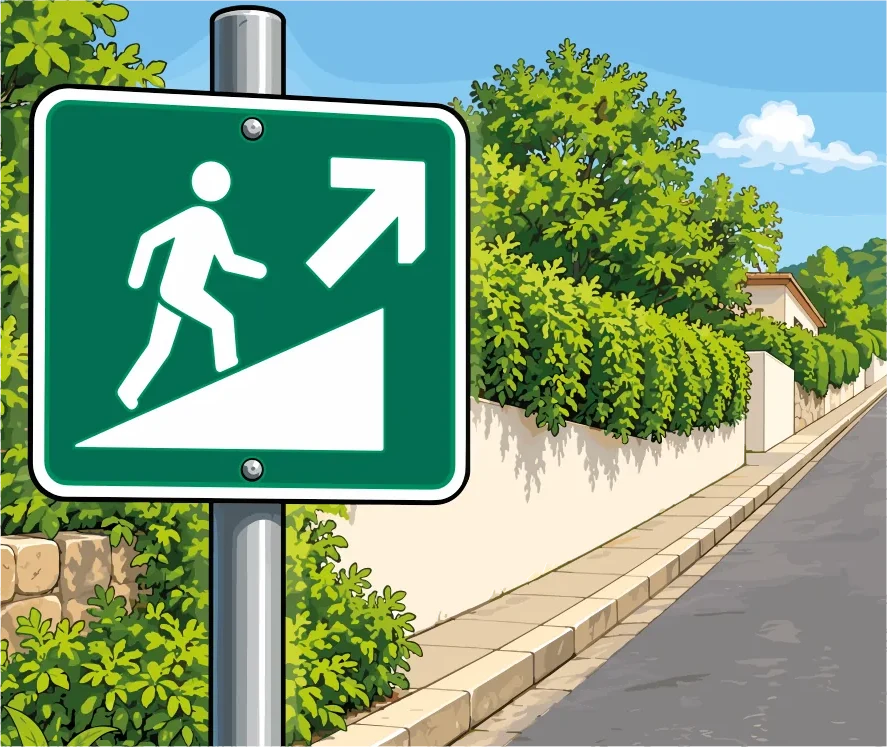
which is the safe direction;
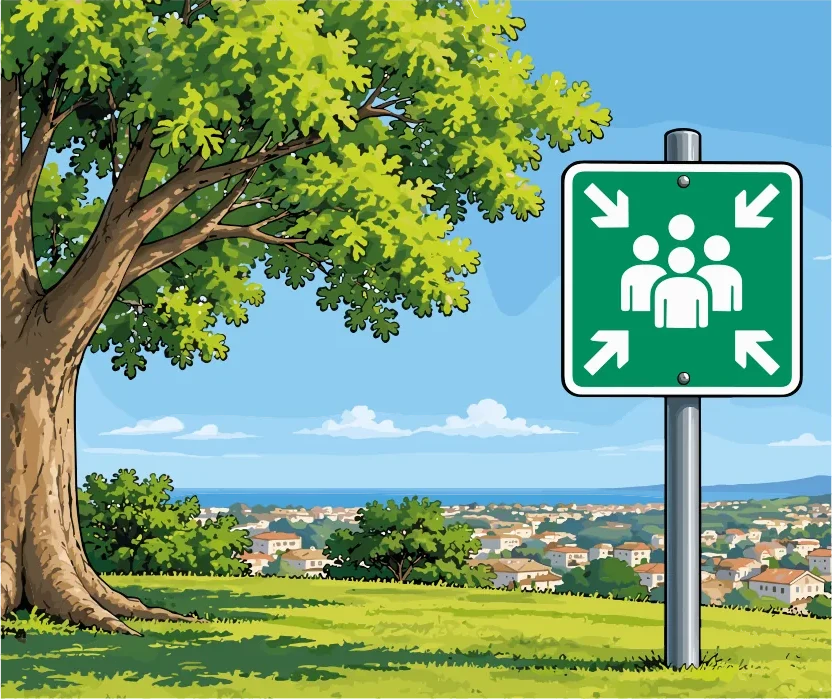
where the meeting point is;
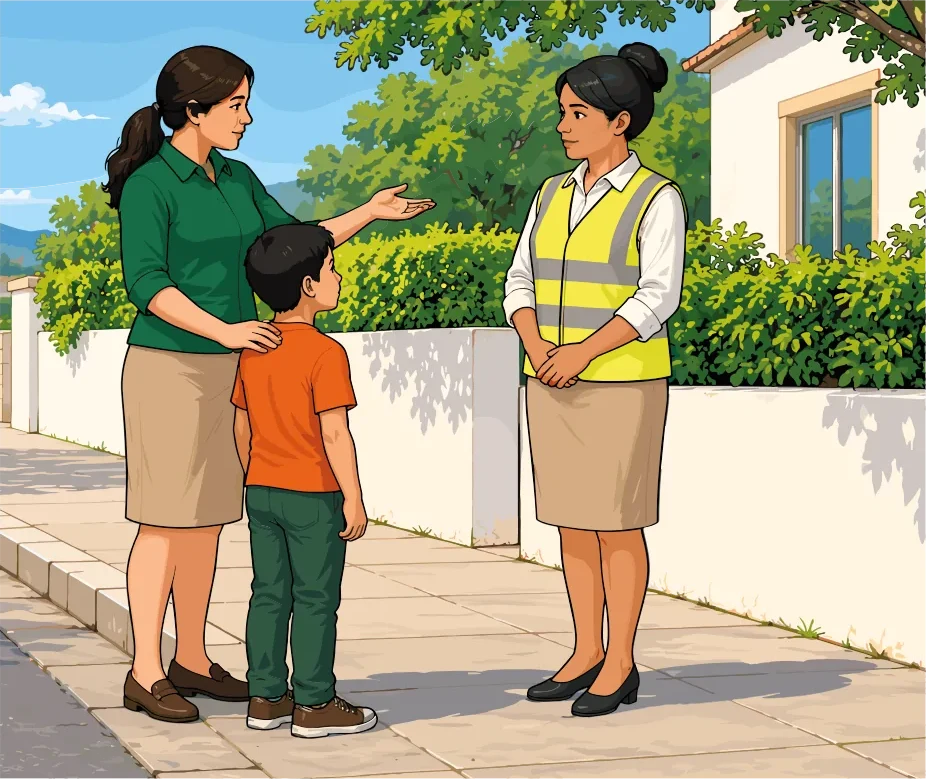
which adults they must obey;
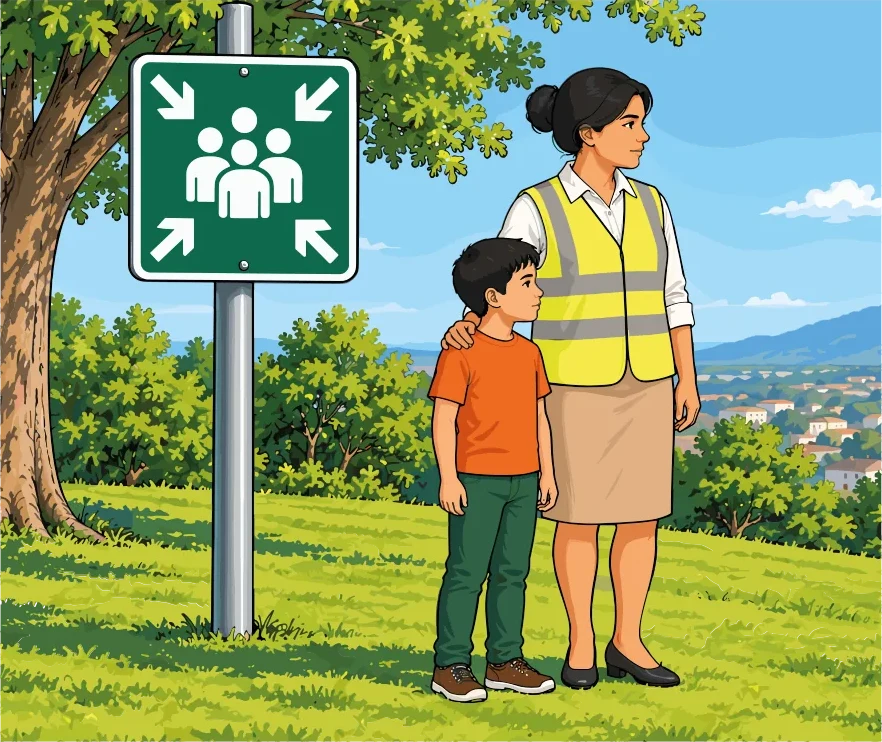
what to do if their parents are not present.
If parents are not present

If the child is at school, daycare, an institution, a sports activity, or under the responsibility of another adult when the emergency occurs:
- They must stay with the group and obey the adult responsible.
- They must not leave a safe zone on their own to look for their parents.
- Parents must know the school or institution's emergency plan in advance, the zone to which minors will be evacuated, and the family reunification procedure.
1.10Babies and young children
Families with babies or children who still cannot move quickly must prepare their carrying system in advance.
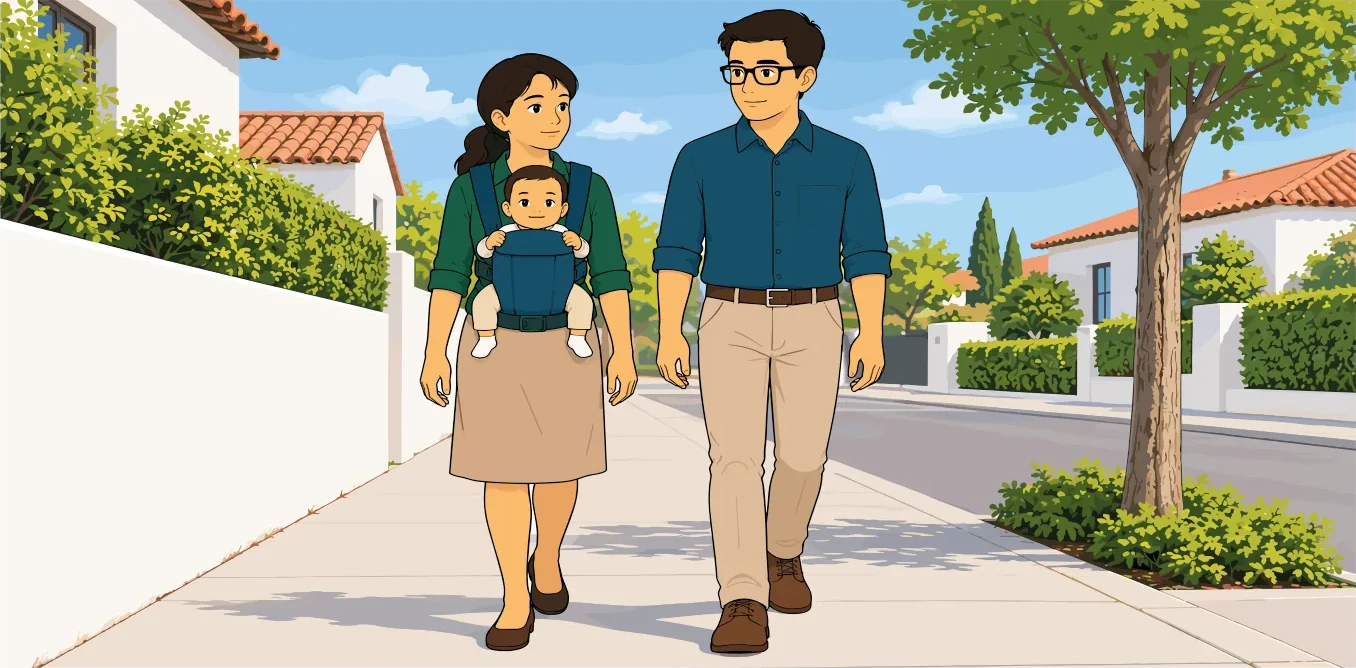
It may be necessary to have:

ergonomic baby carrier;

essential feeding items;

diapers;

wipes;

a change of clothes;

medications;

warm items.
1.11Family drills
Practice the evacuation in advance using the actual system you would use during an emergency. Theoretical preparation is not enough.
Carry out periodic drills from:
The home;
the school, where applicable;
the workplace;

other frequently visited places located within a threat zone.
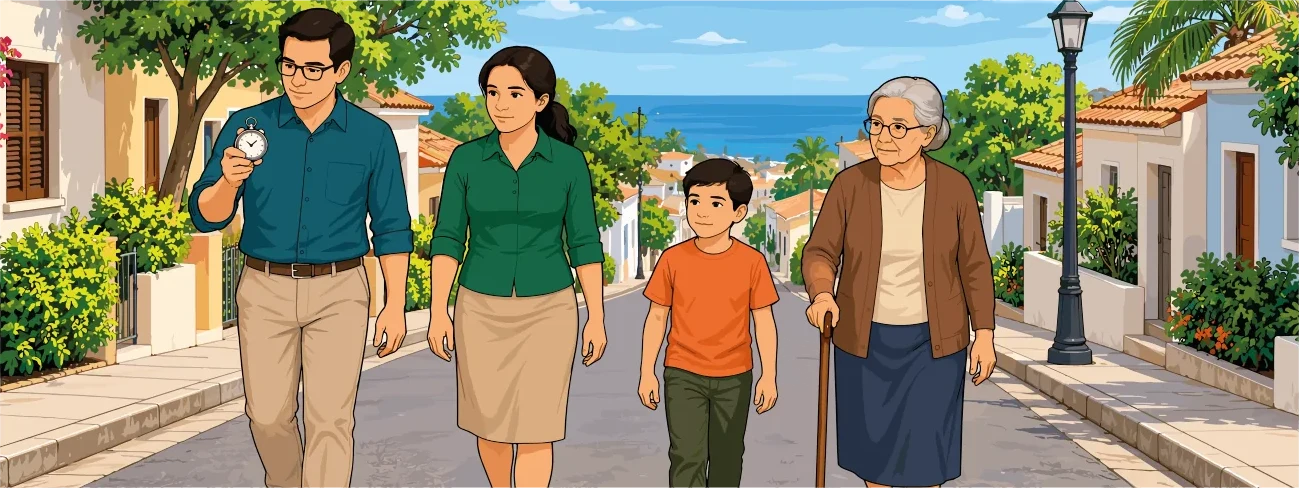

The correct goal is to reach the safe zone within the evacuation time established for the locality, with the greatest possible margin.

Drills should include scenarios such as:
- main route blocked;
- no electricity;
- no communication;
- nighttime evacuation;
- rain;
- presence of children;
- assisting a person with reduced mobility;
- moving pets.
1.12Preparing pets
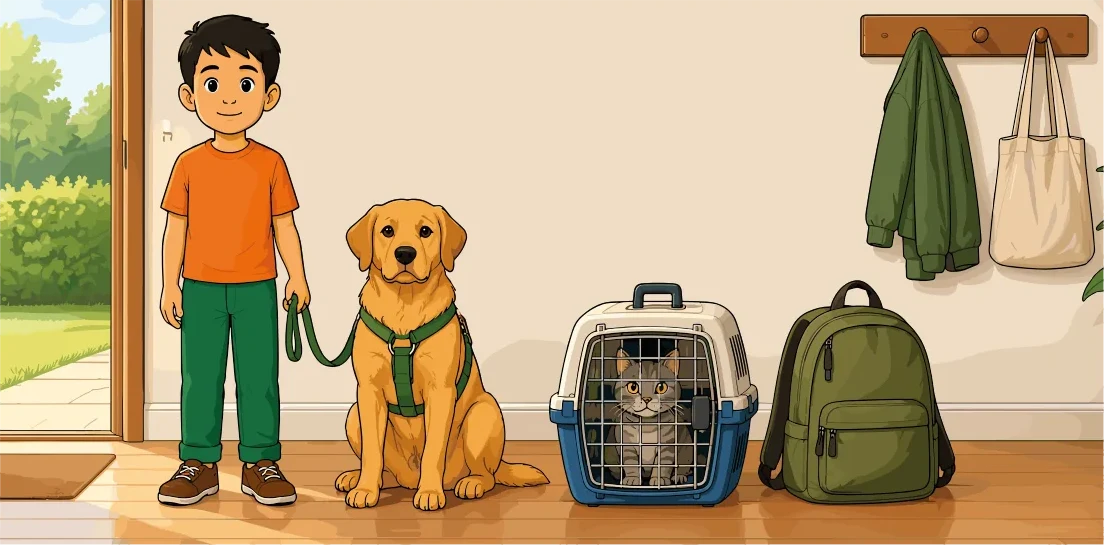
Identification

Pets must have up-to-date identification.
Where applicable, use:
- collar or harness with ID tag;
- name of the person responsible;
- primary phone number;
- alternative phone number;
- microchip, where available and common in the locality.

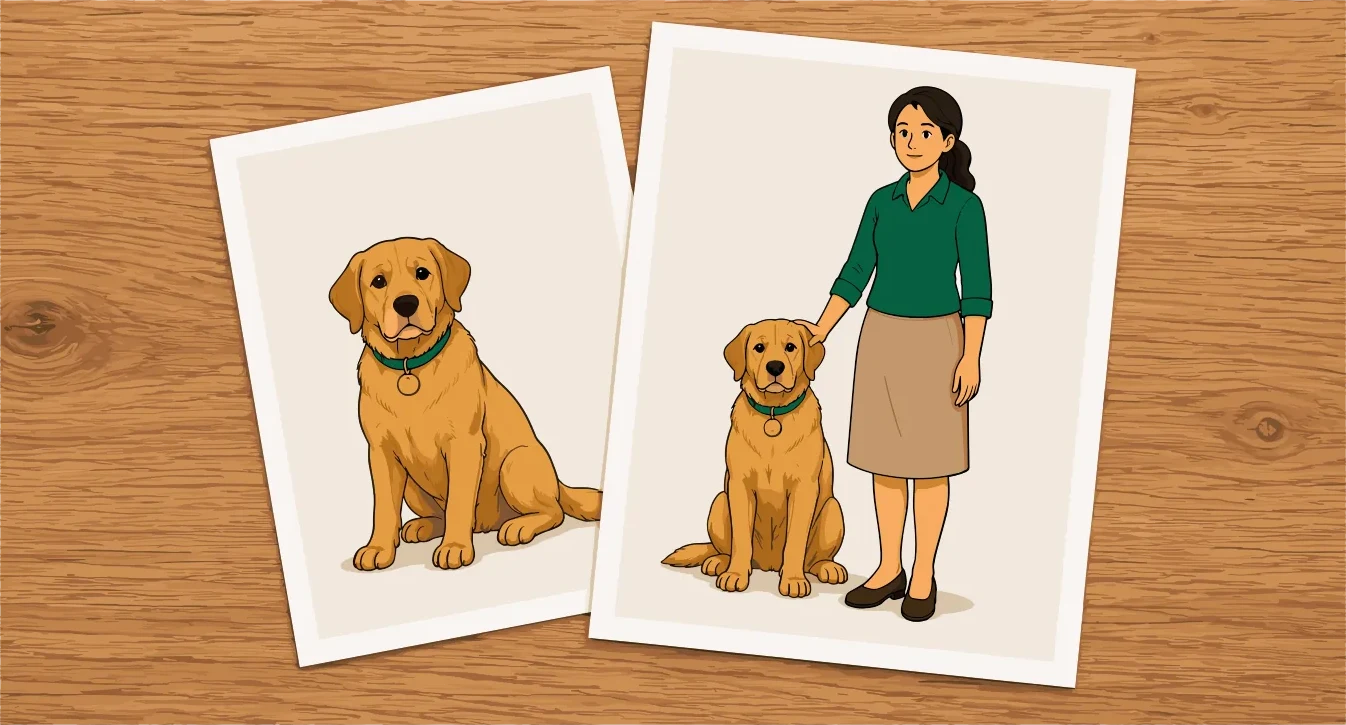
Keep a recent photograph of the pet and, preferably, a photograph of the animal with the person responsible for it.
Keep copies of:
- vaccination certificates;
- treatments;
- medications;
- relevant veterinary information.
Pet kit

It may include:

food

water

folding container

medications

leash

harness
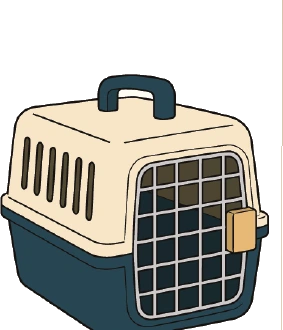
suitable carrier

waste bags

basic hygiene items

small blanket

copy of veterinary records
Quantities must be adapted to the animal's size, species and particular needs.
Training
Train dogs and other animals capable of it, in advance, to:

Wear a harness;
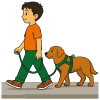
walk on a leash;

get into a carrier quickly;

stay inside it;
carry out the evacuation.

Cats and small animals must be moved in properly closed carriers.
Shelters and meeting points

Find out beforehand which safe zones, lodgings or shelters accept animals and under what conditions.
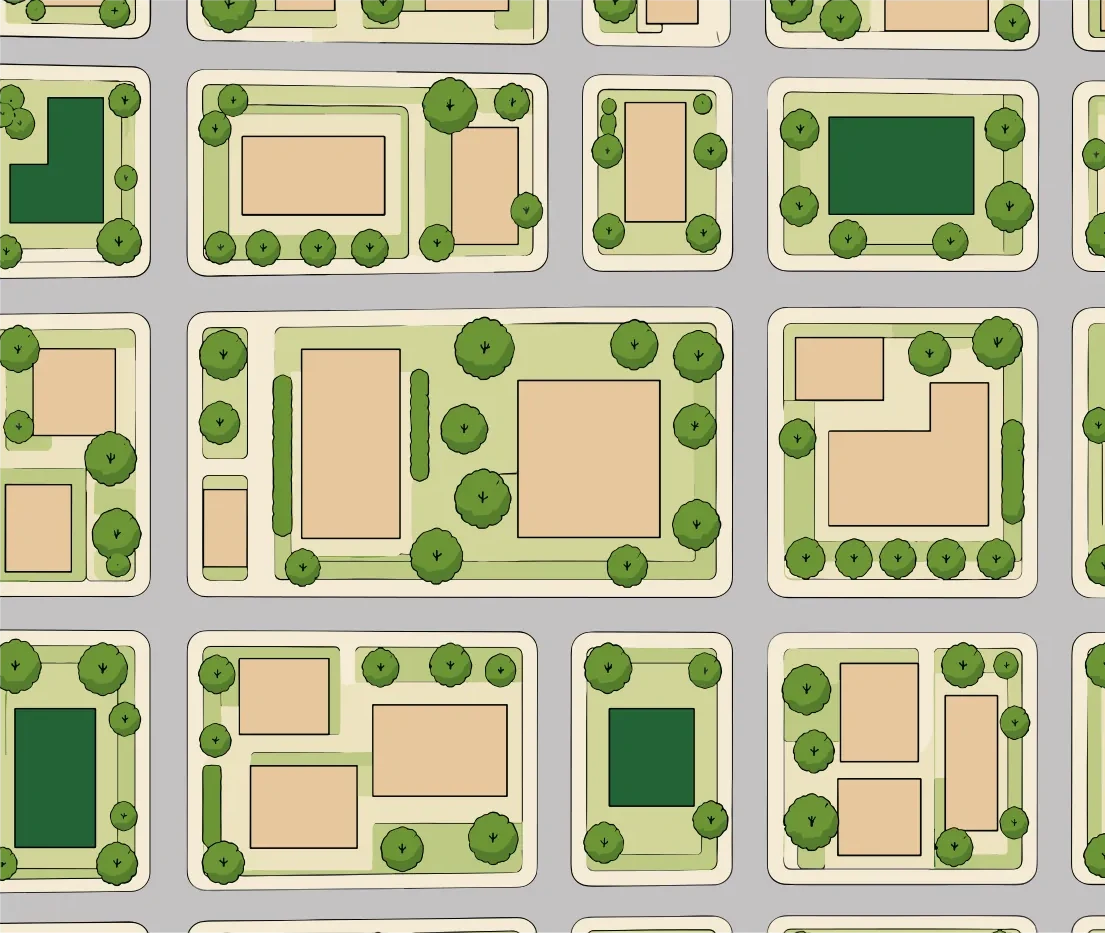
Identify alternatives.
1.13People with disabilities and people who need assistance
Planning must be inclusive
People with disabilities, reduced mobility, medical needs, cognitive or sensory difficulties, must take part, as far as they are able to, in developing their own plan.
You should not wait for the emergency to decide how they will be evacuated.
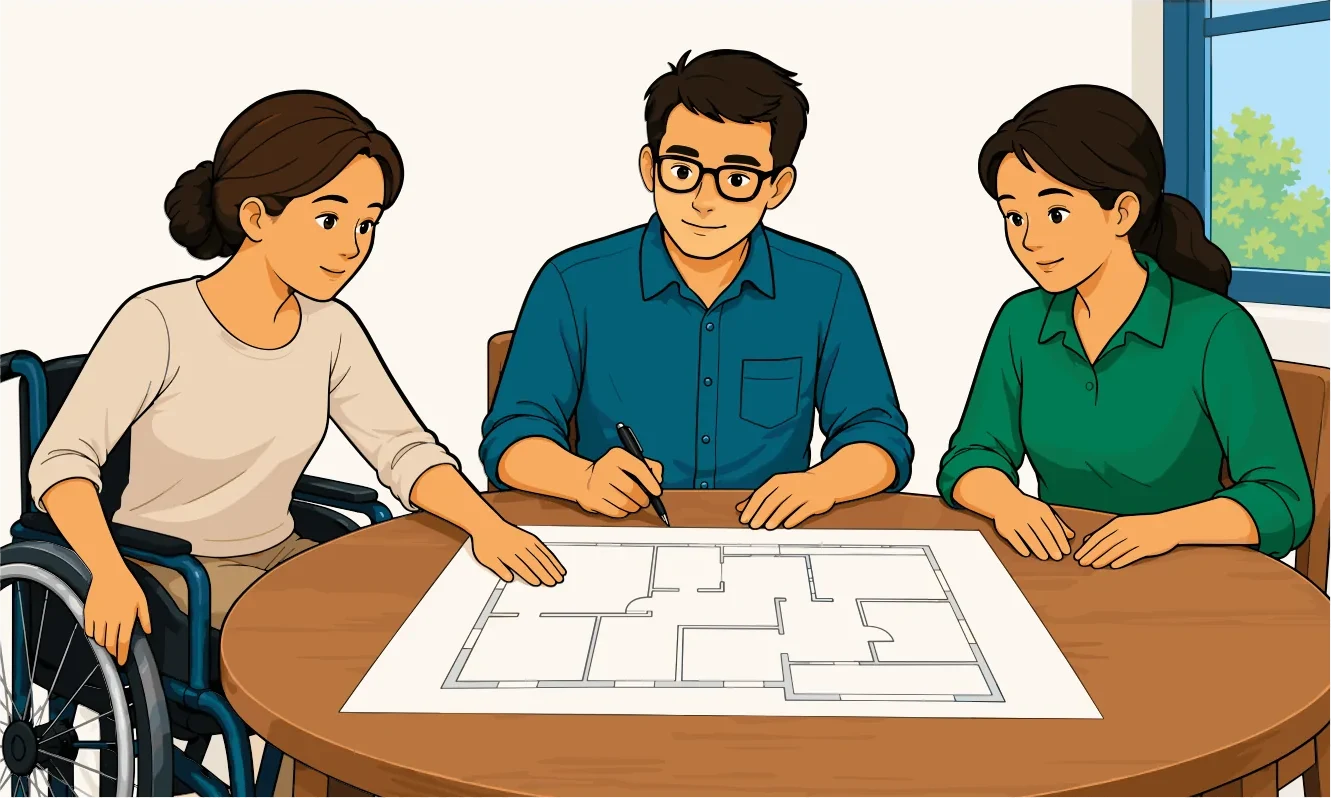
Create a personal support network

Identify several trusted people —family members, neighbors, coworkers or members of the institution— who know: the person's needs; their home or usual location; accessible routes; assistive devices; essential medications; the appropriate techniques for helping them.

Avoid having the plan depend on a single person.
When it is appropriate and consent exists, copies of keys may be distributed among selected members of the network.
 02
02Specialized backpack
In addition to the general items, you may need to include:
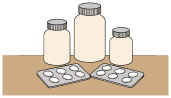
Essential medications in a reasonable quantity according to the medical instructions and storage possibilities;
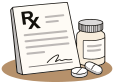
copies of prescriptions;
list of medications and doses;
relevant medical information;
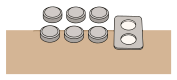
batteries for hearing aids;
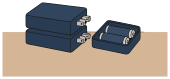
batteries or power systems for assistive devices;
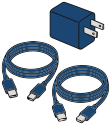
chargers;
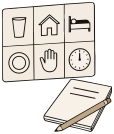
communication items;
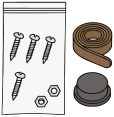
essential spare parts;

tools specific to certain devices.
Information card
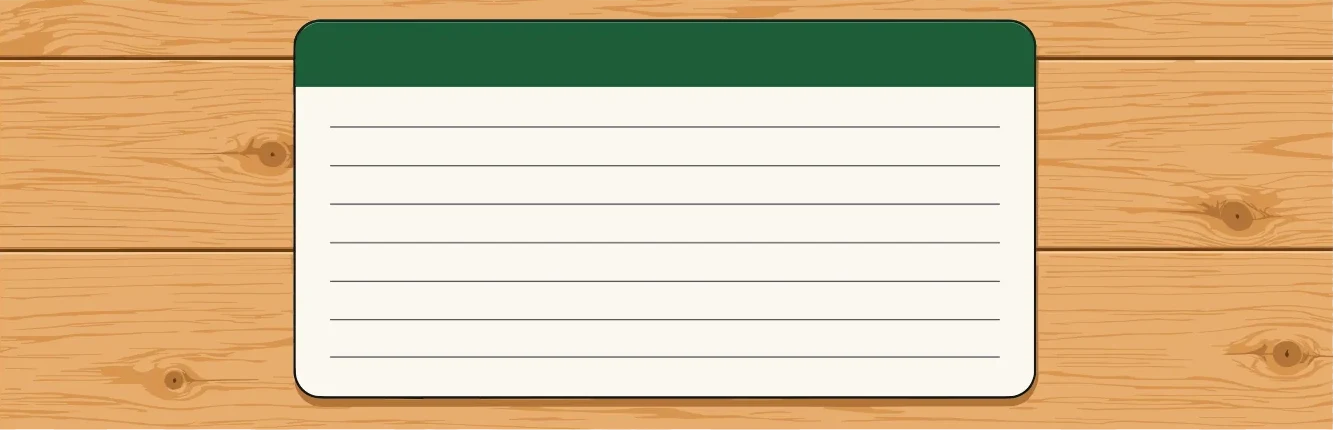
It may include:
- name;
- emergency contacts;
- type of assistance needed;
- allergies;
- medications;
- essential medical information;
- preferred method of communication;
- assistive devices used.
Accessible routes
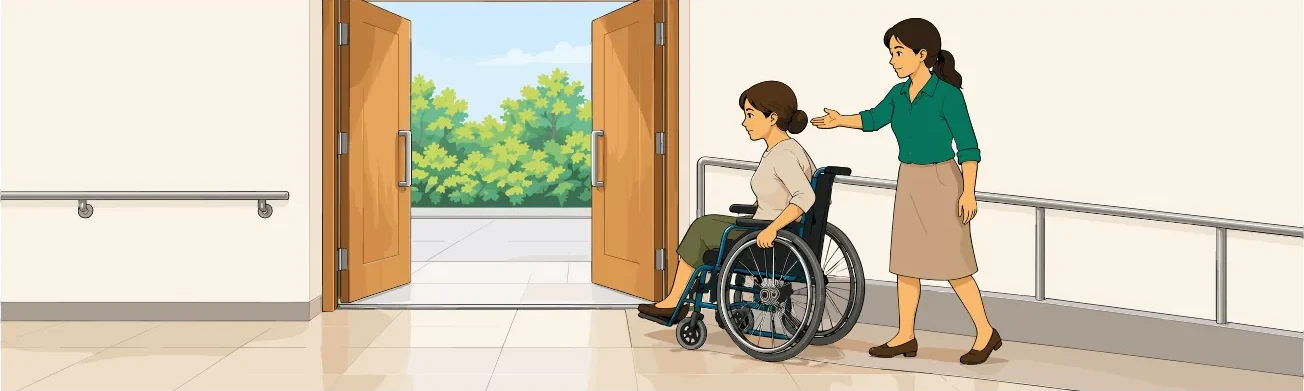
Walk the evacuation route in advance and identify: stairs; slopes; changes in level; narrow paths; uneven terrain; obstacles; places where a wheelchair could become stuck; alternative routes.
People with hearing impairments
Plan redundant alert systems, such as:

Visual alerts,
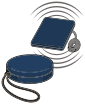
vibration,

text messages,

adapted devices,
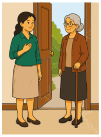
direct notification from members of the support network.
People with visual impairments

When applicable, prepare:

a spare cane;
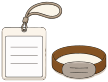
identification items;

assistive devices;
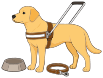
specific plan for guide dogs.
People with intellectual or cognitive disabilities, or neurodivergent people

Progressively practice: what the alert means; what they should bring; who they must stay with; where they must go; what will happen when they reach the safe zone.

When there is sensory sensitivity, add the items regularly used to reduce sensory over-stimulation to the kit, as long as they do not make evacuation more difficult.
1.14Preparing your home in advance
The main goal of preparing the home is to reduce injuries during the earthquake that may precede the tsunami, and to lower secondary risks.
Know the shut-off points
All responsible adults must know how to locate, when applicable:
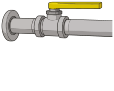
main gas valve

main water shut-off valve

electrical panel
Secure dangerous objects
Properly fasten:
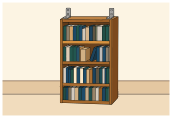
bookcases;
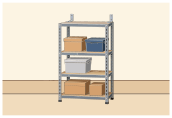
shelving;
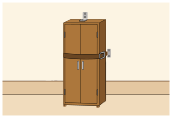
tall furniture;
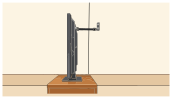
televisions;

appliances; heavy objects;
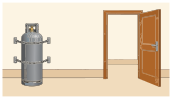
tanks or cylinders that require fastening; items that could fall and block an exit.
Keep clear:

doors;
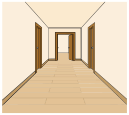
hallways;
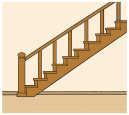
stairs;
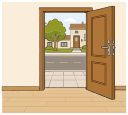
exit routes.
Secure dangerous substances
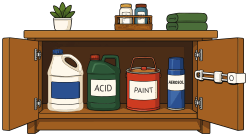
Store fuels, paints, pesticides, chemical products and cleaning substances in accordance with the corresponding safety rules, in properly closed containers and appropriate locations.
Documentation
Protect:
- identification documents;
- insurance policies;
- titles or deeds;
- certificates;
- medical records;
- essential banking information;
- pet documentation;
- important phone numbers and contacts.
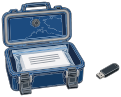
Use waterproof containers and keep secure digital copies when possible.
1.15Vehicle preparation
The vehicle must not be the central element of the evacuation plan against a local tsunami. After an earthquake, using it may be impossible or dangerous, and it can contribute to blocking the routes.
As general preparation:

Keep the vehicle in working condition;

avoid habitually driving with low fuel levels;

keep a physical map;

keep basic emergency items;
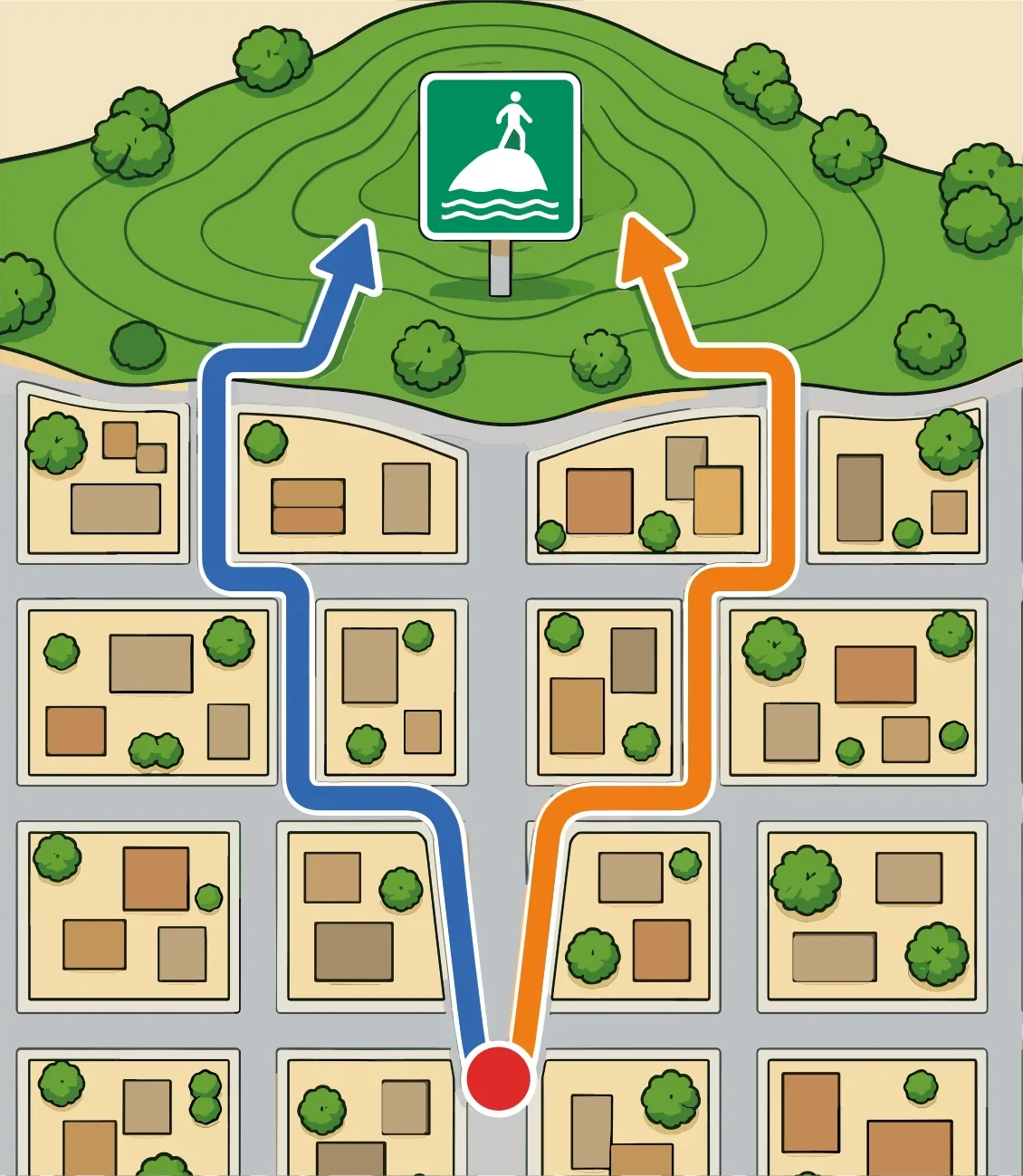
know alternative routes.
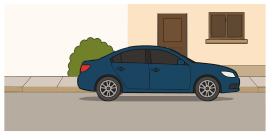
Life takes top priority over the vehicle.
1.16Preparation in schools, temples, clubs, associations and institutions
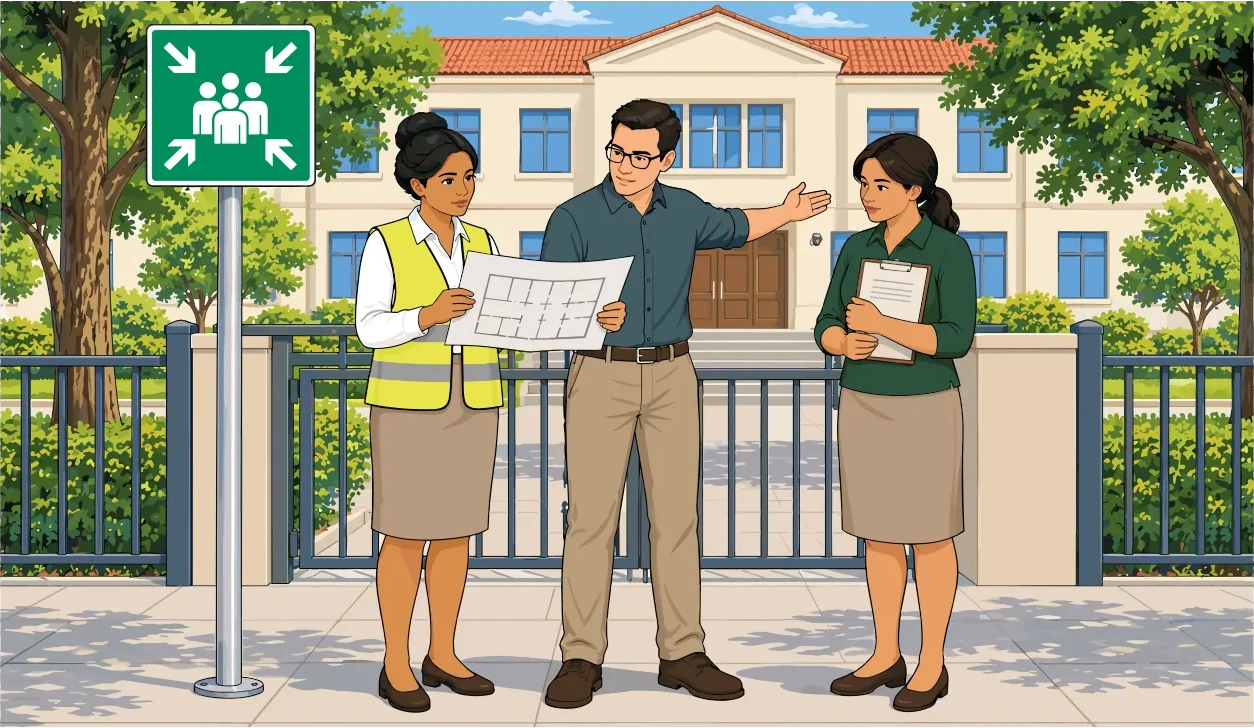
You must determine in advance:
- Who declares or initiates the evacuation;
- who leads each group;
- who checks restrooms and common areas, provided doing so does not delay or endanger their own evacuation;
- who carries the first aid kit and emergency items;
- who assists people with disabilities;
- who accompanies children and older people;
- which is the main route;
- which are the alternative routes;
- where the head count will be taken;
- how family reunification will be carried out;
- how communication with the authorities will take place.
Attendance lists —when necessary— must be easy to transport and must not become a reason to delay evacuation.
1.17Preparing visitors and people unfamiliar with the area
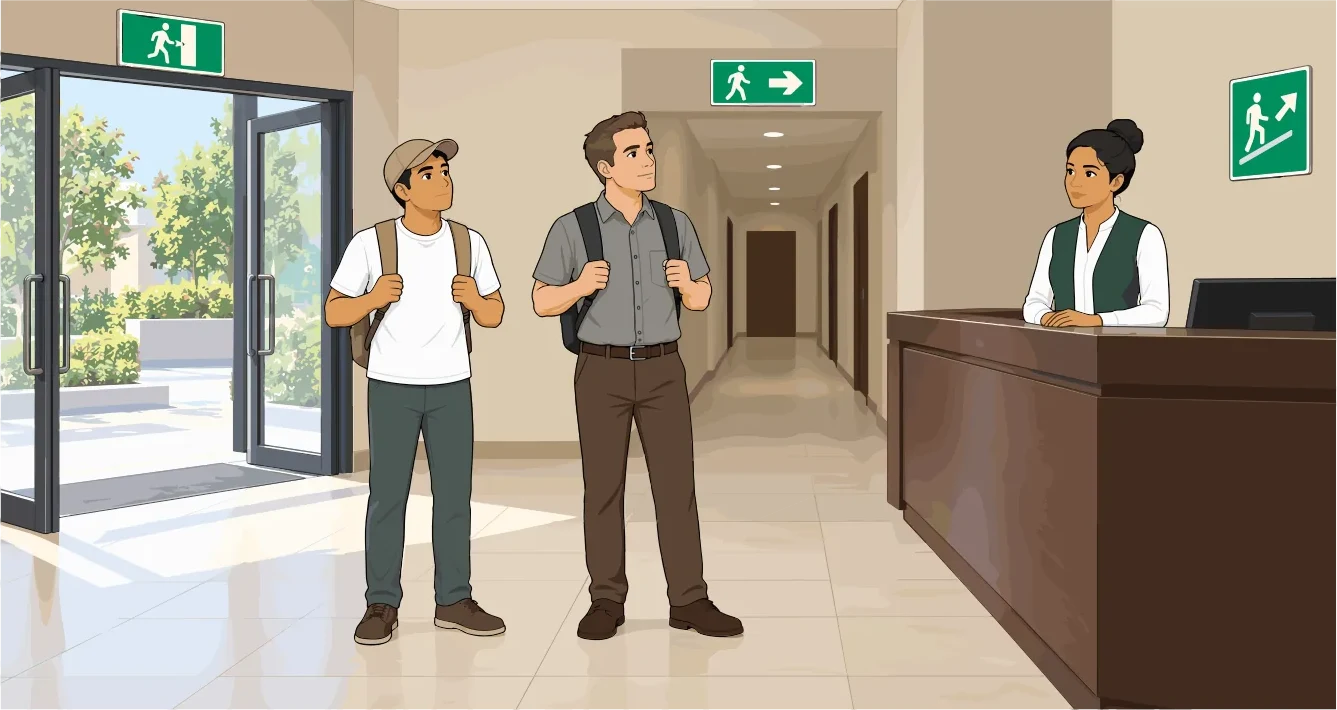
Therefore:
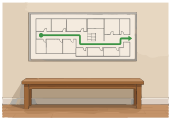
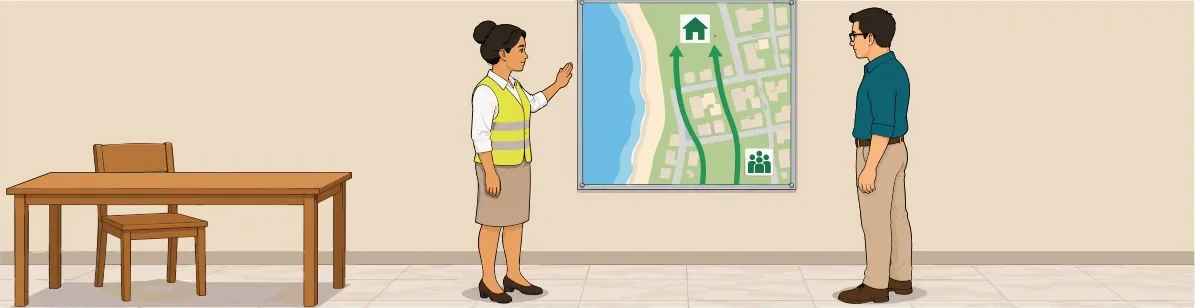
Place evacuation maps in visible locations;
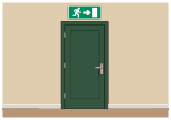
keep the exits clearly marked;
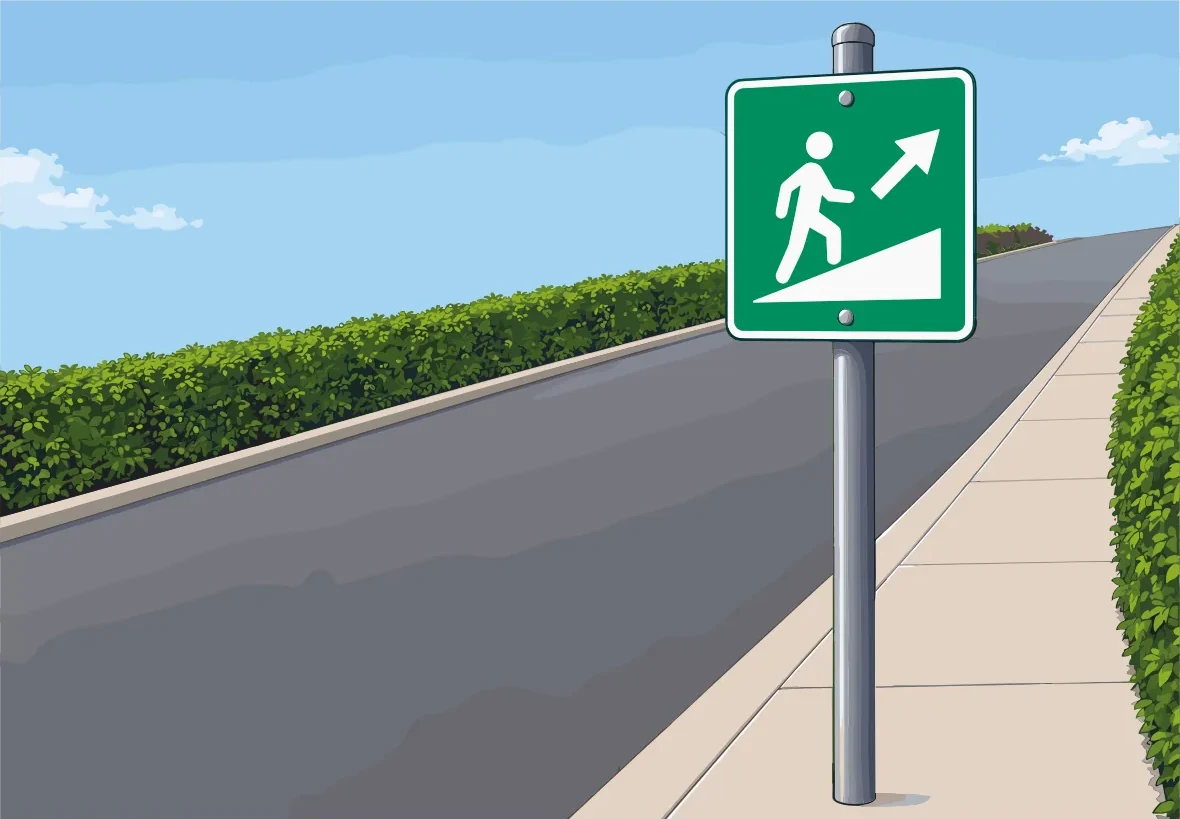
clearly indicate the direction to the safe zone;
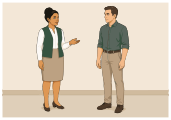
train staff;
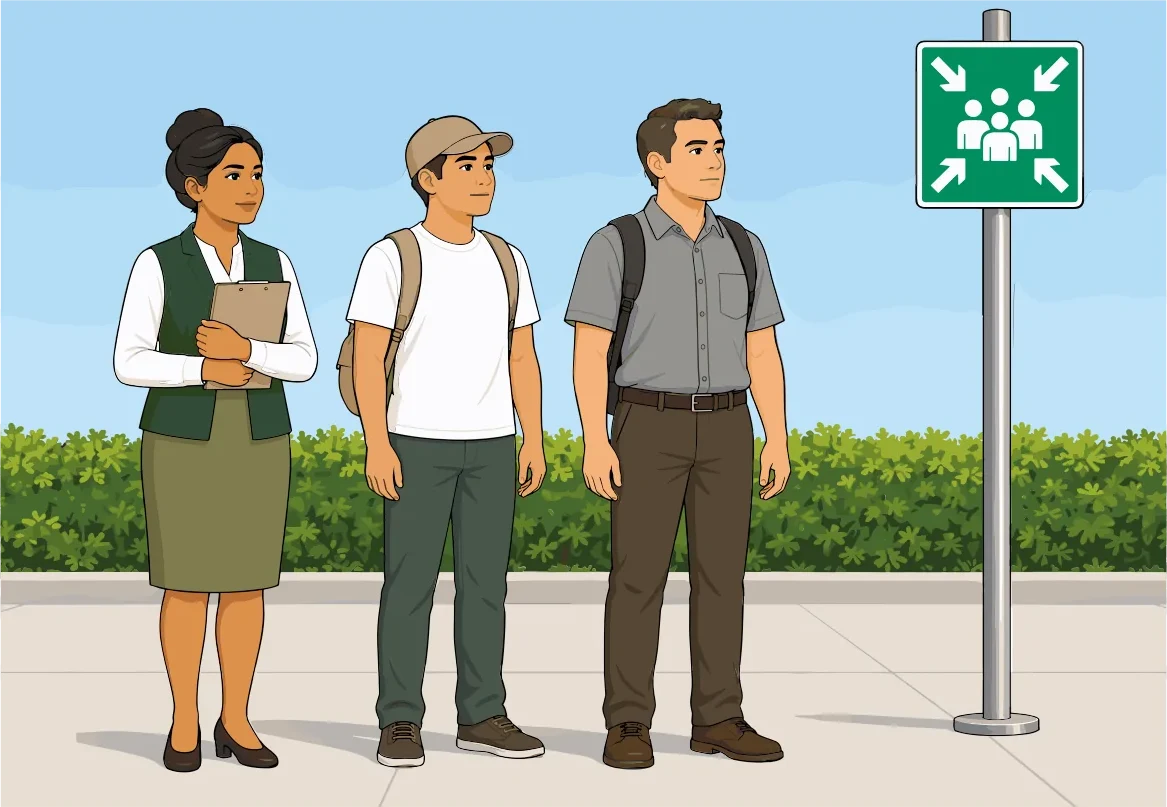
include visitors in drills when possible;
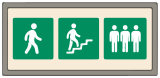
provide instructions that people who do not speak the local language can understand.
1.18Institutional and community drills
Drills must be carried out periodically and must reproduce, under safe conditions, the problems that could arise during an emergency.
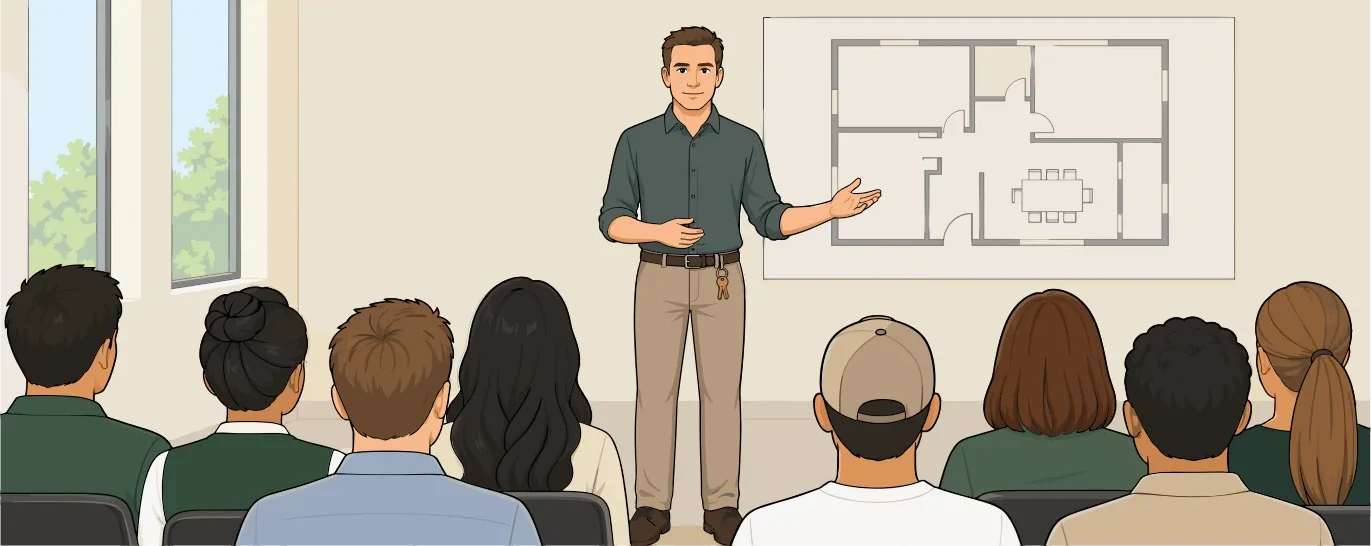
They must make it possible to check:
- total evacuation time;
- alarm operation;
- understanding of instructions;
- capacity of the routes;
- effectiveness of alternate routes;
- assistance to vulnerable people;
- organization of groups;
- head-count procedures;
- internal communication;
- effectiveness of the meeting point.
After each drill, the problems identified must be corrected.
1.19Periodic review of the plan
Review it periodically and whenever:
- you change addresses;
- a child changes schools;
- the workplace changes;
- the evacuation routes are modified;
- the authorities publish new maps;
- new structures are built;
- a member's mobility conditions change;
- older adults, babies or pets join the household;
- phone numbers or contacts change;
- problems are detected during a drill.
1.20Specific preparation for older adults
Older adults may need more time to move, use essential medications, depend on mobility devices, or need assistance to evacuate.
These needs must be addressed before the emergency occurs.
Age alone does not imply disability. Planning must be based on each person's real conditions and needs.
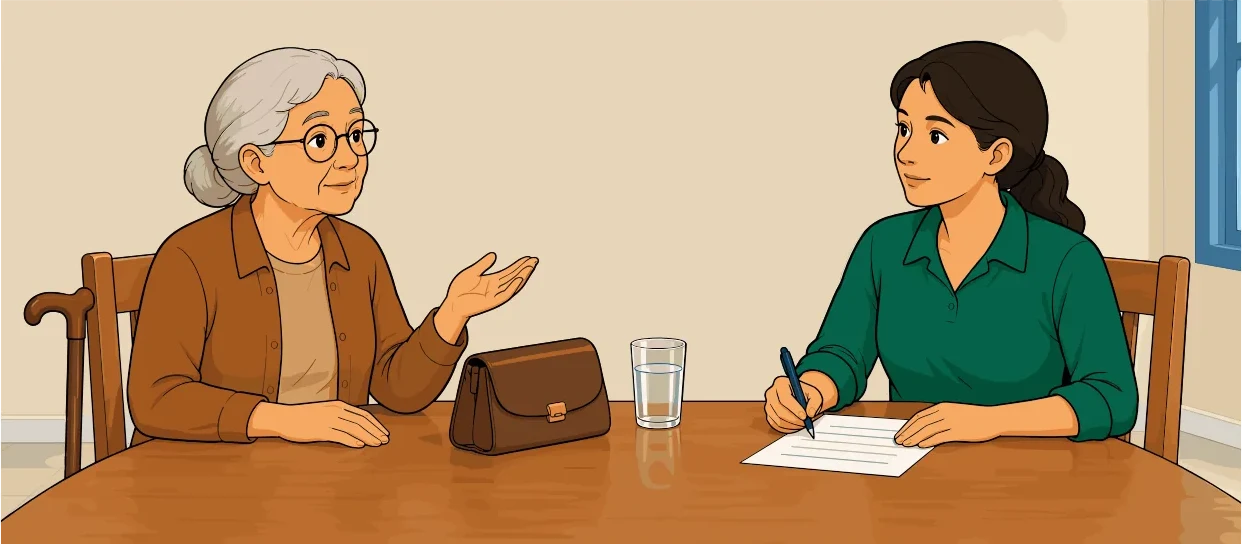
Evaluate needs in advance
Determine whether the person:
- can evacuate independently;
- needs a cane, walker, wheelchair or other device;
- requires help walking;
- uses essential medications;
- needs oxygen or other medical equipment;
- has visual or hearing difficulties;
- can understand and carry out evacuation instructions independently;
- needs permanent assistance;
- can complete the planned route within the time available.
If assistance is required, identify in advance who will be responsible for providing it.
Create a support network
Do not rely exclusively on a single person. Whenever possible, establish a network made up of family members, neighbors, caregivers or trusted people who:
- know the plan;
- know where the person lives;
- know their needs;
- know how to help them;
- know the evacuation route;
- know how to use their mobility devices correctly.
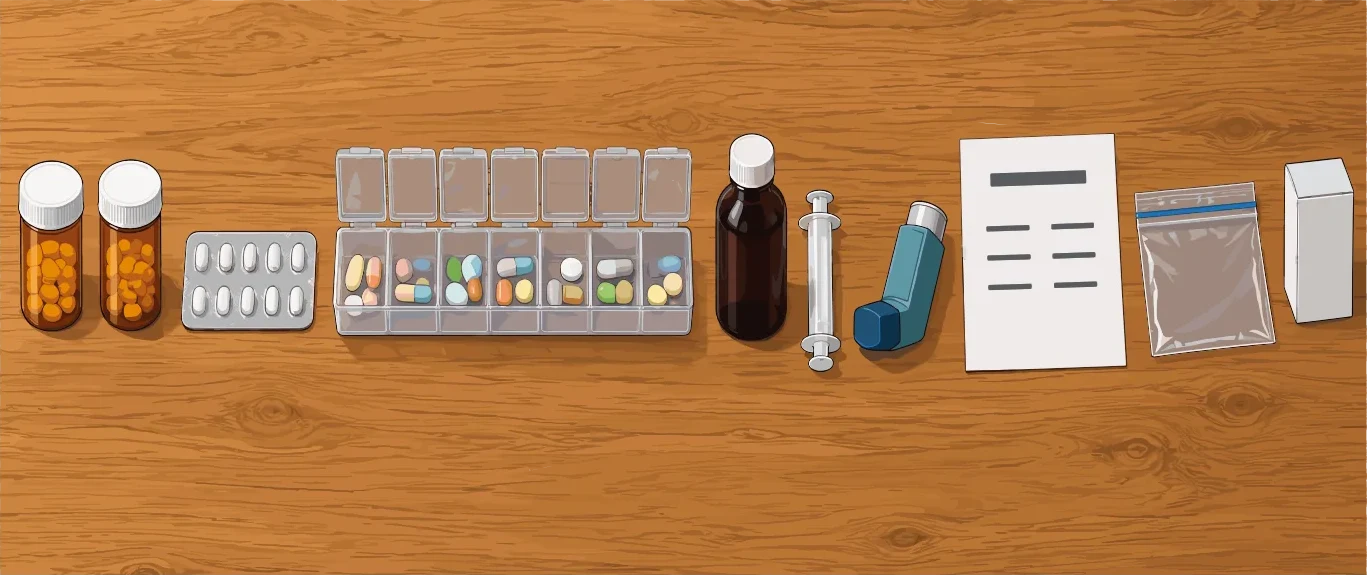
Medications
Keep regular medication organized and maintain an updated list stating:
- name of each medication;
- dose;
- schedule;
- corresponding instructions;
- known allergies;
- details of the doctor or health service, where applicable.
Include a reasonable reserve of medication in the emergency kit, always respecting the medical instructions, storage conditions and expiration dates.
Mobility devices
Canes, walkers, wheelchairs and other essential items must be kept in accessible places.
They must never be left:
- behind furniture;
- stored in rooms that are far away;
- blocked by objects;
- in places that are difficult to reach after an earthquake.
When possible, have appropriate backup items for the person's needs.
Practice the actual assessment
Do not calculate the evacuation time assuming a theoretical speed.
Do the route with the older person, using the devices they will actually need.
If the time required proves excessive, modify:
- the route;
- the safe point chosen;
- the assistance system;
- the number of people assigned to help;
- the evacuation strategy.
The plan must adapt to the person, not the person to the plan.
1.21People with special medical needs
Some people may depend on treatments, medications, electrical equipment or medical devices whose interruption represents a risk. Planning must expressly take these circumstances into account.
Prepare, when applicable:
- medications;
- prescriptions;
- dosage information;
- identification of illnesses or conditions relevant to emergency care;
- batteries;
- suitable alternative power sources;
- chargers;
- medical supplies;
- information on how the equipment operates;
- phone numbers of professionals or medical centers;
- simple instructions for third parties who may need to provide assistance.
If a device requires electricity, consult in advance with the manufacturer, supplier or a qualified professional about what safe alternatives exist for a prolonged power outage.
1.22Preparation for people on the coast for tourism or recreational activities
A significant proportion of the people present in a coastal area may not reside there and, as a result, may be completely unaware of the risk.
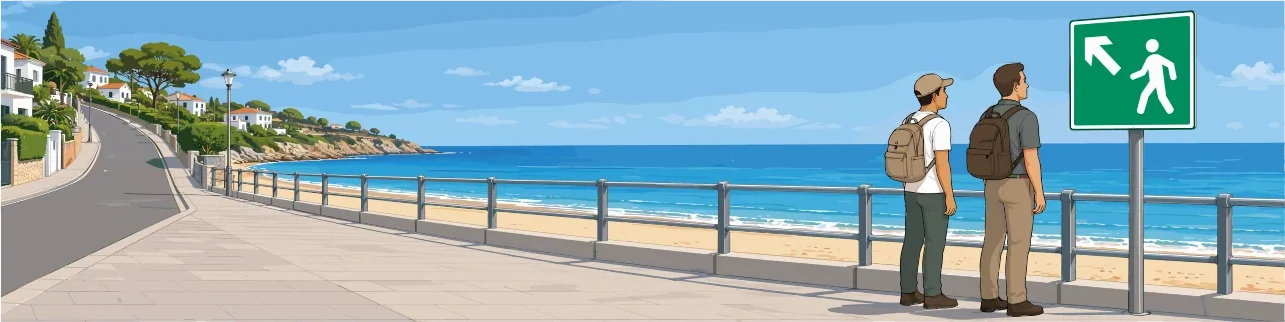
Before visiting a coastal area susceptible to tsunamis:
- find out whether there is a tsunami threat;
- observe the signage;
- identify the evacuation routes;
- locate the safe zones;
- learn the local alert systems;
- identify how to leave the coast on foot.
Especially for those staying at:
- beaches;
- campsites;
- hotels;
- resorts;
- ports;
- marinas;
- fishing areas;
- coastal boardwalks;
- recreational areas near the sea.
1.23Preparation during the night
A tsunami can occur while people are sleeping. For that reason, the plan must also work under conditions of darkness.
Keep next to the bed or in an immediately accessible place:
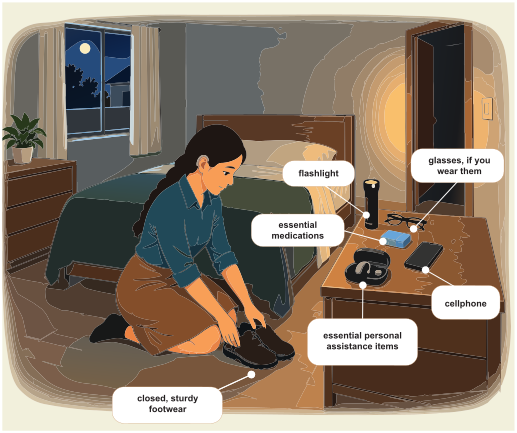
Footwear is particularly important after an earthquake, since there may be broken glass, debris and sharp objects.
Everyone in the household must know the exit even without electric lighting.
1.24Preparation in case of rain, cold or adverse weather conditions
Evacuation can occur in heavy rain, cold, wind, extreme heat or other adverse conditions. The backpack must be adapted to the region's climate.
Consider including:
- lightweight raincoat;
- warm clothing;
- thermal blanket;
- hat;
- sun protection;
- additional water where there is a risk of high temperatures.
1.25Preparing emergency communication
Written information

Every member capable of using it must have a card with: family phone numbers; external contact; meeting point; essential medical information, where applicable.
Do not rely exclusively on contacts stored in the phone.

02 · Power banks
Keep power banks charged and check their function periodically. Keep the necessary cables.

03 · Radio
Have a portable radio powered by batteries or a hand crank. After an emergency, the radio can become one of the most important means of receiving official information.
Responsible use of the phone
In case of an emergency:
- prioritize short messages;
- avoid unnecessary communications;
- conserve the battery life;
- use the official channels available;
- do not spread rumors or information whose source is unknown.
1.26Preparing for the possible loss of electricity, water and utilities
A tsunami can disrupt the following services for prolonged periods:
- electricity;
- drinking water;
- telecommunications;
- transportation;
- medical services;
- businesses;
- cash machines;
- fuel stations;
- sanitation systems.
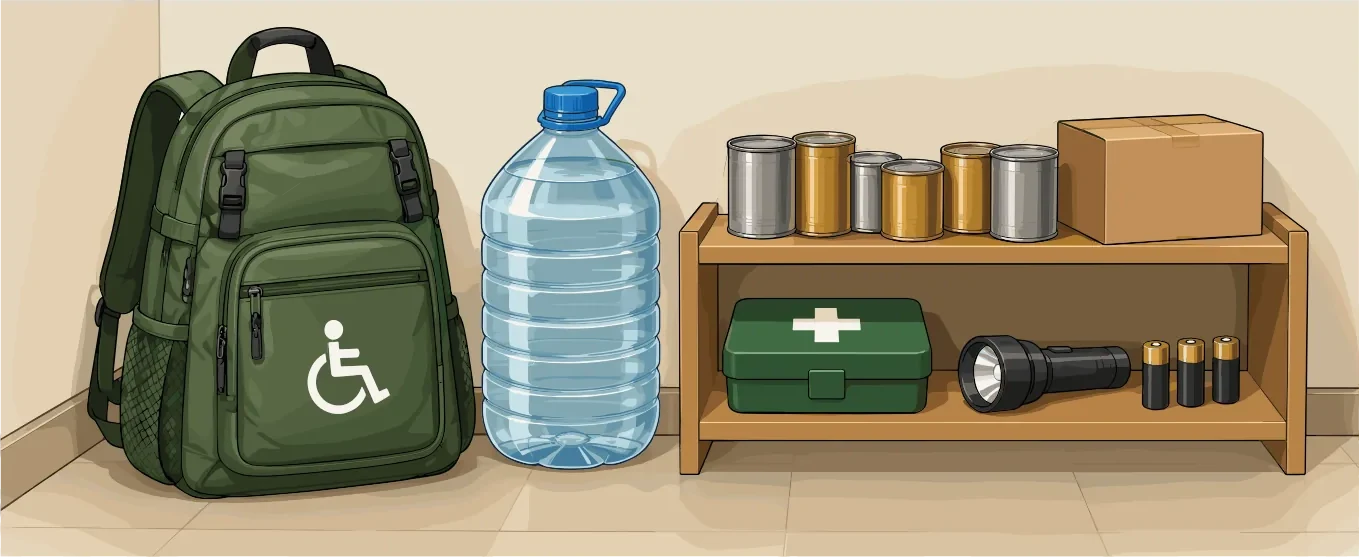
Preparation should not be limited exclusively to the time needed to evacuate.
Every household should also consider how to cover essential needs during the first stages after the disaster.
Keep appropriate supplies of:
- water;
- non-perishable food;
- medications;
- hygiene items;
- lighting;
- batteries;
- items for children;
- supplies for pets;
- the particular needs of dependent people.
1.27Preparing essential documents and information
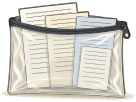
Important documents must be protected before the emergency. Prepare physical copies protected against water and, when possible, secure digital copies. Consider:
- identification documents;
- passports;
- birth certificates;
- property records;
- insurance policies;
- medical records;
- prescriptions;
- vehicle documentation;
- pet documentation;
- important phone numbers.
1.28Basic financial planning
Keep, within your means, a small amount of cash set aside exclusively for emergencies. It is not necessary to carry large sums.
After a disaster, the following may be temporarily out of service:
- banks;
- cash machines (ATMs);
- payment terminals;
- data networks;
- electronic payment systems.

1.29What should not be part of the evacuation plan
Proper preparation also requires identifying behaviors that must be avoided.
Do not plan to:
- go back for belongings;
- wait for family members before evacuating;
- head to the beach to look;
- depend exclusively on a car;
- necessarily wait for a siren;
- necessarily wait for a phone message;
- use elevators as an essential part of a vertical evacuation;
- stop to photograph or film;
- go back for pets if doing so means staying in danger;
- move heavy objects;
- use routes that have never been checked;
- improvise the meeting point during the emergency.
1.30Coordination with schools and educational centers
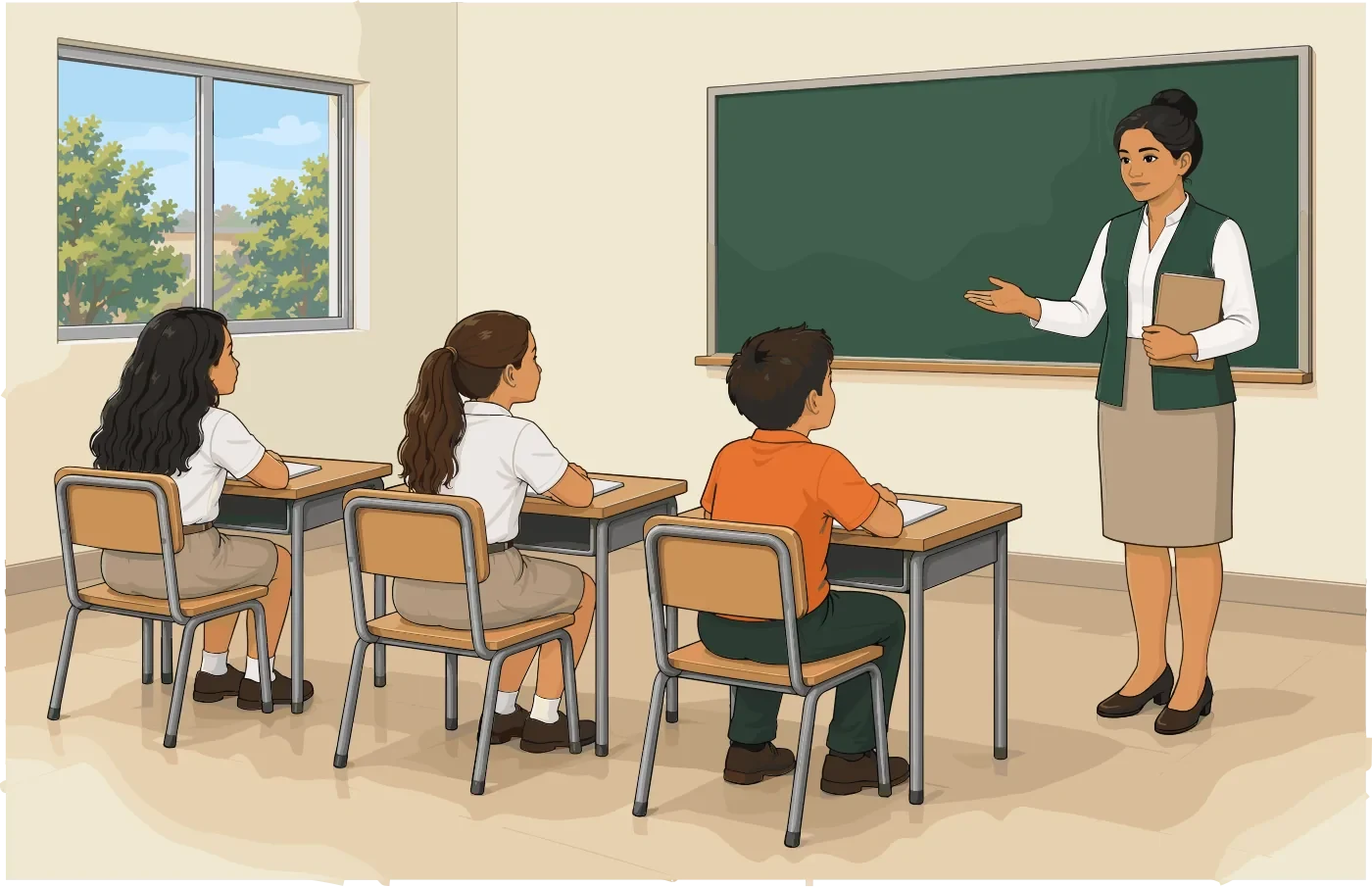
Parents or guardians must know in advance the educational institution's emergency plan.
Find out:
- where students will be evacuated;
- who will be in charge;
- what the meeting point will be;
- how the head count will be carried out;
- how the institution will get in contact;
- where and when families will be able to reunite afterward;
- what the procedure will be if communications do not work.
Children must be taught a fundamental rule: if an emergency occurs while they are at school, they must stay with their teachers or those in charge and follow the institution's plan.
Parents must also avoid exposing themselves by entering a threatened zone to try to reach the school when students are already being evacuated to a safe place.
1.31Responsibilities of institutions, temples, clubs and organizations
Institutions that receive the public have a special responsibility to prepare. The plan must take into account the number and characteristics of the people who may be present.
It is not the same to evacuate:
- an office with few adults;
- a church or temple during a service;
- a club during a children's event;
- an institution with older adults;
- an educational center;
- a facility with people with disabilities;
- an event with a large number of visitors.
Assign roles
Responsibilities must be established in advance. For example:
- overall evacuation leader;
- area leads;
- leads for groups of children;
- leads for assisting people with disabilities;
- first aid kit lead;
- communications lead;
- head-count lead at the safe zone.
Keep exits clear
Evacuation routes must never be used for storing:
- boxes;
- furniture;
- equipment;
- materials;
- merchandise;
- sports items;
- religious or ceremonial objects;
- extra chairs;
- waste;
- vehicles;
- anything that could obstruct circulation.
Signage
Routes must be clearly identified. Where applicable, place:

Maps.

Arrows.

Exit indicators.

Location of the safe point.

Short, easily understood instructions.
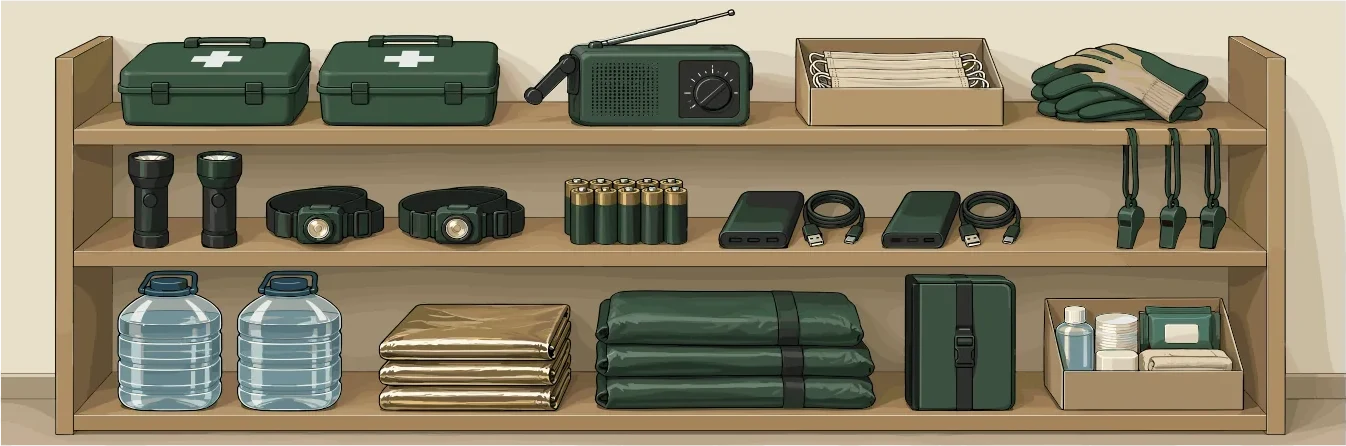
1.32Institutional emergency equipment
Every institution must adapt its resources to the number of people, the characteristics of the premises and local risks.
Consider having:
- first aid kits;
- flashlights, preferably head-mounted;
- spare batteries;
- AM/FM portable radio, battery-powered or hand-crank;
- whistles;
- charged power banks;
- charging cables;
- masks suitable for dusty environments;
- basic hygiene items;
- emergency water;
- thermal blankets;
- sturdy bags;
- protected copies of essential institutional information;
- emergency lists and phone numbers;
- gloves;
- specific items needed for the institution's activities.
1.33After the drill: evaluate and correct
Every drill must end with an evaluation.
Ask:
- Did everyone recognize the alarm?
- Did everyone know what to do?
- Did the evacuation begin quickly?
- Did anyone go back for belongings?
- Did any exit become congested?
- Was the route adequate?
- Did obstacles appear?
- Were people with disabilities able to evacuate?
- Did the children follow the instructions?
- Did the communication system work?
- Was the head count able to be conducted?
- Did the safe point have enough capacity?
- What would happen if the route used were blocked?
1.34Checklist: before a tsunami
Every family or institution located in a threat zone should be able to answer YES to the following questions:
- Do we know whether we are inside a zone susceptible to tsunami?
- Do we know the official evacuation map?
- Do we know where the safe zone begins?
- Do we know our main route?
- Do we have an alternate route?
- Have we walked those routes on foot?
- Do we know how much time we need to evacuate?
- Do we recognize the natural tsunami signs?
- Do we know the official alerts for our locality?
- Do we know what to do if we do not receive any electronic alert?
- Do we have a family meeting point?
- Do we have an external contact?
- Do the children know the plan?
- Do we know what each child will do if their parents are not present?
- Do older adults have assistance planned?
- Do people with disabilities have an accessible plan?
- Are essential medications prepared?
- Are assistive devices accessible?
- Do pets have identification and a transport system?
- Do we have the emergency backpack ready?
- Do we check its contents periodically?
- Do we have a flashlight and radio independent of the electrical grid?
- Do we also have contact information on paper?
- Are the exits permanently clear?
- Are furniture and heavy objects secured?
- Do we know how to evacuate at night?
- Have we conducted drills?
- Do we know what to do if the main route is blocked?
- Does everyone understand that they must not go back for belongings?
- Does everyone know that a natural sign can require evacuating without waiting for further instructions?
1.35Decision rule
In the case of a local tsunami, there may not be sufficient time to receive, verify, or wait for additional information. For that reason, a simple rule must be learned before the emergency:
1.36Fundamental rules everyone must memorize
KNOW YOUR RISK ZONE.
Find out in advance whether you live, work, study or stay within a zone susceptible to tsunami.
KNOW YOUR ROUTE.
Know how to walk to a safe zone and have an alternative.
RECOGNIZE NATURAL SIGNS.
A strong or prolonged earthquake, a sudden and abnormal change in the sea, or an unusual roar from the ocean can mean danger.
DO NOT WAIT FOR AN OFFICIAL ALERT AFTER A NATURAL SIGN.
Evacuate as soon as you can move safely after the shaking.
MOVE AWAY FROM THE SEA.
Head for high ground or as far inland as the local plans indicate.
DO NOT GO TO WATCH THE TSUNAMI.
Do not go near beaches, ports, river mouths or coastal areas to look, photograph or film.
PLAN TO EVACUATE ON FOOT.
The vehicle can get stuck and block the evacuation.
PREPARE THE WHOLE FAMILY.
Children, older adults, people with disabilities and those responsible for pets must know the plan.
PRACTICE.
A route that has been learned and rehearsed is completed more quickly and safely.
DO NOT RISK YOUR LIFE FOR PROPERTY.
Do not go back for documents, money, vehicles or belongings.
FOLLOW THE AUTHORITIES' INSTRUCTIONS.
Each locality's official maps, routes, evacuation zones and procedures take priority over general recommendations.
REMEMBER: PREPARING BEFOREHAND SAVES MINUTES WHEN EVERY MINUTE CAN SAVE A LIFE.
1.37The main goal of preparing
Preparing for a tsunami does not consist solely of having a backpack. When an emergency begins, it is not the moment to design the plan: it is the time to execute it. For that reason, preparation must be done now, reviewed periodically, and practiced until every member of the family, institution or community clearly knows their role.
- BEFORE THE TSUNAMI: KNOW, PLAN, PREPARE AND PRACTICE.
- DURING THE THREAT: ACT WITHOUT DELAY.
- LIFE IS ALWAYS THE PRIORITY.
Downloads
© 2026 by Centro del Reino de Paz y Justicia is licensed under Creative Commons Attribution-NonCommercial-NoDerivatives 4.0 International (CC BY-NC-ND 4.0). To view a copy of this license, visit creativecommons.org/licenses/by-nc-nd/4.0.