Phase 3: After — Staying safe, recovering, and returning without risk
The fact that the water has receded does not mean the danger is over.
After the initial impact of a tsunami, serious threats can continue for hours and, depending on the scale of the disaster, for days or longer.
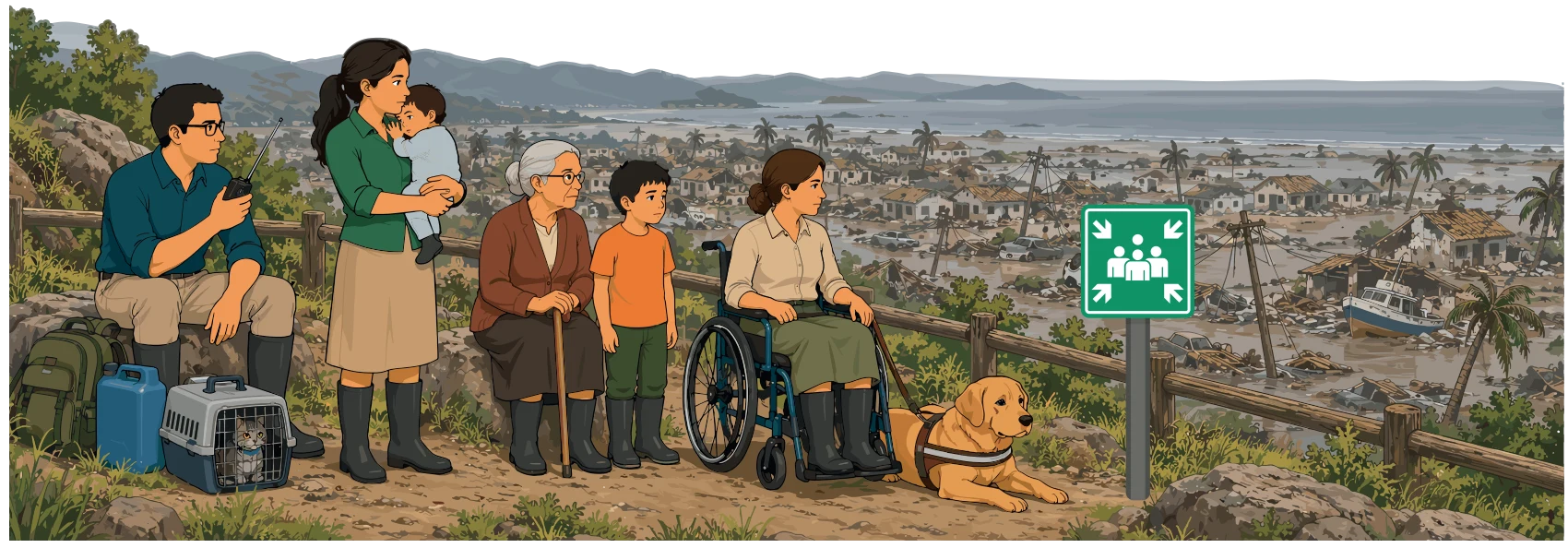
These include:
- New waves and currents associated to the tsunami;
- aftershocks from the earthquake that may have caused the event;
- flooding;
- weakened buildings and structures;
- damaged roads and bridges;
- fallen electrical wires;
- gas leaks;
- fires;
- contaminated water;
- wastewater;
- chemical substances;
- glass, metal and other debris;
- wounds and infections;
- disruptions to water, electricity and communication services.
During this phase, the priorities are:
Remain outside the danger zone until the authorities authorize the return;
attend to urgent medical needs;
avoid further accidents and exposure to contamination;
consume only water and food considered safe;
stay informed through official sources;
provide protection specially to children, elderly people, people with disabilities and others who need assistance;
return and begin recovery efforts only when conditions allow it.
3.1Do not return until the authorities say it is safe
This is the main rule after a tsunami:
A tsunami does not necessarily consist of a single wave.
Multiple waves and strong currents can occur over a prolonged period, and a later wave may be larger or more destructive than an earlier one.
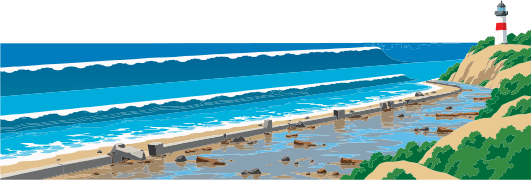
Therefore:
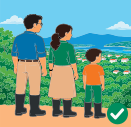
Stay in the safe zone;
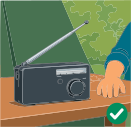
keep up with official information;
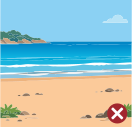
do not go down to the beach;
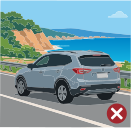
do not travel on coastal roads;
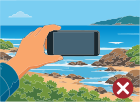
do not go closer to observe or record the phenomenon;

do not go onto docks or damaged structures;
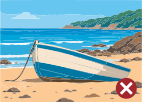
do not try to recover boats or property.
3.2Do not use a fixed height or distance as the only safety criterion
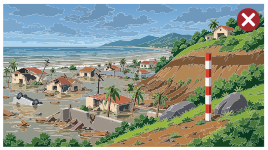
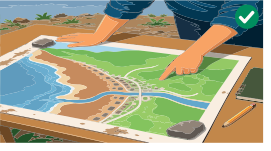
During the emergency you must stay in the safe zone established for the locality, at the corresponding meeting point or at the place indicated by the authorities.
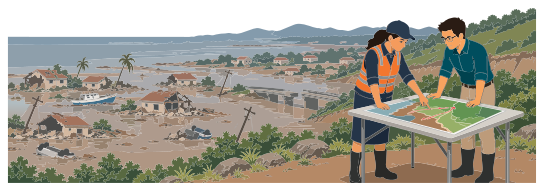
The extent of the flooding produced by a tsunami depends, among other factors, on:
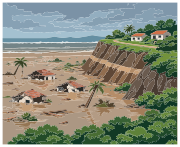
- The topography;
- the characteristics of the coast;
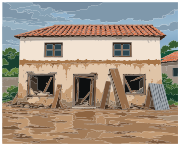
- the magnitude and characteristics of the tsunami;
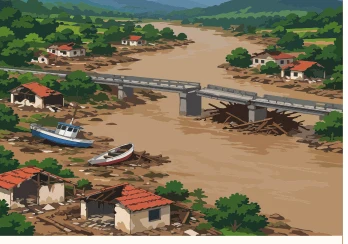
- the presence of rivers, inlets and canals;
- local conditions.
3.3Stay informed
After the impact, keep checking official communications.
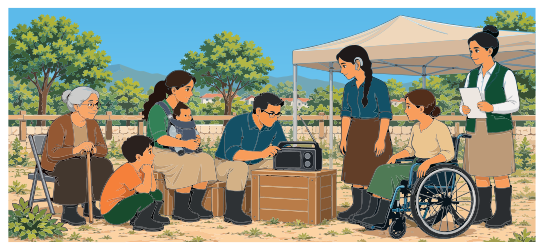
Use the means available:
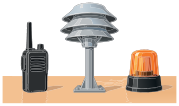
- Radio;
- official alert systems;
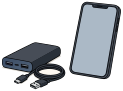
- mobile phone;
- text messages;
- official apps;
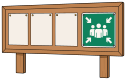
- institutional emergency channels;
- other systems established by the local authorities.
Official information may indicate:
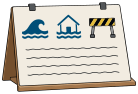
- Whether waves are still arriving;
- which areas remain evacuated;
- which roads are closed;
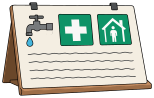
- where shelters are located;
- where medical care can be obtained;
- whether the drinking water is safe;
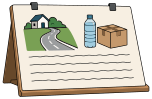
- where food and supplies are being distributed;
- when return may begin.
3.4Use communications responsibly
After a disaster, telecommunications networks may be saturated or partially interrupted.
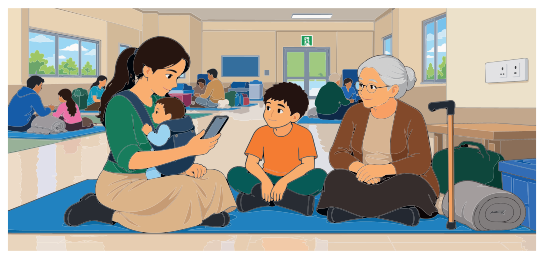
When communications are working:
Use short messages to tell family that you are safe;
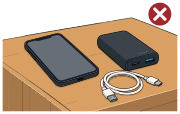
avoid unnecessarily long calls;
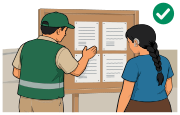
follow the recommendations of the authorities and telecommunications operators;
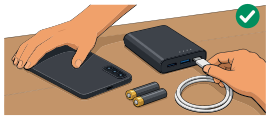
conserve your phone battery;
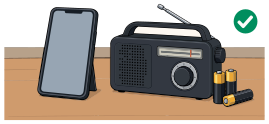
use emergency communications only when they are necessary.
3.5Be ready for aftershocks
If the tsunami was generated by a nearby earthquake, aftershocks may occur.
Some can be strong enough to:
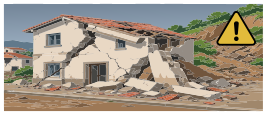
- Bring down structures already weakened;
- cause material to come loose;
- make objects fall;
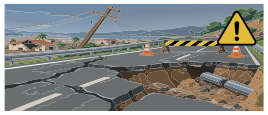
- damage roads;
- interrupt services;
- complicate rescue operations.
If you feel an aftershock:
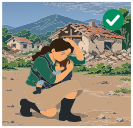
Protect yourself immediately;
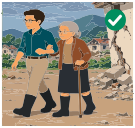
move away from unstable structures when you can do so safely;
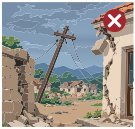
do not stay next to walls, poles, facades or other damaged elements;
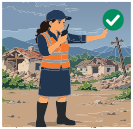
follow the instructions of the authorities.
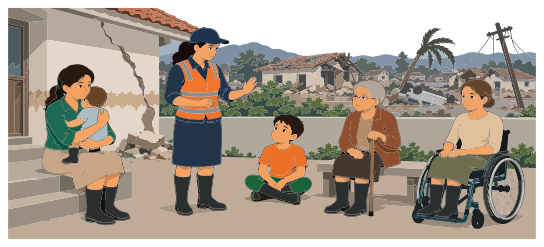
3.6Do not enter affected areas immediately
Even if the authorities have cancelled the threat of further waves, certain areas may remain extremely dangerous.
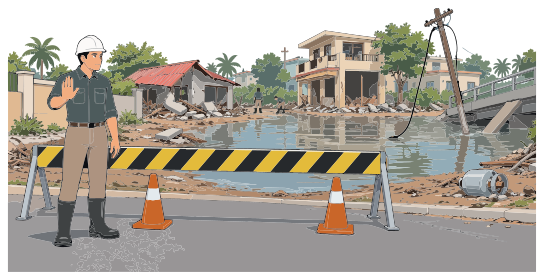
Avoid:
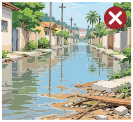
- Flooded streets;
- areas covered in mud;
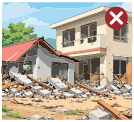
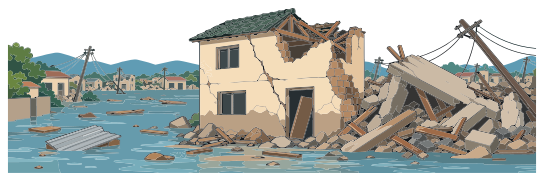
- collapsed structures;
- severely damaged buildings;
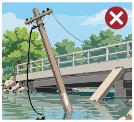
- affected bridges;
- areas with downed power lines;
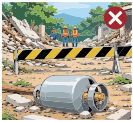
- places where there are gas leaks;
- search and rescue operation areas.
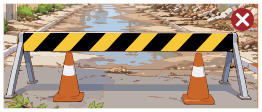
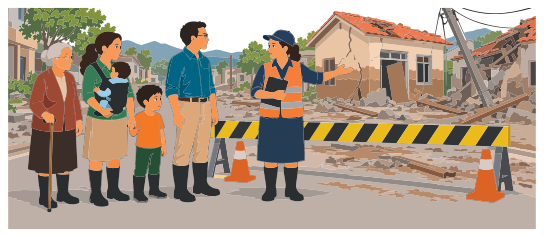
Do not enter restricted areas.
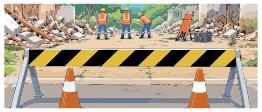
People entering prematurely can create new casualties and hinder the work of firefighters, medical services, police, civil protection and rescue teams.
3.7Avoid floodwater and mud
The water left behind by a tsunami must not be considered clean water.
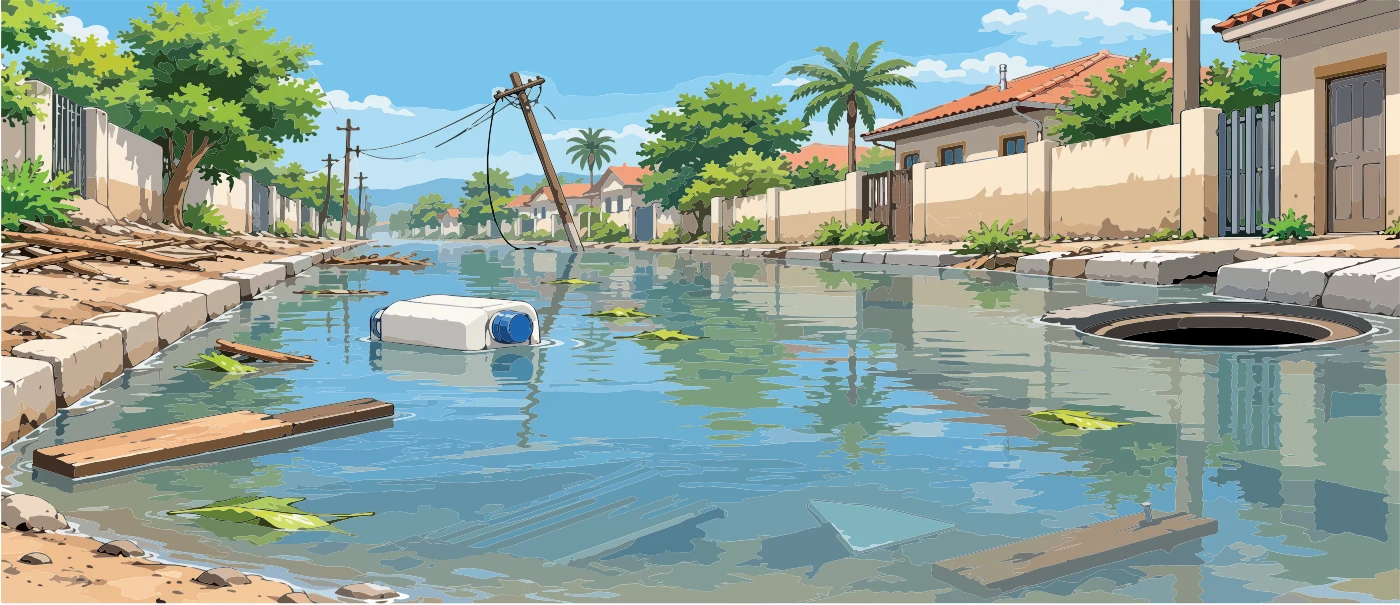
It may contain:
- Wastewater;
- microorganisms;
- fuels;
- oils;
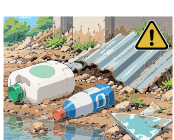
- pesticides;
- chemical products;
- metals;
- glass;
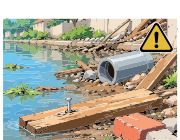
- sharp objects;
- construction material debris;
- other contaminants.
In addition, murky water can conceal:
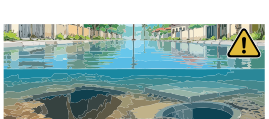
- holes,
- open drains,
- changes in level,
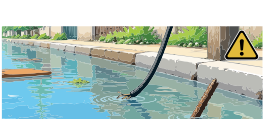
- sharp objects,
- downed power lines,
- other hazards.
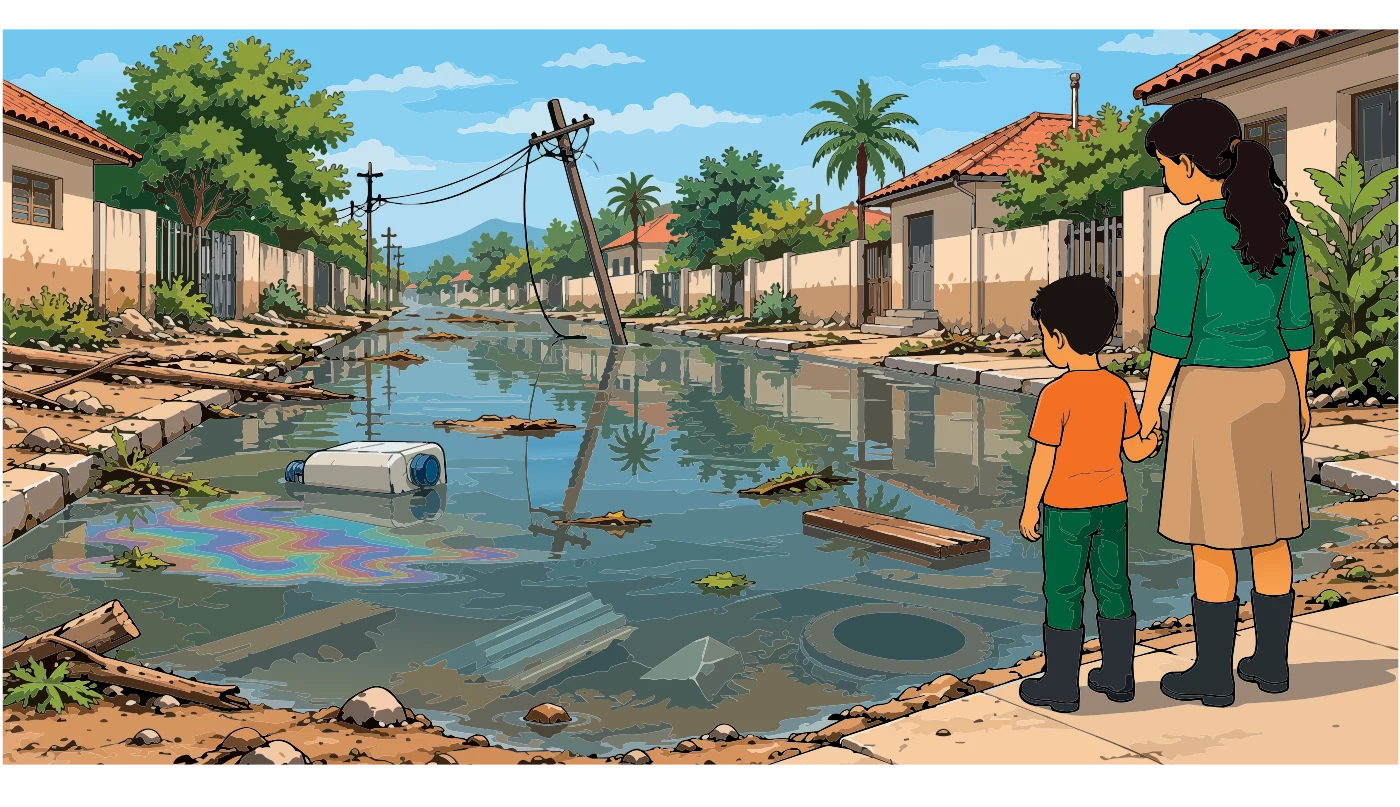
For that reason:
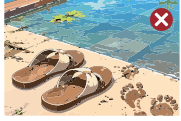
Do not walk through floodwater unnecessarily;
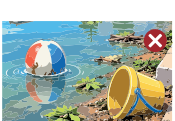
do not let children play in it;
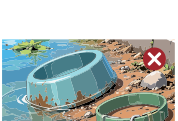
do not let pets drink it;
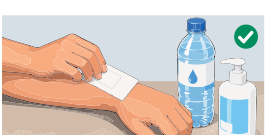
avoid contact with open wounds;
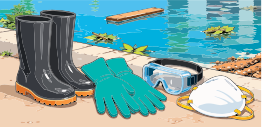
use appropriate protection if authorized cleanup tasks make contact unavoidable.
3.8Power lines, installations and electrocution
Treat every downed power line as dangerous. Do not touch it.
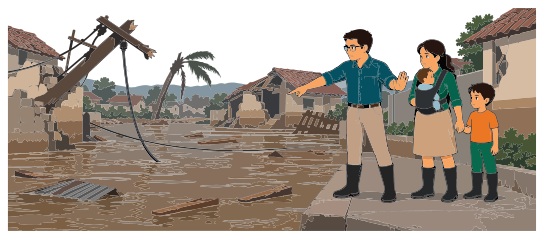
Do not touch these either:
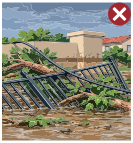
Objects that are in contact with cables;
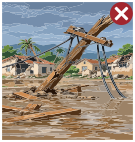
damaged poles;
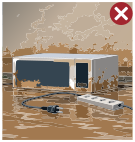
wet electrical equipment;
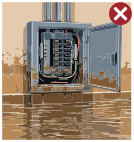
flooded electrical installations.
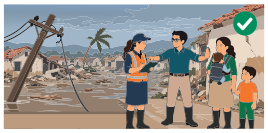
Keep children and other people away, and report the presence of dangerous cables or installations to the corresponding services.
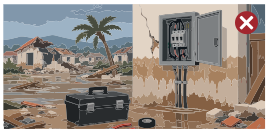
Do not attempt to repair damaged electrical installations if you are not trained and authorized to do so.
3.9Gas, fuels and fire risk
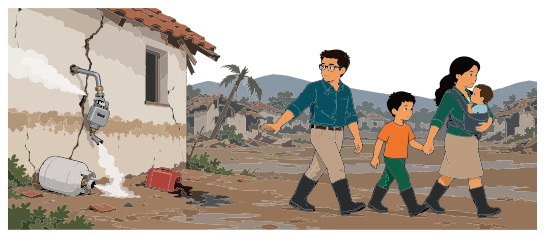
The earthquake and the tsunami can damage:
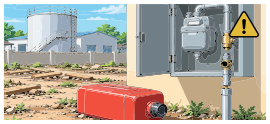
- Gas pipes;
- fuel tanks;
- industrial installations;
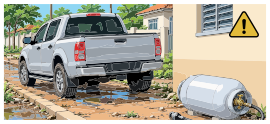
- vehicles;
- household systems.
If you smell gas, hear a leak or find signs of spilled fuel:
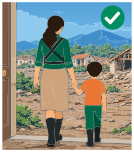
move away;
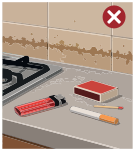
- do not light any flame;
- do not smoke;
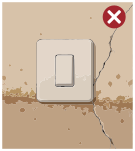
do not operate electrical switches in the area;
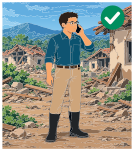
report it to the corresponding services.
3.10Do not enter damaged buildings without authorization
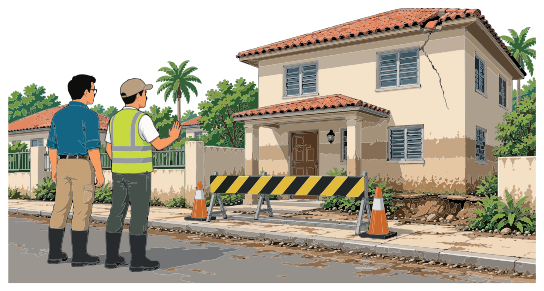
For that reason:
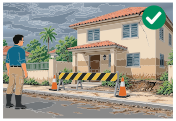
Respect closures and restrictions;
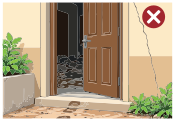
do not enter severely damaged buildings;
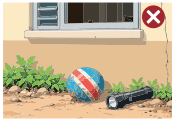
do not let children go in to explore;
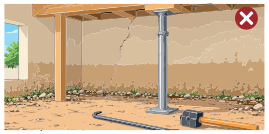
do not remove structural elements;
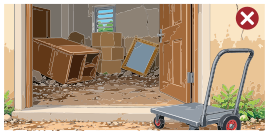
do not try to recover property when conditions are unsafe.
3.11Roads, bridges and vehicles
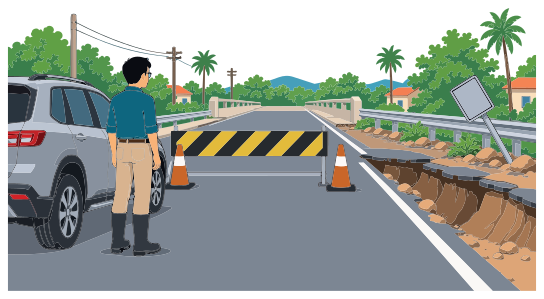
The water may have:
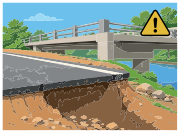
- Eroded the ground beneath the pavement;
- weakened bridges;
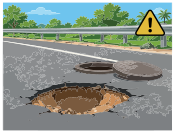
- opened sinkholes;
- displaced sewer covers;
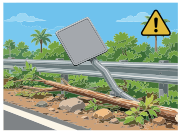
- deposited debris;
- destroyed signage.
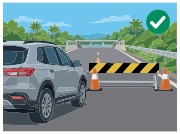
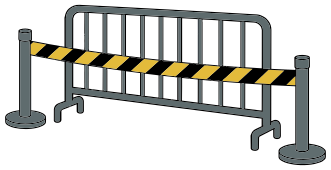
Respect all barriers and closures.
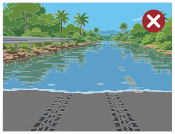
Never drive through an area that is still flooded.
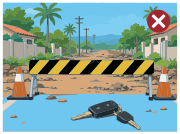
Do not use vehicles to enter restricted areas or to look at the damage.
3.12Water for human consumption
After a tsunami, the drinking water supply may have become contaminated.
However, it should not be established as a universal rule that all tap water is prohibited after any tsunami.
The correct rule is:
Follow the instructions of the health authorities and of those responsible for the water supply.
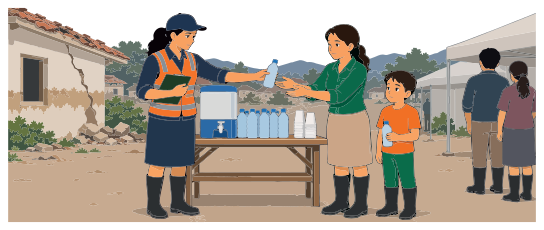
If a contamination warning exists, or if the authorities indicate that the water is not safe:
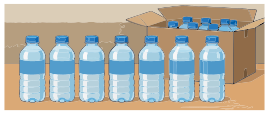
Use bottled water;
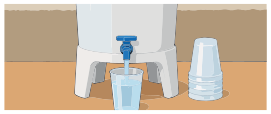
or water properly treated according to official sanitation standards.
Safe water must be used not only for drinking, but also, in accordance to active sanitation guidelines, for:
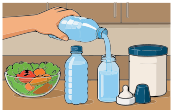
- Preparing food;
- preparing infant formula;
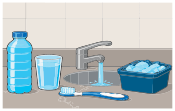
- brushing teeth;
- making ice;
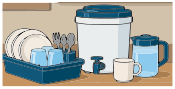
- washing food utensils;
- other activities in which water could be swallowed.
Normal appearance, smell or taste do not guarantee that water is safe.
3.13Food after the flooding
Food that has come in contact with floodwater may be contaminated.
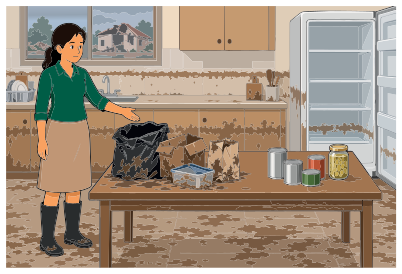
However, it should neither be claimed that absolutely all food in an affected area must be discarded.
Some commercially packaged products in intact, and appropriate packaging may be recoverable through specific sanitary procedures.
Follow the instructions of the health authorities.
Discard food that:
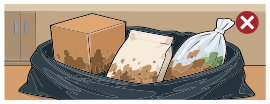
Has been directly exposed to floodwater and is not protected by packaging that can be considered safe; has open or damaged packaging;
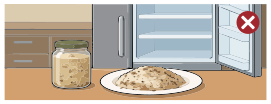
shows abnormal smell, color or texture; has been left unrefrigerated for a period that compromises its safety.
Pay particular attention to containers made of:
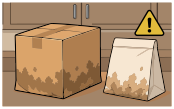
- Cardboard;
- paper;
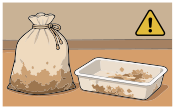
- absorbent materials;
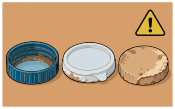
- lids that cannot be properly cleaned or disinfected.
Do not taste food to determine whether it is safe.
If there is any doubt about its safety, discard it.
3.14Hand hygiene
Hygiene is especially important after flooding.
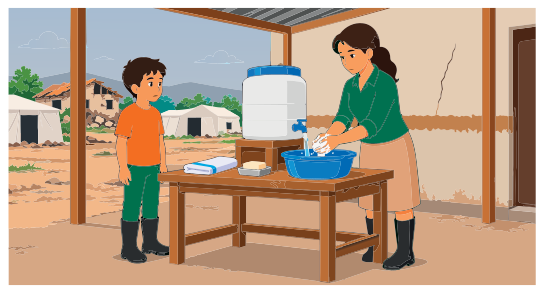
Wash your hands with safe water and soap:
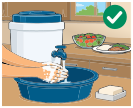
- Before preparing food;
- before eating;
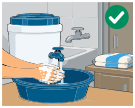
- after using the bathroom;
- after changing diapers;
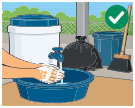
- after handling waste;
- after taking part in cleanup tasks;
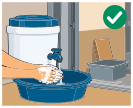
- after touching objects contaminated by floodwater or wastewater.
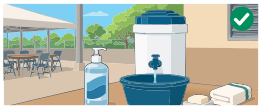
When soap and water are not immediately available, an appropriate alcohol-based product can be used as a temporary measure when conditions allow.
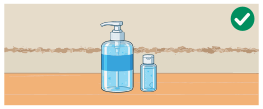
However, if hands are visibly dirty or contaminated, proper washing must be done as soon as safe water is available.
3.15Wounds and injuries
Glass, nails, metal, broken wood and other debris can cause wounds.
Do not ignore an injury simply because it looks minor.
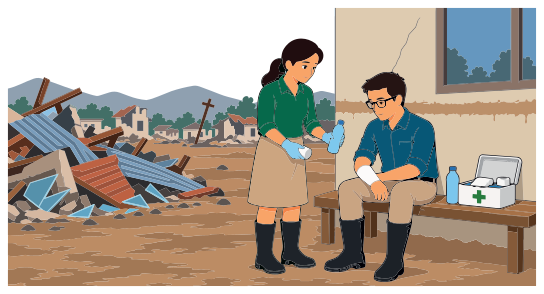
If you are injured:
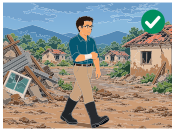
- Get out of the dangerous area;
- control significant bleeding with appropriate first aid;
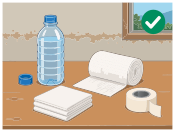
- clean the wounds with safe water when possible;
- cover them with clean material;
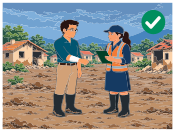
- seek medical attention when the severity of the injury requires it.
Seek medical attention for signs such as:

- increasing pain;
- spreading redness;
- swelling;
- discharge;
- fever;
- other signs of infection.
People with deep, puncture or contaminated wounds may need additional medical evaluation, including a review of their tetanus protection.
3.16First aid and rescue
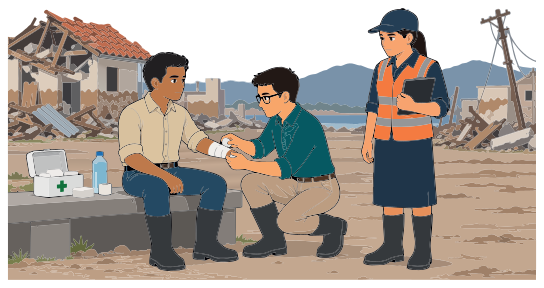
If you find a seriously injured person:
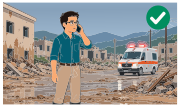
Request professional assistance;
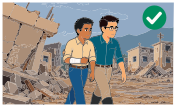
keep them away from immediate danger;
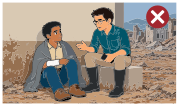
do not move them unnecessarily if you suspect serious injuries, unless staying where they are represents a greater danger;
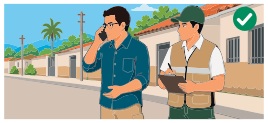
follow the instructions of the emergency services when you can reach them.
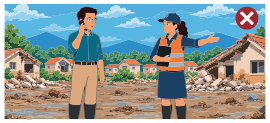
3.17Volunteering and community help
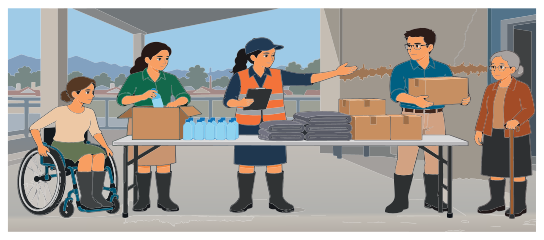
If you want to help:
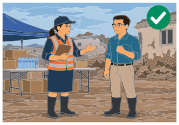
Follow the authorities' instructions; join coordinated organizations or teams, whenever possible;
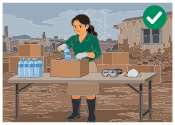
only carry out tasks you are capable of, use the required protective equipment;
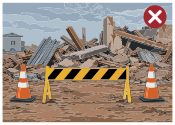
do not interfere with professional search and rescue operations.
It can be especially useful to help, when organized and authorized, with:
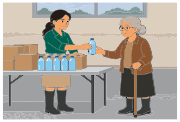
- Water and food distribution;
- guiding people;
- supporting elderly people or people with disabilities;
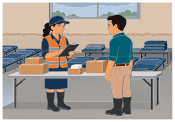
- organizing shelters;
- family reunification;
- logistical tasks;
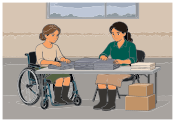
- other low-risk community tasks.
3.18Carbon monoxide: an invisible danger
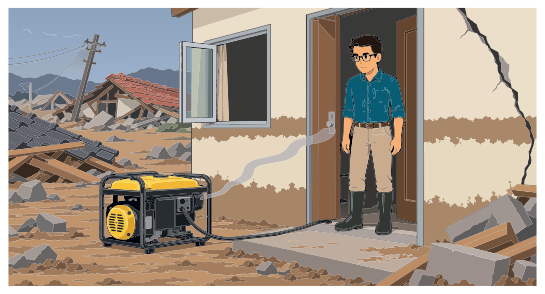
Power outages after a disaster can lead to the use of portable generators, camping stoves or other fuel-burning equipment.
These devices produce carbon monoxide, a gas that cannot be seen or smelled and that can cause severe poisoning or death.
Never use:
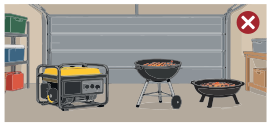
- Generators;
- grills;
- braziers;
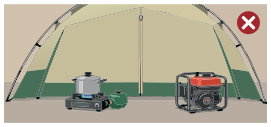
- fuel stoves;
- engines;
inside homes, garages, basements, tents, closed shelters or other spaces without adequate ventilation.
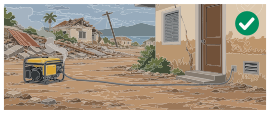
Generators must be used outdoors and far enough away from doors, windows and air intakes, following the safety instructions of the manufacturer and the authorities.
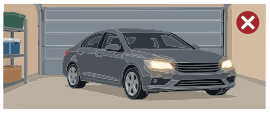
Never run a car with the engine on, inside a garage or other enclosed space.
3.19Cleaning up can also be dangerous
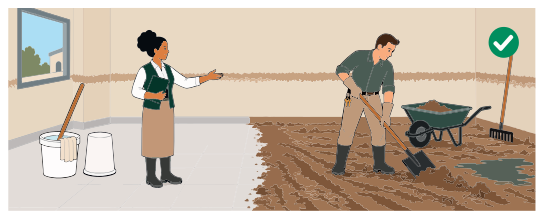
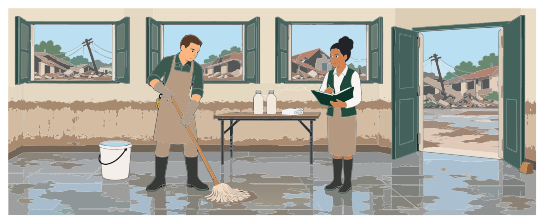
When entry is finally authorized and recovery efforts begin, use appropriate protective equipment based on the existing risks.
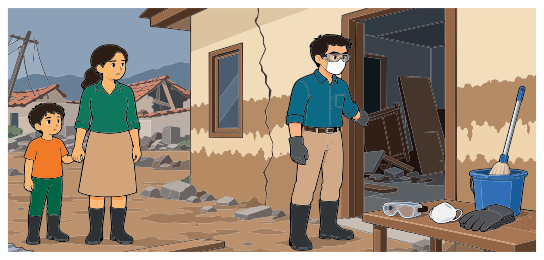
It may be necessary to use:
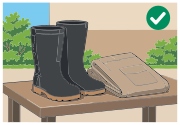
- Sturdy footwear;
- long pants;
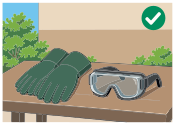
- appropriate gloves;
- eye protection;
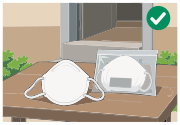
- adequate respiratory protection for certain tasks.
Take extra care with:
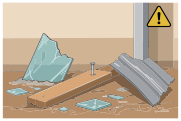
- Glass;
- nails;
- metal;
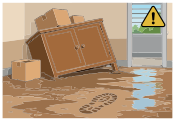
- slippery surfaces;
- unstable heavy objects;
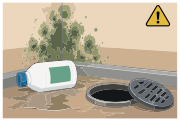
- mold;
- chemical products;
- wastewater.
Do not let children take part in dangerous cleanup tasks.
Recovering property must never take priority over people’s safety.
3.20Fundamental principle of this phase
After a tsunami, the objective is not to return as soon as possible, but to return when it is safe.
The visible disappearance of the water does not remove the dangers.
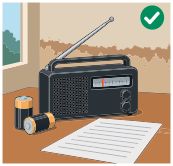
Stay informed.
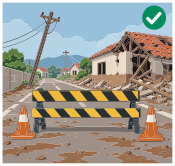
Respect restricted areas.
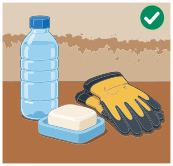
Protect your health.
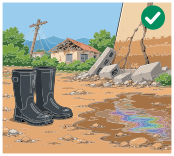
Avoid contaminated water and damaged structures.
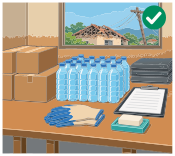
Help in an organized way.
And remember:
The emergency does not end until the competent authorities indicate that the threat has finished and conditions allow a safe recovery to begin.
3.21Minors after a tsunami
After a tsunami, children and adolescents need special protection.
The danger is not limited to the possibility of new waves. The post-disaster environment can contain contaminated water, mud, debris, glass, metal, power lines, unstable structures and other risks that minors may not recognize.
At the same time, they may feel fear, distress, confusion, sleep disruptions or worry about family, friends, pets, their home or their school.
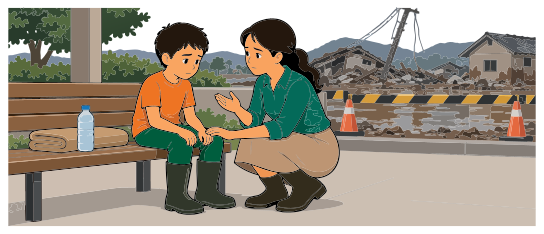
For that reason, the priorities are:
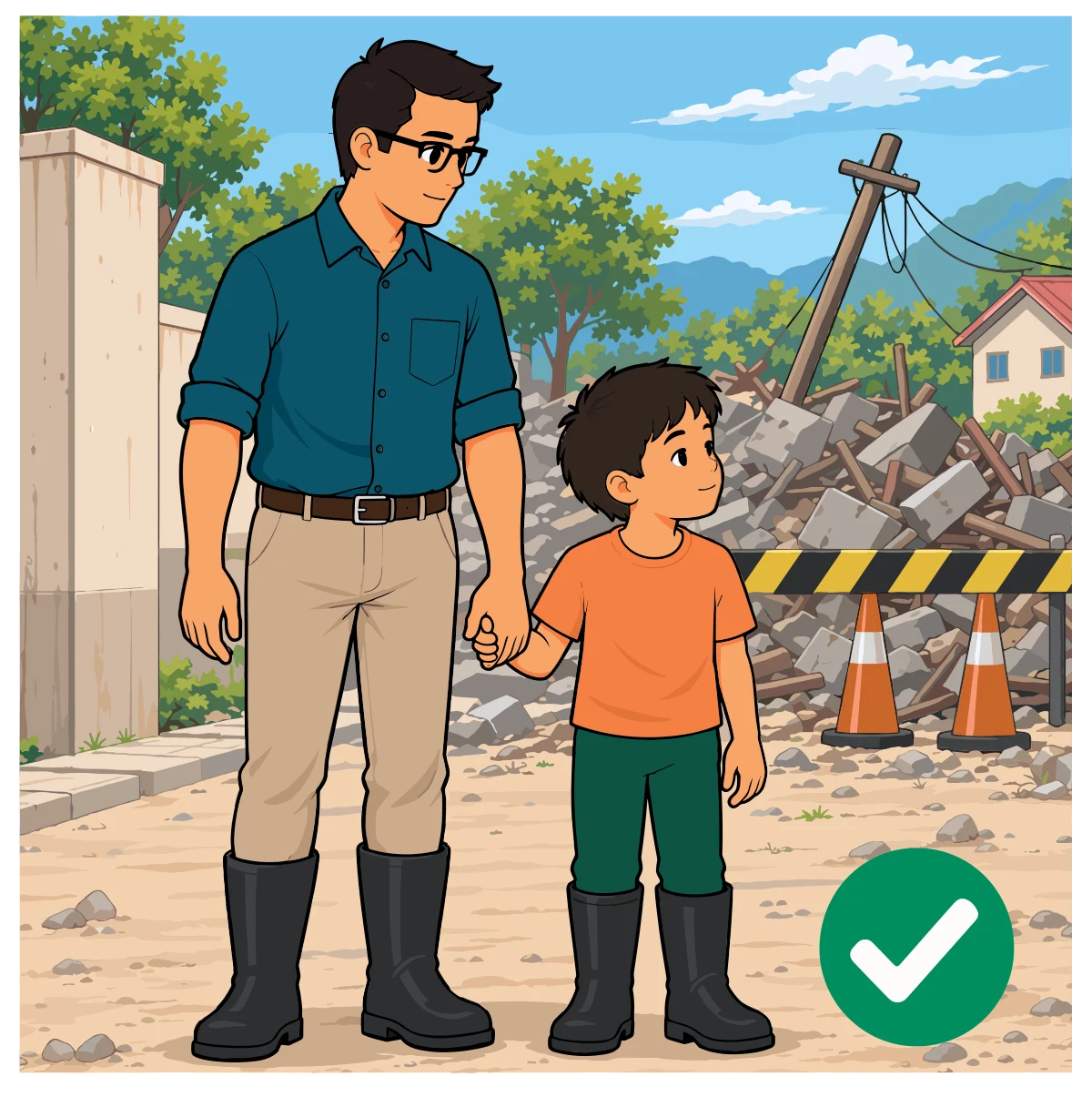
Keep them out of dangerous areas;
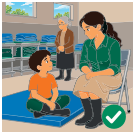
guarantee adequate supervision;
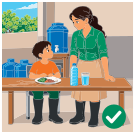
provide safe water and food;
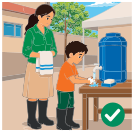
maintain appropriate hygiene conditions;
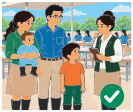
facilitate family reunification;
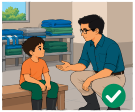
- give them understandable information;
- listen to their worries;
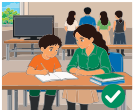
reduce unnecessary exposure to distressing images and conversations;
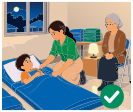
try, as much as possible, to reestablish routines and a sense of safety.
3.22Stay with minors in the safe zone
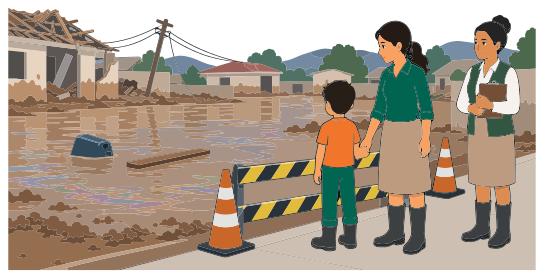
Do not let children go back to the coast, home, school or any other evacuated area until the authorities have authorized the return.
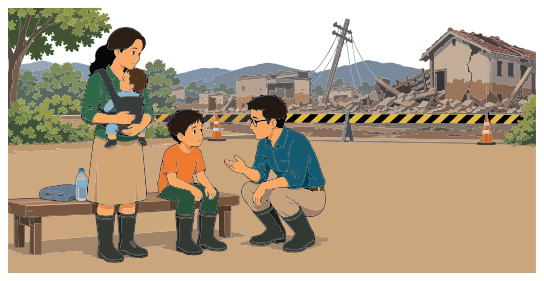
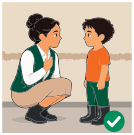
Explain to them simply why they have to wait.
You can use phrases such as:
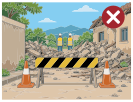
Do not let curiosity lead them near:
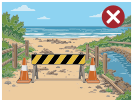
- The beach;
- rivers or canals;
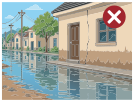
- Flooded areas;
- damaged buildings;
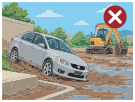
- displaced vehicles;
- machinery;
- rescue areas;
- debris.

Children must not move around an area affected by a tsunami on their own.
3.23Supervision in shelters and meeting points
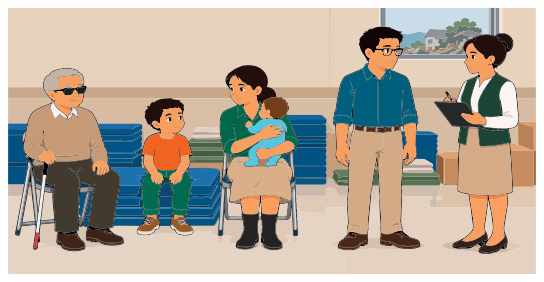
Shelters and meeting points can bring many people together and present an unfamiliar environment for minors.
Keep appropriate supervision, especially of young children.
Make sure that they:
Know who the responsible adult is;
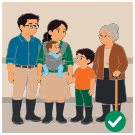
stay with their family or group;
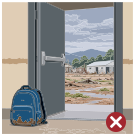
do not leave the shelter alone;
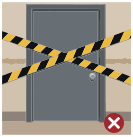
do not enter restricted areas;
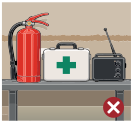
do not handle emergency equipment;
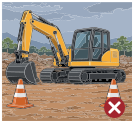
do not go near vehicles or machinery;
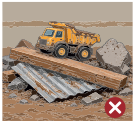
do not pick up objects found among the debris.
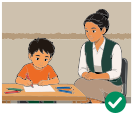
If there are areas specifically set aside for children, use them in accordance with the shelter’s rules.
3.24Do not let children play in the water, mud or debris
Minors:
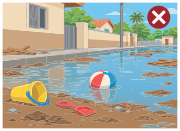
Must not play in floodwater;
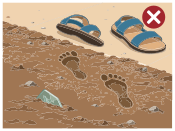
must not walk barefoot through affected areas;
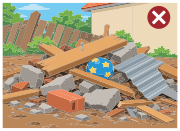
must not play on piles of debris;
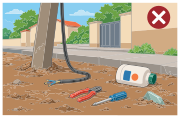
must not touch cables, containers, tools or unfamiliar objects;
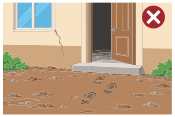
must not enter damaged buildings;
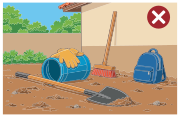
must not take part in dangerous cleanup tasks.
3.25Water and food for minors
Children must consume water considered safe by the health authorities.
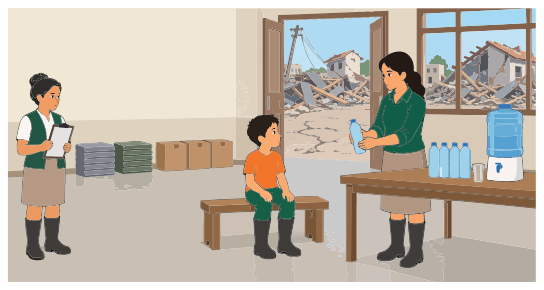
Extra attention must be paid to the water used for minors:
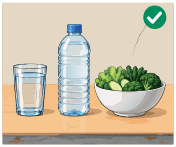
- Drinking;
- preparing food;
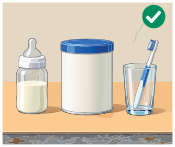
- preparing infant formula;
- brushing teeth;
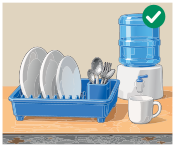
washing utensils used for feeding.
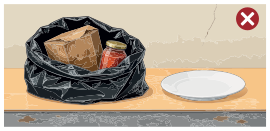
Do not give minors food that has been contaminated by floodwater.
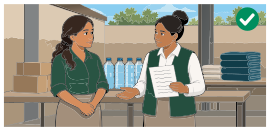
Follow the instructions of the health authorities on the consumption and storage of food.
3.26Hygiene for minors
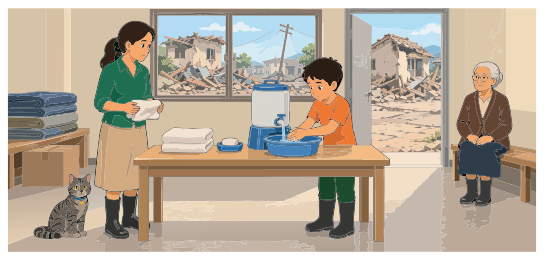
Help children maintain adequate hygiene, especially:
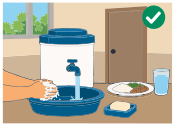
- Before eating;
- after using the restroom;
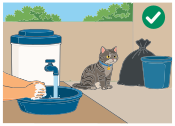
- after touching animals;
- after handling waste;
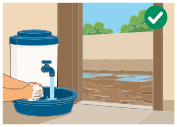
after any accidental contact with mud or floodwater.
Use safe water and soap when they are available.
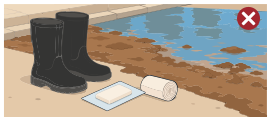
If a child has a wound, even if it seems minor, keep it from coming into contact with floodwater.
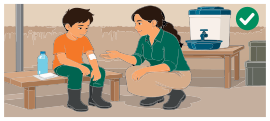
Contaminated wounds should be properly cleaned and monitored.
3.27Emotional support after the disaster
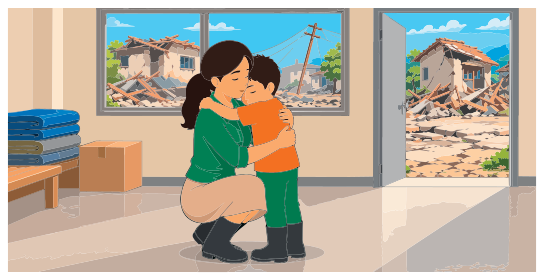
They may:
- Cry;
- appear fearful;
- stay unusually quiet;
- become easily irritable;
- cling more to adults;
- have difficulty sleeping;
- ask repeatedly what happened;
- worry about family members or pets;
- temporarily show typical behavior of younger children.
Not all children will react the same way.
The adult should be present, listen, and give age-appropriate explanations.
3.28Do not promise what you cannot guarantee
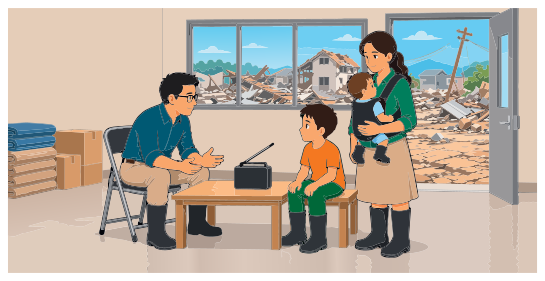
Children need emotional reassurance, but it must be given without conveying false information.
You can say:
3.29Reduce overexposure to the disaster
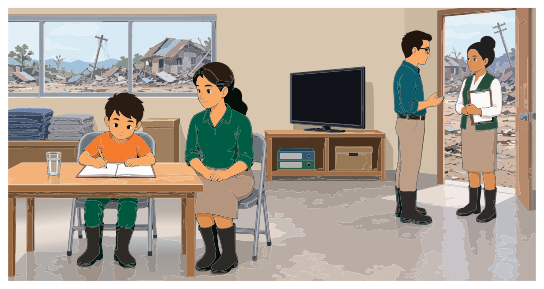
- Images of injured or dead people;
- repetitive videos of the tsunami;
- especially disturbing photographs;
- graphic conversations about deaths;
- rumors;
- alarming arguments;
- constantly repeated news.
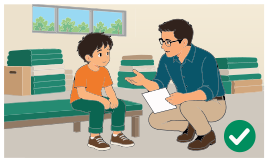
Explain what happened using truthful, simple information appropriate for their age.
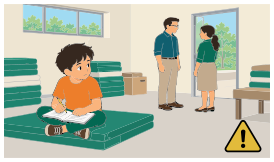
Adults should also bear in mind that children hear conversations even when they appear to be playing or doing something else.
3.30Restore routines when possible
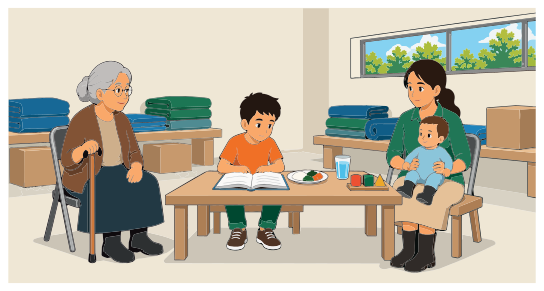
When circumstances allow it, try to maintain:
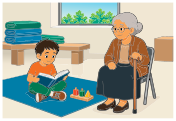
- Reasonable mealtimes;
- rest periods;
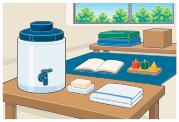
- hygiene;
- quiet activities;
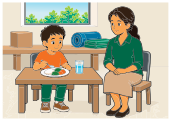
- play;
- reading;
- contact with familiar people.
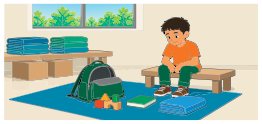
If the child has a toy, book, blanket or comfort object that was packed in the emergency backpack in advance and is available, it can be used.
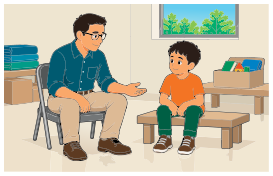
3.31When to seek additional help for a minor
Fear, sadness and certain temporary emotional changes are to be expected after a disaster.
Extra attention should be paid if the child:
However, seek professional guidance when the reactions are intense, persist, worsen or interfere significantly with the child’s daily life.
Early attention can help reduce later consequences.
3.32Family reunification
After an evacuation, reunification must be carried out in an organized way.
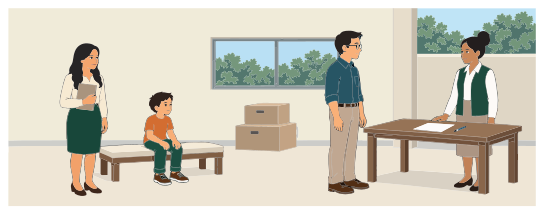
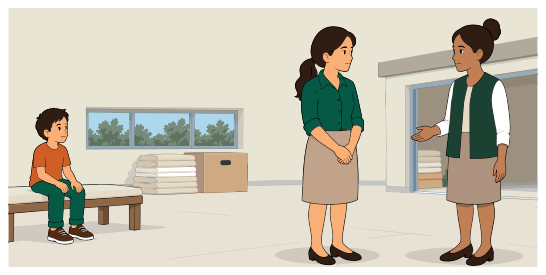
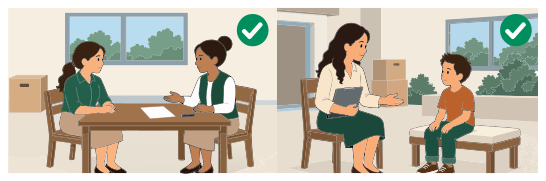
If a minor was evacuated by a school, educational center, club, temple or other institution:
Follow the established reunification procedure;
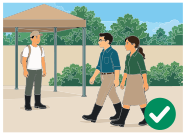
go to the location specified by the institution or the authorities;
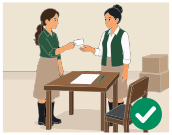
identify yourself according to the corresponding process;
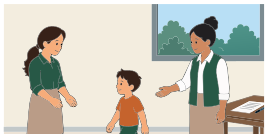
respect the system used to release minors to their authorized guardians;
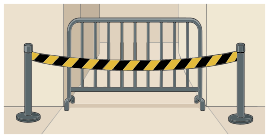
do not enter restricted areas on your own to look for them.
Minors must not be released to unauthorized people simply because they claim to know them.
Institutions must keep minors under supervision until reunification is completed in accordance with the established process.
3.33If a minor is missing
If after the evacuation you cannot locate a minor:
- Report it immediately to the authorities or those in charge of the shelter;
- give precise information about the minor;
- state where they were last seen;
- say who they were with;
- provide a recent photograph if one is available;
- follow the official search and reunification procedures.
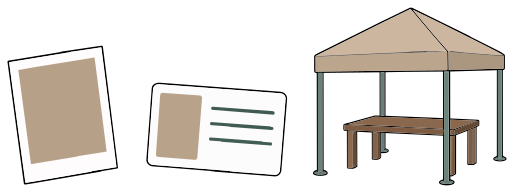
Do not leave a safe zone to go back on your own into an affected or evacuated area.
3.34Pets after a tsunami
Pets can also be injured, disoriented, contaminated or extremely stressed after a tsunami.
Their main needs will be to:
Stay out of dangerous areas;
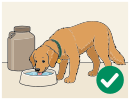
have safe water;
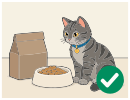
receive uncontaminated food;
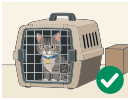
remain under control.
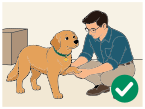
to be examined for possible injuries;
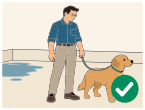
to avoid unnecessary contact with floodwater;
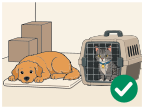
to reduce situations that could cause them to bolt, bite or fight.
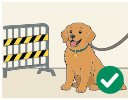
3.35Do not go back into a danger zone to look for a pet
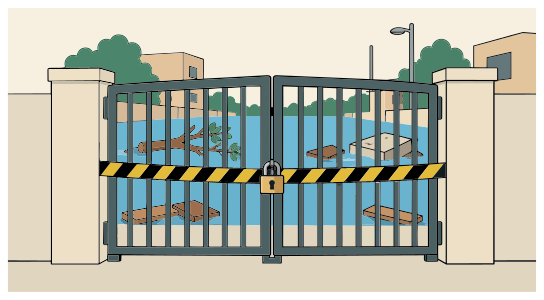


A missing pet is a distressing situation, but a search carried out during an active threat can create new casualties.
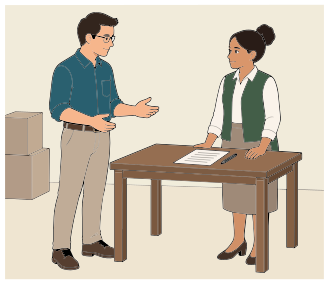
3.36Keep pets under control
Keep:
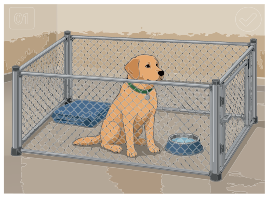
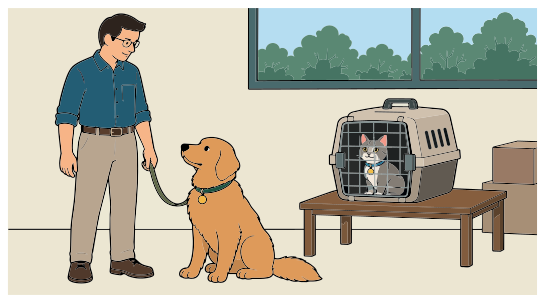
Dogs on a leash or in a secure enclosure;
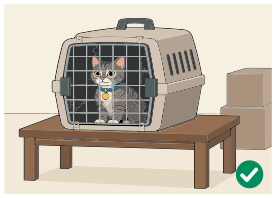
cats and other small animals in appropriate carriers when possible;
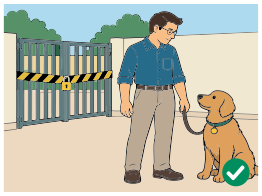
animals away from dangerous areas.
A disoriented animal can get lost, be injured, come into contact with hazardous substances or interfere with emergency operations.
3.37Water for pets
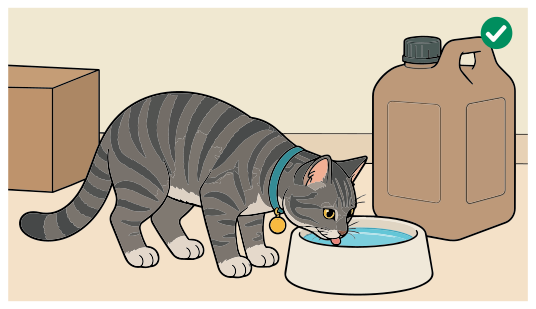
Floodwater may contain:
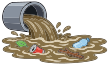
wastewater,

microorganisms,

fuels,

chemical products
and other contaminants.
Swallowing salt water can also cause serious health problems.
If you suspect the animal drank a significant amount of salt water or contaminated water and shows symptoms, seek veterinary attention as soon as possible.
3.38Feeding pets
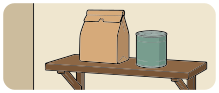

Use food that has been kept protected from the flooding and is in safe condition.
Discard animal food that is:
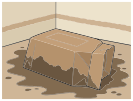
Wet from floodwater;
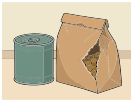
in damaged packinging;
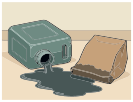
contaminated by chemical products;
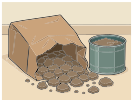
spoiled.
3.39Check the animal for injuries
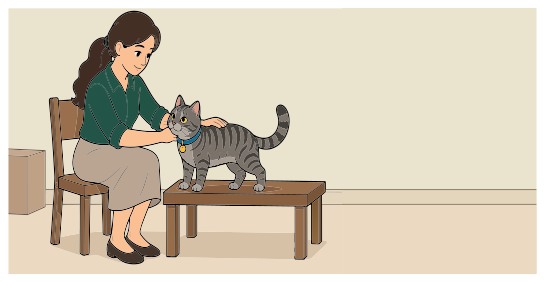
Look for:
- material stuck to the coat;
- cuts, wounds, limping;
- pain, bleeding, burns;
- skin irritation, difficulty breathing;
- injuries to the paw pads;
- significant changes in behavior.
Pain and fear can cause a normally docile pet to bite or scratch.
If there is a significant injury or you suspect poisoning, seek veterinary assistance when it is available.
3.40Contact with mud or contaminated water
If the pet has been through floodwater or mud, stop it from licking substances stuck to its paws or coat.
When conditions are safe:
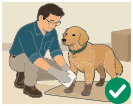
Carefully remove the dirt;
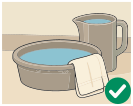
use clean water to wash the contaminated areas where appropriate;
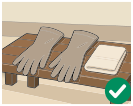
protect your hands if you are handling potentially contaminated material;
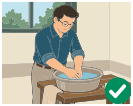
wash your own hands after tending to the animal.
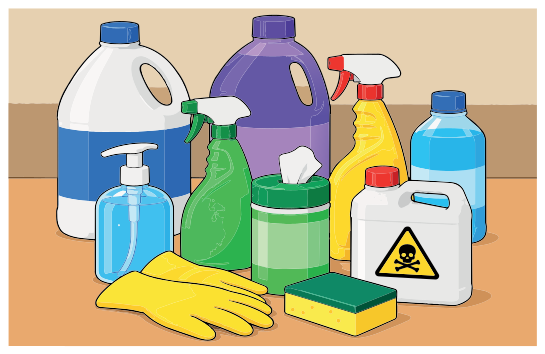
Do not use chemical products or household disinfectants on the animal that could be toxic.
If you suspect exposure to hazardous substances, seek veterinary guidance.
3.41Pets in shelters and meeting points
Not all shelters intended for the general population will necessarily be able to house pets, so local instructions about facilities set up for animals must be followed.
Where pets are allowed:
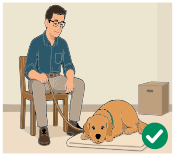
Keep them under control;
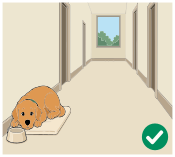
stop them from blocking paths;
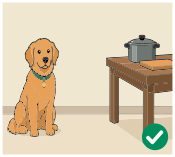
keep them away from food preparation areas;
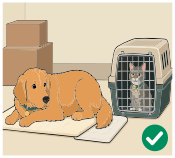
reduce unnecessary contact with other animals;
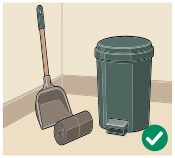
pick up their waste;
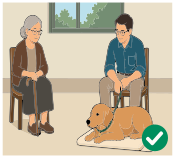
respect people who may have allergies, a fear of animals or other needs.
3.42Animal waste
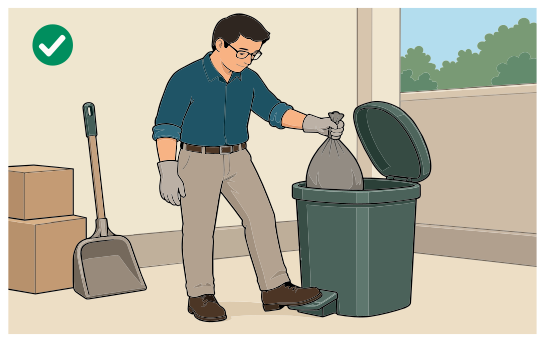
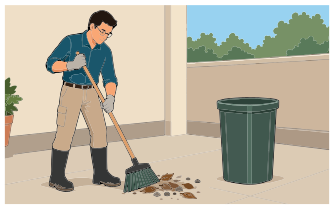
Follow the system established for the location.
Proper waste management helps maintain sanitary conditions in the shelter.
3.43Pet stress and behavior
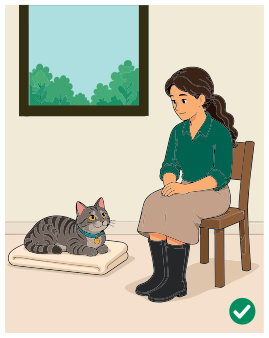
Maintain calm and predictable behavior as much as possible.
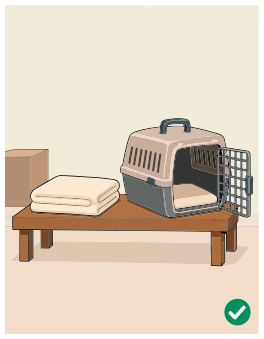
Familiar items that are available may be used, such as a blanket or the pet’s usual carrier, provided they are safe and clean.
Avoid allowing unfamiliar people from handling a visibly frightened animal unnecessarily.
Do not punish a reaction caused by fear.
3.44Service animals
Service animals perform functions that are different from those of pets and should remain, whenever possible, with the person they assist.
After a tsunami:
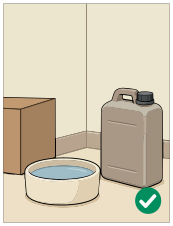
Make sure they have safe water;
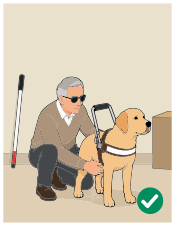
check them for injuries;
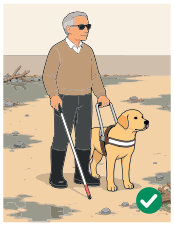
prevent contact with contaminated water and debris;
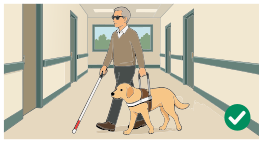
allow them to continue performing their function when it is safe;
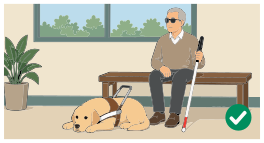
respect the bond between the animal and the person.
Do not separate a person from their service animal if it’s not necessary.
If the animal is injured or temporarily unable to perform its function, communicate the need for alternative assistance to those in charge of the shelter or the appropriate services.
3.45Fundamental principle for minors and pets
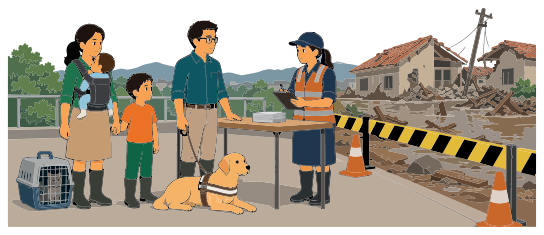
After a tsunami, curiosity, the desire to return, and the need to be reunited with people, animals, or belongings must never lead to renewed exposure to danger.
Adults are responsible for keeping minors protected and supervised.
Pets must remain under control and outside contaminated or unsafe zones.
Family reunification and the search for animals must be carried out through organized procedures.

Safety must be ensured first.
Recovery begins afterward.
3.46People with disabilities and people who need support
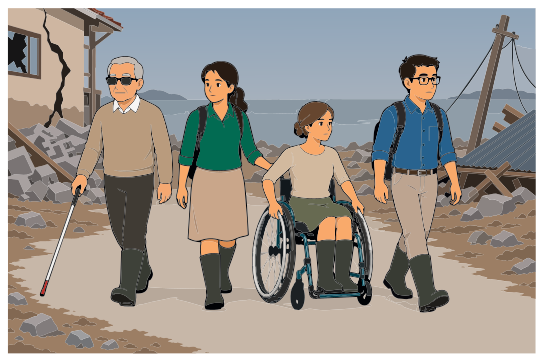
After a tsunami, normal accessibility conditions may have changed considerably.
Streets, ramps, elevators, transportation systems, signage, power supply, communication networks, and healthcare facilities may be damaged or out of service.
Therefore, each person’s needs must be assessed individually.
A person may need support related to:
- mobility;
- orientation;
- vision;
- hearing;
- communication;
- understanding;
- eating;
- medication;
- medical equipment;
- power supply;
- transportation;
- personal assistance;
- service animals;
- sensory regulation;
- other functional needs.
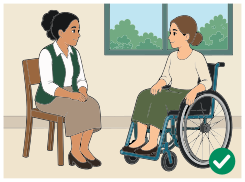
3.47Stay in the safe zone
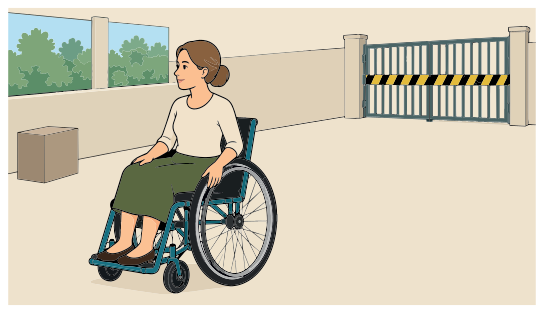
Do not go back to recover:
- medications;
- equipment;
- wheelchairs;
- electronic devices;
- documents;
- animals;
- other belongings;
if doing so means entering a dangerous or restricted area again.
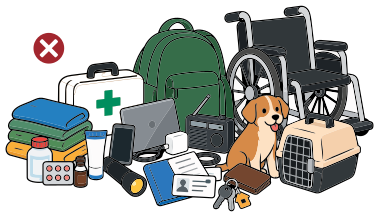
If an essential medication, device, or equipment was left in the affected area, communicate the need to those in charge of the shelter, healthcare services, or the appropriate authorities in order to seek a safe alternative.
3.48Keep the support network active when necessary
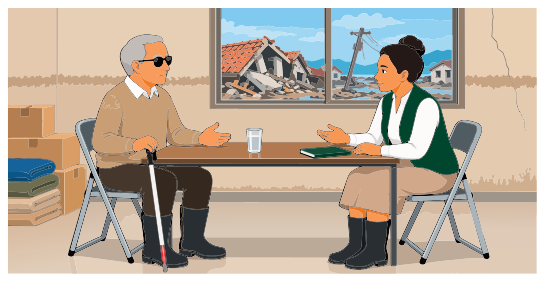
The network can help with:
- accompanying the person;
- obtaining information;
- managing supplies;
- assisting with mobility;
- keeping devices;
- communicating with family members;
- requesting assistance;
- avoiding the overload of a single caregiver.
However, the support network must adapt to the circumstances after the disaster.
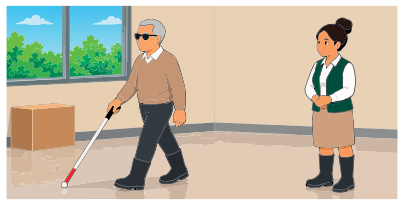
The person with a disability must retain, to the greatest extent possible, their autonomy and decision-making capacity.
3.49Medications
If the person takes medications regularly:
- Check which medications they still have;
- make sure the containers have not been contaminated by floodwater;
- keep them dry and properly stored;
- keep the instructions, prescriptions or available information;
- inform the health personnel;
- avoid the risk of running out of an essential medication.
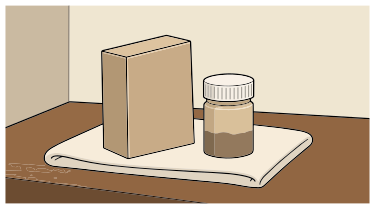
Do not use medications that have been directly exposed to contaminated water if there are doubts about their safety.
Do not change doses, stop treatments or substitute medications on your own, unless there is professional guidance
If an essential medication was lost, report it as soon as possible to healthcare personnel or to those in charge of the shelter.
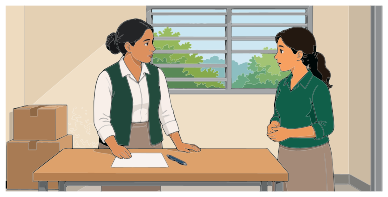
3.50Medical equipment and assistive devices
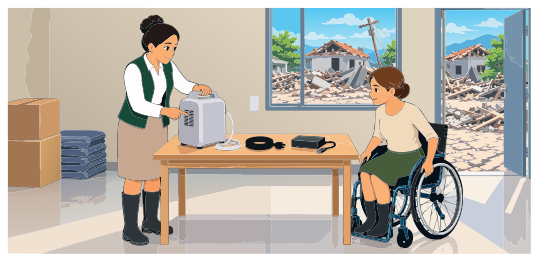
Some people depend on:
- oxygen concentrators;
- respiratory equipment;
- pumps;
- communication devices;
- hearing aids;
- prostheses;
- electric wheelchairs;
- feeding equipment;
- other medical or assistive devices.
After the tsunami, check whether the equipment:
- is dry;
- has visible damage;
- is working properly;
- has sufficient battery power;
- requires electricity;
- needs supplies or replacement parts.
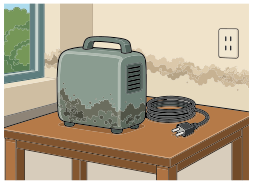
Do not connect equipment that has been wet or may be damaged to the electrical grid until it has been determined that it is safe to do so.
Immediately inform healthcare personnel or those in charge of the shelter when a device is essential to the person’s health or safety and there is a risk that its operation may be interrupted.
3.51Electricity needs
Power outages may especially affect people who depend on medical equipment or mobility and communication devices.
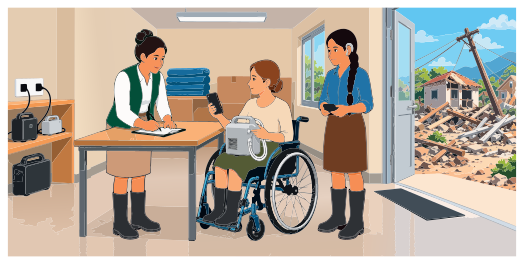
If a person needs electricity for an essential device:
- Report this need upon entering the shelter;
- indicate which device they use;
- communicate how long it can operate on battery power;
- use alternative power sources only in a safe manner;
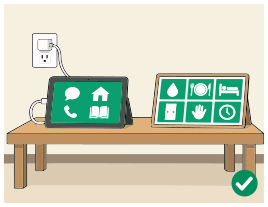
- prioritize charging essential devices.
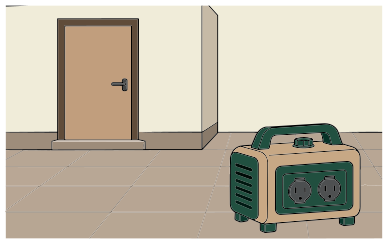
Portable generators must be used in accordance with safety rules and never indoors or in enclosed spaces, due to the risk of carbon monoxide poisoning.
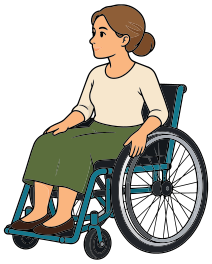
3.52Wheelchairs, canes, walkers, prostheses, and other aids
Mobility devices are part of a person’s autonomy.
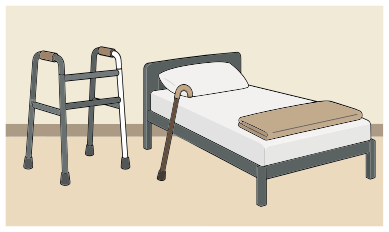
Do not remove, move, or handle them unnecessarily without authorization.
If a device has been damaged:
- report the need to the appropriate personnel;
- seek a temporary alternative when available;
- keep any salvageable parts and accessories;
- avoid improvised repairs that could cause a fall or injury.
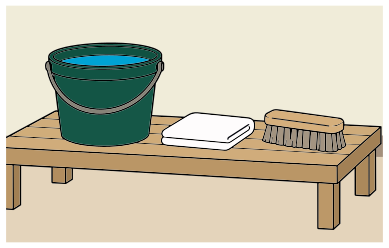
If a wheelchair or other device came in contact with contaminated water, it may require cleaning and, depending on the equipment, evaluation before it is used normally again.
3.53Accessibility in shelters and meeting points
When entering a shelter, communicate any relevant functional needs.
It may be necessary to request:
- an accessible route;
- reasonable proximity to accessible restrooms;
- enough space for a wheelchair;
- a safe, obstacle-free surface;
- access to electricity;
- appropriate storage for medications;
- assistance with eating;
- a space with fewer stimuli;
- alternative means of communication;
- other accommodations.
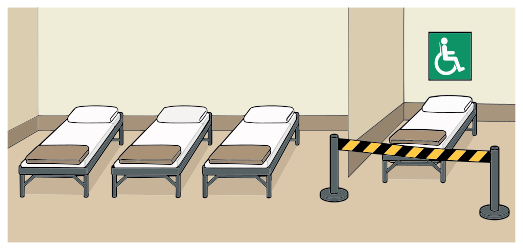
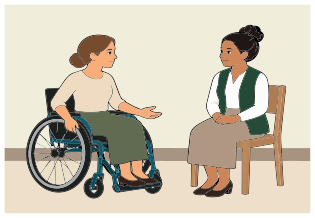
Whenever possible, the person should be consulted directly about which location and assistance are most appropriate.
3.54Keep accessible routes clear
In shelters and meeting points:
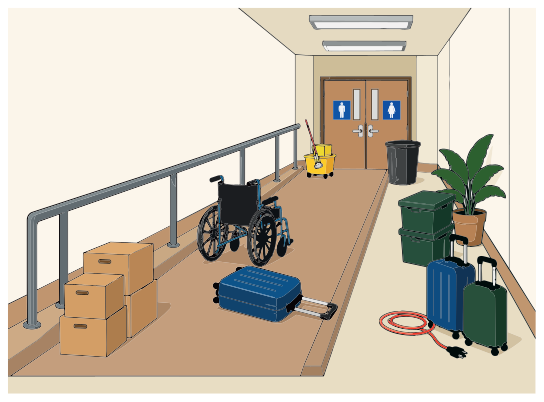
- keep access to restrooms clear;
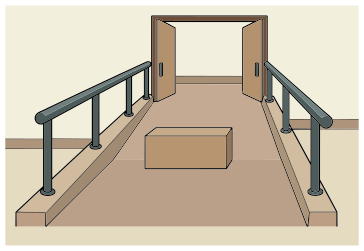
- do not block accessible doors;
- do not place boxes on ramps;
- do not use accessible spaces as improvised storage areas;
- do not leave luggage in pathways;
- avoid loose cables and other obstacles on the floor.
3.55People with visual impairments
After a tsunami, a previously familiar environment may have changed completely.
There may be:
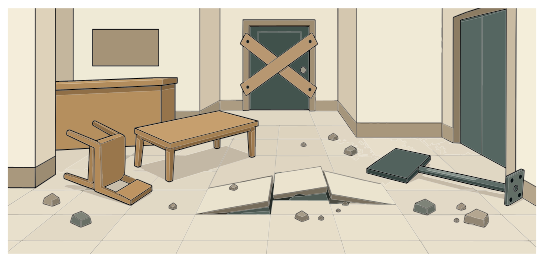
- new obstacles;
- closed routes;
- destroyed signage;
- uneven surfaces;
- displaced furniture;
- debris.
If a person requests assistance:
- Identify yourself;
- ask how they would like to be guided;
- offer your arm when that is their preferred method;
- describe relevant obstacles;
- announce steps and changes in elevation;
- clearly indicate changes in direction;
- explain important changes in the surroundings.
Do not use ambiguous expressions such as “over there” or “careful.”
Use specific instructions:

“There is a step down.”
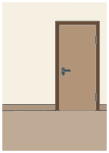
“The door is on your right.”
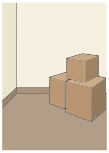
“There are boxes ahead; we are going to go around them on the left.”
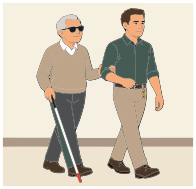
Do not force the person to stay permanently holding onto a guide’s arm. Offer assistance and respect the form of orientation the person themselves prefers.
3.56Deaf people or people with hearing impairments
Information after a tsunami must also be provided through visual and written means.
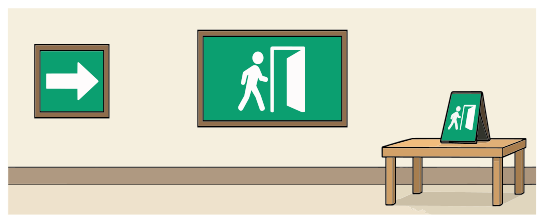
Do not rely exclusively on:
- loudspeakers, sirens;
- verbal announcements;
- radio.

When possible, use:
- written messages;
- signs;
- screens;
- text messages;
- apps;
- pictograms;
- sign language when available;
- other appropriate systems.
Make sure the person has access to essential updates about:
- new alerts;
- evacuations;
- shelter changes;
- supply distribution;
- medical care;
- authorization to return.



3.57People with communication needs
Some people may use:
- communication boards;
- electronic devices;
- pictograms;
- writing;
- gestures;
- augmentative or alternative communication systems.
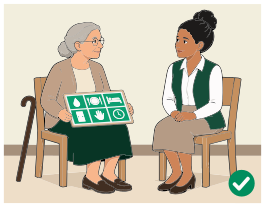
Do not confuse difficulty speaking with difficulty understanding or making decisions.
Give enough time to respond when circumstances allow.
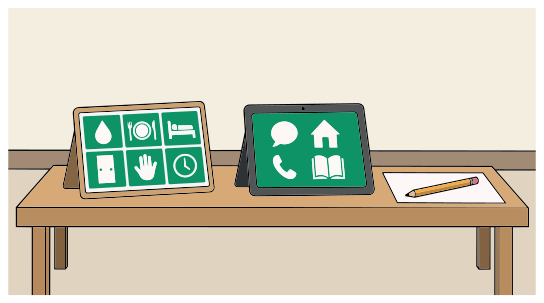
Keep their communication devices available and charged whenever possible.
Speak directly to the person, not exclusively to the person accompanying them.
3.58People with intellectual, cognitive, or developmental disabilities, and neurodivergent people
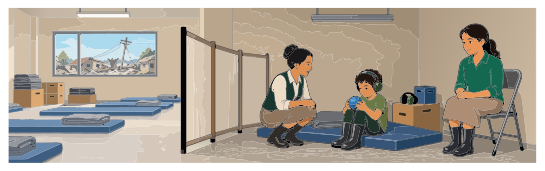
Shelters may have:
- Intense noise;
- constant lighting;
- crowds;
- unfamiliar smells;
- frequent physical contact;
- disruption of routines;
- lack of privacy.
These conditions may cause distress or sensory overload in some people.
When possible:
- provide a quieter space;
- reduce unnecessary stimuli;
- maintain familiar routines;
- use brief instructions;
- explain changes in advance;
- allow the use of familiar sensory regulation items;
- avoid unexpected physical contact.
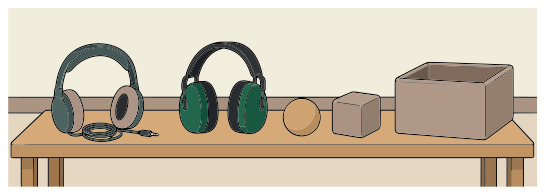
If the person uses headphones, hearing protection, sensory regulation items, or other resources, and these are available, allow their use when it is safe.
Do not assume that all autistic people or people with intellectual disabilities need isolation. Assistance must be individualized.
3.59People with disabilities and contaminated water
Unnecessary contact with floodwater and mud should be avoided for all people.
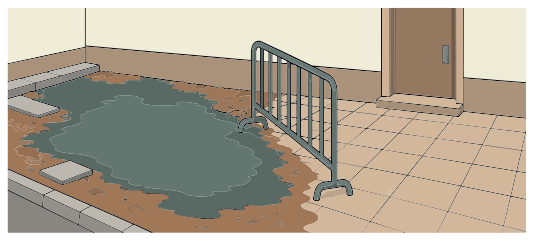
If contact with contaminated water occurs:
- perform the corresponding hygiene measures using safe water;
- check for possible wounds;
- properly clean any devices that were exposed;
- seek healthcare services when necessary.
3.60Service animals
Service animals must remain with the person they assist whenever possible.
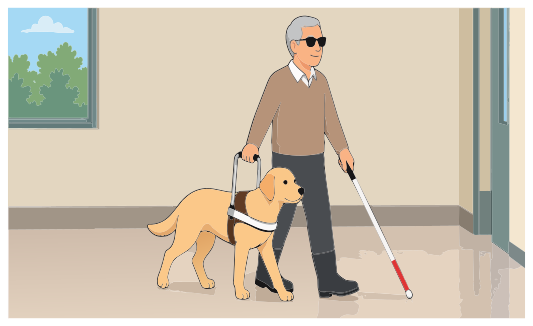
Ensure:
- Safe water;
- appropriate food;
- a place for them to relieve themselves;
- proper physical control;
- assessment for possible injuries.
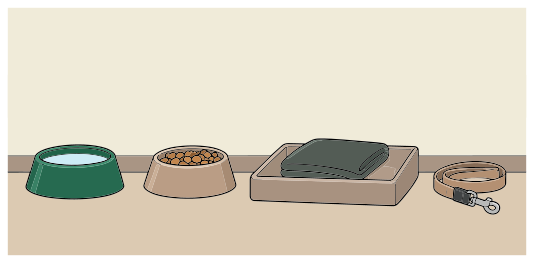
Do not separate a person from their service animal simply because other pets are not admitted in a certain area without first consulting the applicable rules and seeking an appropriate solution.
If the animal is injured or can no longer perform its function, immediately communicate that the person may need alternative assistance.
3.61Older adults and people with medical needs
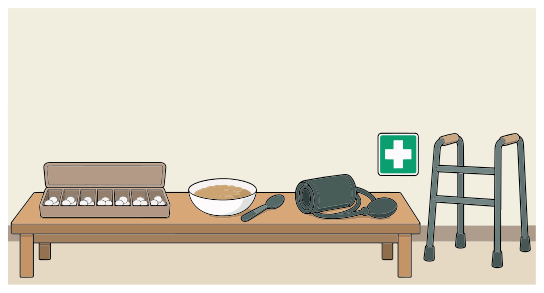
Some older adults or people with medical needs may require:
- Medication;
- specific food;
- assistance with mobility;
- medical devices;
- healthcare services;
- help understanding information;
- support communicating with family members.
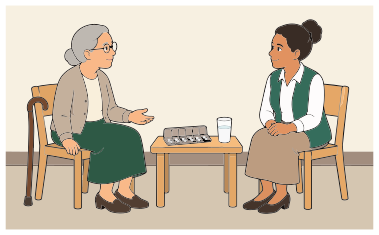
Do not assume someone is incapable simply because of their age.
3.62Responsibility of institutions after the tsunami
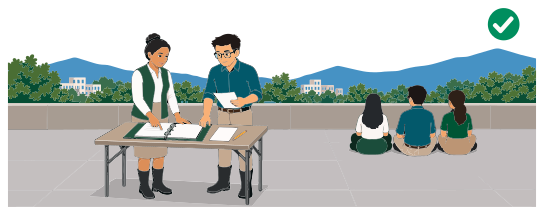
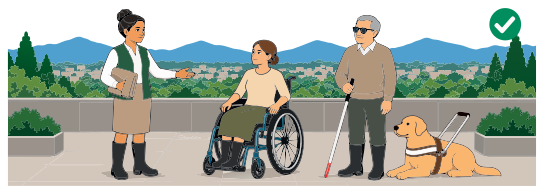
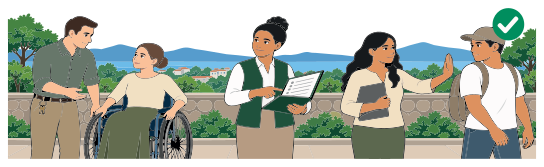
The institutional priorities are to:
- Protect evacuated people;
- verify who reached the safe point;
- identify missing persons;
- detect injured people or people who need assistance;
- maintain communication with the authorities;
- prevent premature returns;
- facilitate reunification;
- provide verified information;
- collaborate with the official response.
3.63Take a headcount in the safe zone
When conditions allow, each person in charge of a group must account for the people under their supervision.
The headcount must be done in the safe zone, not delaying the evacuation inside the building or threatened area.
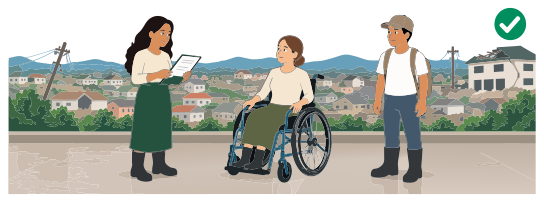
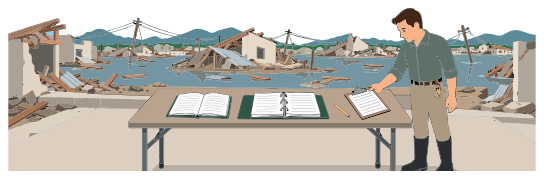
Use:
- attendance lists;
- registration records;
- rosters;
- information from group leaders;
- other available means.
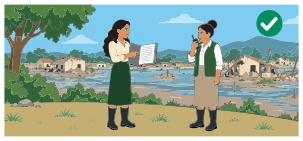
Identify:
- people present;
- injured people;
- people who need assistance;
- people whose whereabouts are unknown.
3.64Do not send people to look for missing persons
If a person is missing:
- gather information about where they were last seen;
- determine who they were with;
- record their information;
- communicate the information to the authorities or responsible teams.
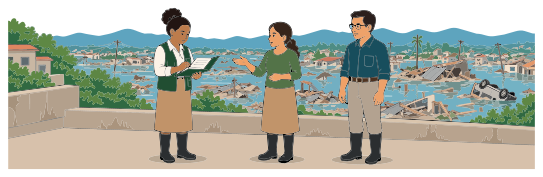
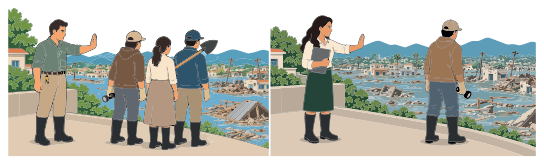
Do not organize improvised groups to return to the affected area while danger or access restrictions remain;
Do not allow family members, volunteers, or members of the institution to return individually.
3.65Care for injured people
Quickly identify those who need care.
Provide first aid within the abilities of the trained people who are present.
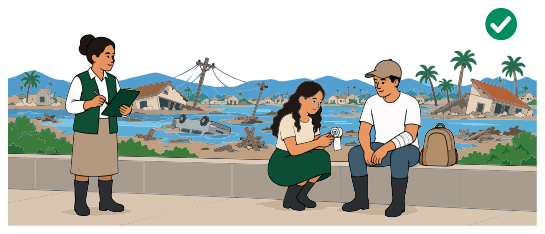
Request professional assistance for:
- major bleeding;
- difficulty breathing;
- loss of consciousness;
- serious injuries;
- burns;
- fractures;
- deep wounds;
- other medical emergencies.
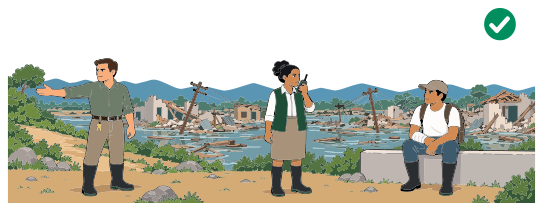
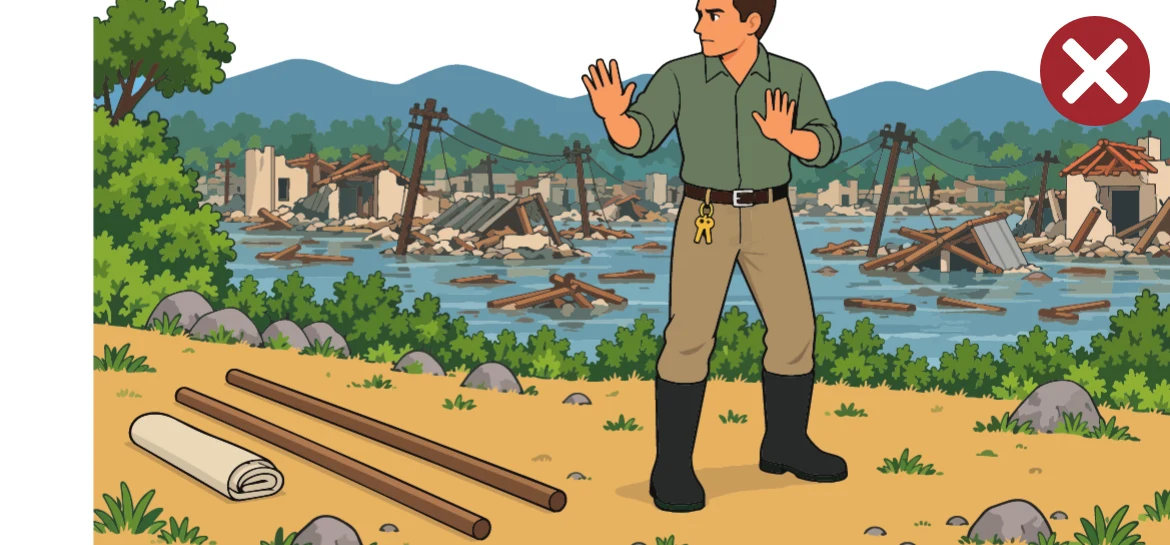
Do not perform procedures that you are not qualified to do.
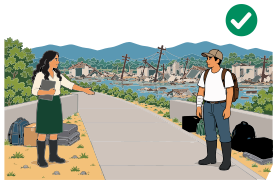
Keep access clear for emergency services.
3.66Organization of the meeting point
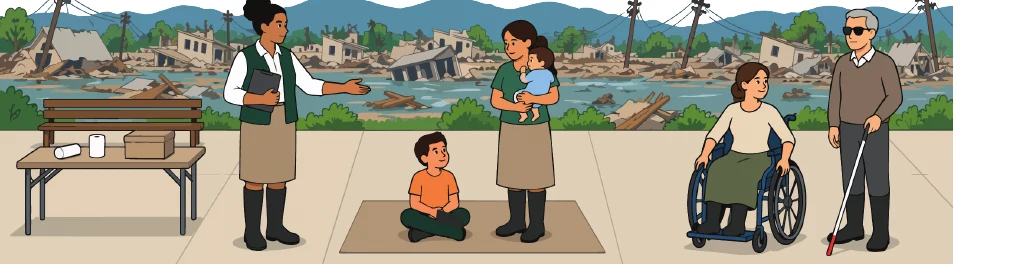
When an institution must remain at a safe point for some time, organize the space to reduce risks.
When conditions allow, establish areas for:
- people who require first aid;
- minors;
- people who need additional assistance;
- water distribution;
- information and registration;
- reunification.
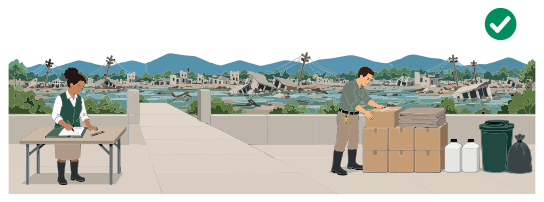
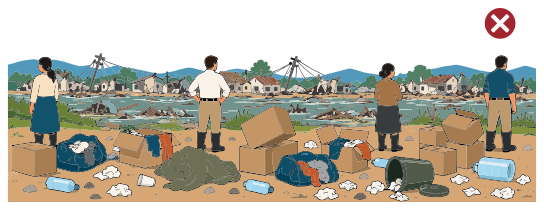
Keep:
- Pathways clear;
- access points unobstructed;
- supplies organized;
- waste controlled;
- information centralized.
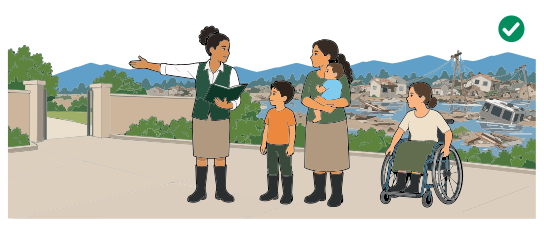
3.67Institutional information
When possible, designate one person responsible for centralizing information.
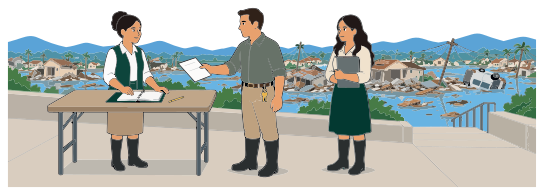
The information must clearly indicate what people should do.
3.68Reunification in institutions
When minors or dependent people have been evacuated under institutional responsibility, apply the previously established reunification procedure.
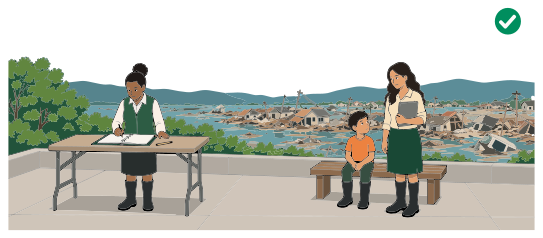
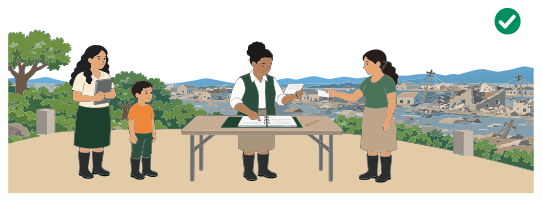
Before releasing a minor:
- verify the adult’s identity;
- confirm that they are authorized;
- record the release when the institutional system allows for it.
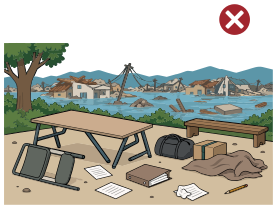
Do not allow the chaos after the disaster to eliminate basic protection controls.
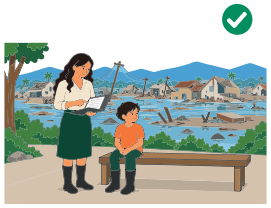
If a family member has not yet arrived, keep the minor under supervision and follow the corresponding procedure.
3.69Do not authorize return on your own
An institution must not independently declare that an evacuated area is safe simply because:
- the water receded;
- no new waves are observed;
- other people began to return;
- the building appears intact;
- someone informally reported that the emergency was over.
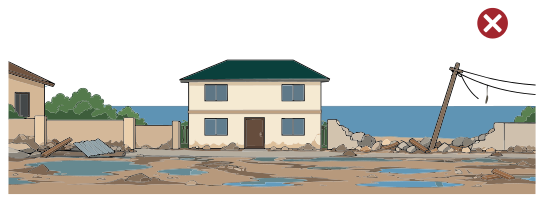
Wait for authorization from the relevant authorities.
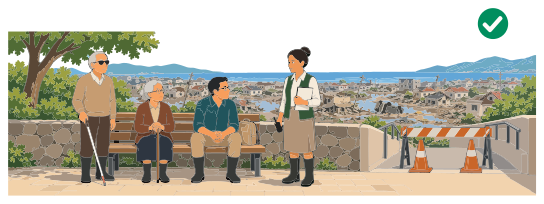
The decision to return must be based on official information, not on personal impressions.
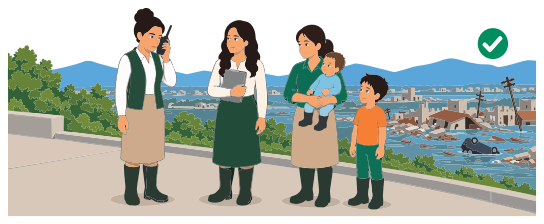
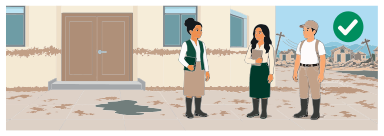
3.70Inspection of the institutional building
Once general return to the area has been authorized, this does not automatically mean that each individual building is safe to occupy.
Before resuming activities, the condition of the facilities must be assessed according to the extent of the damage.
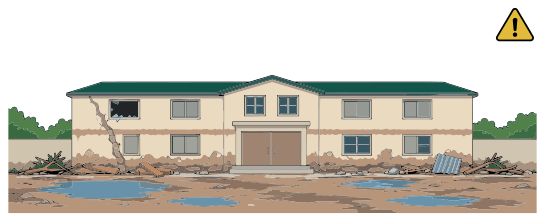
Pay attention to:
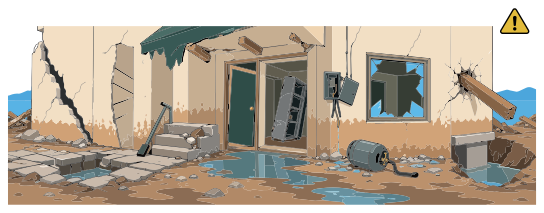
- major cracks;
- damaged walls or ceilings;
- structural irregularities;
- erosion around foundations;
- damage to stairways;
- sinking;
- doors that have become stuck due to structural irregularities;
- unstable heavy objects;
- wet electrical systems;
- gas leaks;
- broken glass;
- damage caused by the impact of debris;
- contaminated water.
If there are signs of structural damage, do not allow entry until the appropriate assessment determines that it can be done safely.
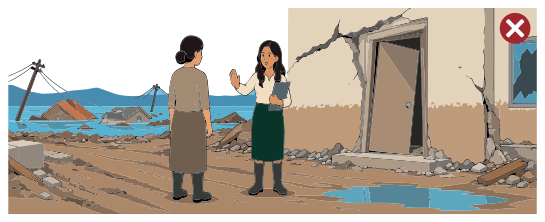
3.71Do not resume activities prematurely
The fact that an institution may be able to re-enter its facilities does not necessarily mean that it is ready to resume its usual activities.
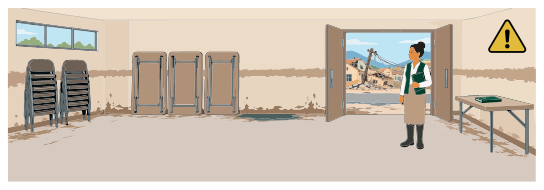
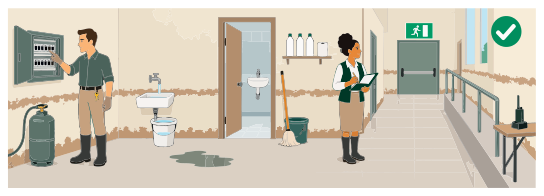
Before reopening, the following must be considered:
- structural safety;
- electricity;
- gas;
- availability of safe water;
- sewage and waste-disposal systems;
- working restrooms;
- accessibility;
- emergency exits;
- communication systems;
- hygienic conditions;
- risks arising from moisture or contamination;
- ability to respond to a new emergency.
3.72Cleaning the facilities
Cleaning tasks must be organized according to the existing risks.
3.73Document damage when it is safe
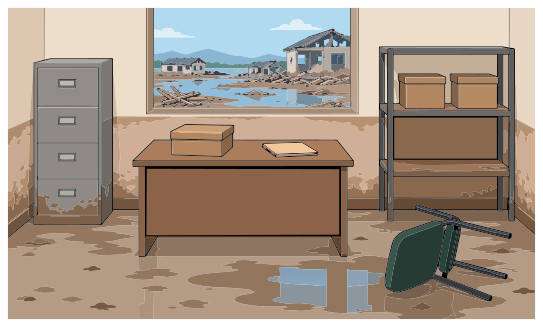
When the authorities allow access and doing so does not pose a danger, the institution may document:
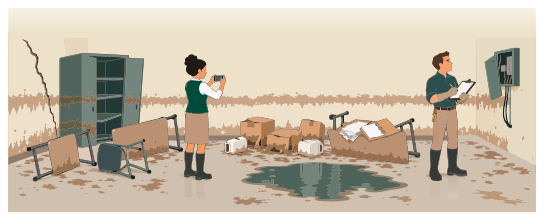
- damaged equipment;
- lost supplies;
- structural damage;
- compromised systems;
- damaged documentation;
- furnishings.
Use photographs, videos, inventories, or other records when necessary for insurance, assistance, repairs, or institutional administration.
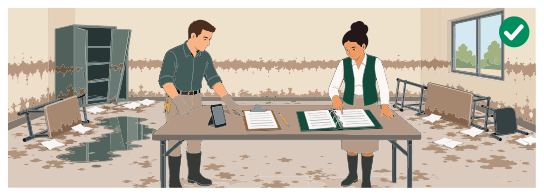
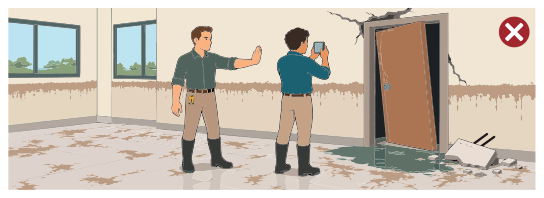
Never enter an unsafe area solely to take photographs or obtain documentation.
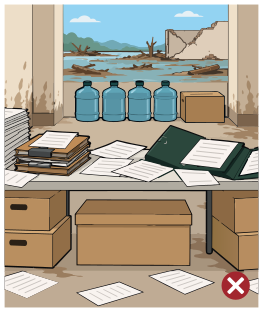
3.74Protect institutional information and documentation
If institutional records have sustained water or physical damage:
- preserve what can be recovered when it can be done safely;
- protect personal and confidential information;
- do not leave sensitive documents in public spaces;
- use the backup copies prepared during the prevention phase when available.
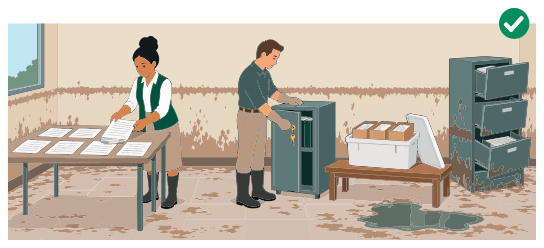
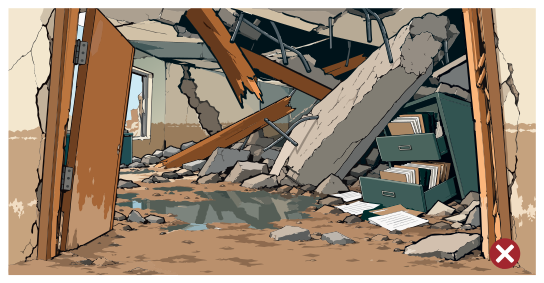
Protecting information is important, but no document justifies entering a dangerous structure.
3.75Coordination with the authorities
Private institutions and community organizations must collaborate with the authorities and agencies in charge of the emergency response.
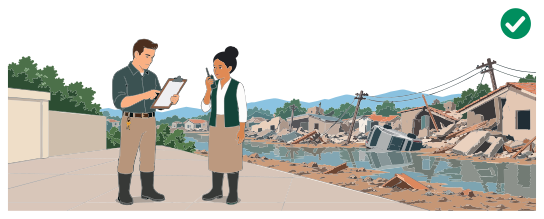
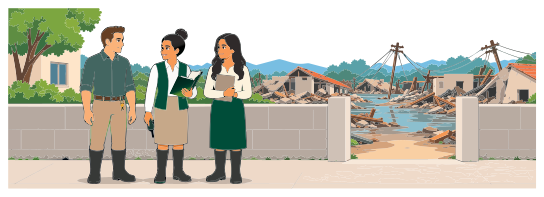
When appropriate:
- communicate the approximate number of people under your supervision;
- report injured persons;
- report missing persons;
- communicate special needs;
- follow instructions regarding shelters and evacuations;
- respect movement restrictions;
- avoid duplicating or interfering with emergency operations.
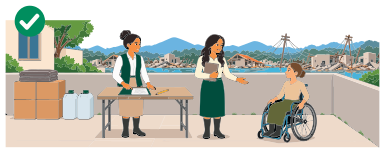
3.76Donations and material aid
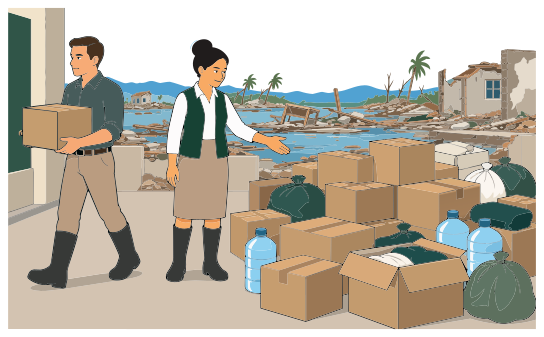
After a disaster, a large volume of donations may be generated quickly.
Before collecting or distributing goods:
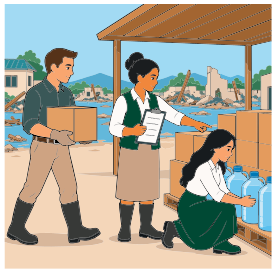
- determine which items are truly necessary;
- coordinate with the responsible organizations;
- organize receipt and storage;
- avoid accumulating products that have not been requested;
- check the safety of food, water, and medications.
Do not distribute food, medications, or health products with questionable origins or storage conditions.
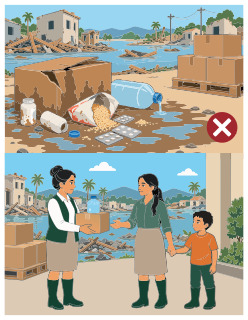
Aid must respond to real needs and must not become an additional logistical difficulty.
3.77Volunteers
Register and organize volunteers when the institution participates in assistance tasks.
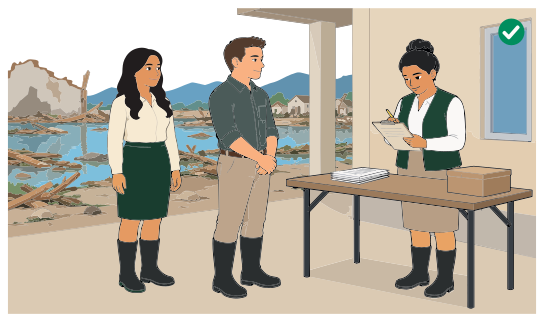
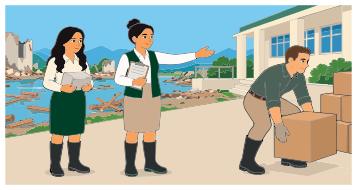
Assign functions according to:
- training;
- experience;
- physical condition;
- existing risks.
Do not allow unprepared volunteers to perform:
- technical search and rescue;
- entry into unstable structures;
- electrical work;
- gas handling;
- intervention involving hazardous substances;
- medical procedures for which they are not trained.
Good intentions do not eliminate risks.
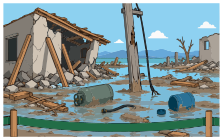
3.78Care for those who help
Institutional leaders, volunteers, caregivers, and members of support teams may also experience:
- exhaustion;
- stress;
- fear;
- sadness;
- irritability;
- difficulty concentrating.
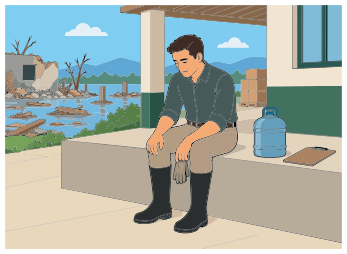
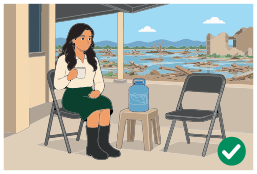
Organize breaks when circumstances allow.
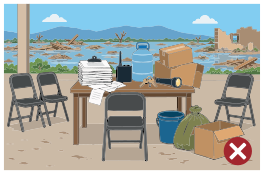
Avoid allowing one person to take on all care, coordination, or assistance tasks for prolonged periods.
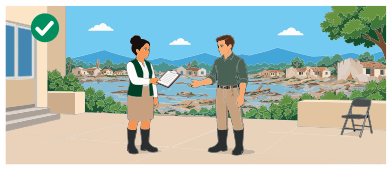
3.79Record of decisions and needs
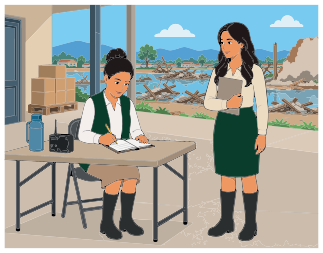
When the immediate emergency has decreased and conditions allow, record:
- people assisted;
- pending needs;
- available supplies;
- identified damage;
- decisions made;
- official communications received;
- actions requiring follow-up.
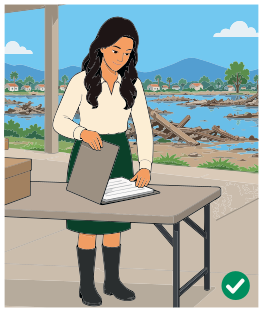
This record will facilitate the continuity of the institutional response and later recovery.
However, do not allow administrative tasks to interfere with immediate safety and assistance needs.
3.80Institutional principle for recovery
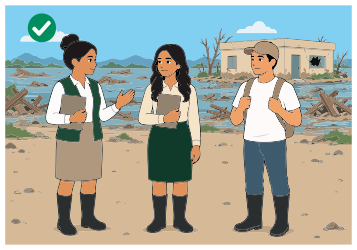
After a tsunami, an institution must act according to a clear sequence:
First, protect people.
Then, verify who is present and who needs help.
Next, coordinate assistance and reunification.
Only when the authorities allow it, assess the facilities and the damage.
Finally, begin an organized and safe recovery.
None of them takes priority over the life and safety of people.
Downloads
© 2026 by Centro del Reino de Paz y Justicia is licensed under Creative Commons Attribution-NonCommercial-NoDerivatives 4.0 International (CC BY-NC-ND 4.0). To view a copy of this license, visit creativecommons.org/licenses/by-nc-nd/4.0.