Activation, evacuation and institutional response
During a tsunami threat, the time available to get everyone in an institution to safety can be extremely short. In a tsunami generated near the coast, the first waves can arrive within minutes, and there may not be enough time to receive an official warning.
In an institution, organization, club, church, temple, educational establishment, community center, association or any other place that brings people together, the response must consist of immediately executing the plan prepared in advance, not designing or discussing a new procedure during the emergency.
The institutional priorities are:
- immediately recognize the natural or official danger signs;
- protect people from the earthquake while the shaking continues;
- activate the Institutional Tsunami Emergency and Evacuation Plan;
- take up the planned chain of command;
- issue a clear evacuation order;
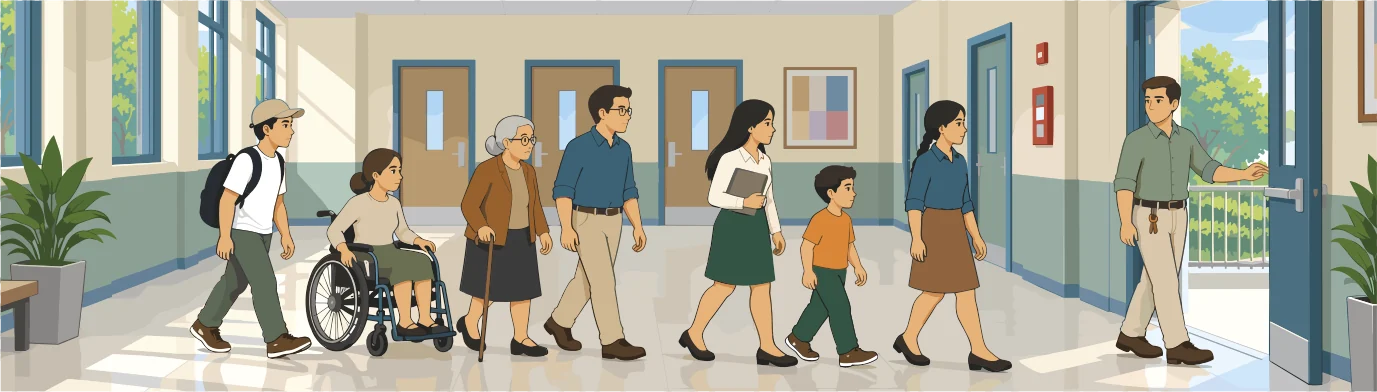
- evacuate everyone as soon as possible;
- guide them along the planned routes toward a safe zone;
- maintain the evacuation flow;
- assist those who need support;
- avoid unnecessary separations;
- carry out the head count once the safe zone is reached;
- inform the authorities of missing, injured, or people needing assistance;
- prevent returning to the threatened zone;
- remain in the safe place until the competent authorities expressly indicate that it may be left.
2.1Recognize the threat and act immediately
Every institution located in a zone susceptible to tsunami must be ready to act on two types of warnings: natural warnings and official warnings. Both do not need to occur simultaneously.
Natural warnings
The main natural signs that may indicate a tsunami is approaching are:
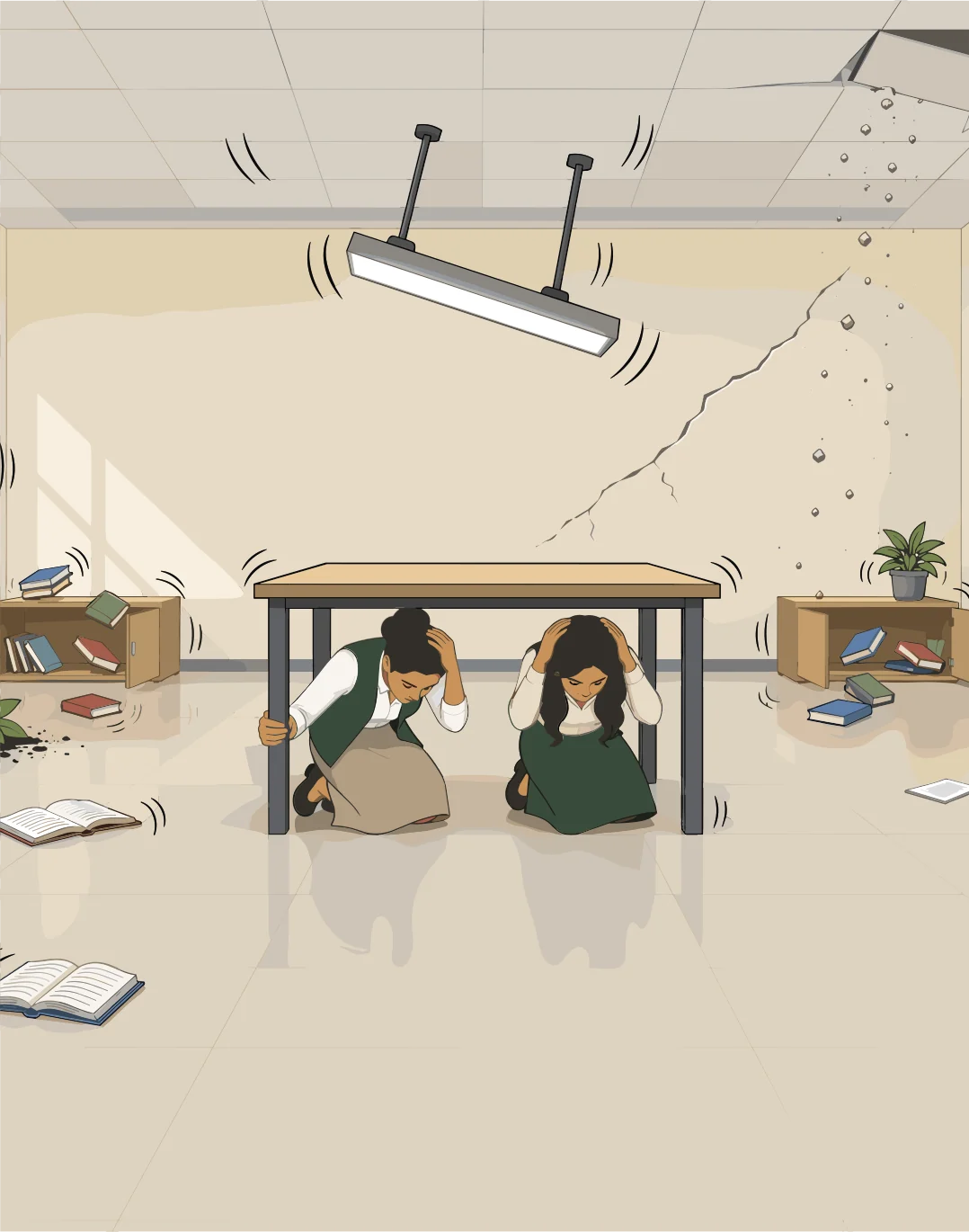
A strong or prolonged earthquake.
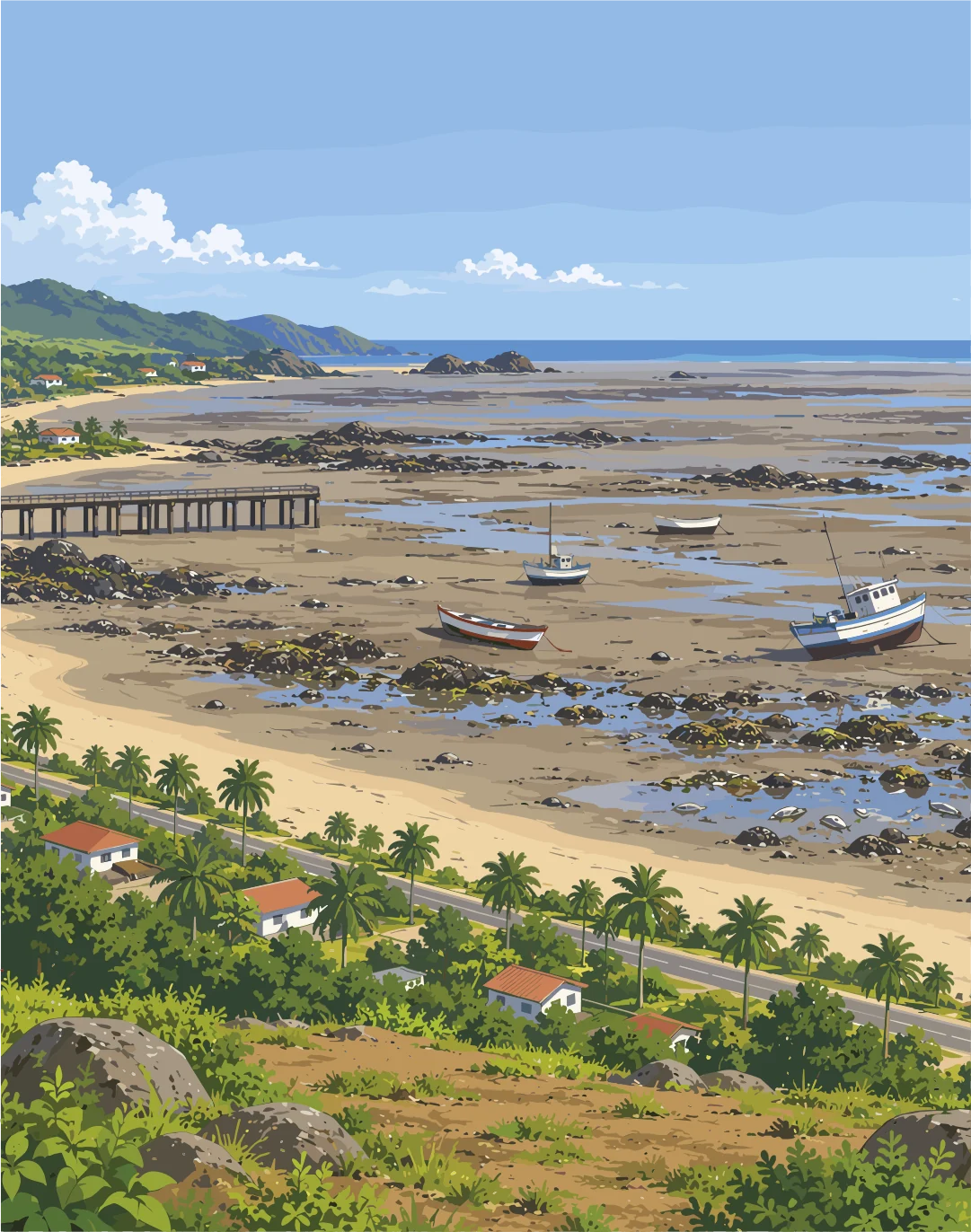
A sudden, abnormal change in sea level, either a considerable withdrawal of the water or a rapid rise.
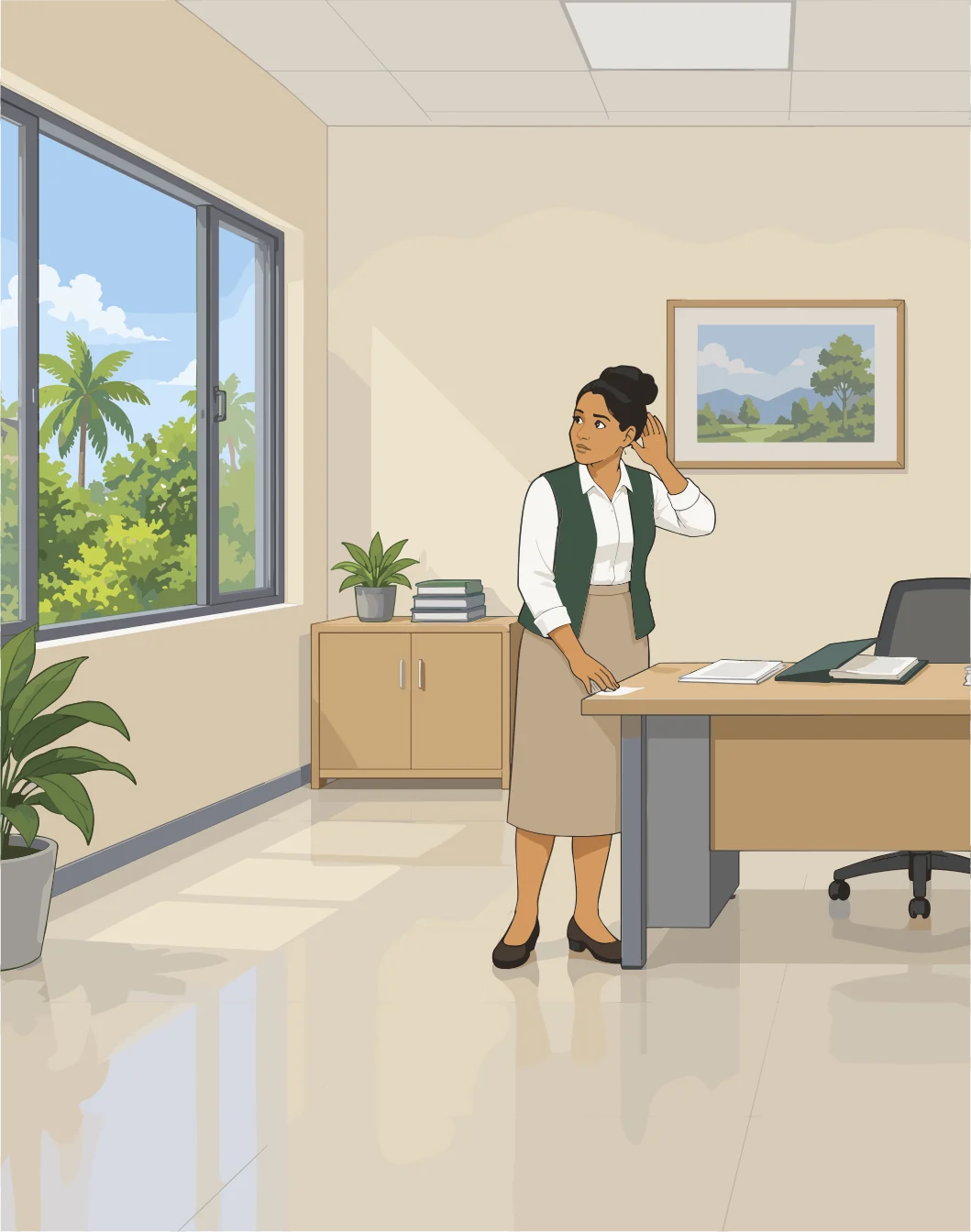
An unusual, loud roar coming from the sea.

These signs do not all need to appear at the same time.
If the establishment is within a zone susceptible to tsunami flooding and any of these signs is detected, the planned institutional procedure must be applied immediately.
If an earthquake is still occurring, people must protect themselves from the shaking first. As soon as it is possible to move safely, the evacuation must begin.
Official warnings
If the authorities issue a tsunami evacuation order or instruction, the institution must immediately activate its plan.
Do not delay the evacuation to:
- carry out administrative inquiries;
- call for meetings;
- locate the institution’s most senior authority;
- personally check conditions at sea;
- verify information on social media;
- wait for additional internal instructions that are not necessary to carry out the plan.
2.2Activate the institutional plan
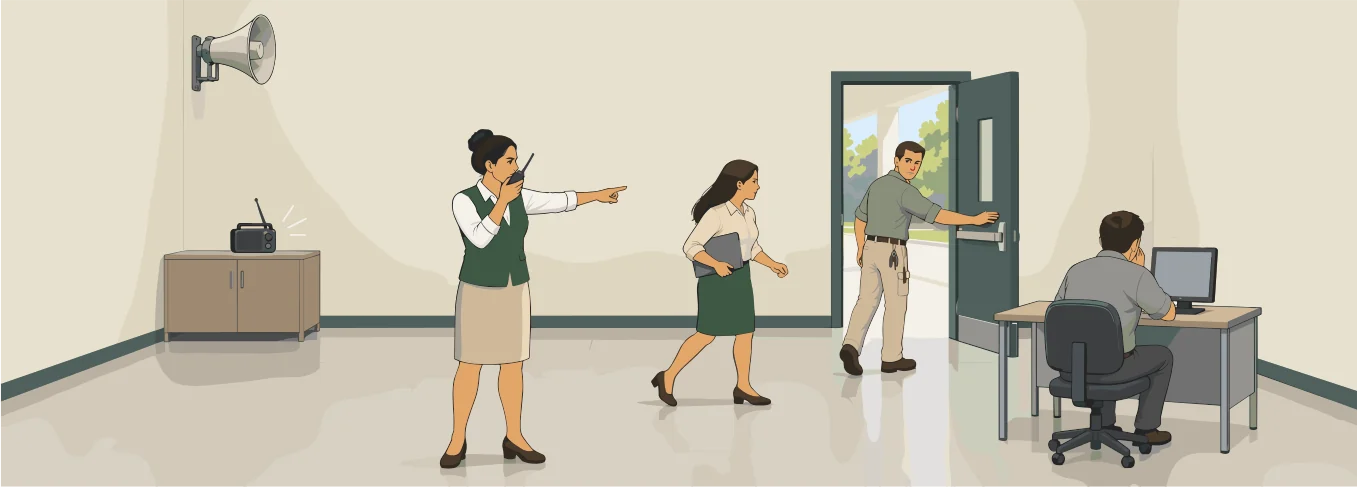
Once the threat is recognized, the designated lead must activate the Institutional Tsunami Emergency and Evacuation Plan.
If the main lead is absent or incapacitated, their alternate must take over immediately.
No time should be lost trying to locate a specific person when the plan establishes a chain of replacements.
Activation must simultaneously set in motion, when applicable:
- the internal alarm;
- the chain of command;
- sector leads;
- group leads;
- assistance leads;
- the evacuation procedure;
- essential communications;
- moving the emergency equipment that is immediately available.
2.3Issue a clear evacuation order
The initial communication must be unambiguous. Use short, firm, operational messages. For example:
“TSUNAMI WARNING*. WE MUST EVACUATE NOW. FOLLOW STAFF INSTRUCTIONS AND FOLLOW THE MARKED ROUTE TOWARD THE SAFE ZONE.”
* Use the official highest-alert term for your country. In the U.S. and Puerto Rico: “Tsunami Warning.”

Do not give speeches or lengthy explanations. Do not use ambiguous expressions such as:
“We might have to leave.”
“It looks like there’s a warning.”
“Let’s wait a little.”
“It’s probably nothing.”
2.4Protect yourself first if the earthquake continues
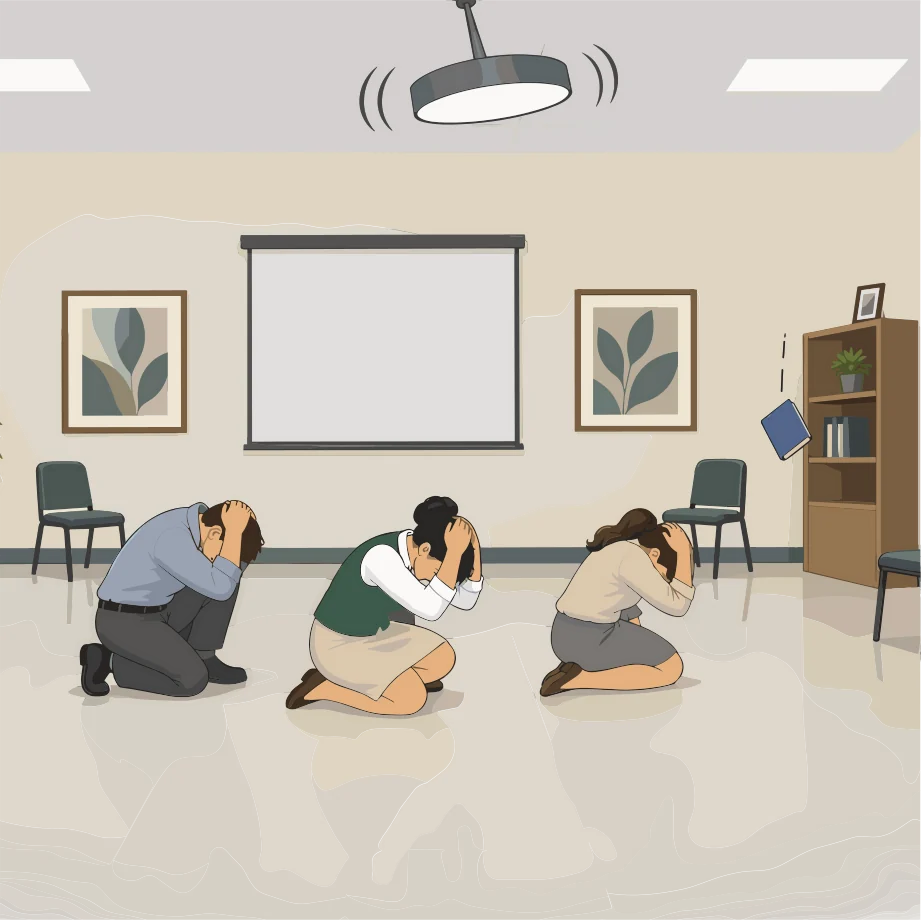
If the tsunami threat is linked to an earthquake that is still occurring, an uncontrolled evacuation must not be attempted during intense shaking if moving would expose people to falls, broken glass, objects, or other immediate hazards.
During the seismic movement:
- protect people from objects that could fall;
- keep them away from windows and glass elements when possible;
- avoid unnecessary movement during intense shaking;
- apply the seismic protection procedures planned for the establishment.
As soon as the shaking allows reasonably safe movement: BEGIN THE EVACUATION WITHOUT DELAY.
2.5Put the chain of command into action
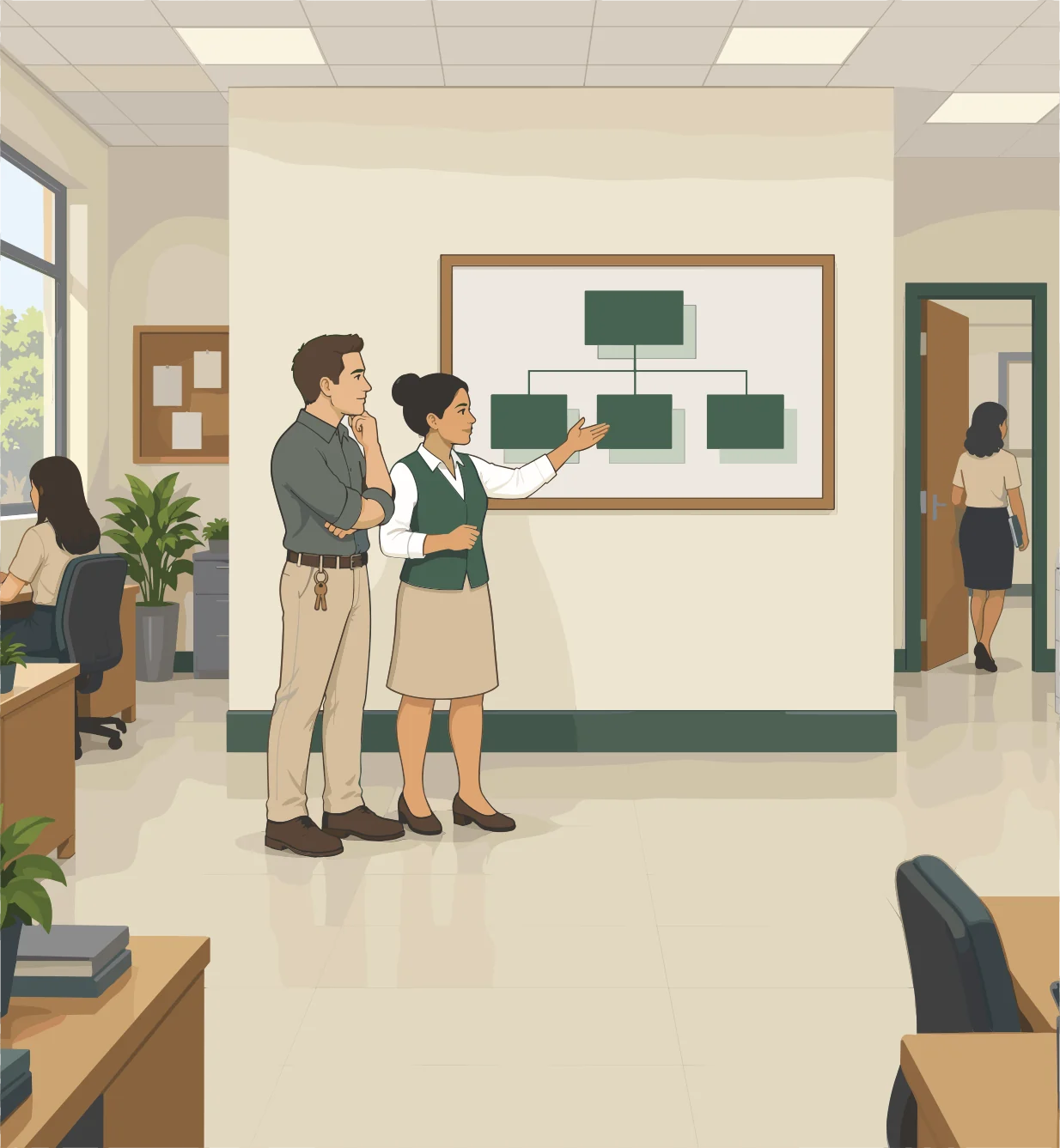
Each lead must immediately take up the role assigned during the preparedness phase.
Depending on the institutional organization, the following may be involved:
- overall lead;
- alternate;
- sector leads;
- group leads;
- assistance leads;
- communications lead;
- first aid personnel;
- emergency equipment lead;
- head count lead.
Each person must carry out their role without unnecessarily interfering with the others.
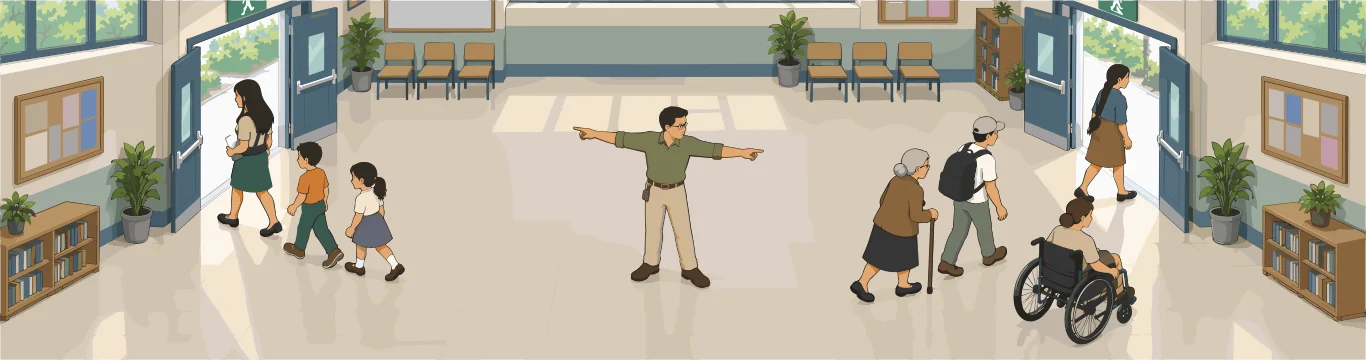
2.6Begin the evacuation
Evacuation must begin as soon as conditions allow movement.
Leads must:
- open and keep the planned exits available;
- direct people toward the established routes;
- distribute the flow according to the plan;
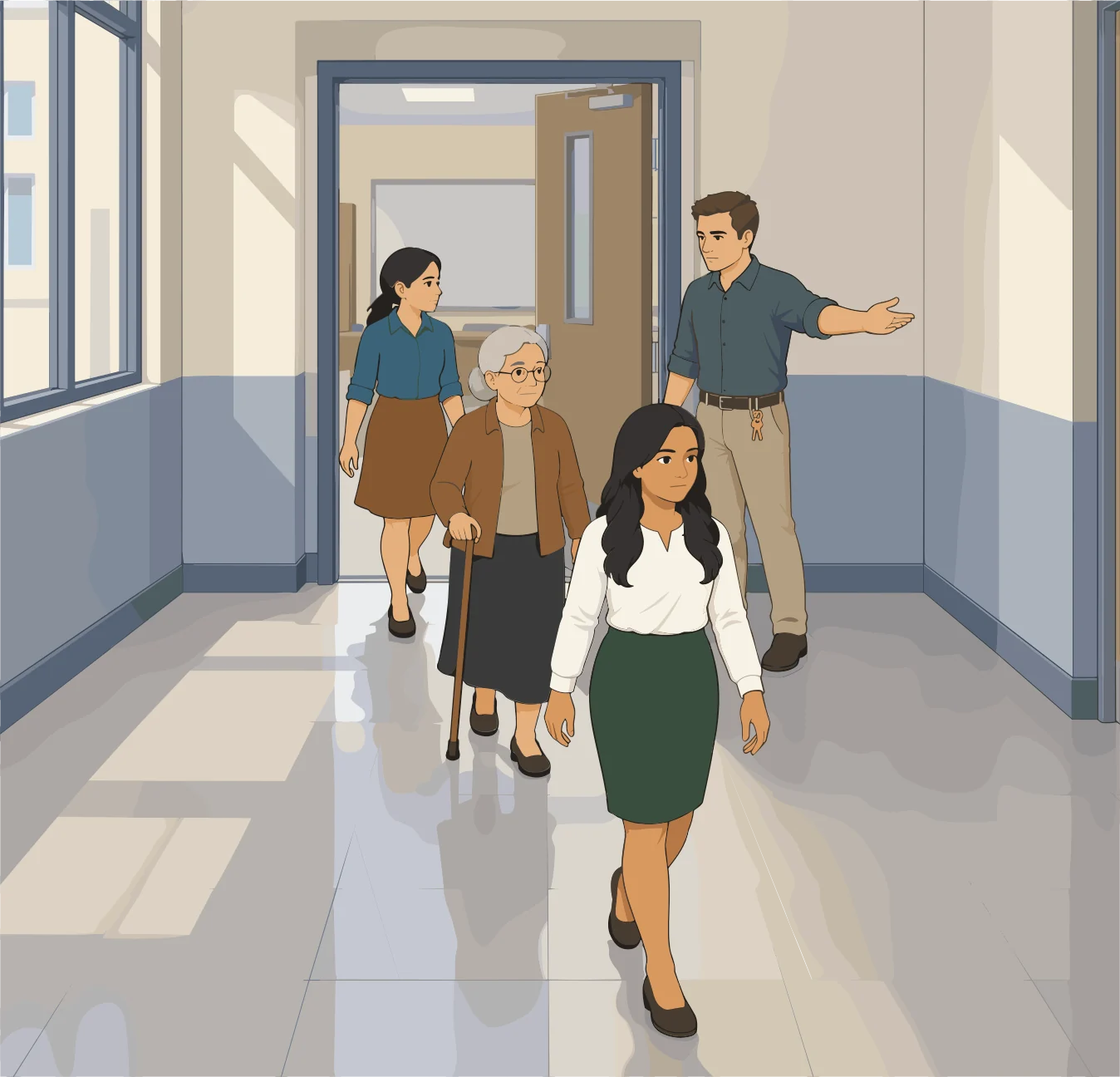
- avoid crowding at doors and in hallways;
- keep circulation routes clear;
- prevent people from turning back;
- assist those who need help;
- keep groups organized when possible;
- continue toward the safe zone.
Evacuation should not wait until everyone is perfectly organized before it begins.
2.7Do not carry out the head count inside the building
Do not delay the evacuation trying to complete a head count before leaving. If the planned records or lists are immediately available and can be taken without delaying the evacuation, take them. If they are not available: LEAVE THEM. Never go back for them.
2.8Use the planned routes
Groups must follow the official routes and the institutional routes established in advance.
While on the move:
- respect the signage;
- follow the authorities’ instructions;
- use the main route while it remains passable;
- use the planned alternative if the main route is blocked or dangerous;
- avoid unnecessary detours;
- keep going until you are completely out of the zone susceptible to flooding.
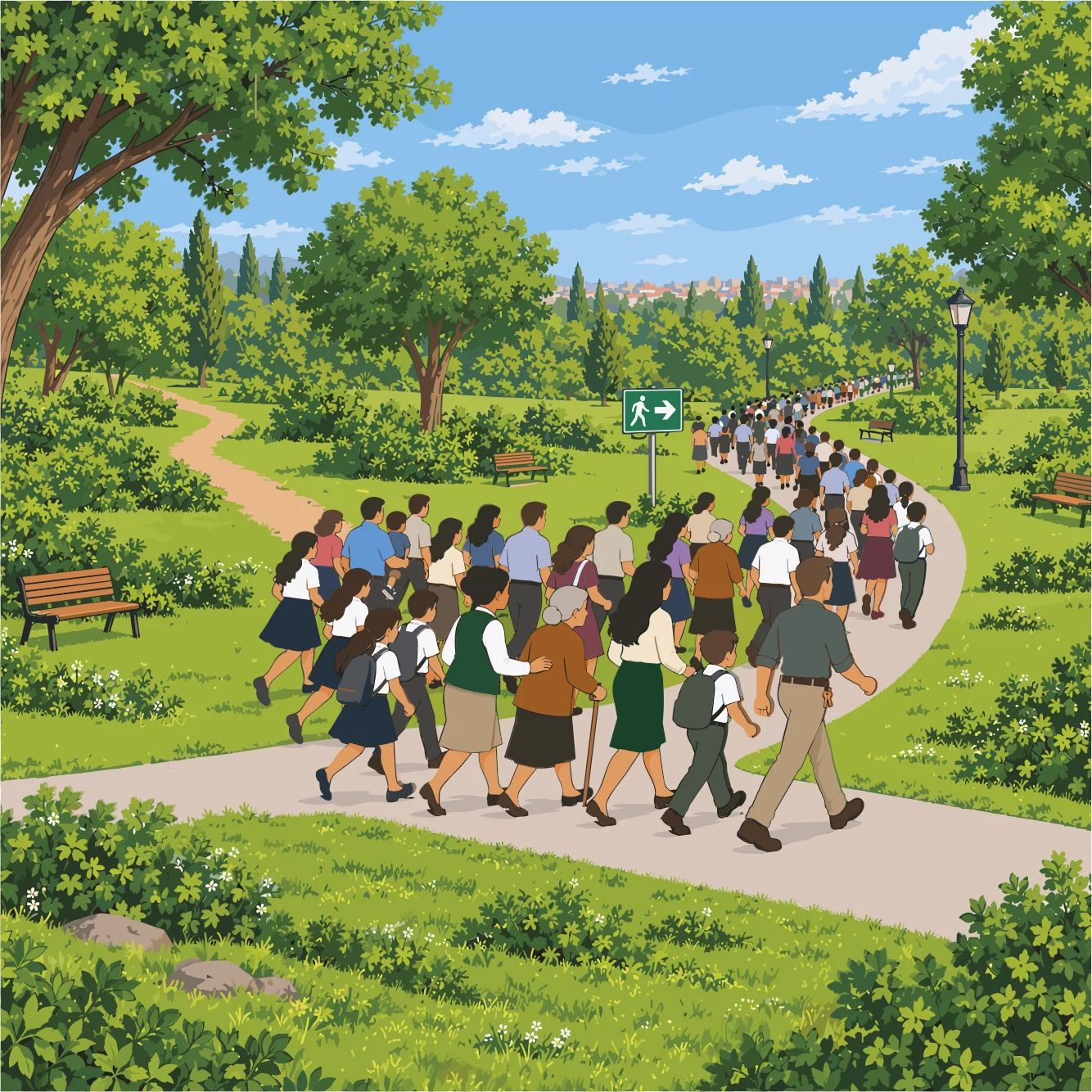
2.9Evacuate mainly on foot
Where the local plan and conditions allow, evacuation on foot must be the preferred option.
After an earthquake there may be:
- blocked streets;
- cracks;
- debris;
- damaged bridges;
- fallen poles and trees;
- traffic lights out of service;
- unstable structures;
- stalled vehicles;
- traffic jams.
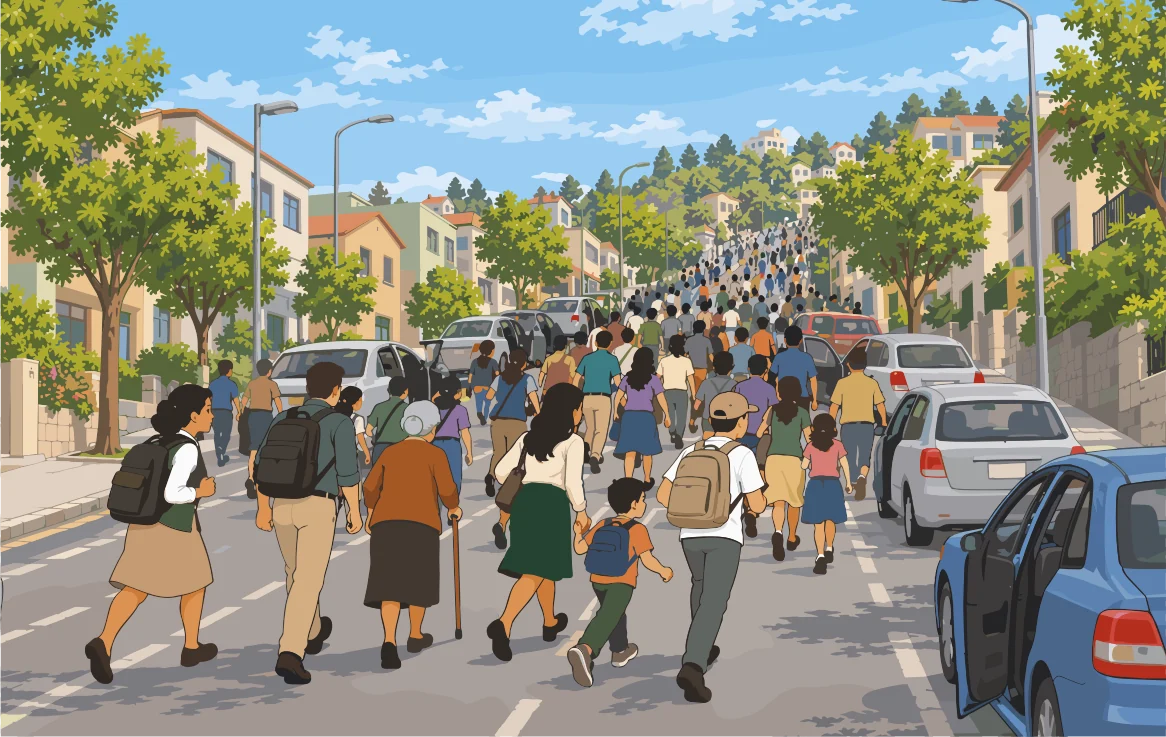
The mass use of vehicles can block the roads and hinder both pedestrians and emergency response. However, an absolute ban on vehicle evacuation must not be established. Where the official plan provides for vehicles for certain people, groups, or circumstances, apply that procedure.
2.10Do not let anyone go back for belongings
Once the evacuation has begun: no one should go back for objects.


Do not let people go back for:
- phones;
- money;
- documents;
- wallets;
- backpacks;
- clothing;
- toys;
- equipment;
- computers;
- sports items;
- religious objects;
- medications;
- vehicles;
- pets;
- other belongings.
If the institutional emergency kit is immediately available and can be carried without delaying departure, it may be taken. If retrieving it means going back, searching for it, or stopping the evacuation: LEAVE IT.
2.11Do not try to protect the facilities
During an immediate threat, those in charge must not stay inside the establishment to:
- close offices;
- put away money;
- secure computers;
- protect documentation;
- close shutters;
- move vehicles;
- disconnect equipment;
- protect facilities;
- retrieve valuables;
- take inventory;
- check for damages.
Planned technical actions to reduce risk should only be carried out if they can be done immediately, safely, and without delaying the evacuation.
2.12Avoid crowding and bottlenecks
In places with large concentrations of people, a disorganized evacuation can create additional risks.
Leads must:
- distribute the flow among the planned exits;
- prevent people from stopping at doorways;
- avoid unnecessary crossing between groups;
- keep hallways and stairs clear;
- avoid uncontrolled running;
- prevent pushing;
- keep a continuous movement toward the outside;
- prevent people from stopping immediately after passing through an exit.
2.13Do not use elevators
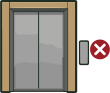
After an earthquake or during an emergency evacuation, elevators must not be used as an ordinary means of evacuation, given the possibility of:
- power outages;
- mechanical failures;
- structural damages;
- service interruptions.


2.14Keep groups organized
Where the institution has previously defined groups —classrooms, teams, congregations, workshops, sectors, residences, or other units— try to keep them together during the evacuation whenever doing so does not delay movement.
Each lead must:
- lead their group;
- use the assigned route;
- avoid separations;
- prevent members from turning back;
- assist those who need it;
- continue to the safe point;
- carry out the head count there.
2.15Children and adolescents
When minors are under institutional responsibility, the designated adults must immediately take charge of leading them.
Minors must:
- stay with their group;
- follow the adult responsible;
- continue along the indicated route;
- not go back for belongings;
- not leave the group to look for family members;
- not stop to look at the sea.
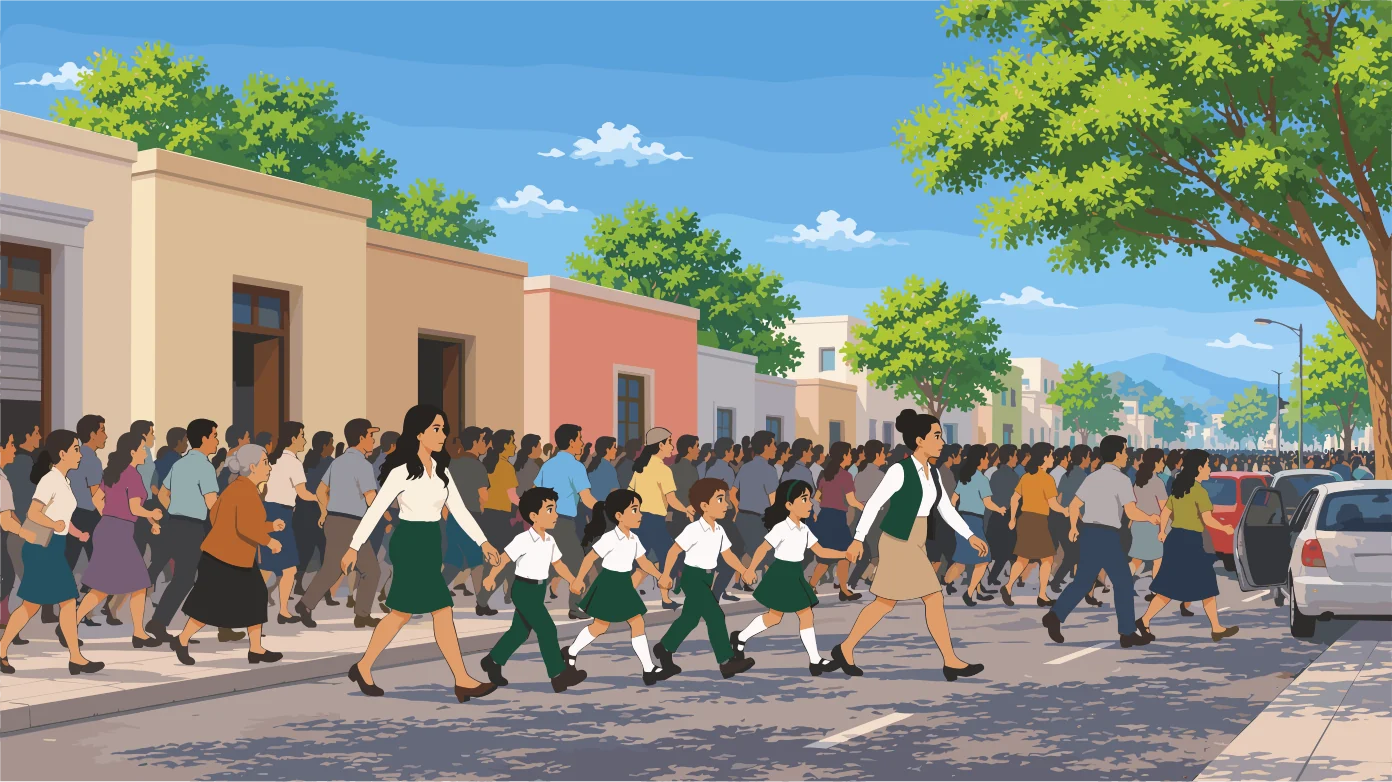
Leads should use short instructions:
“STAY WITH THE GROUP.”
“KEEP WALKING.”
“DO NOT GO BACK.”
“WE ARE GOING TO THE SAFE PLACE.”
2.16Babies and young children
The procedures planned during the preparedness phase must be carried out immediately.
Leads must:
- keep children under direct control;
- use the previously established means of carrying them;
- avoid separations;
- carry those who cannot move fast enough;
- use carrying or transport systems available when they are part of the procedure;
- avoid unnecessary loads;
- keep moving toward the safe zone.
2.17Do not let family members interrupt the evacuation
When children, adolescents, or other dependent people are under the institution's responsibility, the institutional evacuation and reunification procedure must be applied.
Evacuation must not be stopped while waiting for family members to arrive. Nor should a person be handed over at a location that compromises the continuation of the evacuation, if doing so contradicts the established procedure.
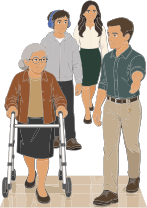
2.18People with disabilities and people who need support
Immediately activate the assistance procedures previously prepared.
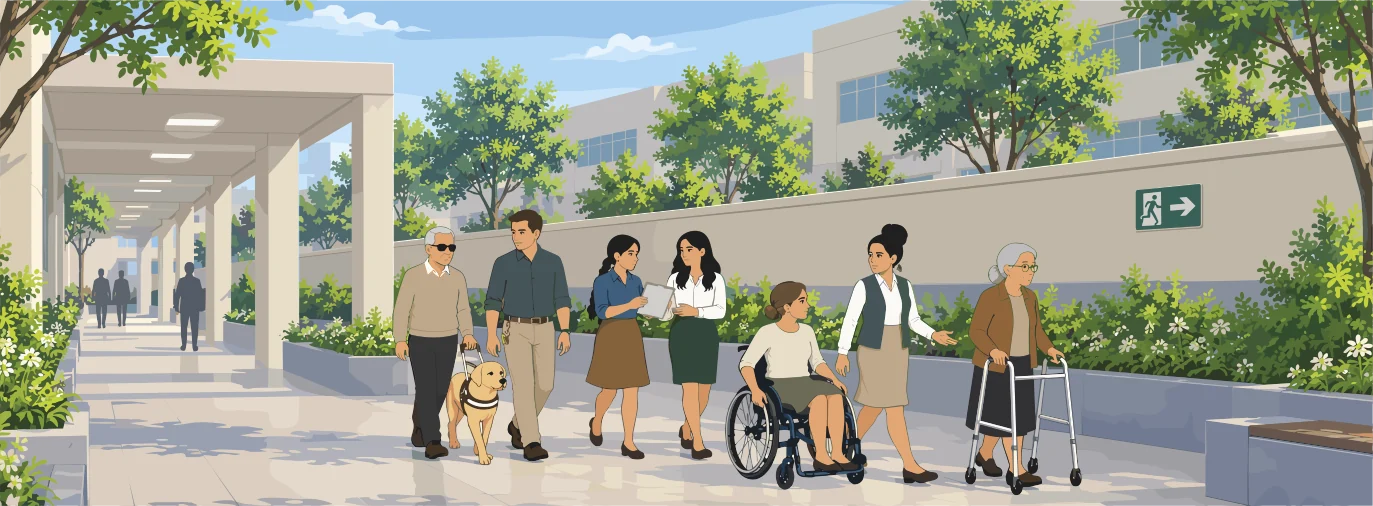
Needs may be related to:
- mobility;
- vision;
- hearing;
- communication;
- comprehension;
- orientation;
- transportation;
- medical equipment;
- medications;
- service animals;
- personal assistance.
Do not assume that every person with a disability needs the same kind of help. When possible, ask: “HOW CAN I HELP YOU?”. Respect the person's own instructions about the safest way to assist them.
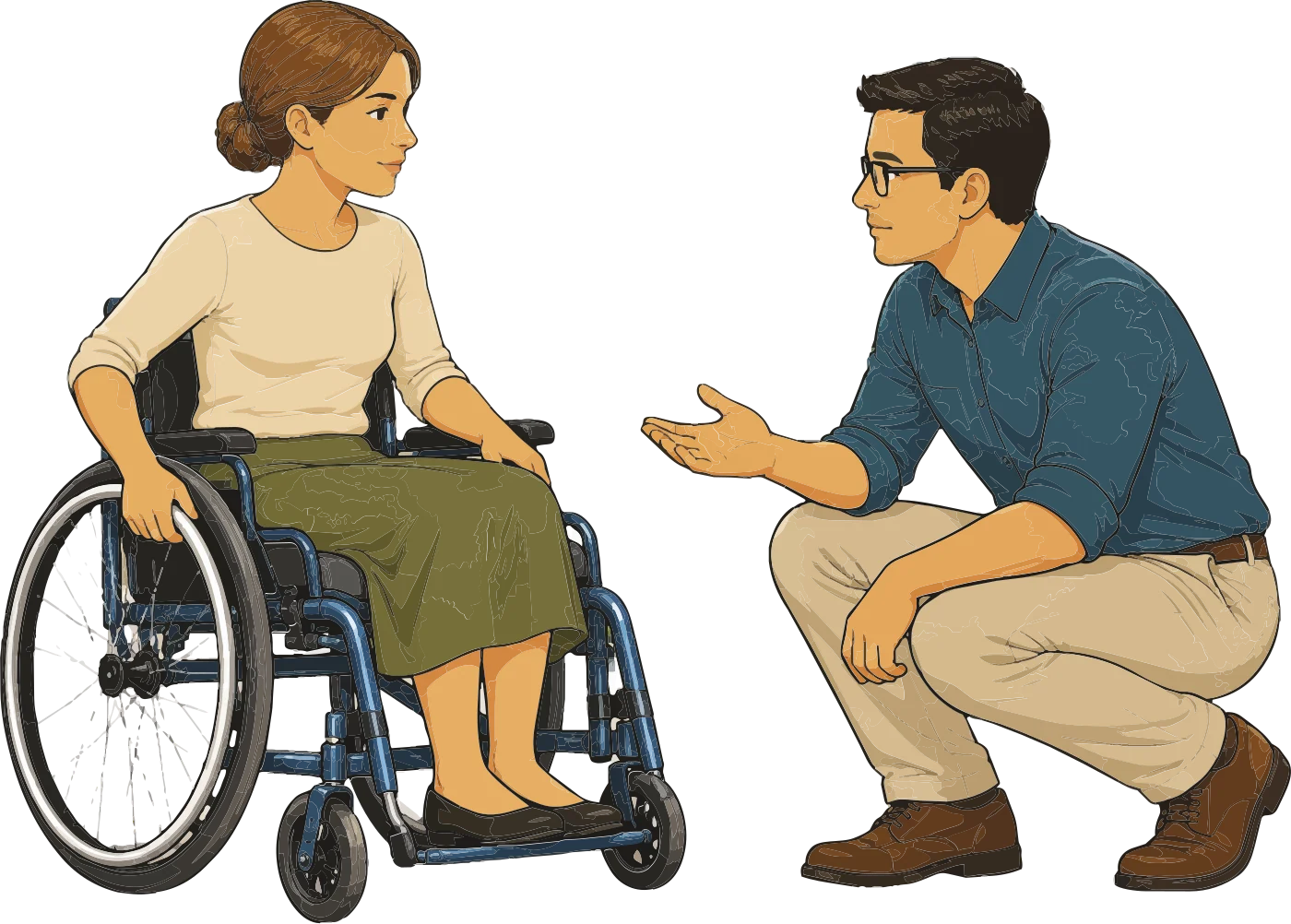

1. People with reduced mobility
When a person uses:
- a wheelchair,
- a cane,
- a walker,
- crutches,
- a prosthesis,
- another mobility device,
try to keep them together with their device whenever possible.
Use the planned accessible route. Do not improvise lifting or carrying techniques.
Exceptions: if a person must be physically moved and there is immediate danger, apply the techniques staff have been previously trained for and, when possible, follow the person's own instructions.

2. People with visual impairments
Identify yourself before providing assistance. Do not take hold of or pull the person without warning them.
If they accept help:
- ask how they prefer to be guided;
- describe obstacles;
- warn them about steps;
- indicate changes in level;
- report changes of direction;
- use concrete spatial references;
- keep their cane, service dog, or other essential item with them.
Avoid ambiguous instructions such as “over there” or “watch out.”

3. People with hearing impairments
Do not assume that an audible alarm or loudspeaker message was perceived.
Use:
- visual signals;
- eye contact;
- clear gestures;
- short written messages;
- available communication devices;
- sign language when trained staff are available.
A message can be: “TSUNAMI — EVACUATE NOW — FOLLOW ME.”
The priority is to confirm that the person understood that they must evacuate and where they should go.

4. People with intellectual, cognitive or developmental impairments and neurodivergent people
Alarms, crowds, shouting, damage, and abrupt changes in routine can cause disorientation or overload.
Use:
- short instructions;
- one instruction at a time;
- familiar language;
- pictograms or gestures when useful;
- the company of a familiar person when possible;
- regulating items that are immediately available and do not delay the evacuation.
Avoid shouting or giving several orders at once. Do not use physical restraint as a general procedure.

5. Older adults and other people who need assistance
Others who may also need help:
- older adults;
- people with temporary injuries;
- pregnant women;
- people with respiratory or cardiovascular difficulties;
- disoriented people;
- people who do not understand the language;
- visitors;
- injured people.

6. People with special medical needs
If a person depends on:
- medications;
- oxygen;
- electrical equipment;
- communication devices;
- medical supplies;
- other essential items;
try to keep these items with them when they are immediately available and can be carried without compromising the evacuation.
Do not dangerously delay departure looking for equipment or supplies that are not available at that moment.

7. Service animals
Service animals must stay with the person they assist whenever circumstances allow. They must not be treated simply as pets, since they may perform essential functions related to:
- orientation;
- mobility;
- alerting;
- functional support;
- other needs of the person.
Avoid separating the person from their service animal.
2.19Pets and other animals
When an institution allows or houses animals, apply the planned procedure. If an animal can be evacuated immediately without compromising people's safety, evacuate it.
Do not let a person:
- go back for a pet;
- chase an animal into the threatened zone;
- block a route trying to control an animal;
- expose other people to recover an animal.
2.20Guide visitors and people unfamiliar with the location
Visitors may not know the:
- tsunami signs;
- exits;
- routes;
- safe points;
- signage;
- language used;
- institutional procedure.
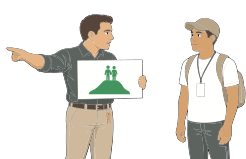
Staff must give simple, direct instructions.
- Do not assume a visitor will spontaneously follow others.
- Use signage, gestures, and pictograms when necessary.
- The goal is to quickly bring visitors into the organized evacuation flow.
2.21People who do not understand the language spoken
A language barrier must not prevent evacuation.
Use:
- pictograms;
- signage;
- gestures;
- demonstrations;
- short messages in available languages;
- direct accompaniment.

Tsunami

Walk

Go up

Safe place
The essential instruction must be understandable:
“TSUNAMI — EVACUATE NOW — FOLLOW THIS ROUTE.”
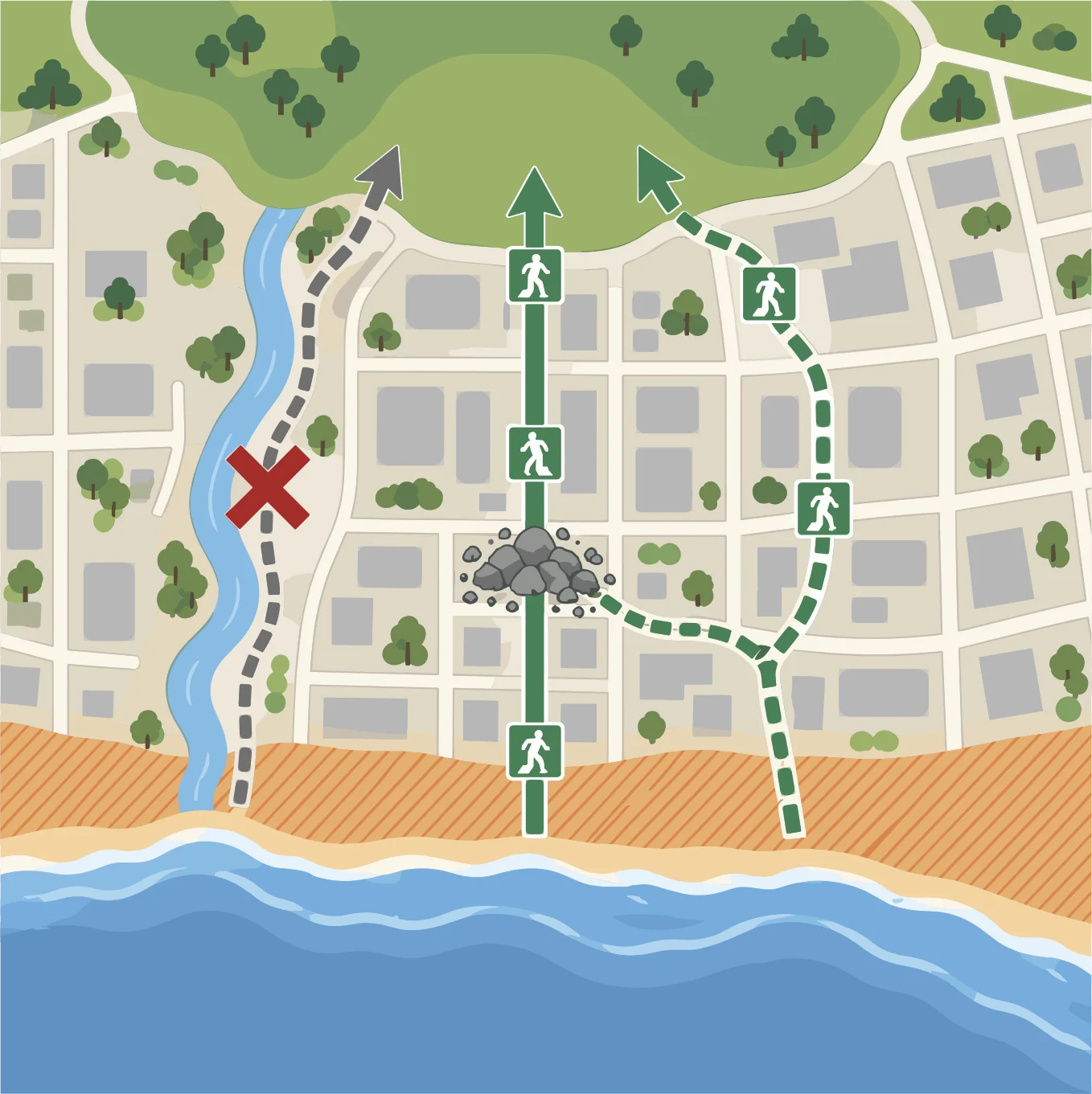
2.22If the main route is blocked
Do not stop the entire evacuation waiting for it to clear.
Activate the planned alternative route.
- Leads must immediately communicate the change to the affected groups.
- Prevent different groups from trying to go back against the direction of the evacuation flow.
- If no planned route can be used, follow the authorities' instructions and use whichever alternative allows the greatest safety in moving away from the threat zone.
2.23Move away from rivers, canals, estuaries, ports and river mouths
The danger is not limited to the beach.
Waves and currents can travel inland through:
- rivers;
- estuaries;
- canals;
- river mouths;
- bays;
- ports;
- coastal lagoons;
- other channels connected to the sea.
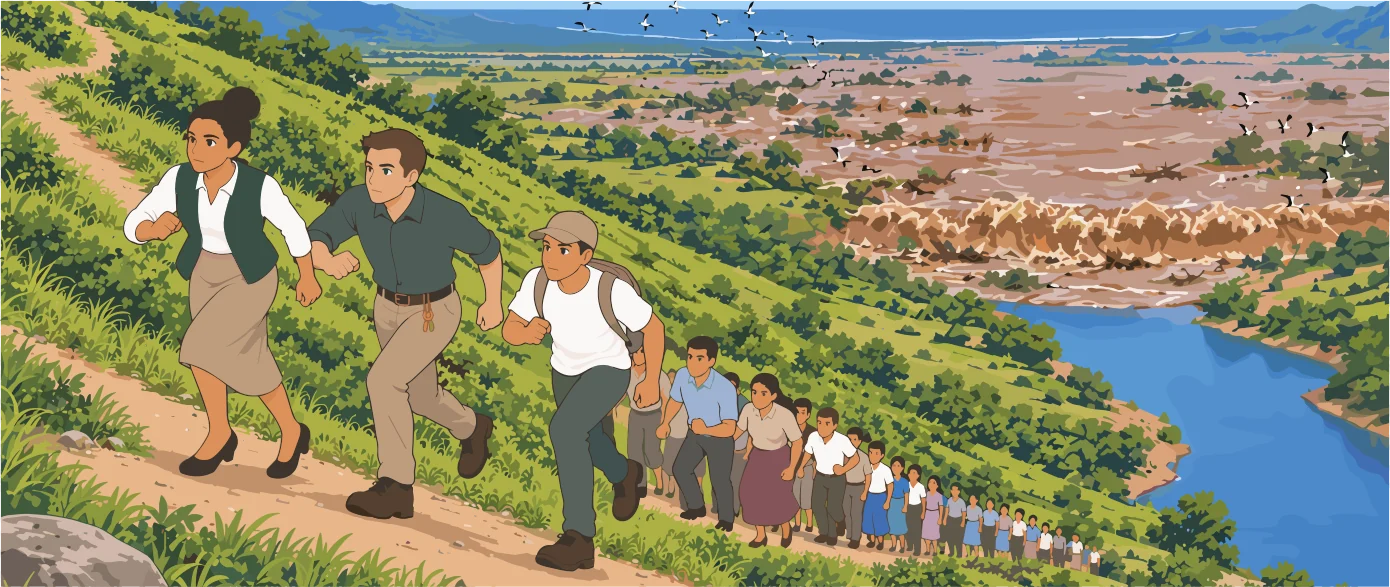
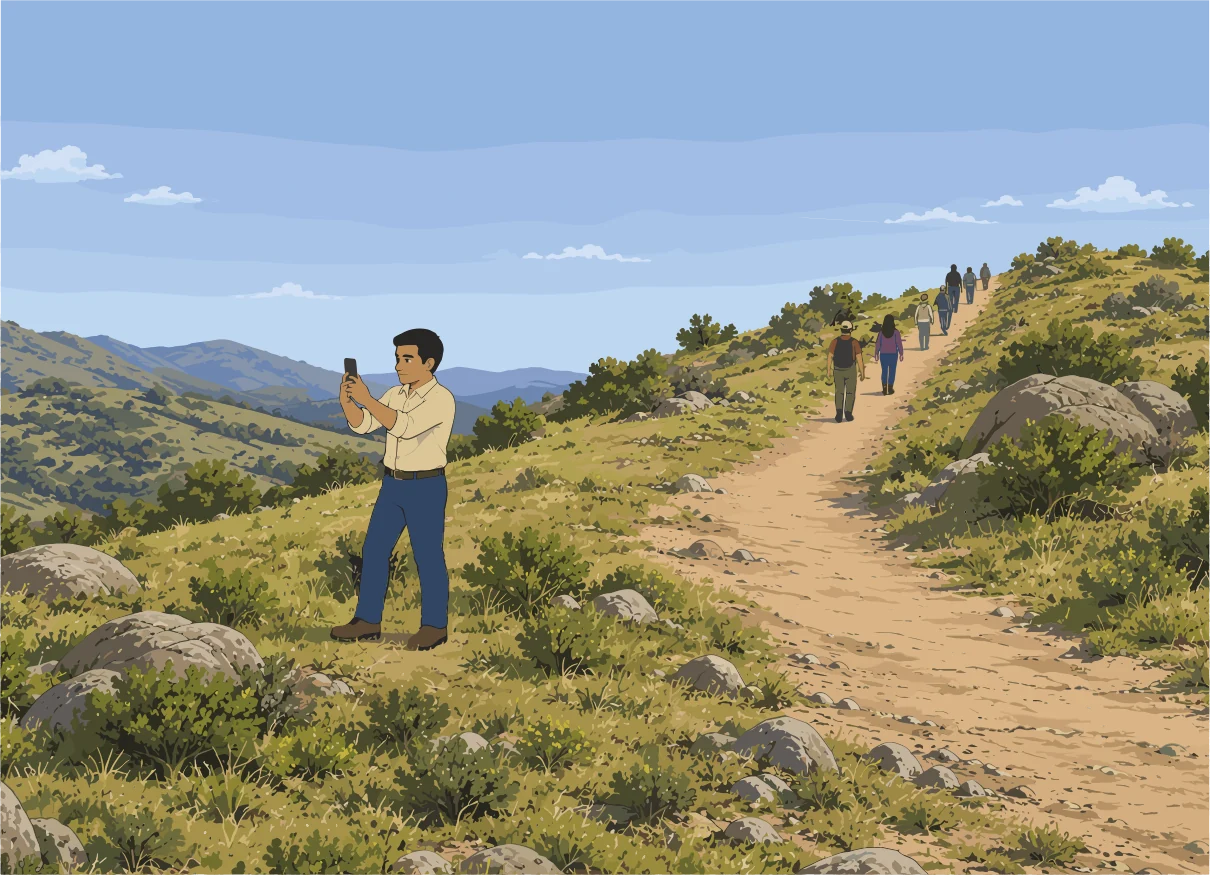
2.24Do not let anyone go near the sea
No one should leave the evacuation to:
- watch the tsunami;
- photograph it;
- record it;
- broadcast it;
- watch the sea withdraw;
- collect objects;
- approach boats;
- check what is happening.
2.25Vertical evacuation
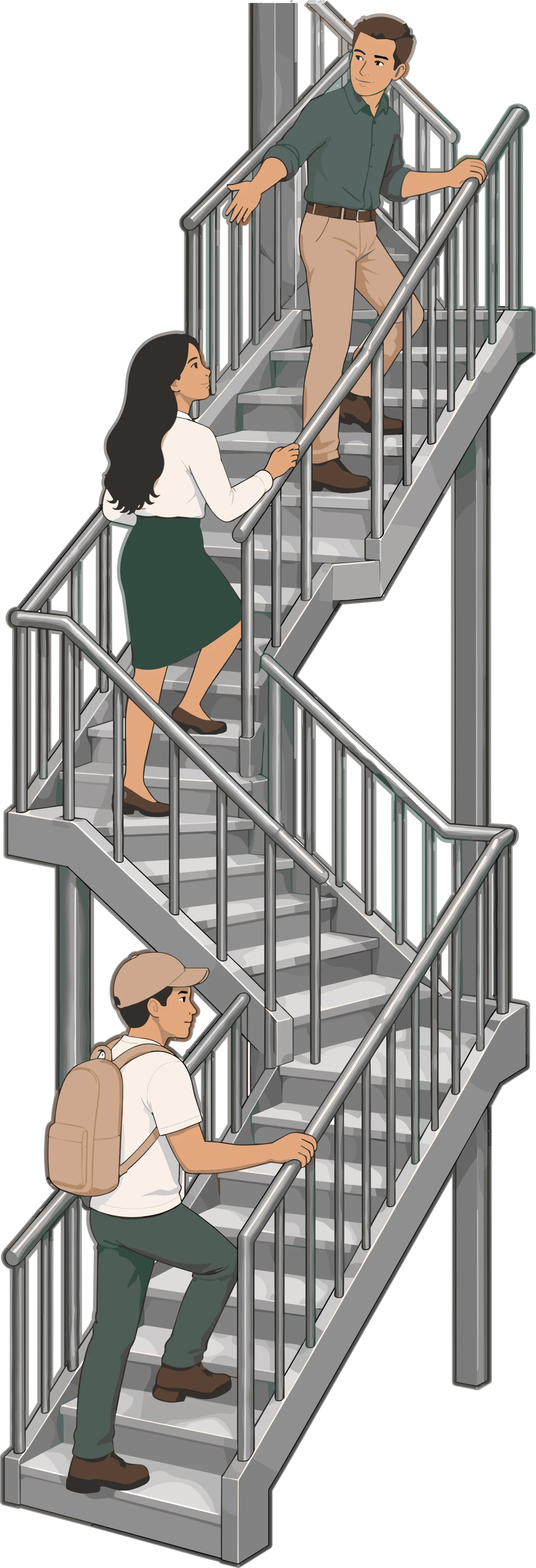
The first option must be to reach a safe zone outside the area susceptible to flooding. If the time available does not allow this, proceed according to one of the following situations:
1 WHEN A STRUCTURE IS OFFICIALLY DESIGNATED FOR VERTICAL EVACUATION
Leads must:
- direct people toward the structure;
- use the stairs;
- do not use elevators;
- maintain the flow;
- assist those who need help;
- avoid pushing;
- climb to the levels established as safe;
- keep people away from edges, windows, and unstable elements;
- carry out the head count when possible;
- remain there until official instructions are received.
Do not assume that any tall building is automatically safe against a tsunami. Give priority to structures identified for vertical evacuation. A building that looks solid is not, by itself, a guarantee of safety.
2 WHEN NO STRUCTURE IS OFFICIALLY DESIGNATED FOR VERTICAL EVACUATION
If the water is imminent, there is no time to leave the area, and no officially designated structure exists, you must look for the available alternative that offers the greatest height and protection, giving priority to sturdy structures.
This is an extreme survival measure.
It does not mean that any building chosen is capable of withstanding a tsunami.
2.26If aftershocks occur during the evacuation
After a strong earthquake, new shakings may occur.
If an aftershock occurs:
- protect yourself from objects that could fall;
- move away from facades;
- avoid poles and cables;
- stay away from damaged walls;
- be careful around falling debris;
- resume evacuating as soon as you can move safely.
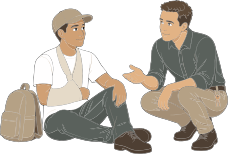
2.27If there are injured people
Apply the planned first aid and assistance procedures without losing sight of the main threat.
If an injured person can move:
- help them;
- accompany them;
- continue toward the safe zone.
If they cannot move:
- activate the planned assistance procedure;
- request help;
- use the available means of transport;
- avoid maneuvers staff are not trained for, unless there is an immediate danger that makes moving them essential.
2.28Do not send staff to look for missing people
If a person is found to be missing during the evacuation, do not automatically send someone back into the establishment or into the threatened zone. Continue the evacuation.
Once the safe zone is reached:
- confirm the absence;
- gather the available information;
- determine where they were last seen;
- report the situation to the emergency services.
2.29Carry out the head count in the safe zone
Once the planned point is reached:
- organize the groups;
- keep access routes clear;
- carry out the head count;
- use the available lists;
- identify injured people;
- identify people who need assistance;
- determine whether anyone is missing;
- report incidents to the overall lead.
2.30Keep people in the safe zone
Once evacuated, people must stay out of the threat zone.
Do not let them go back to:
- look for belongings;
- check for damage;
- recover vehicles;
- look for pets;
- take photos of the establishment;
- look for family members;
- help clean up;
- retrieve objects;
- check whether the water has gone down.
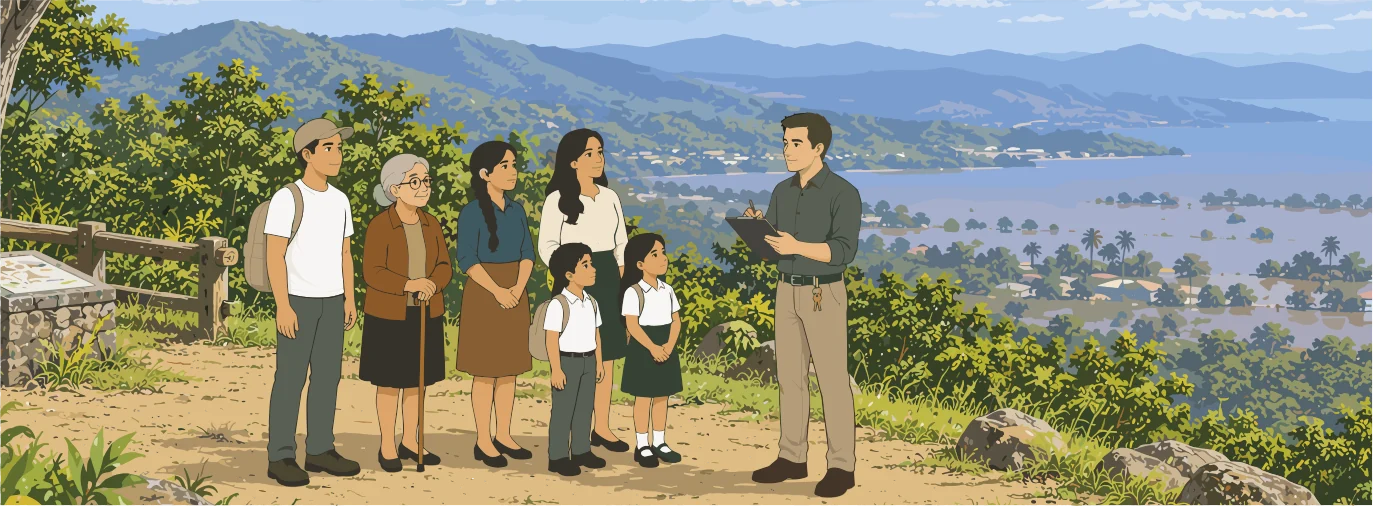
2.31A tsunami can have multiple waves
A tsunami does not necessarily consist of a single wave. It may produce a series of waves and currents. The first wave will not necessarily be the largest, and dangerous conditions can continue for hours.
For that reason:
- do not leave the safe point after the first wave;
- do not interpret the water receding as the end of the threat;
- do not allow people to return;
- keep monitoring official communications.

2.32Control access to the evacuated area
When it is possible to do so from a safe position, leads must prevent members, visitors, or family members from going back to the establishment.
If a person insists on entering an officially evacuated zone, inform the competent authorities.
2.33Communications during the evacuation
Communication is important, but it must never delay departure.
Prioritize
- evacuate;
- remain in charge of the groups;
- receive official information when possible;
- communicate essential incidents;
- inform family members when conditions allow.
DO NOT STAY INSIDE THE THREATENED ZONE:
- making long calls;
- sending administrative communications;
- posting on social media;
- recording videos;
- looking for news;
- verifying rumors.
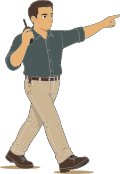
Do not depend exclusively on a mobile phone
Telecommunications can:
- become saturated;
- be interrupted;
- lose coverage;
- suffer power outages;
- work erratically.
The lack of a phone notification does not mean there is no danger.
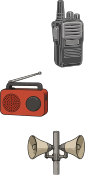
Use the planned alternative means:
- radio;
- public alert systems;
- megaphones;
- internal communications;
- emergency channels;
- other available means.
- other available means.
External institutional communication
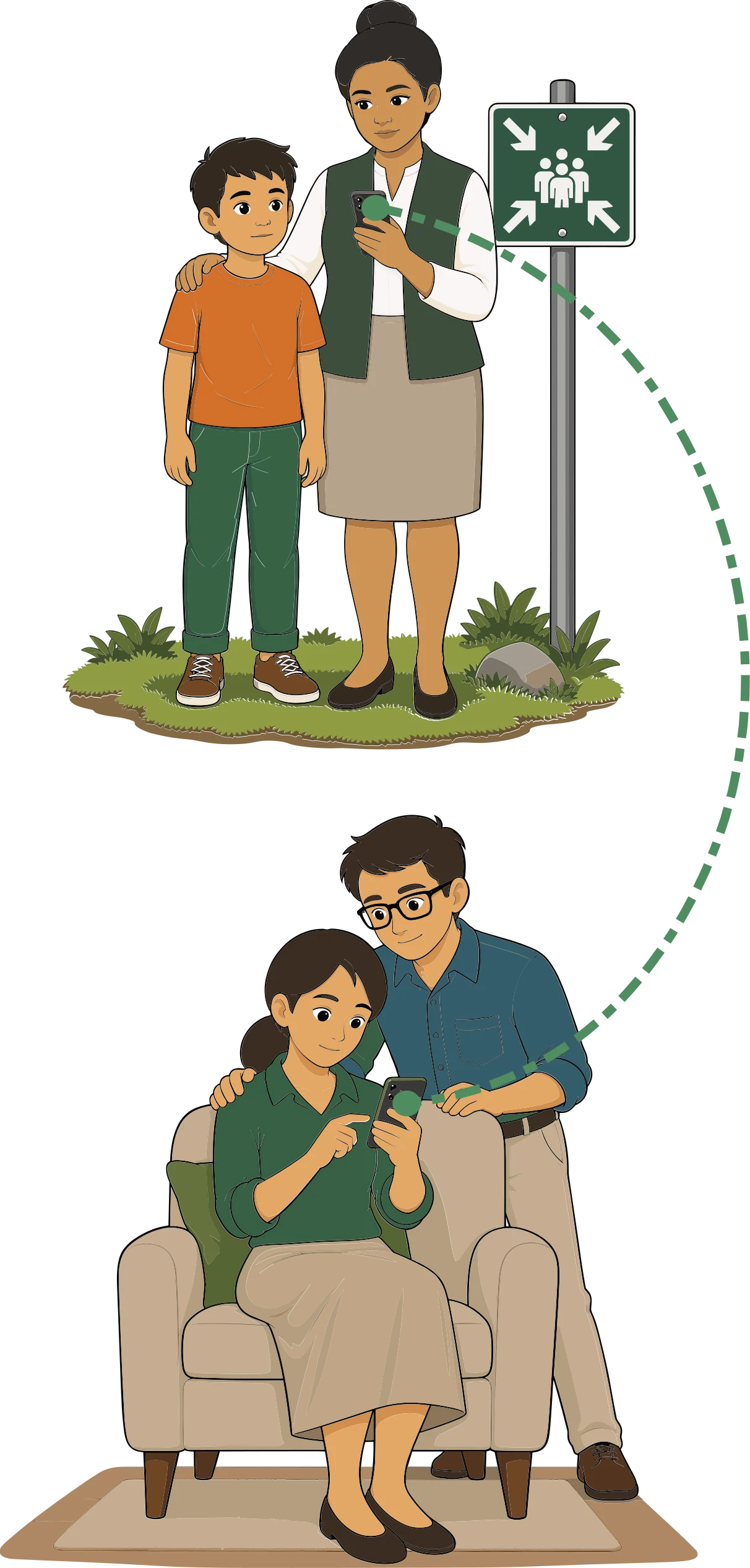
When conditions allow, the previously authorized person may issue institutional information.
Communication must be:
- Short,
- specific,
- operational,
- consistent with the official information.
For example, you may inform:
- that the institution has evacuated;
- what the planned reunification point is;
- that no one should go to the establishment;
- what instructions family members should follow;
- which channel will be used for further communications.
Do not spread unconfirmed information about:
- casualties;
- missing people;
- damage;
- how the tsunami is developing;
- whether the emergency has ended.
2.34Avoid panic without minimizing the danger
1 COMMUNICATION MUST COMBINE URGENCY, CLARITY AND CONTROL
Do not shout contradictory messages.
Do not use expressions such as:
- “nothing is going to happen”;
- “it is only a precaution”;
- “there is no danger”;
- “it is surely a false alarm”,
if you have no official information to support them.
Use operational instructions:
- “WE MUST EVACUATE NOW.”
- “FOLLOW THIS ROUTE.”
- “KEEP MOVING.”
- “DO NOT GO BACK.”
- “STAY WITH YOUR GROUP.”
If a person panics or freezes
A lead must:
- establish direct contact;
- give one instruction at a time;
- tell them where to go;
- accompany them when possible;
- avoid prolonged discussion;
- ask for additional help if available;
- keep moving toward the safe zone.
Do not gather several people around someone if it blocks the evacuation.

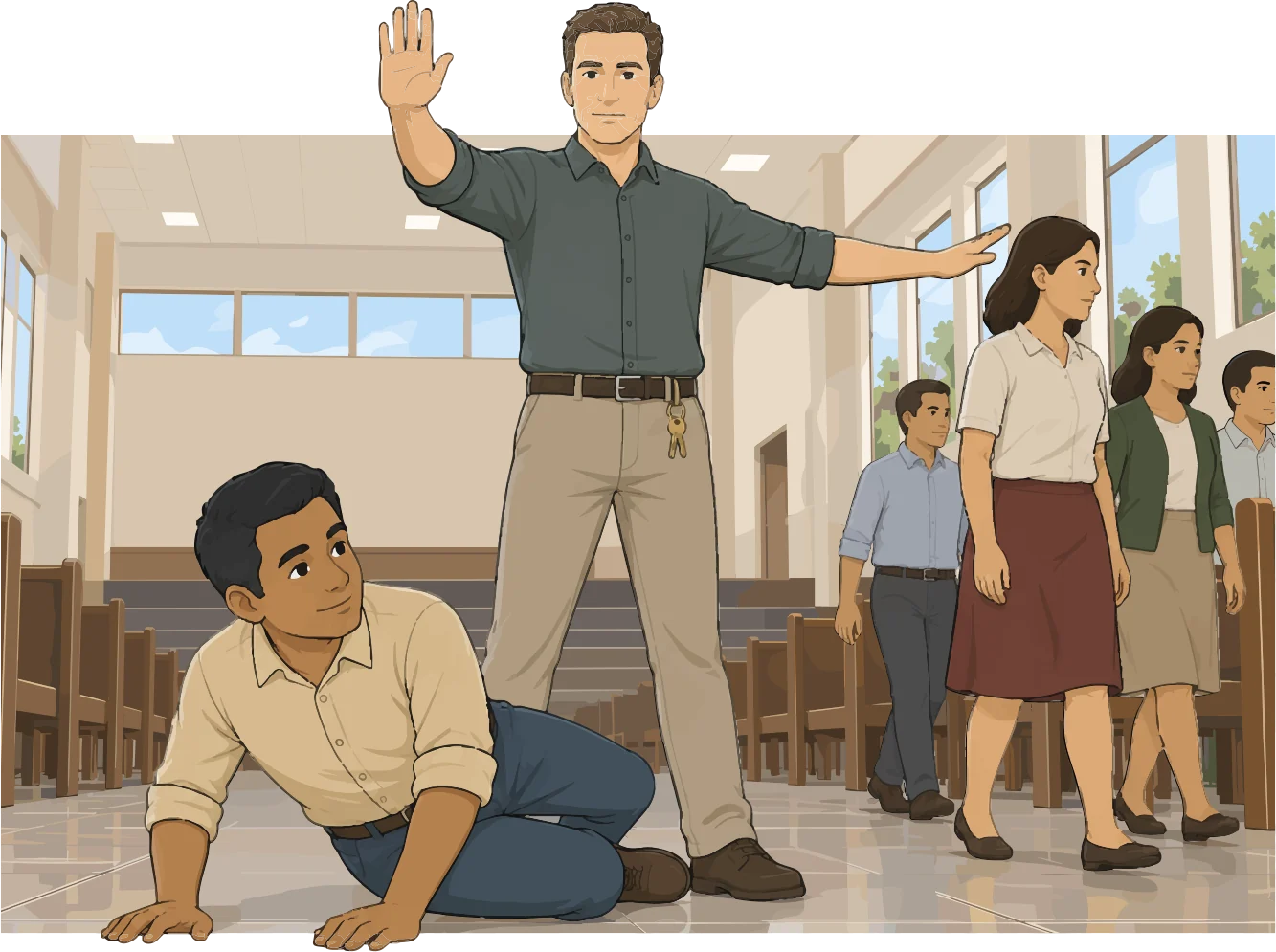
2.35If someone falls during the evacuation
When a person falls:
- prevent others from running into them;
- help them get back up when possible;
- request support if they are injured;
- keep the route clear;
- continue the evacuation.
Flow leads must prevent a fall from causing people to pile up on stairs, doors, or in hallways.
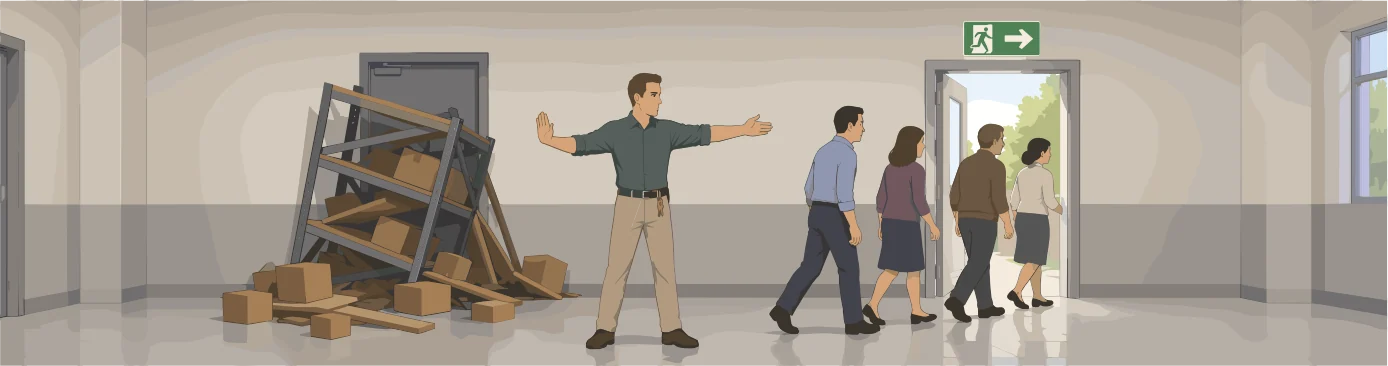
2.36If an exit becomes unusable
Do not allow people to keep crowding in front of a blocked exit. Immediately redirect them to the planned alternative exit. Communicate the change to the other leads.
Do not try to remove heavy or dangerous obstacles when another route is available and doing so would delay the evacuation.
2.37If the internal alarm fails
Immediately activate the planned alternative procedure.

You may use:
- megaphones;
- whistles;
- portable loudspeakers;
- verbal communication;
- previously assigned messengers;
- visual signals;
- other available systems.
2.38Final check of areas
If the plan provides for leads to check areas, the check must be quick and compatible with a safe evacuation.
Quickly check:
- restrooms;
- classrooms;
- offices;
- changing rooms;
- normally occupied storage areas;
- halls;
- common areas.
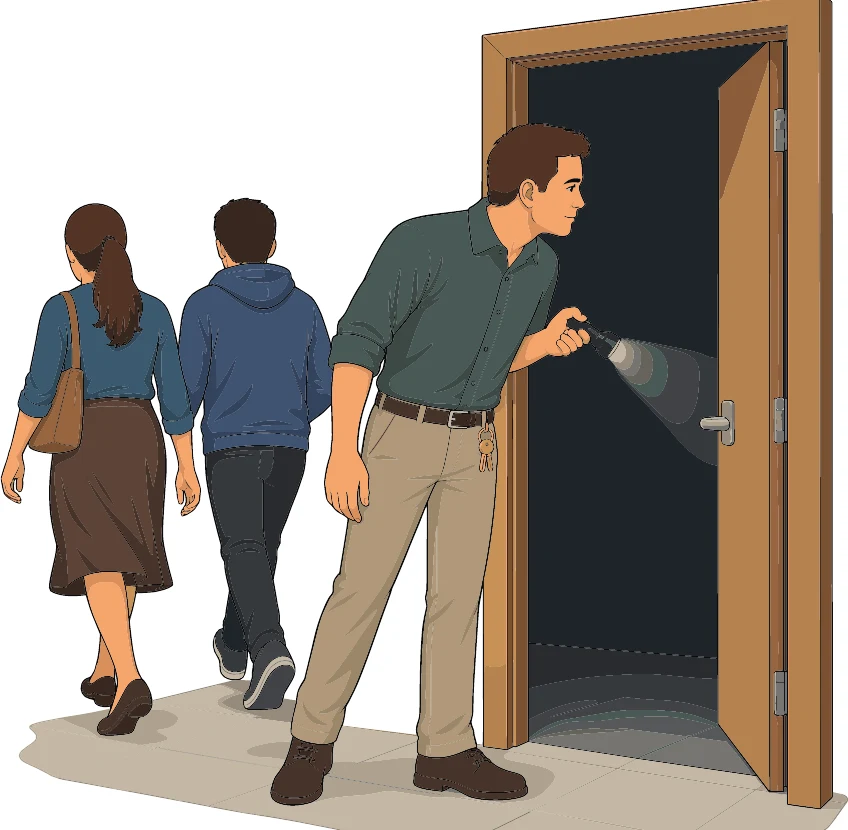
It must not turn into an exhaustive search. It must not be done when the threat is imminent, or when doing so would leave the lead delayed inside the danger zone.
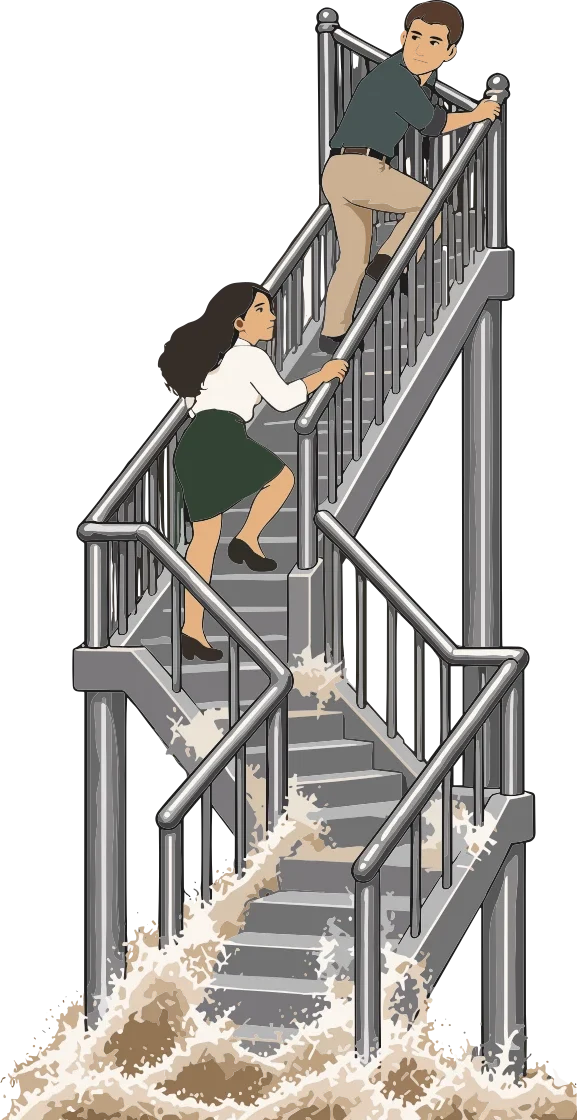
2.39If the water reaches the establishment before the evacuation is complete
Planning should aim to prevent this situation.
If the water is imminent and it is no longer possible to reach the horizontal safe zone:
- immediately apply the available vertical evacuation procedure;
- look for high places;
- use officially designated structures where they exist;
- keep people away from low levels;
- use the stairs;
- do not use elevators;
- continue climbing toward the area planned as safe.
Do not stay on lower floors trying to finish procedures.
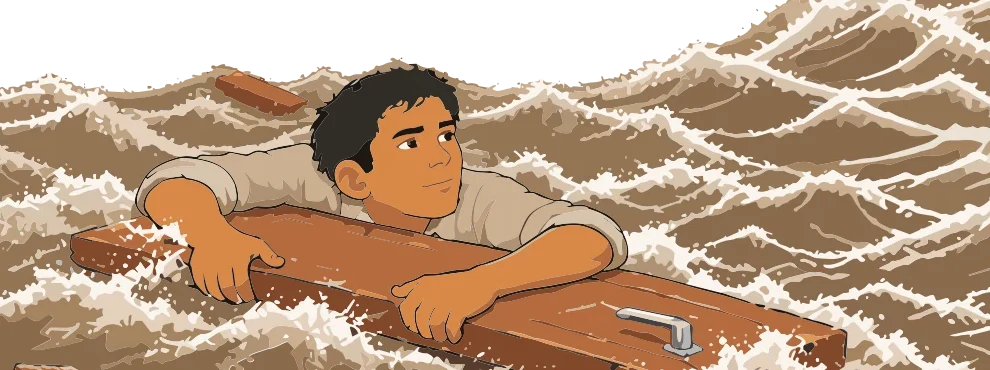
2.40If the water reaches people during the evacuation
Tsunami currents can be extremely violent and carry vehicles, wood, metal, glass, and other debris.
If a person is caught in the water:
- try to stay afloat;
- if possible, hold on to a sturdy floating object;
- try to keep your head above water;
- protect yourself from impacts;
- do not waste strength trying to fight directly against a strong current;
- try to reach a stable structure or high point if a safe opportunity exists.
Other members of the institution must not deliberately go into tsunami currents to carry out improvised rescues that could create new casualties.
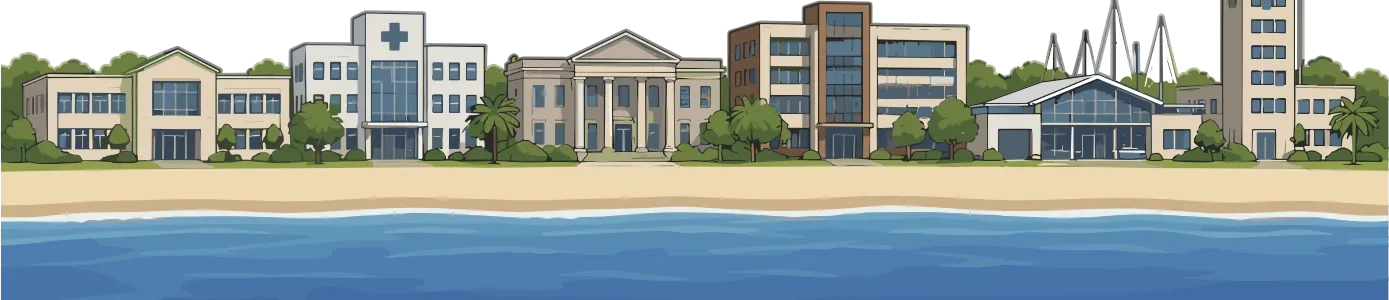
2.41If the institution is on a beach, port or in a coastal area
Evacuation must begin with maximum urgency.
Do not stay:
- closing facilities;
- storing equipment;
- securing boats;
- collecting sports items;
- moving furniture;
- protecting vehicles;
- waiting to observe the sea.
Immediately move people away from:
- beaches;
- docks;
- ports;
- marinas;
- river mouths;
- boardwalks;
- riverbanks connected to the sea.
2.42Institutions with water activities or boats
If members of the institution are already at sea, their procedure may be different from people on land.
Decisions regarding boats depend on:
- location;
- depth;
- distance from the coast;
- time available;
- type of boat;
- maritime conditions;
- instructions from the authorities.
The instructions of the competent maritime and port authorities must be followed.
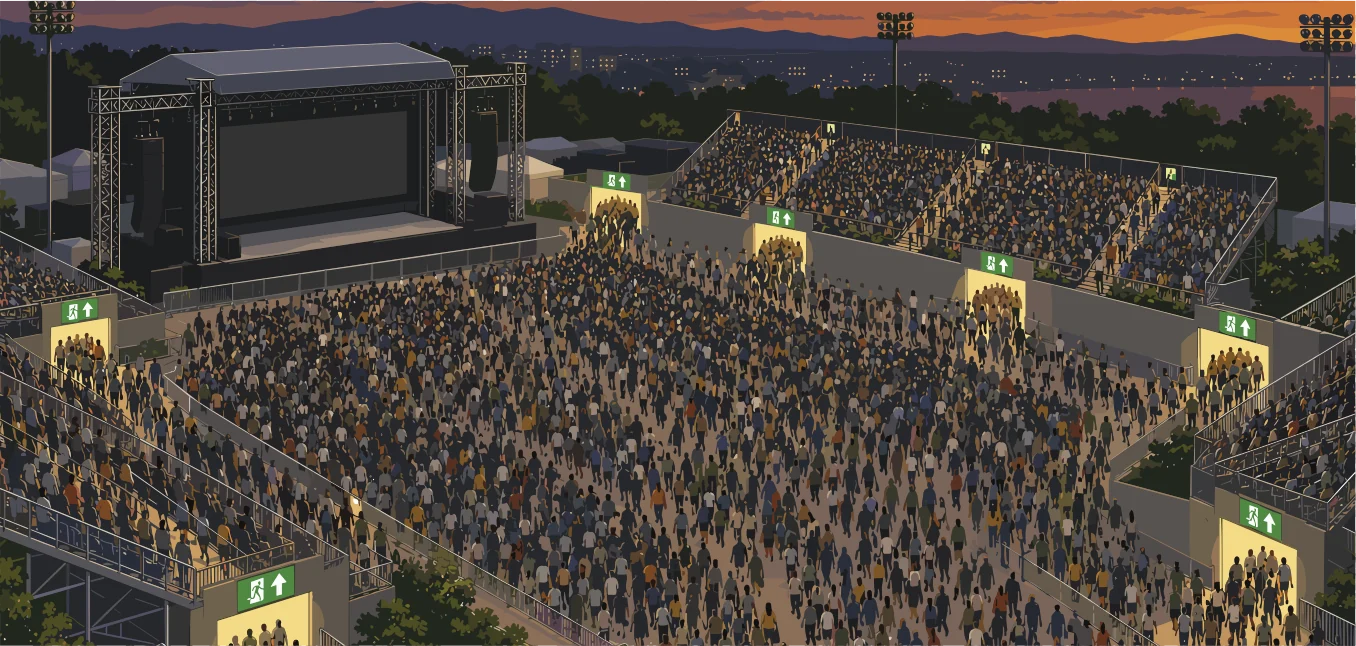
2.43If a mass gathering is under way
When the threat occurs during a religious service, performance, sports competition, meeting, ceremony, cultural event, or other event with mass gathering:
- immediately suspend the event;
- issue the evacuation order;
- open the planned exits;
- activate the leads;
- distribute the flow of people;
- use all the planned evacuation sectors;
- keep messages concise;
- prevent people from gathering to look for acquaintances;
- stop them from going back for belongings;
- direct them toward the safe zones.
2.44If the highest institutional authority is not present
The evacuation must not be delayed. The next appointed person in the chain of replacement must take over immediately.
A properly prepared institution must be able to evacuate even if the following are absent:
- president;
- director;
- priest;
- pastor;
- rabbi;
- leader;
- head of school;
- administrator;
- owner;
- the usual lead.
2.45If communications with the authorities fail
Losing communications does not rule out the natural signs or an already received evacuation order. Continue to follow the plan.
Do not go back because:
- the internet stopped working;
- the phone lost its signal;
- you cannot reach a superior;
- a siren stopped being heard;
- you are not receiving new updates.
2.46Family reunification
Reunification must be carried out according to the previously prepared procedure.
The institution must avoid improvised releases that cause:
- loss of control over who remains under its responsibility;
- movement into dangerous areas;
- separation of groups;
- confusion about missing persons.
Where appropriate, verify the identity and authorization of the person picking up a minor or dependent. Reunification must never involve returning to a threatened zone.
2.47Do not declare the emergency over on your own
The institution must not decide the danger has ended because:
- no visible wave arrived;
- the first wave was small;
- the water receded;
- a certain amount of time has passed;
- the weather improved;
- other people began returning;
- an informal message is circulating on social media.
2.48Behaviors to avoid
During a tsunami threat or impact:
- DO NOT wait to see a wave before evacuating.
- DO NOT wait for an official alert when clear natural danger signs already exist.
- DO NOT call meetings before evacuating.
- DO NOT wait for the highest institutional authority.
- DO NOT complete administrative procedures.
- DO NOT take the head count inside the building if it delays the exit.
- DO NOT go back for lists.
- DO NOT go back for belongings.
- DO NOT try to protect facilities.
- DO NOT allow people to approach the sea.
- DO NOT allow photographs or filming from dangerous areas.
- DO NOT use elevators during a vertical evacuation.
- DO NOT assume that any tall building is safe.
- DO NOT send staff back into a threatened zone to look for missing people.
- DO NOT allow minors to leave their groups.
- DO NOT allow family members to enter the threat zone to pick up people.
- DO NOT leave the planned route without need.
- DO NOT cross flooded areas.
- DO NOT spread rumors.
- DO NOT allow anyone to return after the first wave.
- DO NOT declare the emergency over on your own decision.
2.49Institutional checklist during a tsunami
During the emergency, check:
- Was the plan activated?
- Did the designated lead take charge?
- Was a clear order given?
- Are the sector leads taking action?
- Are the exits open and operational?
- Did the evacuation begin without delay?
- Is the planned route being used?
- Was an alternative route activated when necessary?
- Is the flow of people being maintained?
- Is crowding being prevented?
- Are minors staying with the adults responsible for them?
- Are people who need support being assisted?
- Are visitors being guided?
- Are people with disabilities receiving the planned assistance?
- Is unnecessary use of vehicles being avoided?
- Are people being prevented from going back for belongings?
- Are elevators being avoided when appropriate?
- Is everyone being kept away from the sea?
- Is the head count being taken in the safe zone?
- Are missing people being reported to the authorities?
- Are groups being kept at the safe point?
- Is return being prevented?
- Are official sources of information being used?
- Is the institution still waiting for official authorization before leaving the safe zone?
2.50Institutional decision rule during the emergency
When there is an official evacuation order or a clear natural sign of tsunami:
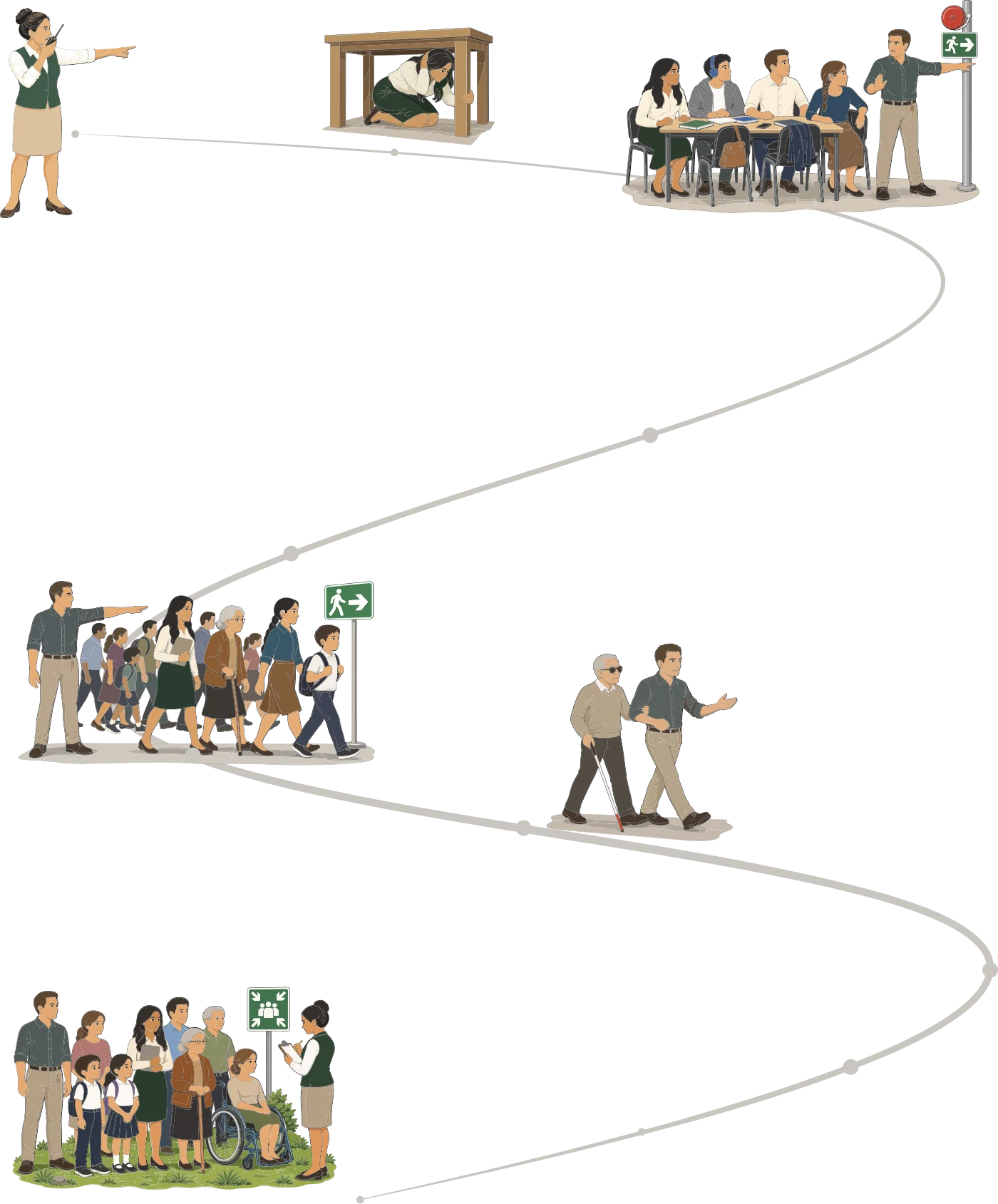
- activate the plan;
- protect yourself from the earthquake first if it is still happening;
- begin evacuating as soon as you can safely move;
- do not wait for unnecessary confirmations;
- do not wait for the highest institutional authority;
- direct people toward the safe zone;
- assist those who need support;
- do not stop the evacuation to carry out head counts, recover documents, or protect property;
- do not allow anyone to go back;
- carry out the head count in the safe zone;
- stay there until the competent authorities authorize the return.
2.51Fundamental rules for every institution
1. RECOGNIZE THE THREAT
Natural signs can constitute the first warning.
2. ACTIVATE THE PLAN
During the emergency, what was prepared beforehand is carried out.
3. PROTECT YOURSELF FROM THE EARTHQUAKE
When the shaking stops and you can move safely, evacuate immediately.
4. DO NOT WAIT
Minutes can be decisive.
5. COMMUNICATE CLEARLY
Instructions must be short, unmistakable, and operational.
6. EVACUATE
The priority is to get people out of the zone susceptible to flooding.
7. USE THE PLANNED ROUTES
Do not improvise unnecessarily.
8. MAINTAIN THE FLOW
Avoid crowding, pushing, and blockages.
9. ASSIST THOSE WHO NEED IT
Apply the inclusive procedures prepared beforehand.
10. DO NOT GO BACK FOR ANYTHING
Property is replaceable.
11. CARRY OUT THE HEAD COUNT IN THE SAFE ZONE
Do not delay the evacuation by trying to complete it inside the establishment.
12. DO NOT SEND PEOPLE TO LOOK FOR MISSING PERSONS
Inform the emergency services.
13. REMEMBER THERE MAY BE MORE WAVES
The first will not necessarily be the largest.
14. DO NOT DECLARE THE EMERGENCY OVER
Wait for the competent authorities to announce it.
2.52Final message
During a tsunami, the institution must immediately move from preparedness to execution.
It is not the time to:
- write procedures;
- discuss responsibilities;
- personally check the sea;
- protect buildings, files, money, or equipment;
- look for belongings;
- wait for an absent institutional authority.
It is time to:
- recognize the danger;
- activate the plan;
- assume the planned roles;
- communicate clearly;
- evacuate;
- lead;
- assist;
- reach the safe zone;
- carry out the head count;
- report incidents;
- keep people protected;
- wait for official instructions.
Life is always the priority
The guide Tsunamis — Module 2, Phase 2: During, intended for the general public, states as its main objective:
“During a tsunami, every minute counts, and survival largely depends on quickly recognizing the danger and carrying out the actions prepared beforehand without delay.”
In an institution that brings people together, this objective takes on a collective dimension: a prepared organization must be able to quickly turn a potentially disorganized crowd into a guided, orderly evacuation, clearly understood and directed toward a safe zone.
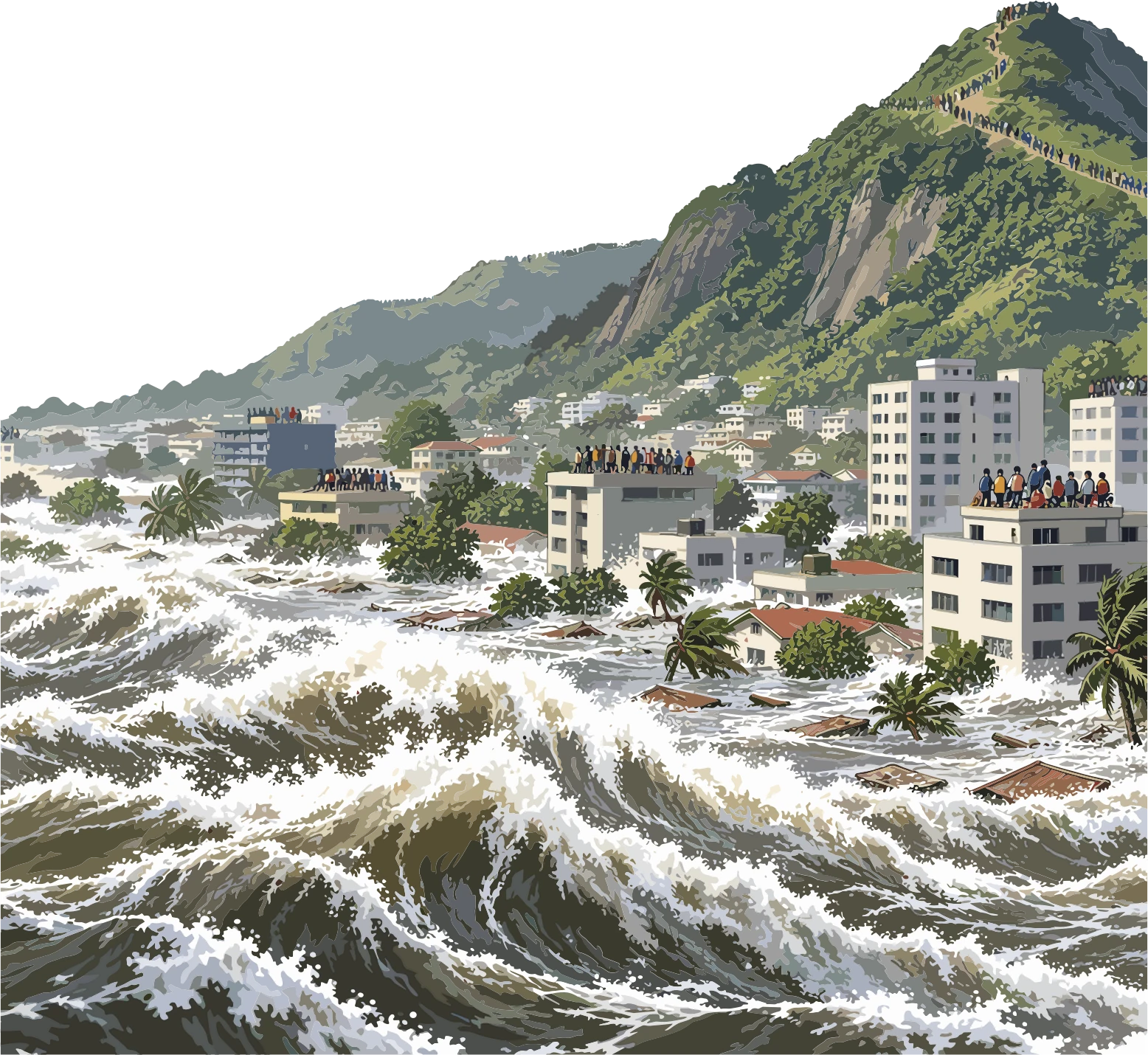
RECOGNIZE, ACTIVATE, COMMUNICATE, EVACUATE,
ASSIST, AND KEEP EVERYONE IN THE SAFE ZONE.
DO NOT IMPROVISE.
DO NOT GO BACK.
LIFE IS ALWAYS THE PRIORITY.
Downloads
© 2026 by Centro del Reino de Paz y Justicia is licensed under Creative Commons Attribution-NonCommercial-NoDerivatives 4.0 International (CC BY-NC-ND 4.0). To view a copy of this license, visit creativecommons.org/licenses/by-nc-nd/4.0.