Protection, control, reunification and institutional recovery
The water receding does not mean the danger has ended.
After the initial impact of a tsunami, serious threats can continue for hours and, depending on the scale of the disaster, for days or longer. These include new waves and currents, aftershocks, flooding, weakened structures, damaged roads and bridges, downed power lines, gas leaks, fires, contaminated water, wastewater, chemical substances, and debris.
For an institution, organization, club, church, temple, educational establishment, community center, association, or any other place that brings people together, institutional responsibility does not end once the evacuation is complete.
After reaching the safe zone, a new phase of the emergency begins.
The institutional priorities are:
- Keep everyone out of the danger zone;
- preserve the organization and the chain of command;
- verify who reached the safe point;
- identify injured people or those who need assistance;
- determine whether anyone's whereabouts are unknown;
- report incidents to the authorities;
- provide first aid within the capabilities available;
- keep minors and dependent people under supervision;
- facilitate an organized reunification;
- maintain accessibility and assistance for those who need it;
- provide only verified information;
- prevent premature returns;
- maintain communication with the competent authorities;
- do not re-enter the premises until appropriate;
- assess the safety of the establishment afterwards;
- organize recovery;
- determine when conditions are safe enough to resume activities.
 3.1
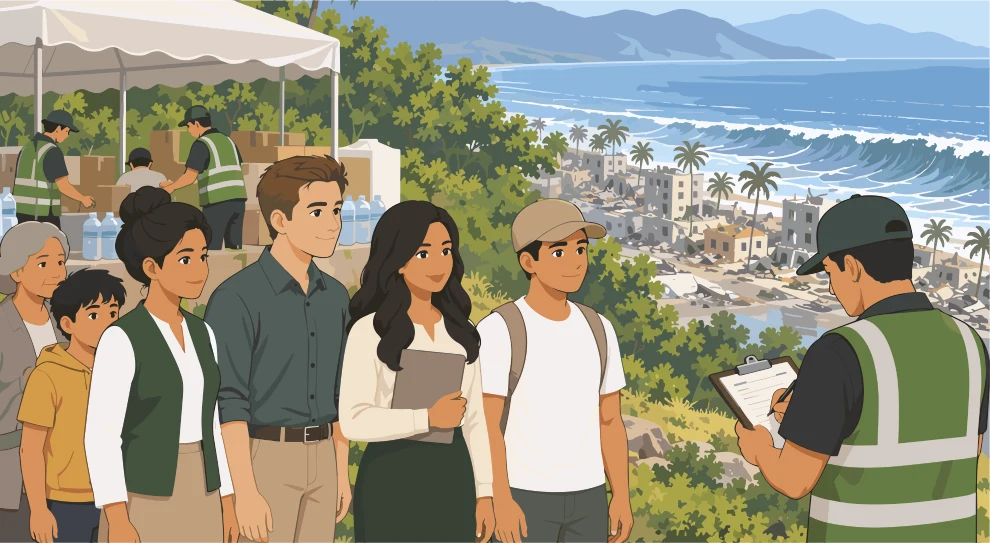
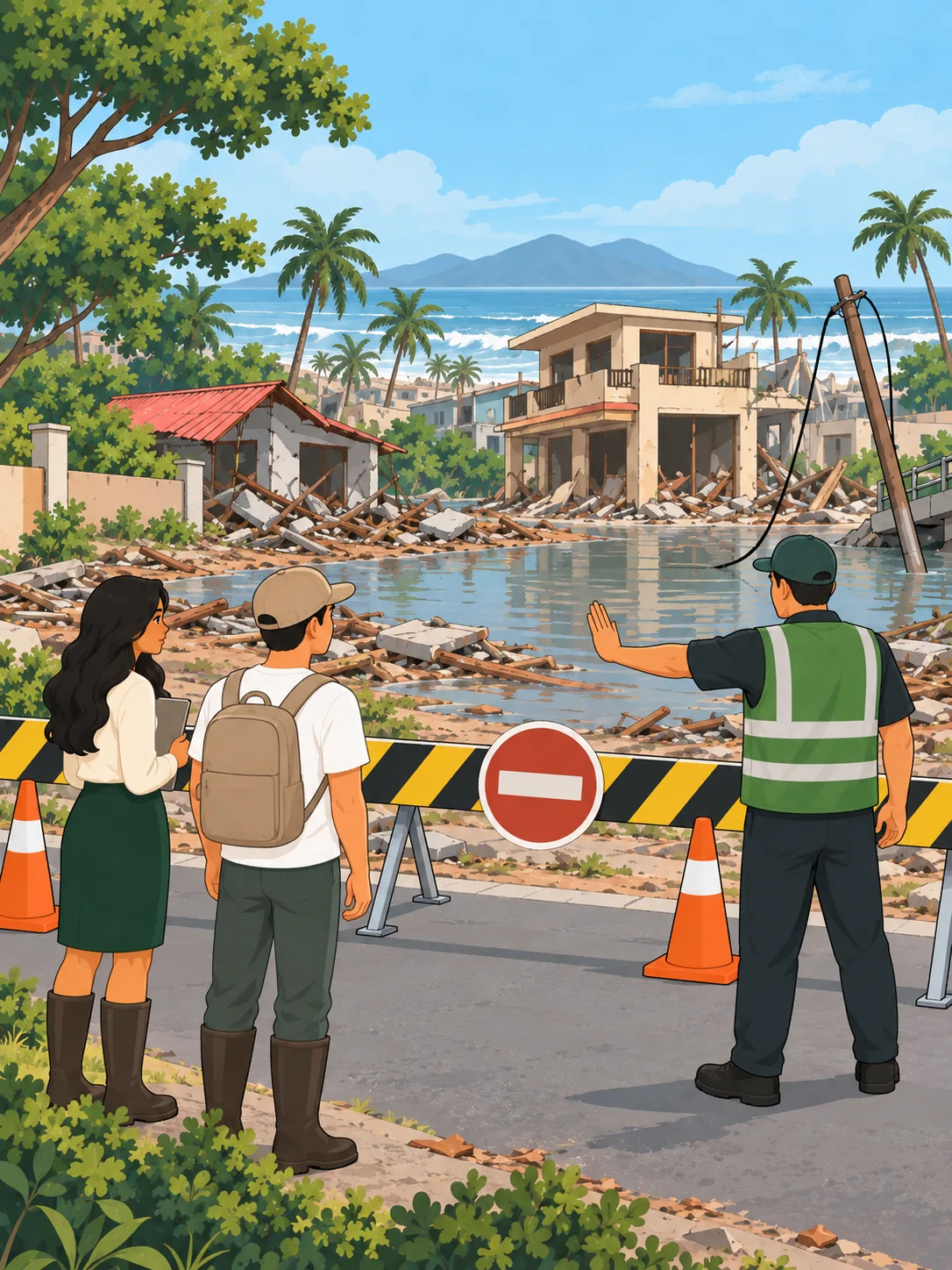
Do not authorize the return until the authorities indicate it is safe
This is the main rule after a tsunami:
A tsunami does not necessarily consist of a single wave. Multiple waves and strong currents can occur over a prolonged period, and a later wave may be larger or more destructive than an earlier one.
For that reason, the institution must:
- Keep people in the safe area,
- continue monitoring official alerts,
- prevent individual returns,
- prevent family members from re-entering the evacuated zone,
- not send staff to recover belongings,
- not go back to check the condition of the establishment,
- not interpret the water receding as the end of the emergency,
- not assume the momentary absence of new waves means the danger has ended.
 3.2
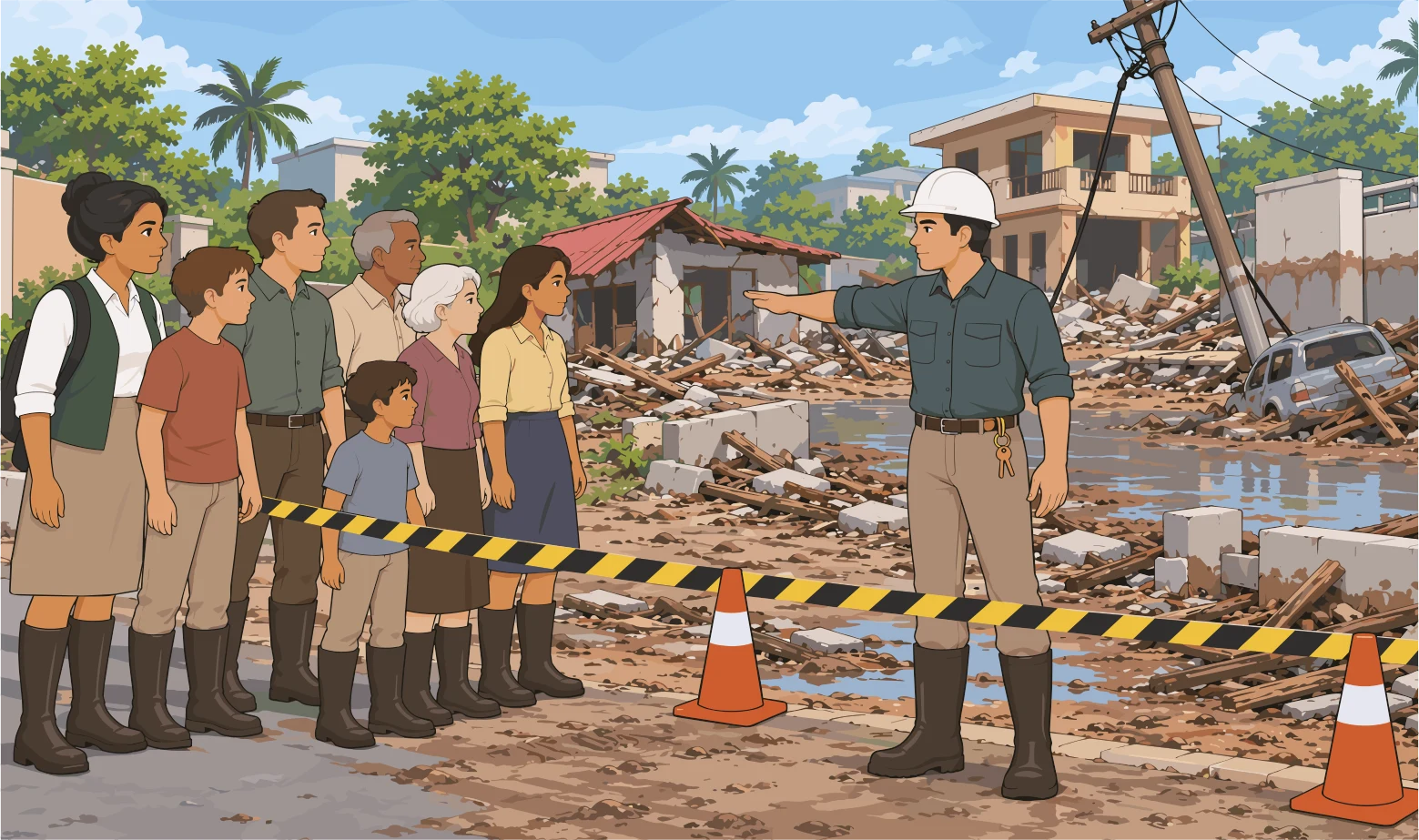
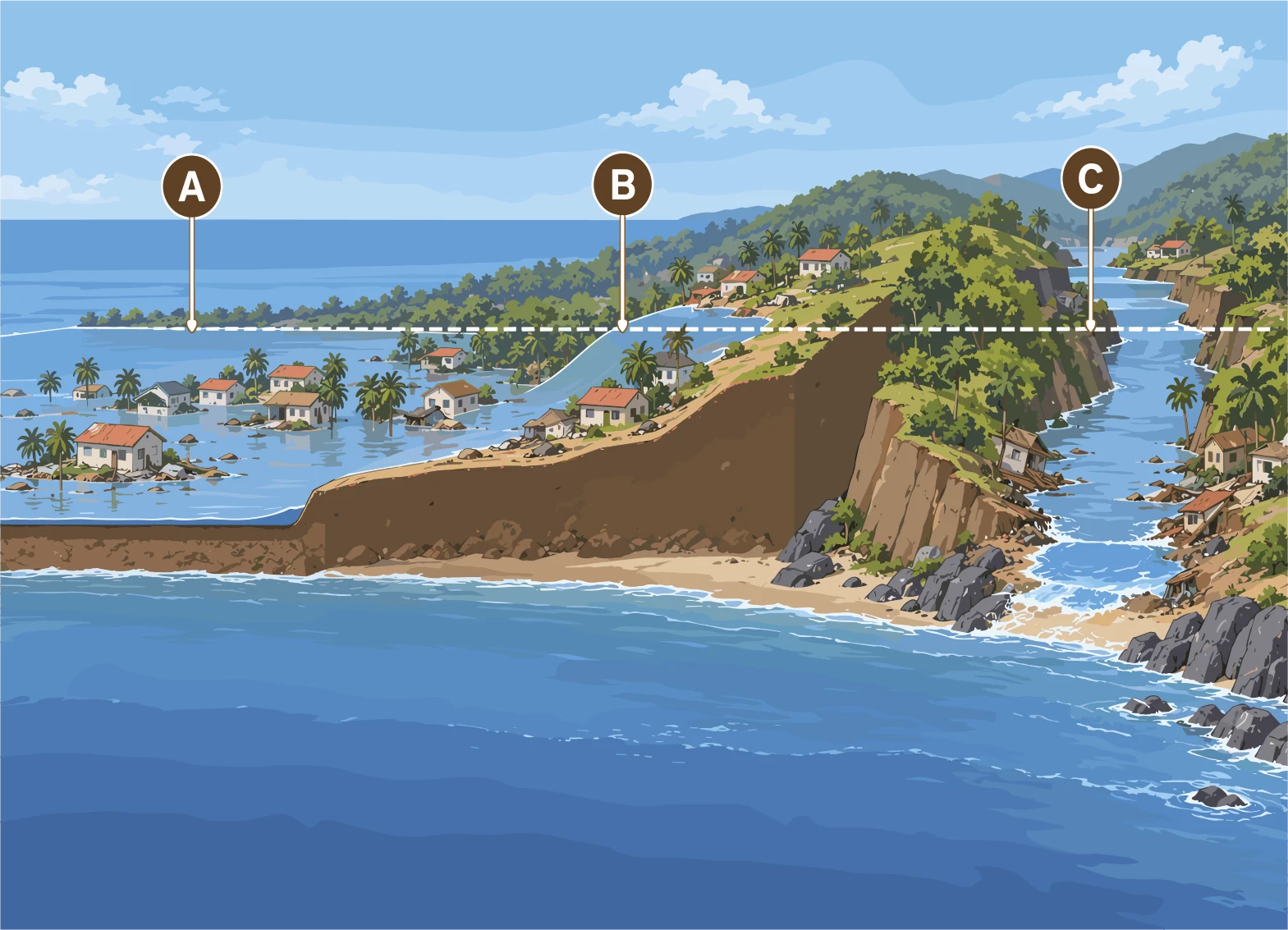
Do not use a fixed height or distance as the only safety criterion
Stay in the safe zone established for the locality, at the corresponding meeting point, or at the place indicated by the authorities.
Do not use a generic height or distance reference as a universal guarantee of safety.
The extent of tsunami flooding depends on factors such as:
- Topography,
- coastal characteristics,
- the magnitude and characteristics of the tsunami,
- the presence of rivers, estuaries and canals,
- local conditions.
 3.3
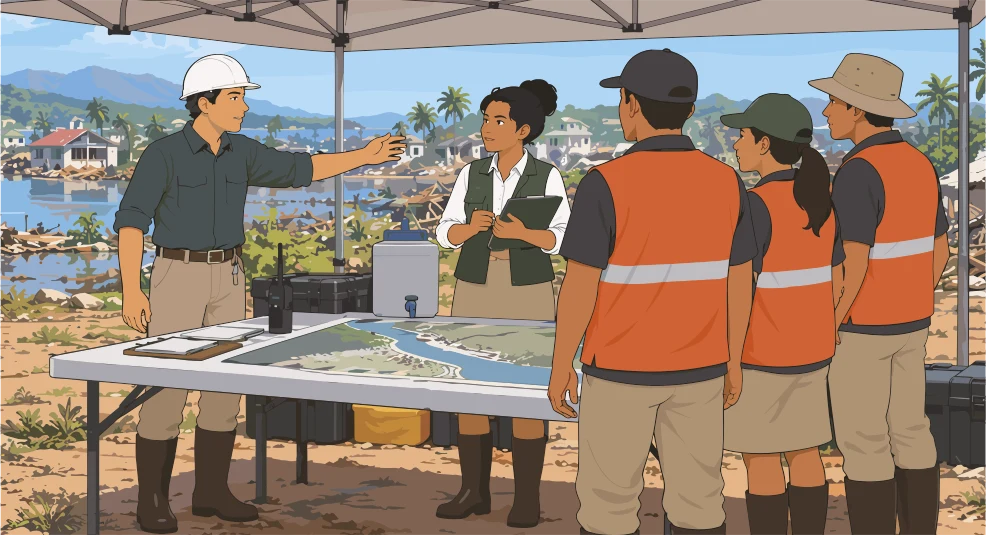
Keep the institutional plan active
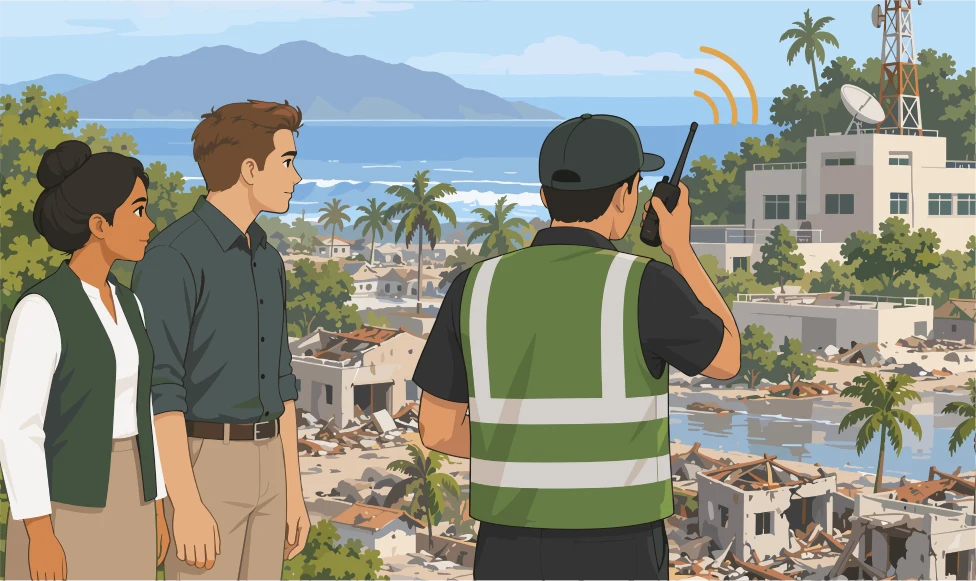
The end of the evacuation does not mean the end of the Institutional Emergency Plan.
The chain of command must continue functioning.
The overall lead and the alternates must continue coordinating:
- Head count,
- first aid,
- care for people who need assistance,
- supervision of minors,
- communications,
- reunification,
- liaison with the authorities,
- supplies,
- incident reports,
- eventual relocation to another shelter or safe point.
 3.4
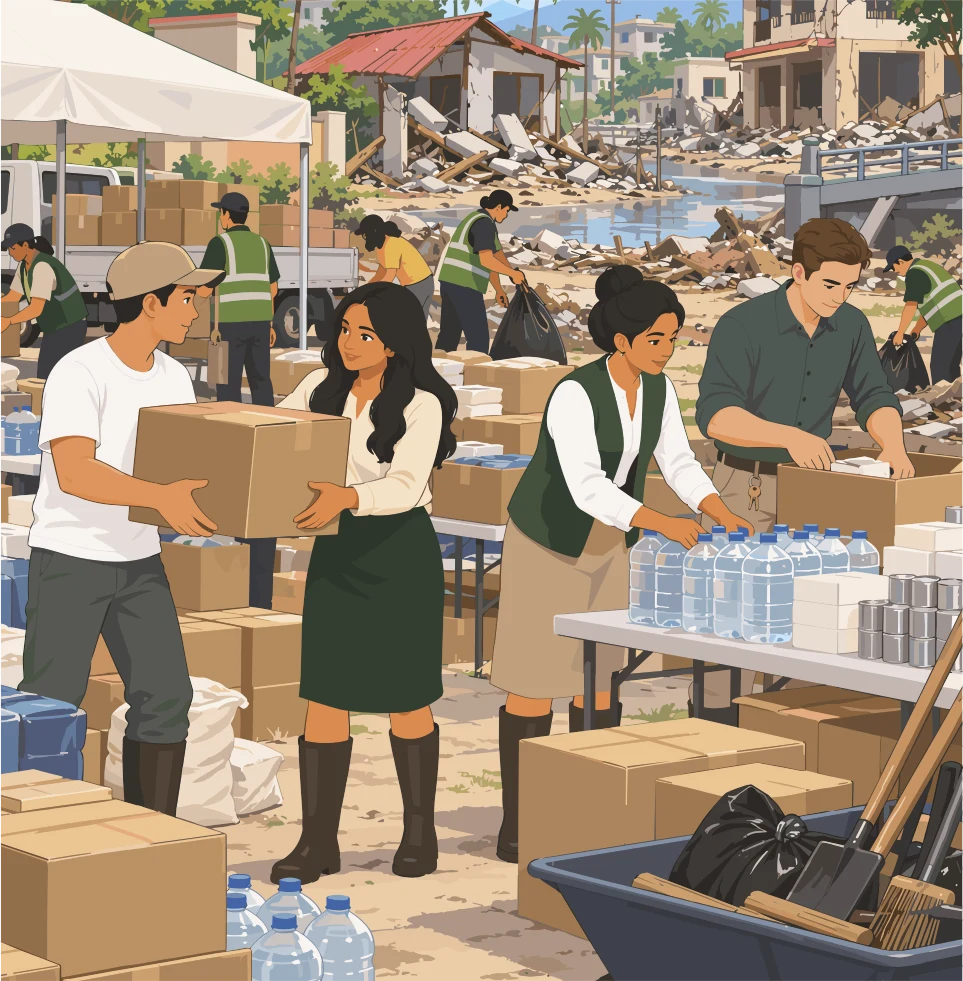
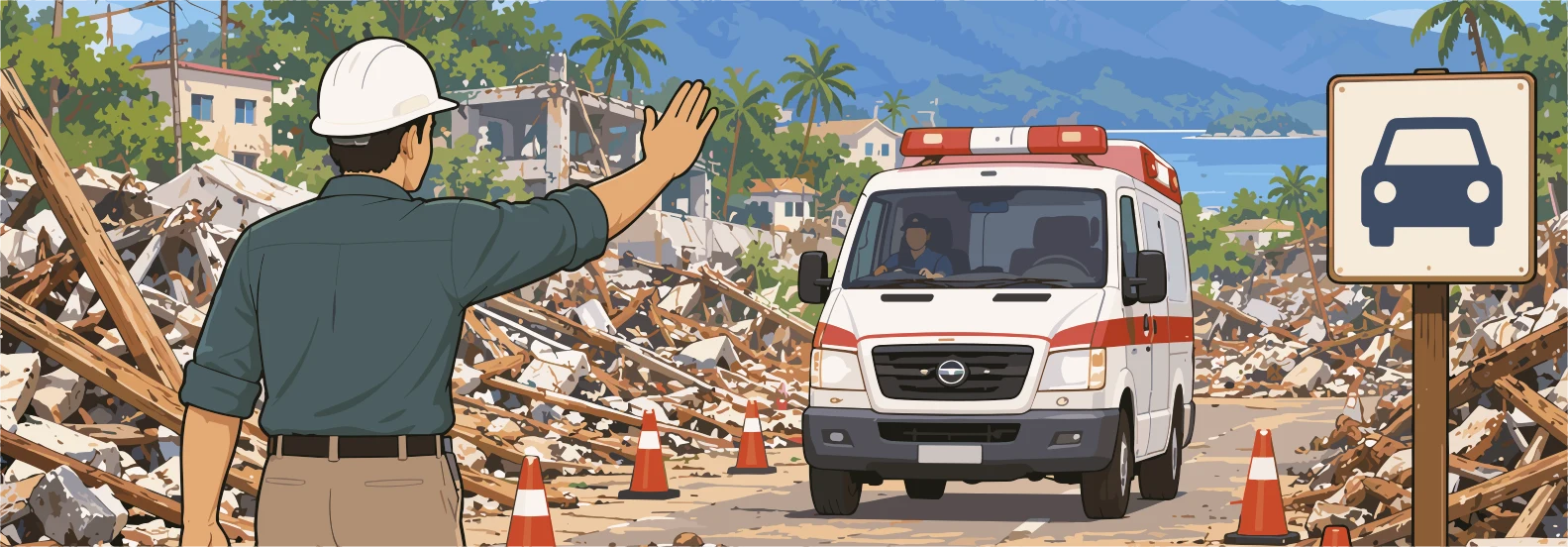
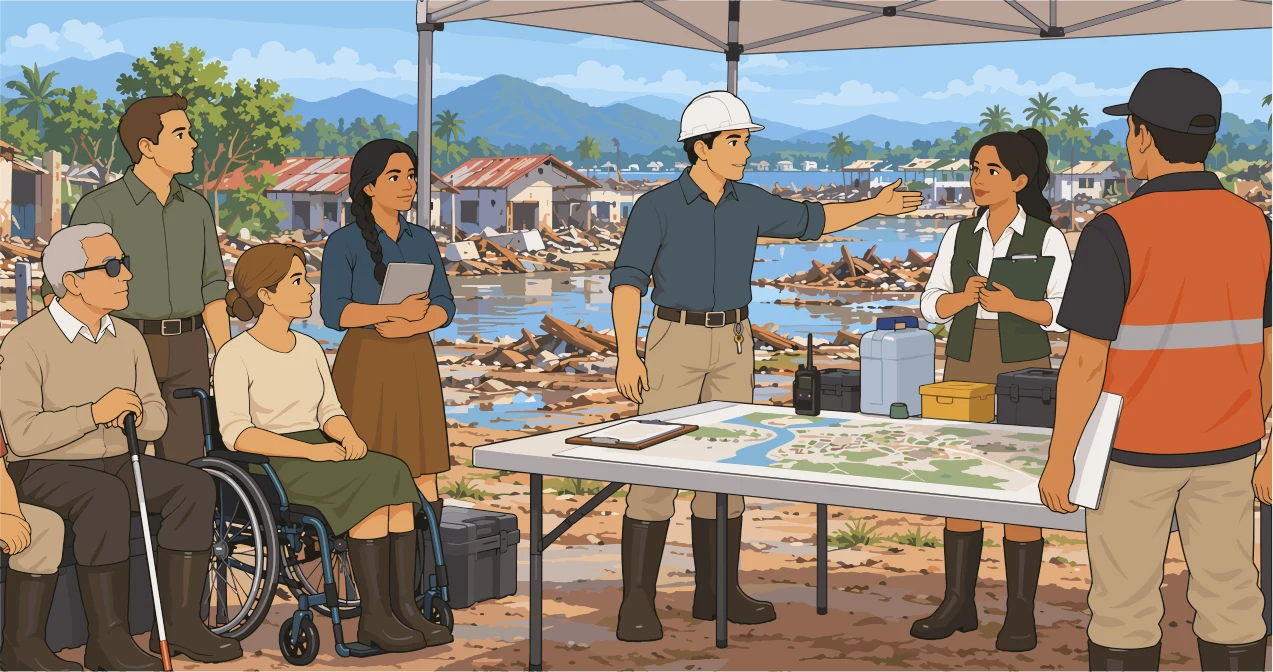
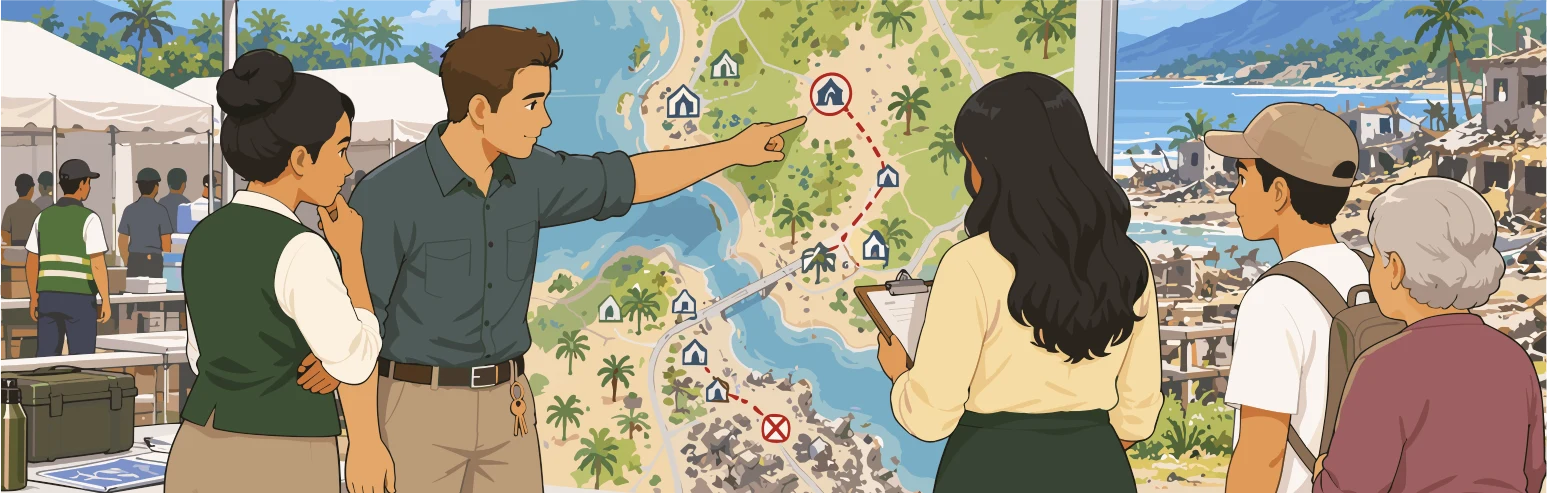
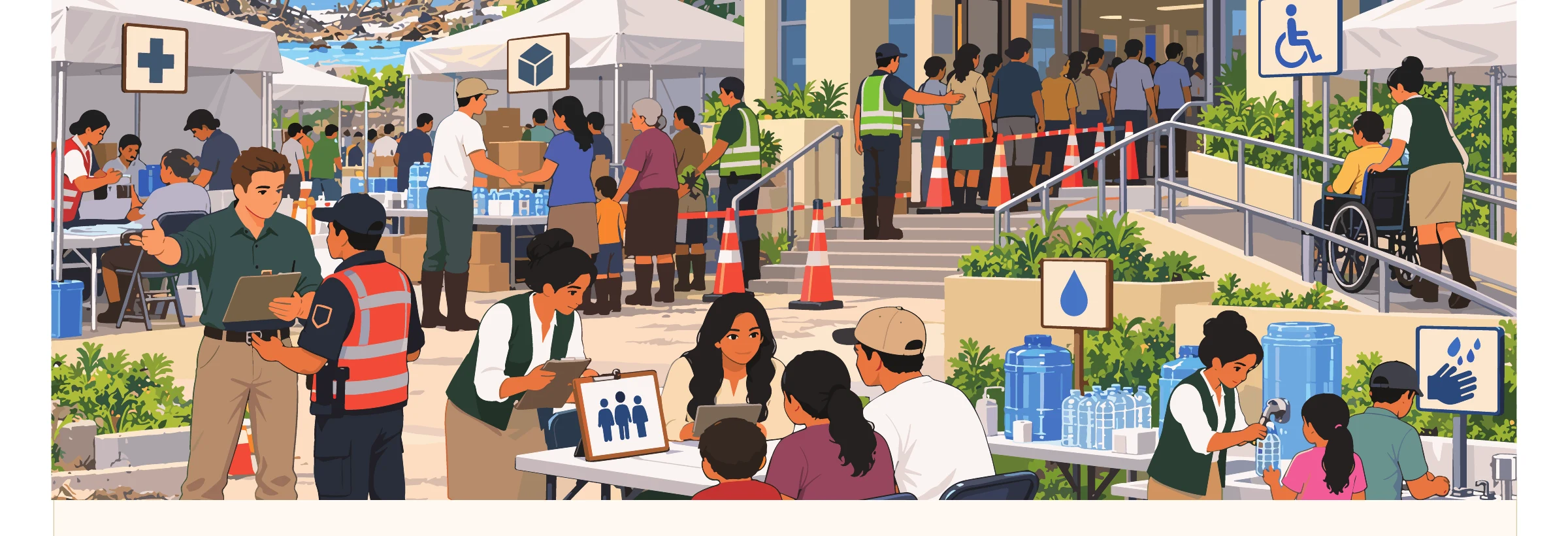
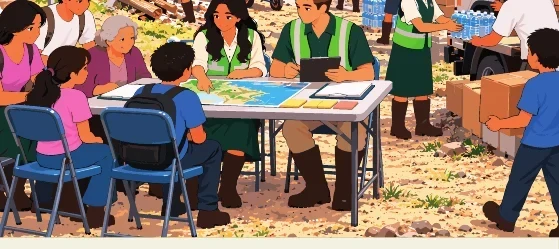
Organize the safe point
Once the safe zone is reached, prevent the organized evacuation from turning into a disorganized concentration of people.
When conditions allow, establish areas for:
- People who need first aid,
- minors,
- people who need additional assistance,
- water distribution,
- information and registration,
- reunification,
- supplies.
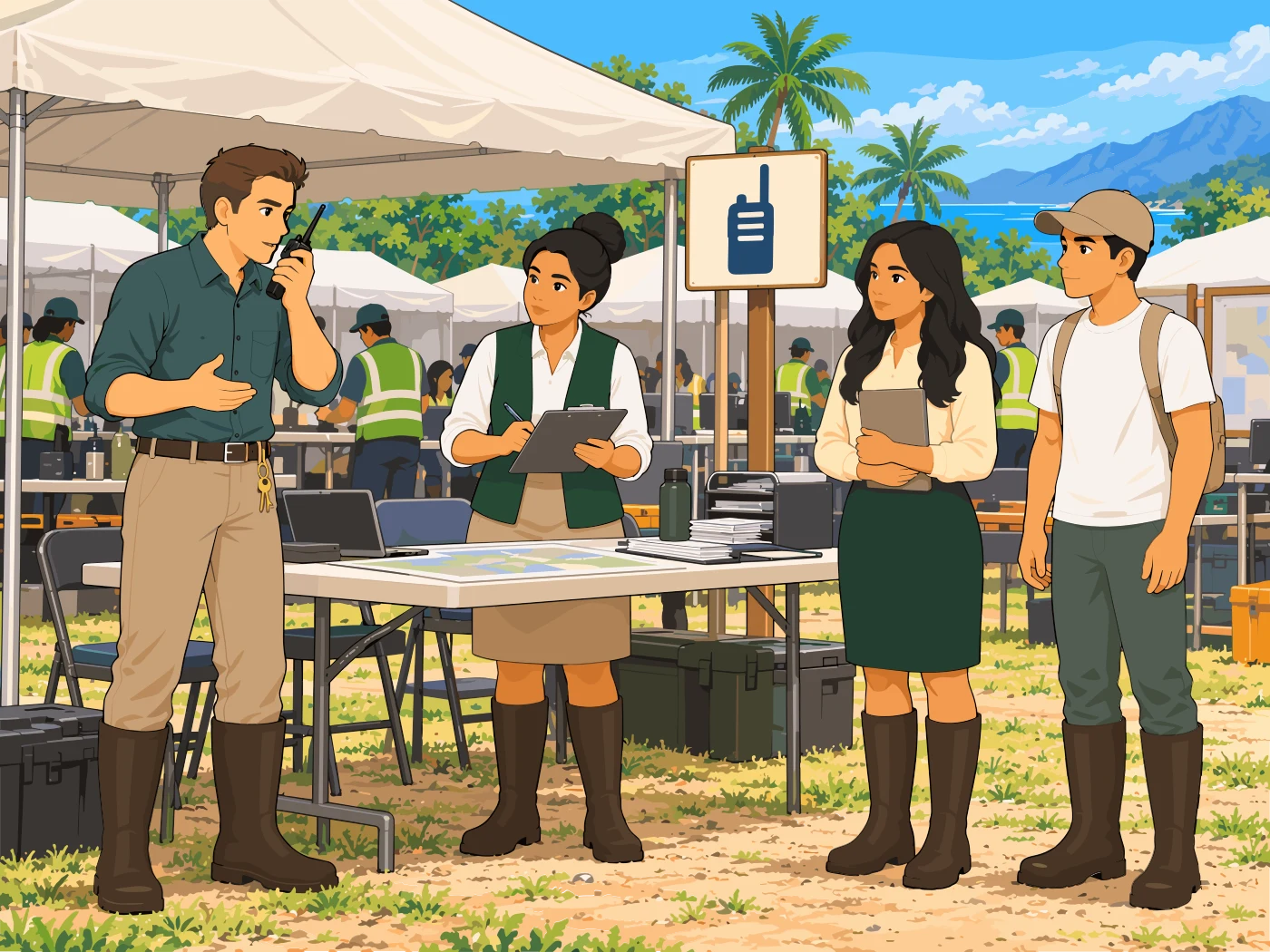
Keep:
- Access points clear,
- circulation routes clear,
- accessible spaces,
- information centralized,
- supplies organized,
- waste under control,
- routes available for vehicles and emergency services.
 3.5
Carry out the head count
As soon as conditions allow, each lead must verify the people who were under their responsibility.
Use:
- Attendance lists,
- entry records,
- rosters,
- information from group leads,
- visitor logs,
- other means available.
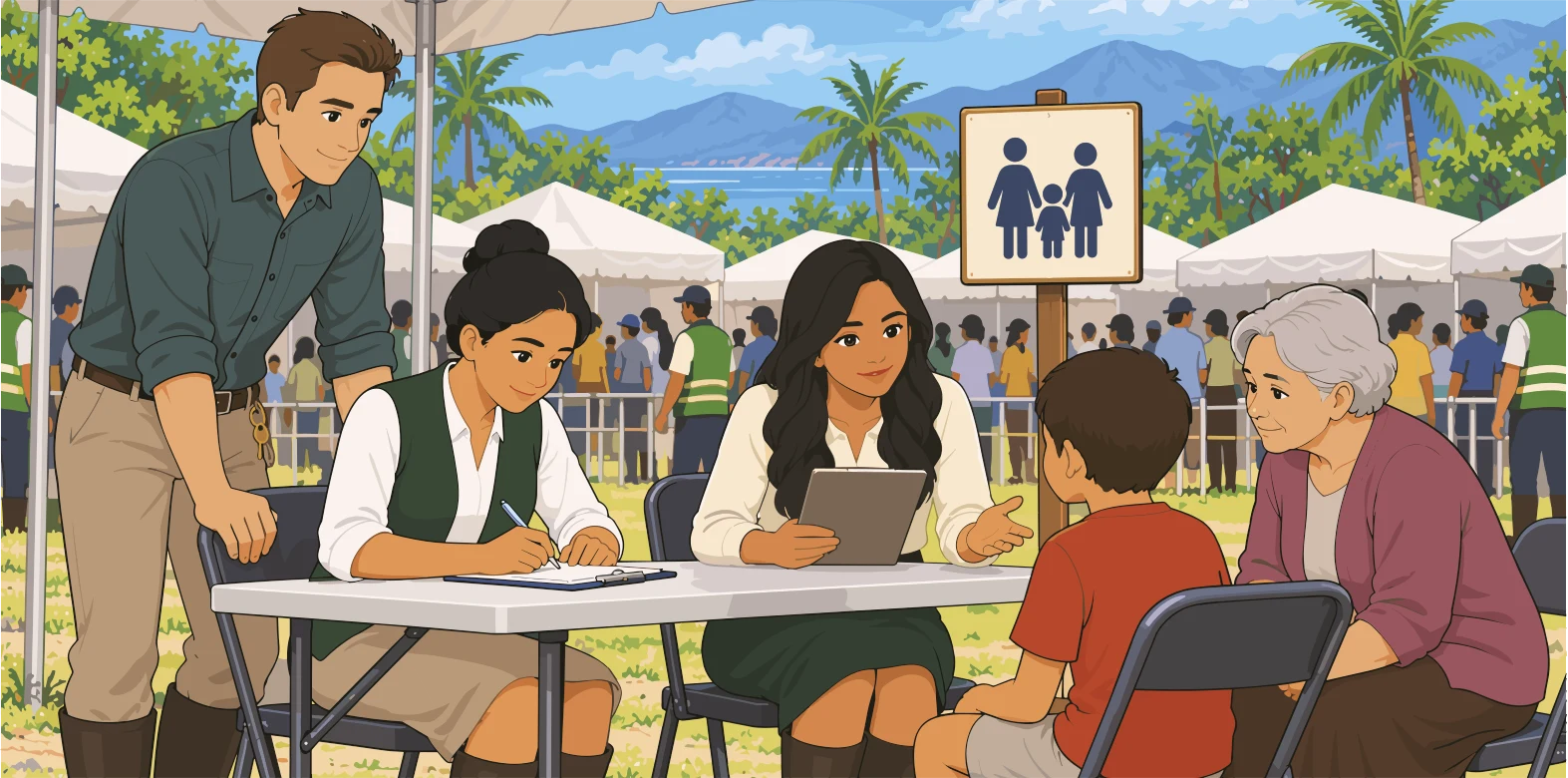
Determine:
- Who is present,
- who was injured,
- who needs assistance,
- who was removed or transferred,
- who has reunited with family,
- who is under medical care,
- whose whereabouts are unknown.
 3.6
If a person is missing
If you realize someone's whereabouts are unknown:
- Confirm that they were actually at the institution,
- check whether they were evacuated with another group,
- determine where they were last seen,
- determine who they were with,
- record their information,
- gather useful information,
- immediately report the situation to the coordination team,
- inform the authorities or responsible teams when appropriate.
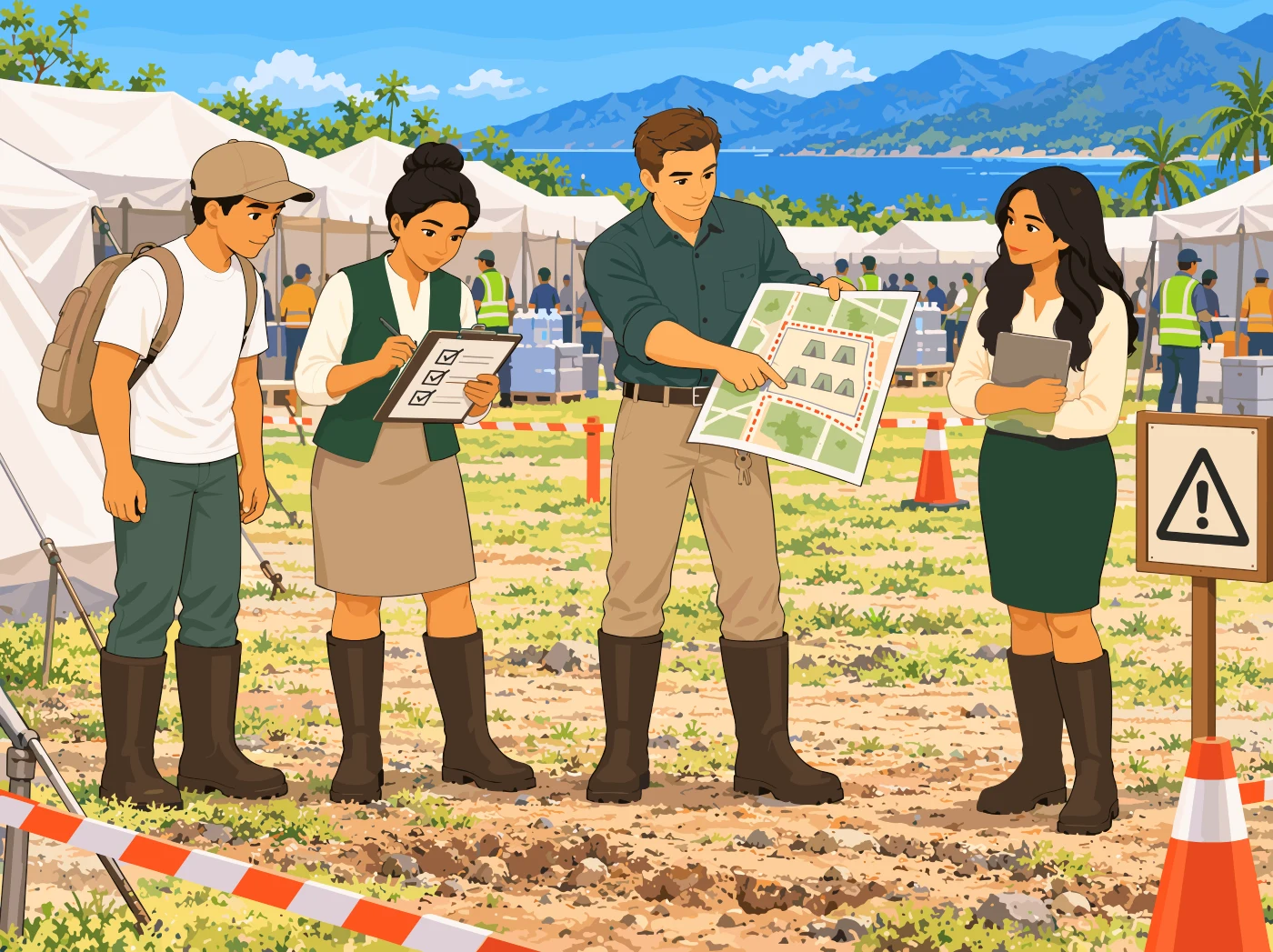

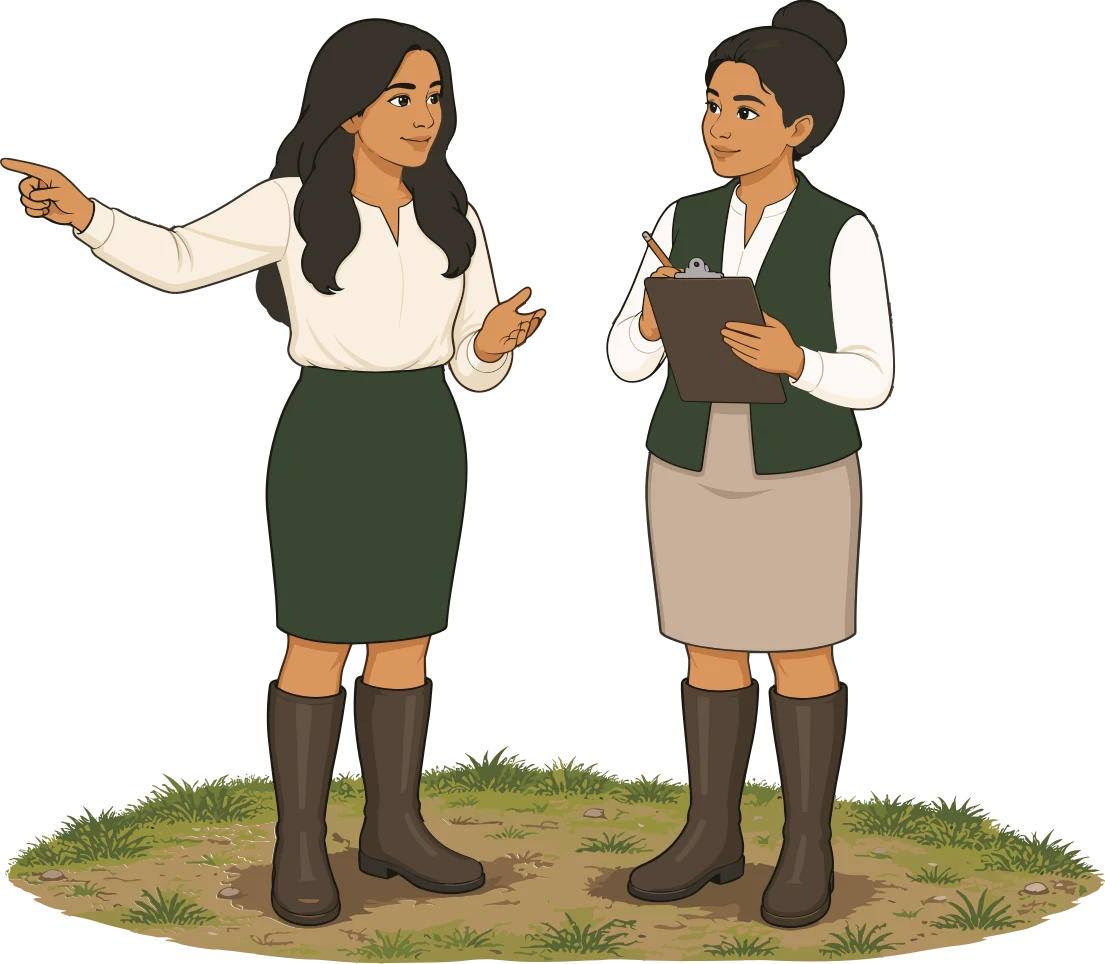
DO NOT SEND STAFF TO LOOK FOR THEM.
Do not organize improvised groups to go back.
Do not allow:
- family members,
- volunteers,
- teachers,
- coaches,
- leaders,
- clergy,
- workers,
- members of the institution,
to go back individually into an affected or restricted area.
 3.7
Care for injured people
Quickly identify those who need attention.
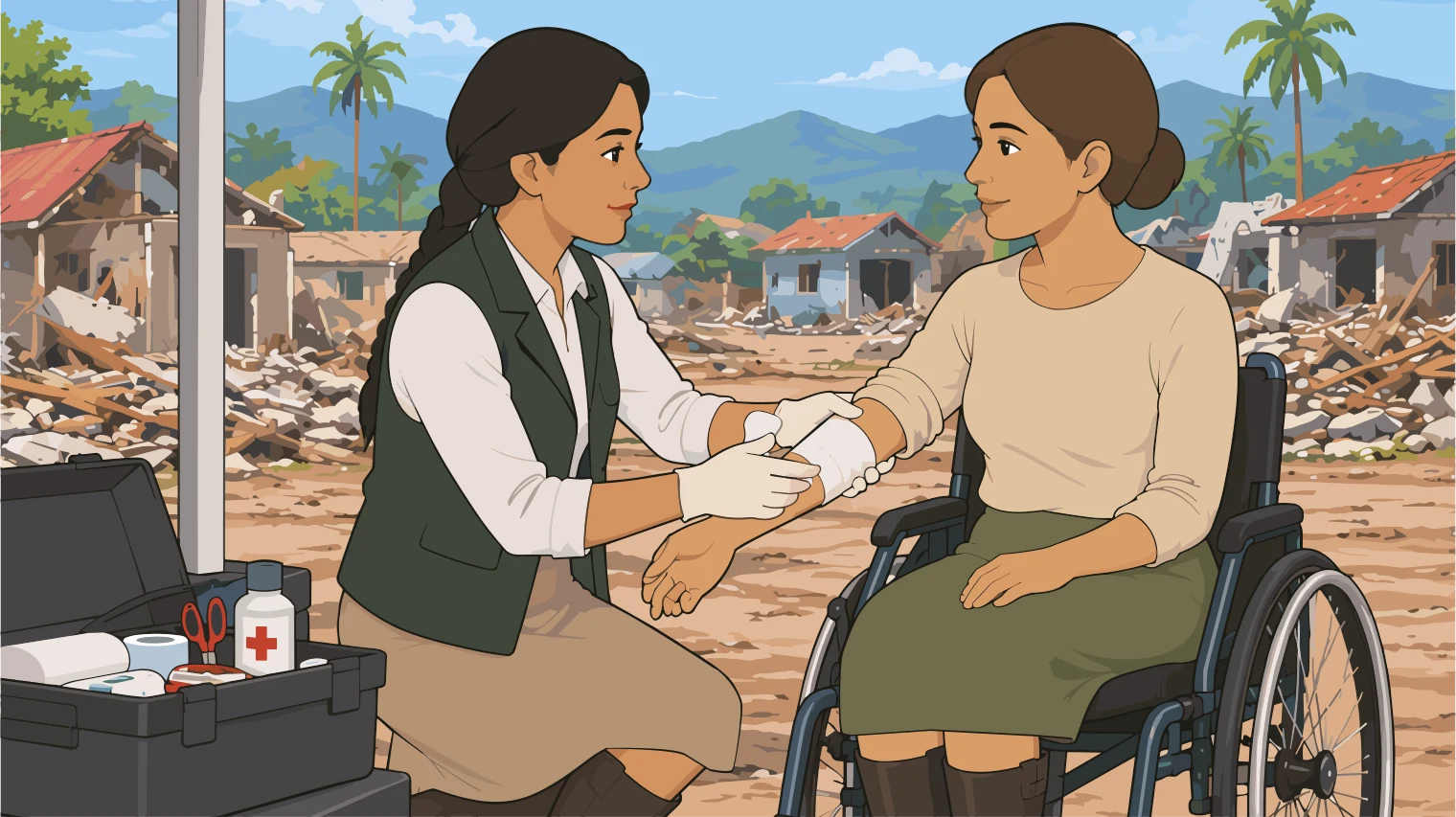
Provide first aid within the capabilities and training of the staff available.
Request professional assistance for:
- Significant bleeding,
- difficulty breathing,
- loss of consciousness,
- serious injuries,
- burns,
- fractures,
- deep wounds,
- other medical emergencies.
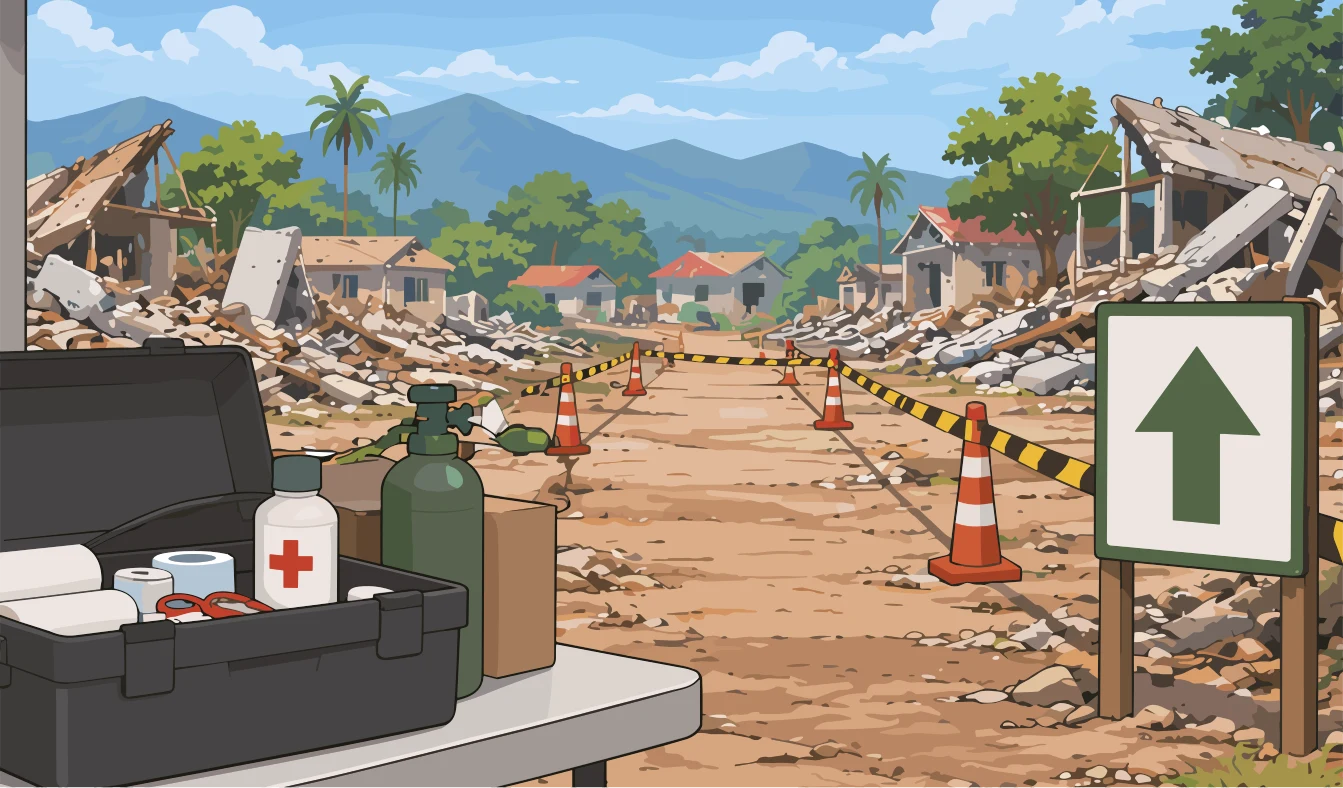
Do not carry out procedures the staff are not trained for.
Do not enter dangerous areas to rescue people when doing so requires technical capabilities the institution does not have.
 3.8
Be ready for aftershocks
If the tsunami was generated by an earthquake, aftershocks may occur.
These can:
- Bring down weakened structures,
- cause landslides,
- make objects fall,
- damage roads,
- interrupt services,
- complicate rescue operations.
If an aftershock occurs:
- Tell people to protect themselves,
- keep them away from unstable structures,
- avoid walls, poles, and damaged facades,
- follow the authorities' instructions,
- reassess the conditions of the meeting point.
 3.9
Institutional communication and sources of information
Maintain centralized institutional communication
When possible, designate a person responsible for centralizing information.
The institution must communicate only information that is:
- Confirmed,
- necessary,
- understandable,
- from official sources or verified observations.
Avoid spreading:
- Rumors,
- unconfirmed numbers,
- names of possible victims before proper confirmation,
- contradictory versions,
- alarmist messages,
- alleged authorizations to return that do not come from competent sources.
Use communications responsibly
After a disaster, telecommunications may be saturated or partially interrupted.
Prioritize essential communications:
- Authorities,
- emergency services,
- institutional leads,
- information for family members,
- reunification,
- medical needs,
- missing people,
- location changes.
Avoid:
- Unnecessary long calls,
- non-urgent administrative communications,
- unnecessary broadcasts,
- circulating videos or photographs,
- spreading unverified information.
Do not rely on a single source of information
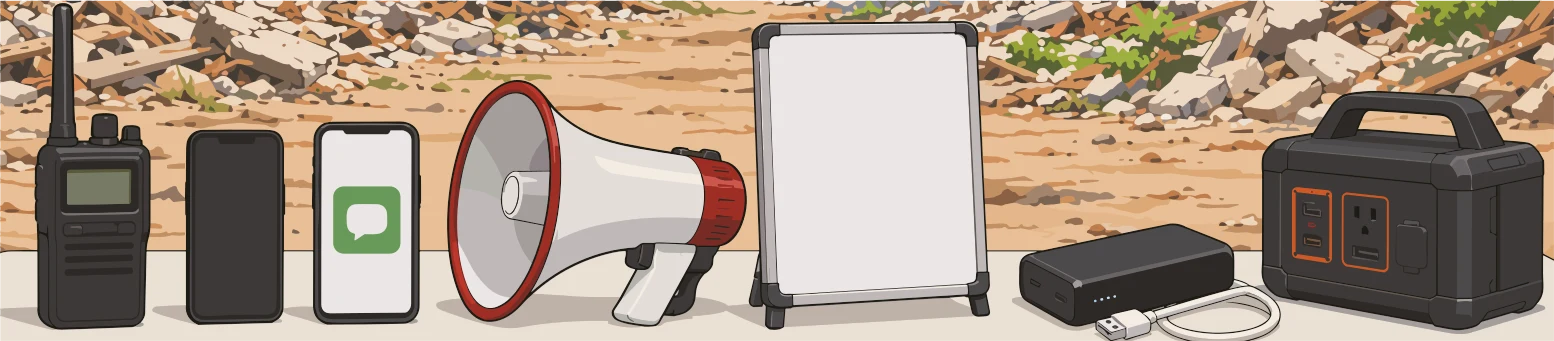
Keep available, when possible:
- radio,
- mobile telephone,
- text messages,
- official apps,
- public alert systems,
- institutional channels,
- other means established by the authorities.
 3.10
Minors under institutional responsibility
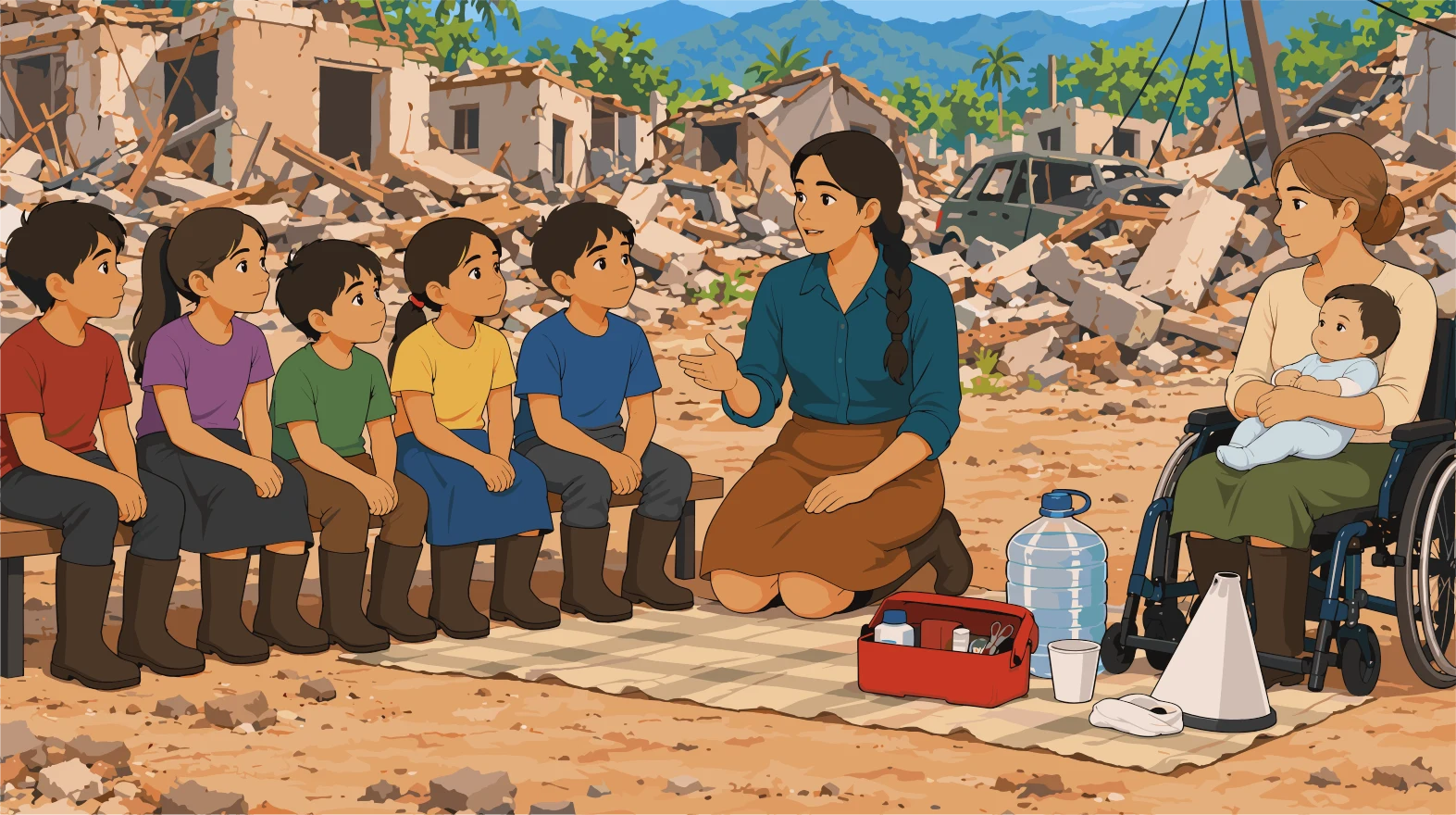
Children and adolescents must remain under supervision.
After a tsunami, there may be:
- contaminated water,
- mud,
- debris,
- broken glass,
- metal,
- power lines,
- unstable structures,
- displaced vehicles,
- machinery,
- rescue areas.
Those responsible must:
- Keep them with their group;
- clearly identify the responsible adult;
- prevent them from leaving the safe point alone;
- keep them away from restricted areas;
- prevent them from handling emergency equipment;
- prevent them from collecting objects from the debris;
- ensure safe water and food;
- maintain adequate hygiene conditions;
- facilitate family reunification;
- provide understandable information.
 3.11
Provide minors with appropriate information
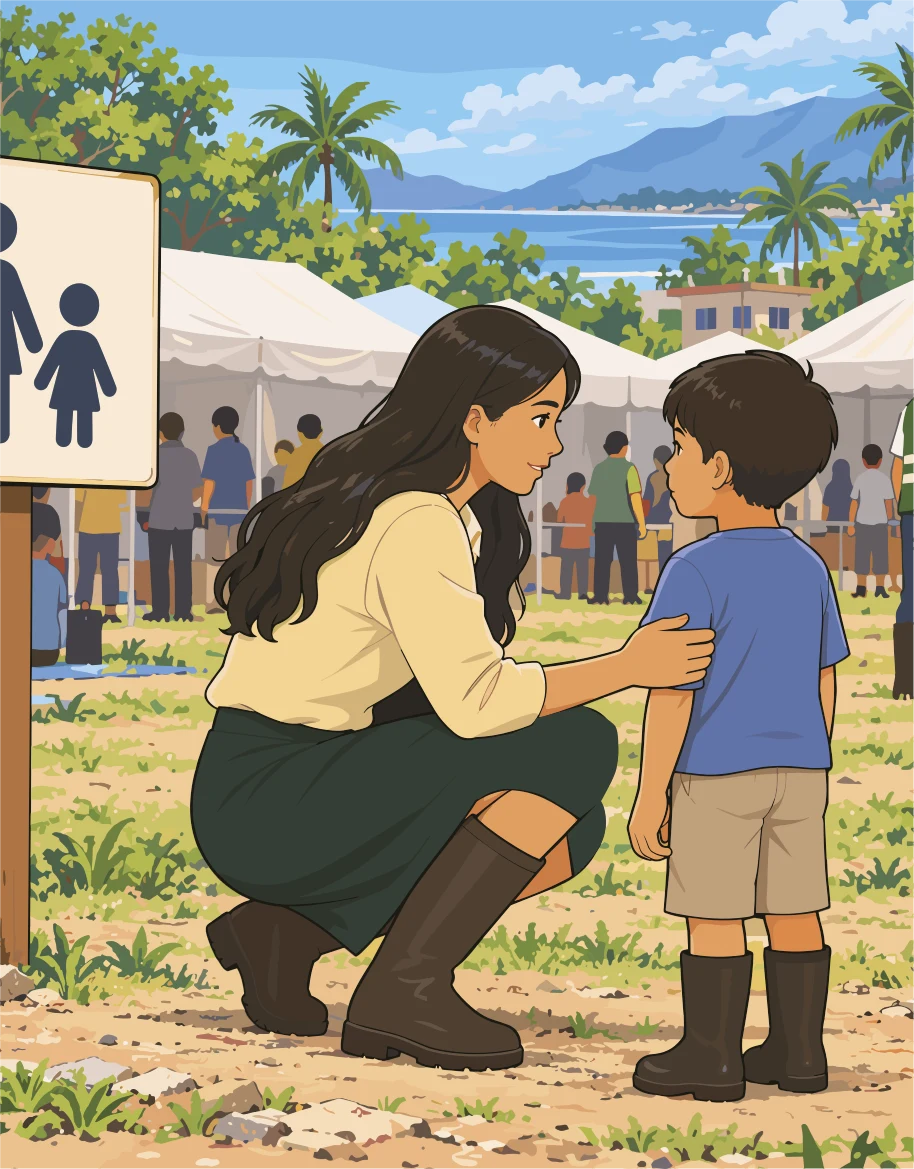
Explain what is happening using truthful, simple, and age-appropriate information.
Avoid assuring them:
- "Nothing else is going to happen."
- "Everyone is fine."
- "We can go back right away."
If there is not yet information to support that, phrases such as these can be used:
"WE’RE IN A SAFE PLACE NOW AND WE’RE GOING TO FOLLOW THE INSTRUCTIONS".
"WE STILL HAVE TO STAY HERE UNTIL THEY TELL US IT’S SAFE TO GO BACK".
"WE’RE STILL FINDING OUT WHAT HAPPENED".
 3.12
Emotional support
After a potentially traumatic experience, some people may show:
- fear,
- distress,
- crying,
- irritability,
- disorientation,
- difficulty concentrating,
- worry about family,
- worry about pets,
- temporary changes in behavior.
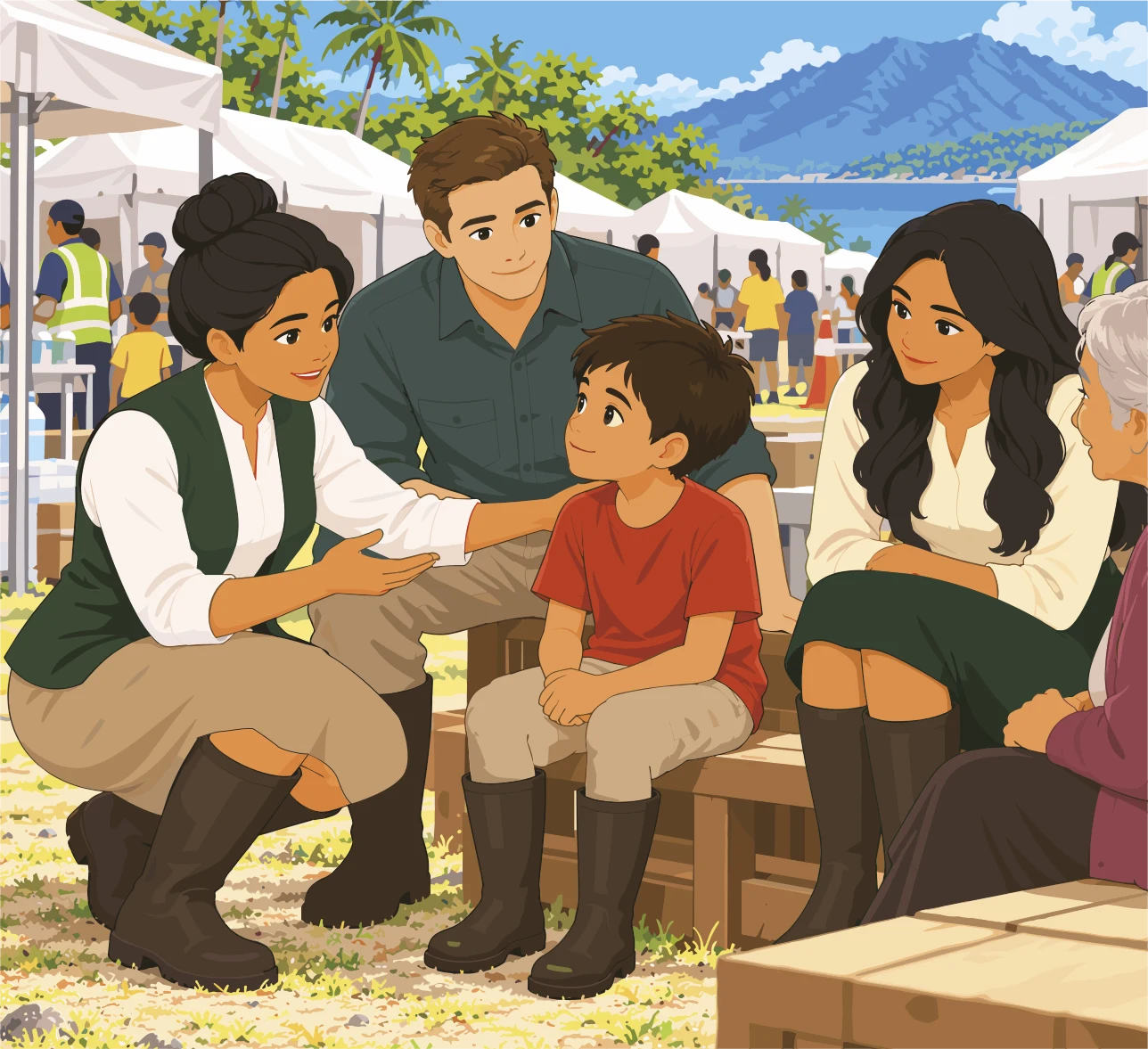
Institutional leads must:
- Maintain calm communication;
- provide clear information;
- avoid rumors;
- listen;
- reduce unnecessary exposure to distressing images;
- avoid graphic conversations about victims in front of minors;
- try to restore some predictability when circumstances allow.
 3.13
Family reunification
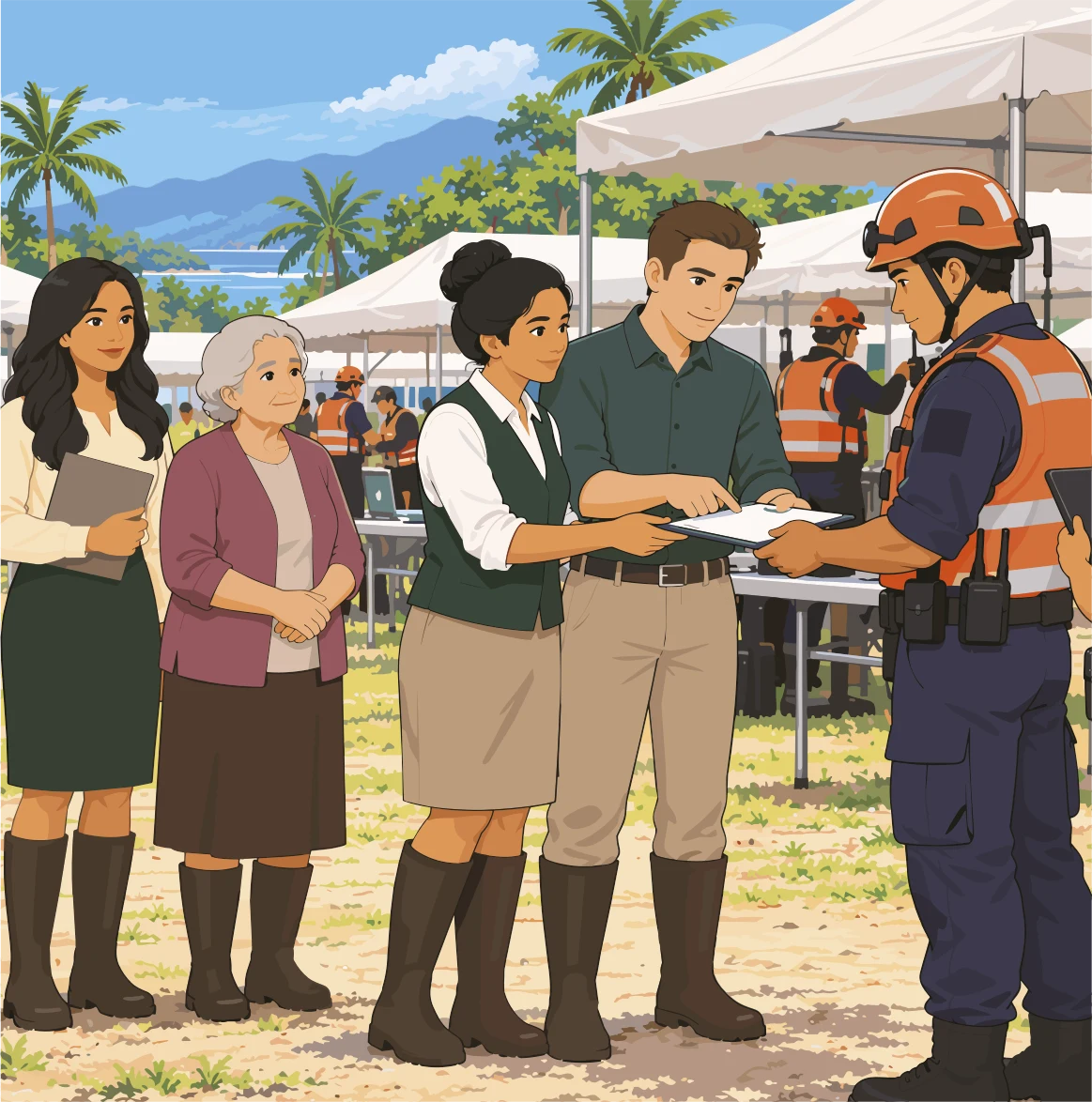
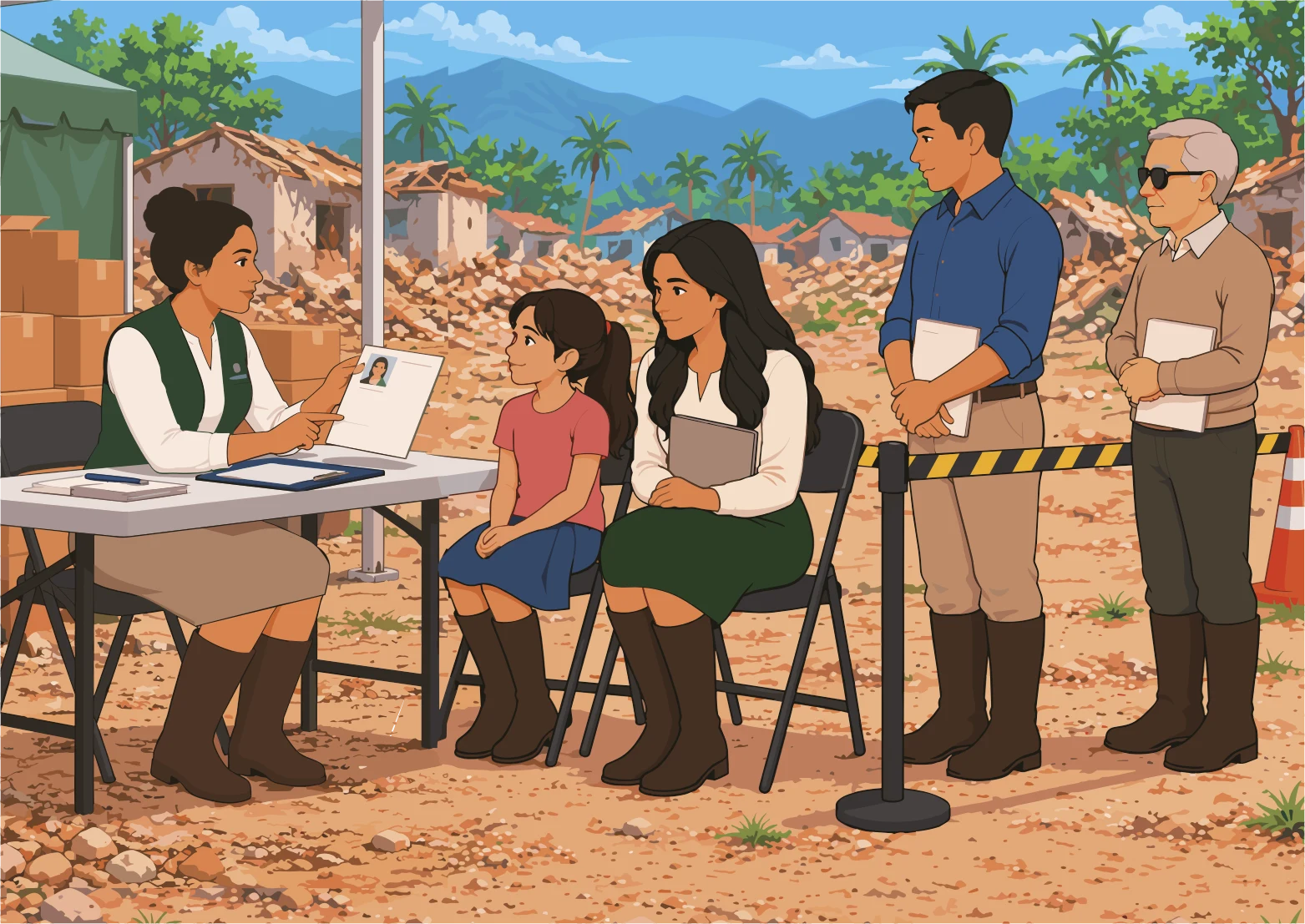
Reunification must be carried out in an organized way.
When minors or dependent people have been evacuated under institutional responsibility:
- Use the planned reunification point,
- keep a record,
- check the adult's identity,
- confirm that they are authorized,
- record the release of people when the institutional system allows for it,
- keep those who have not yet been picked up under supervision.
 3.14
Do not allow family members to enter restricted areas
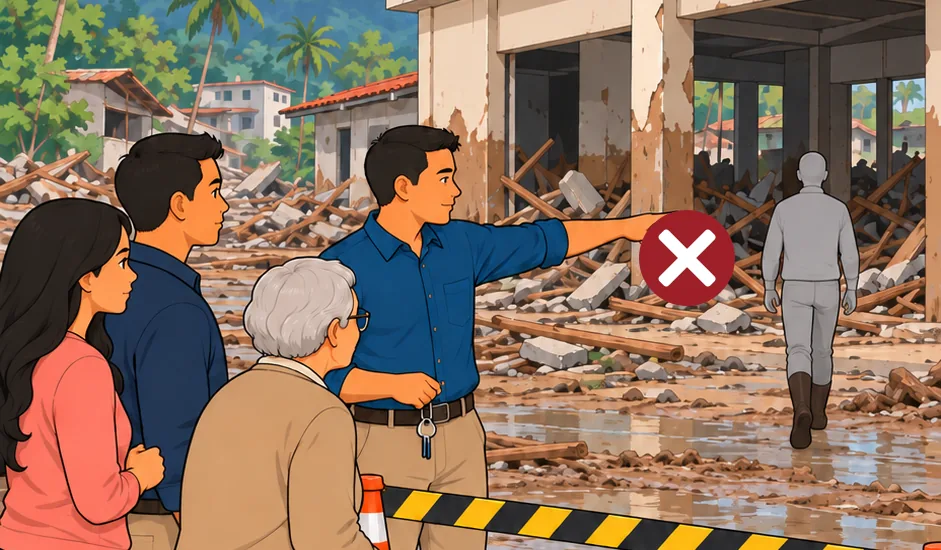
Family members must go to the communicated reunification location.
They must not:
- Go back to the establishment,
- enter evacuated areas,
- personally search for minors,
- cross checkpoints,
- interfere with emergency operations.
3.15People with disabilities and people who need support
After a tsunami, the normal accessibility conditions may have changed.
The following may be damaged or out of service:
- streets,
- ramps,
- elevators,
- transportation,
- signage,
- power supply,
- communications,
- healthcare facilities.
A person may need support related to:
- Mobility,
- orientation,
- vision,
- hearing,
- communication,
- comprehension,
- eating,
- medication,
- medical equipment,
- power supply,
- transportation,
- personal assistance,
- service animals,
- sensory regulation.
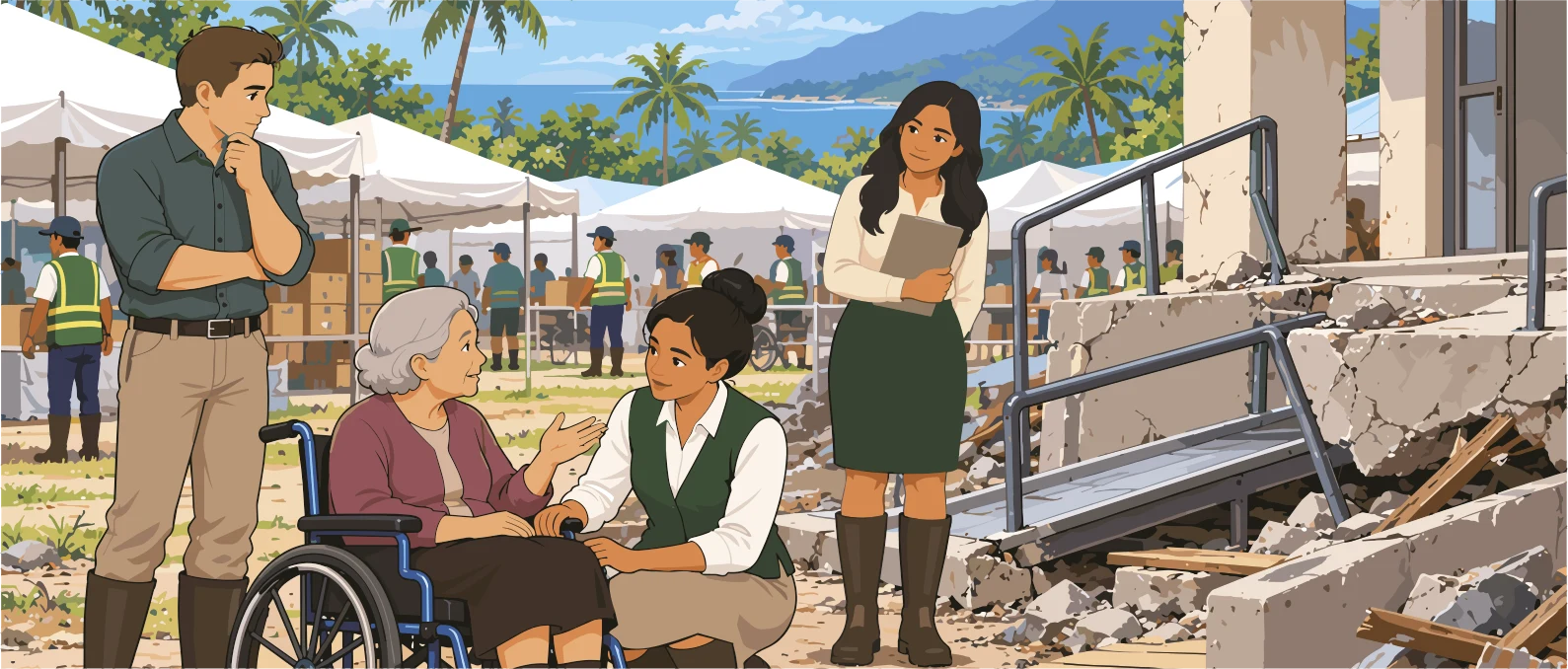
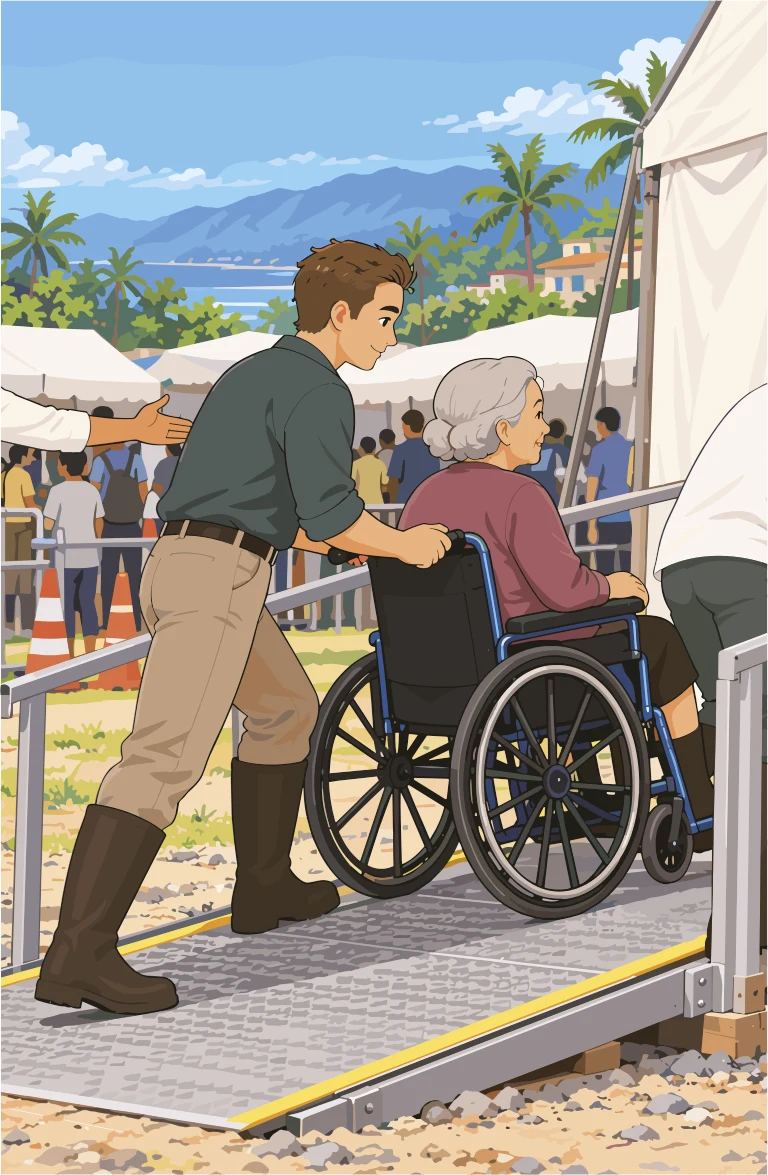
Maintain accessibility at the safe point
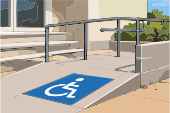
Keep clear:
- ramps,
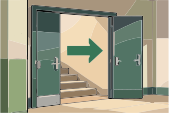
- accessible doors,
- exit routes,
- access to restrooms,
- designated spaces for wheelchairs.
Avoid:
- boxes,
- luggage,
- cables,
- supplies,
- furniture,
in places where they could obstruct movement.
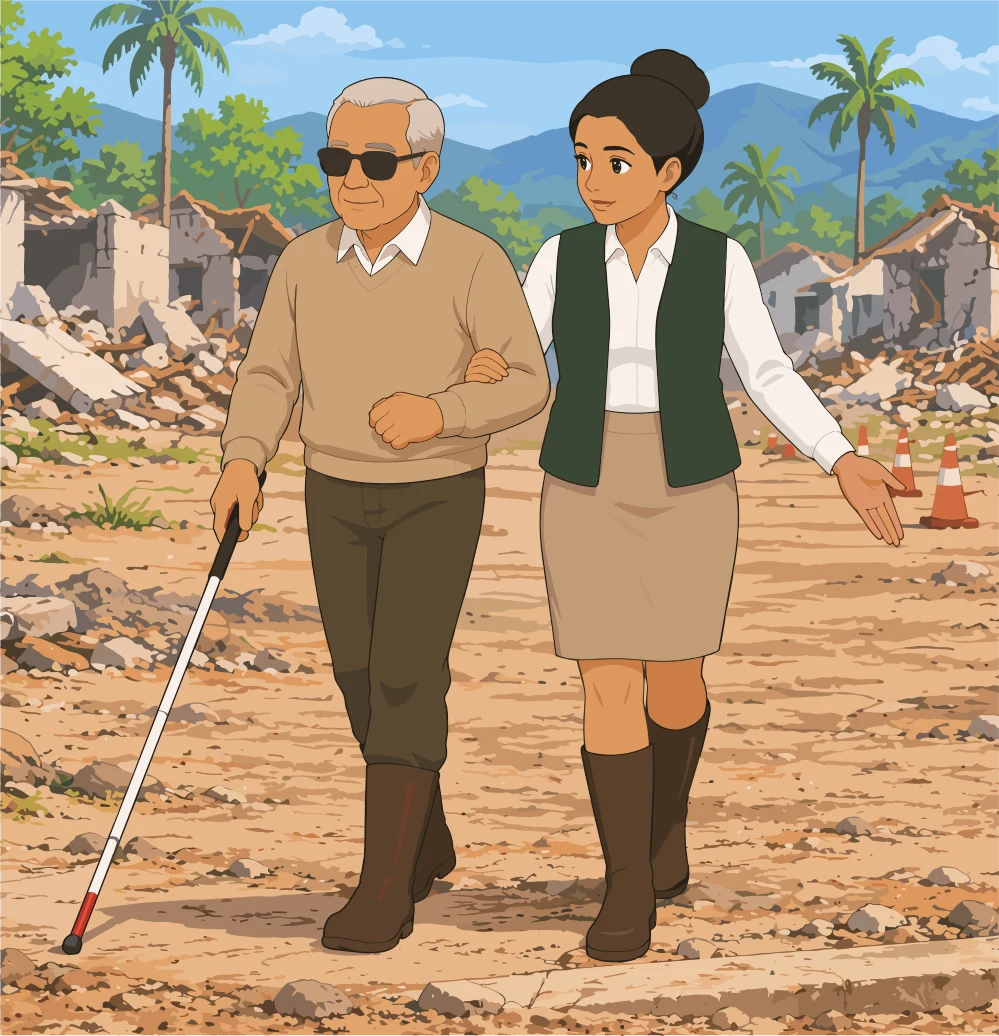
People with visual impairment
Remember that a previously familiar environment may have changed completely.
If a person requests assistance:
- Identify yourself,
- ask how they wish to be guided,
- describe obstacles,
- announce steps,
- indicate changes in elevation,
- explain changes of direction,
- describe significant changes in the environment.
Use specific references.
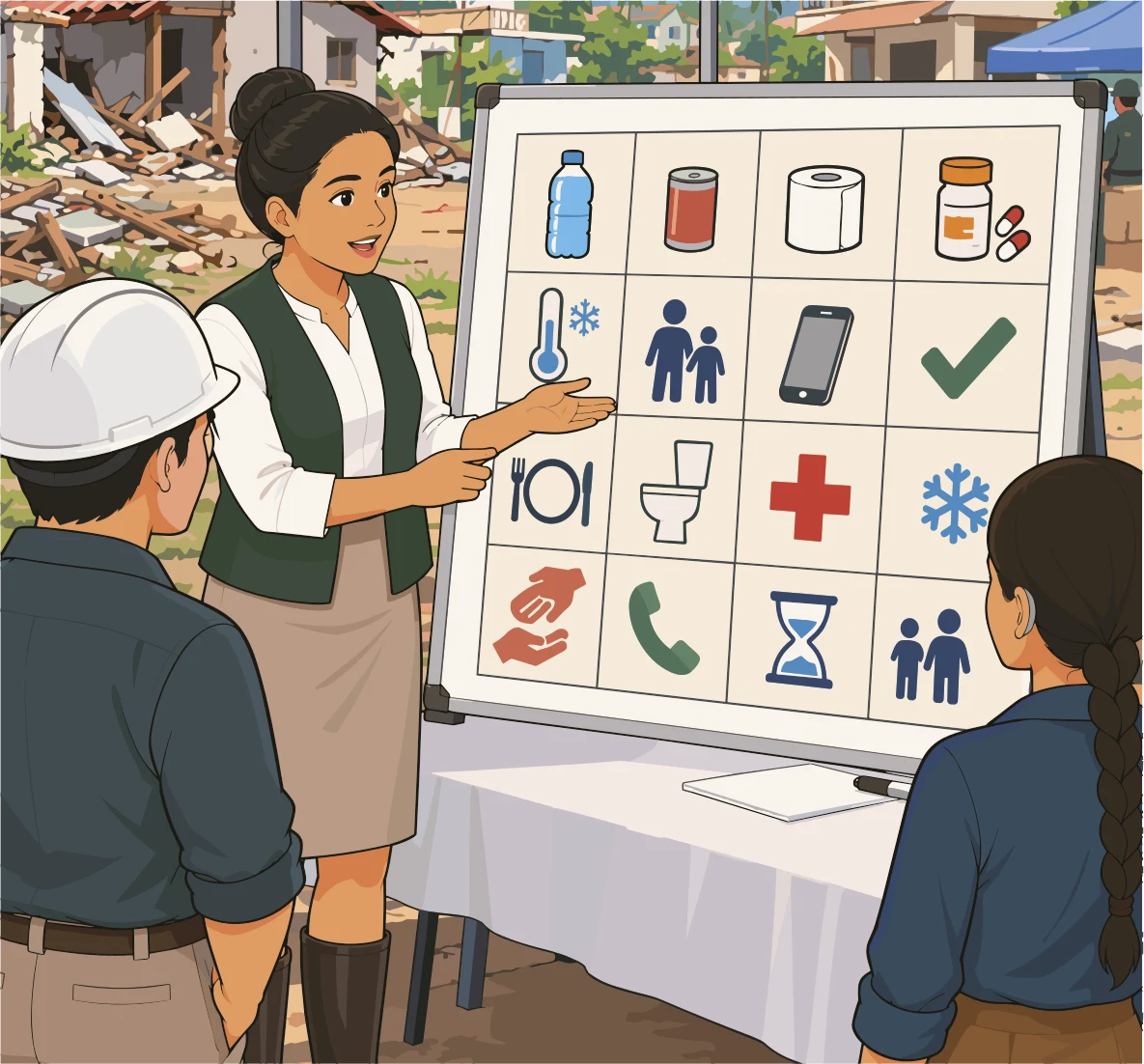
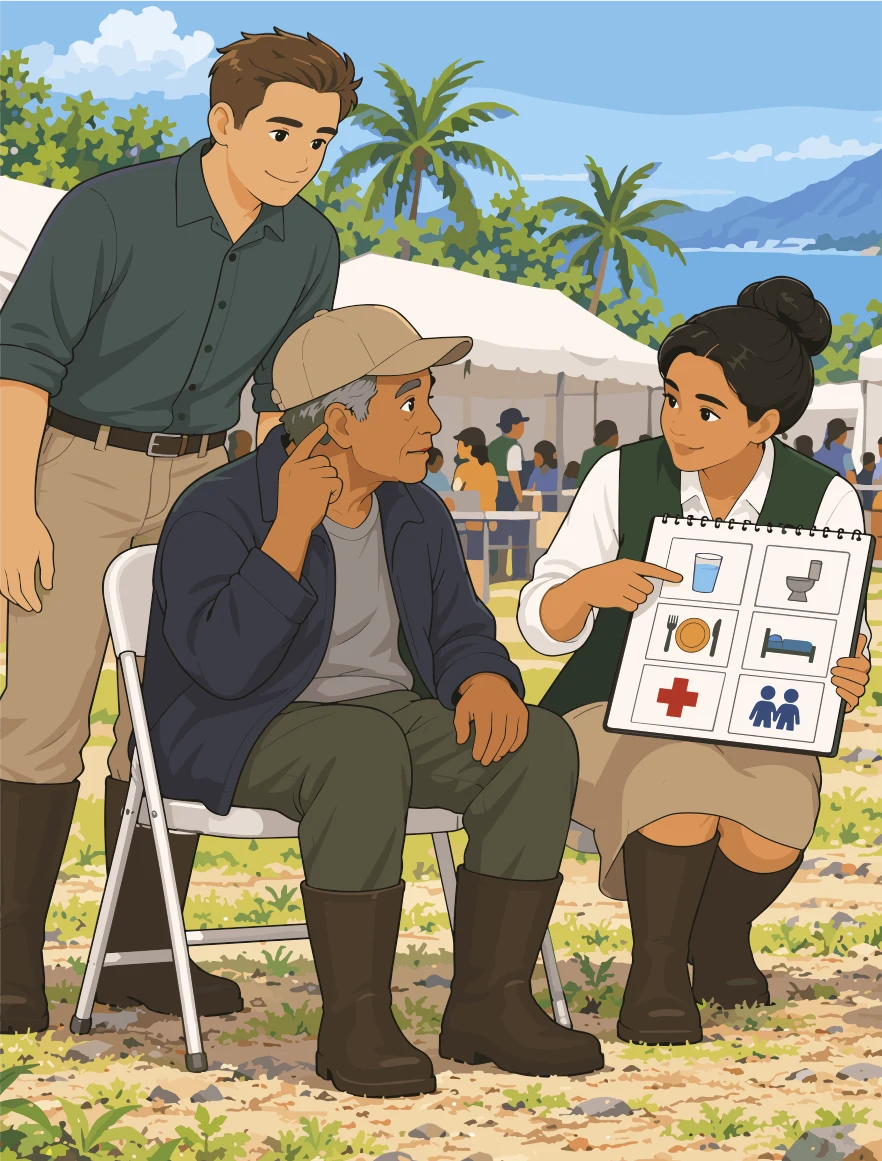
Deaf people or people with hearing impairments
Do not rely exclusively on:
- loudspeakers,
- sirens,
- verbal announcements,
- radio.
Use, when available:
- written messages,
- signs,
- screens,
- text messages,
- apps,
- pictograms,
- sign language,
- other appropriate systems.
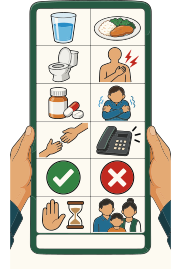
People with communication needs
Facilitate the use of:
- communication boards,
- electronic devices,
- pictograms,
- writing,
- gestures,
- augmentative or alternative systems.
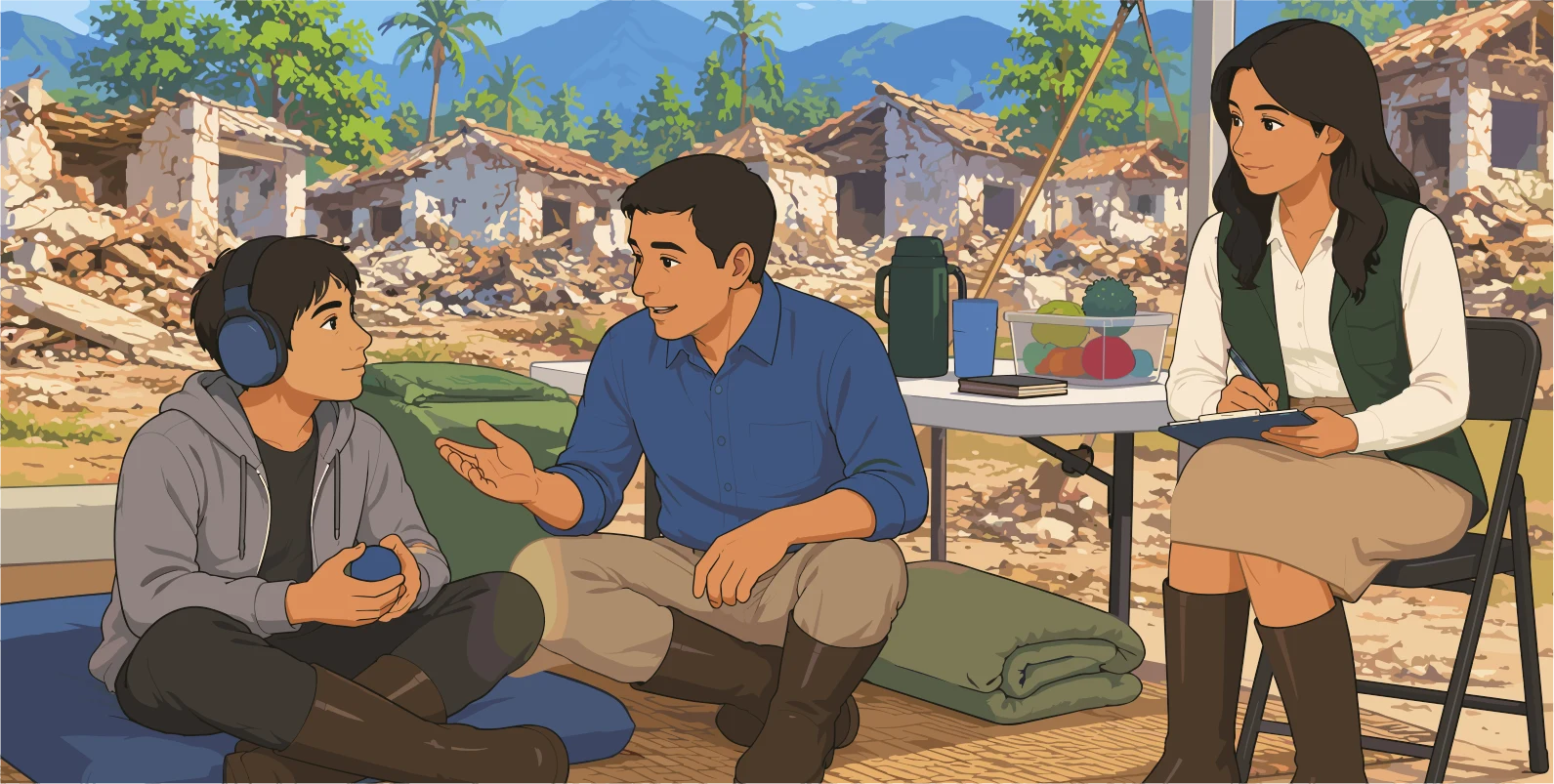
People with intellectual, cognitive or developmental disabilities and neurodivergent people
Meeting points and shelters may present:
- Intense noise;
- constant lighting;
- crowds;
- unfamiliar smells;
- frequent physical contact;
- disruption of routines;
- lack of privacy.
When possible:
- Provide quieter spaces;
- reduce unnecessary stimuli;
- use brief instructions;
- explain changes in advance;
- allow familiar sensory regulation items;
- avoid unexpected physical contact.
Assistance must be individualized.
Medications and medical needs
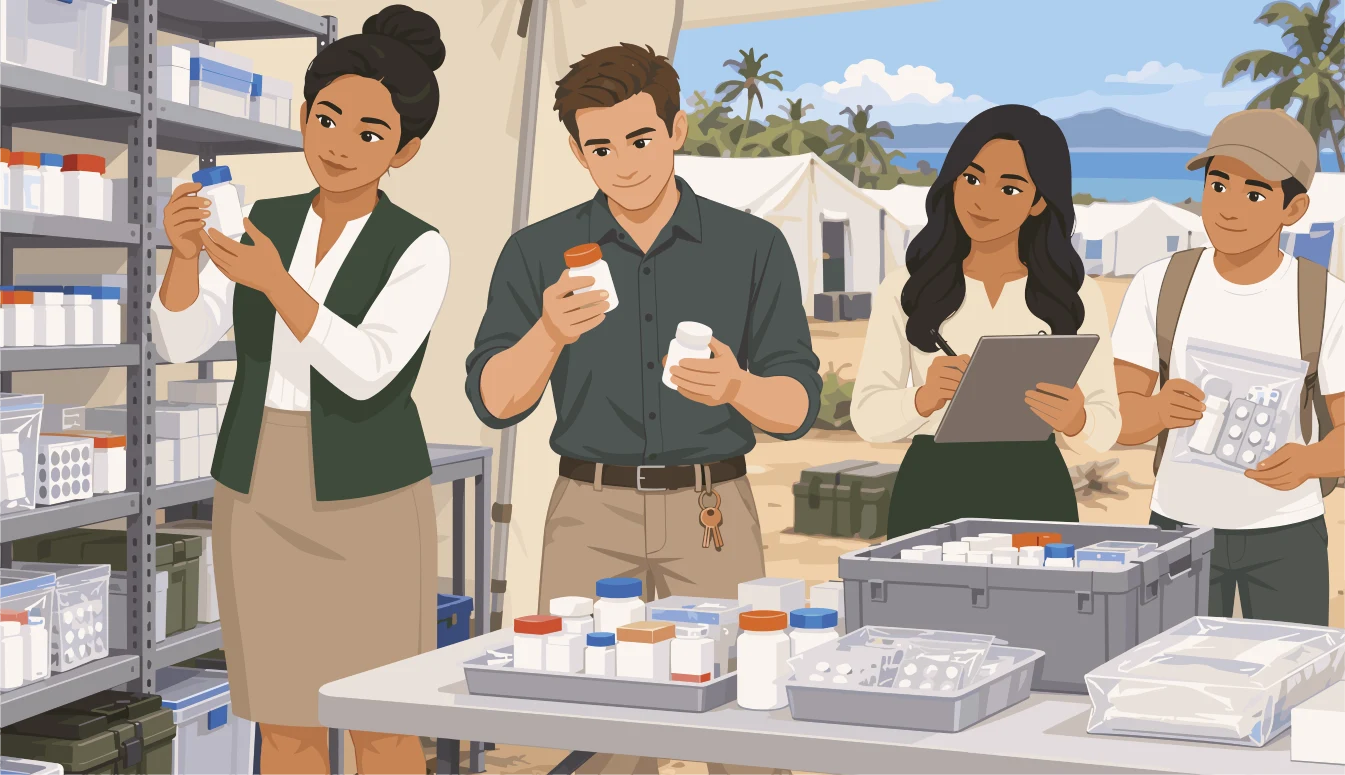
Identify people who depend on regular medications or treatments.
Where applicable:
- Check which medications they still have,
- make sure they have not been contaminated,
- keep them properly stored,
- keep information on prescriptions,
- inform healthcare personnel of any risk of interrupting essential medication.
Medical equipment and assistive devices
Determine whether anyone depends on:
- oxygen concentrators,
- respiratory equipment,
- pumps,
- communication devices,
- hearing aids,
- prosthetics,
- electric wheelchairs,
- feeding equipment,
- other medical devices.
Check:
- condition,
- battery,
- need for electricity,
- availability of supplies,
- possible damage.
Electricity needs
Prioritize identifying people who need electricity for essential devices.
Record:
- Which device they use,
- how long it can operate on battery,
- what power source it requires.

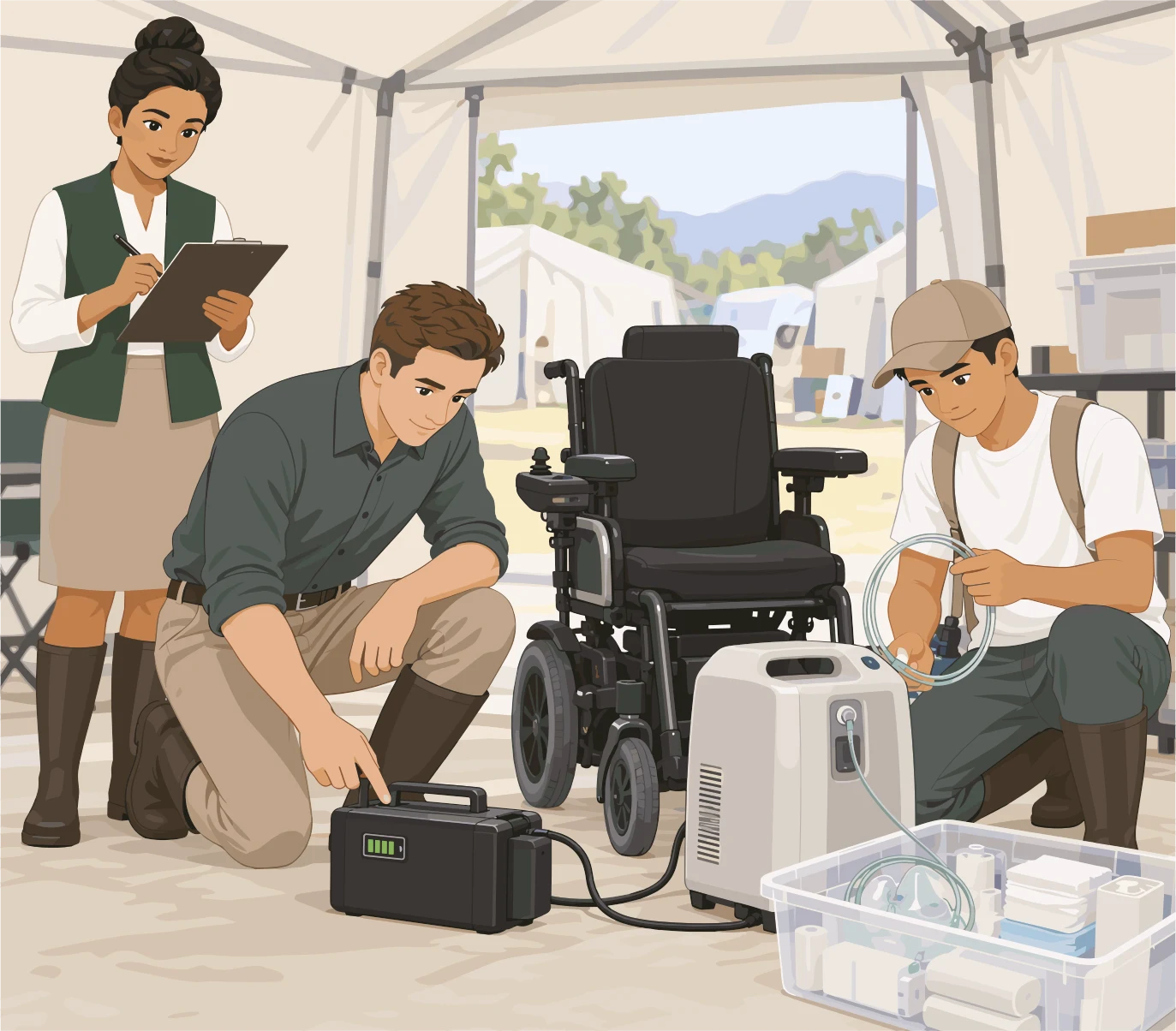
GENERATORS MUST BE USED ONLY IN A SAFE WAY AND NEVER INDOORS OR IN ENCLOSED SPACES.
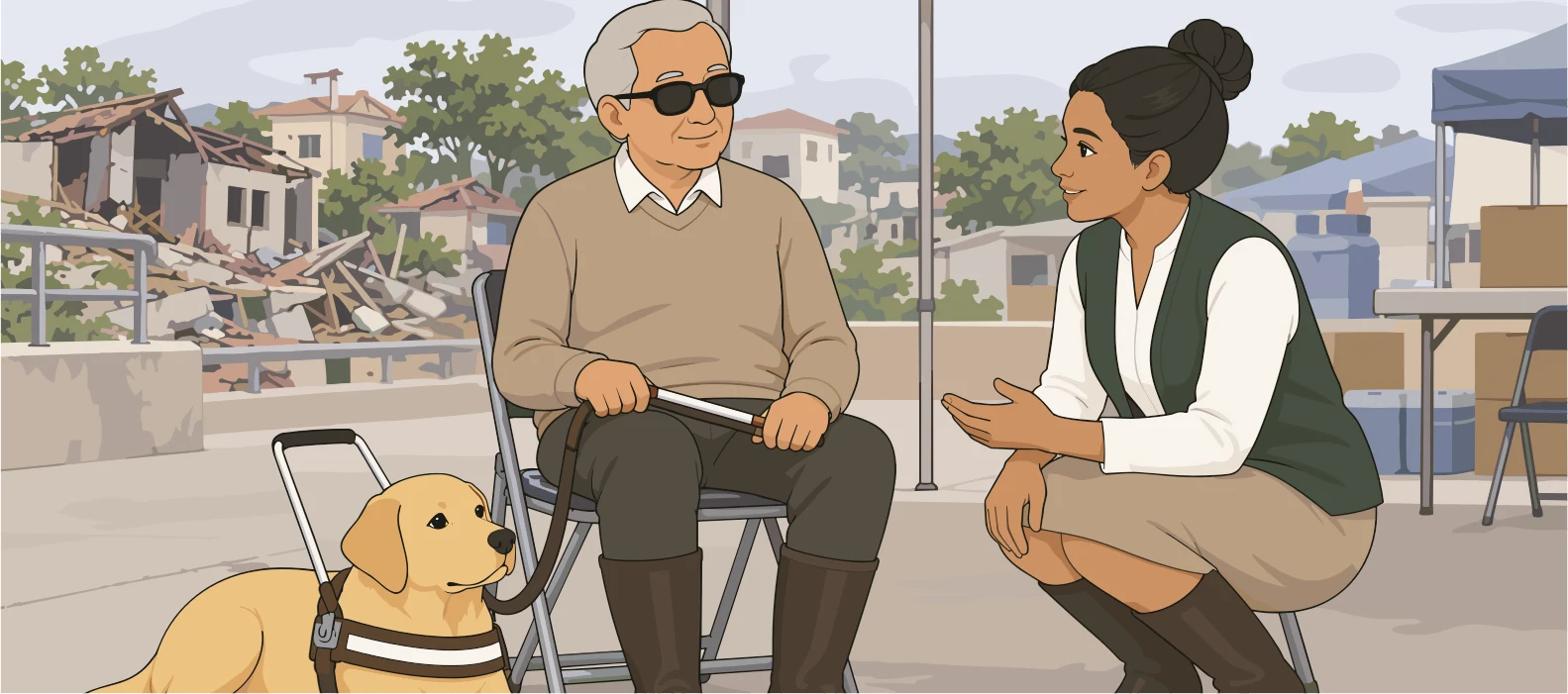
Service animals
Service animals must remain, whenever possible, with the person they assist.
Try to ensure:
- Safe water,
- food,
- proper control,
- assessment of possible injuries,
- a place for them to relieve themselves.
3.16Pets and other animals
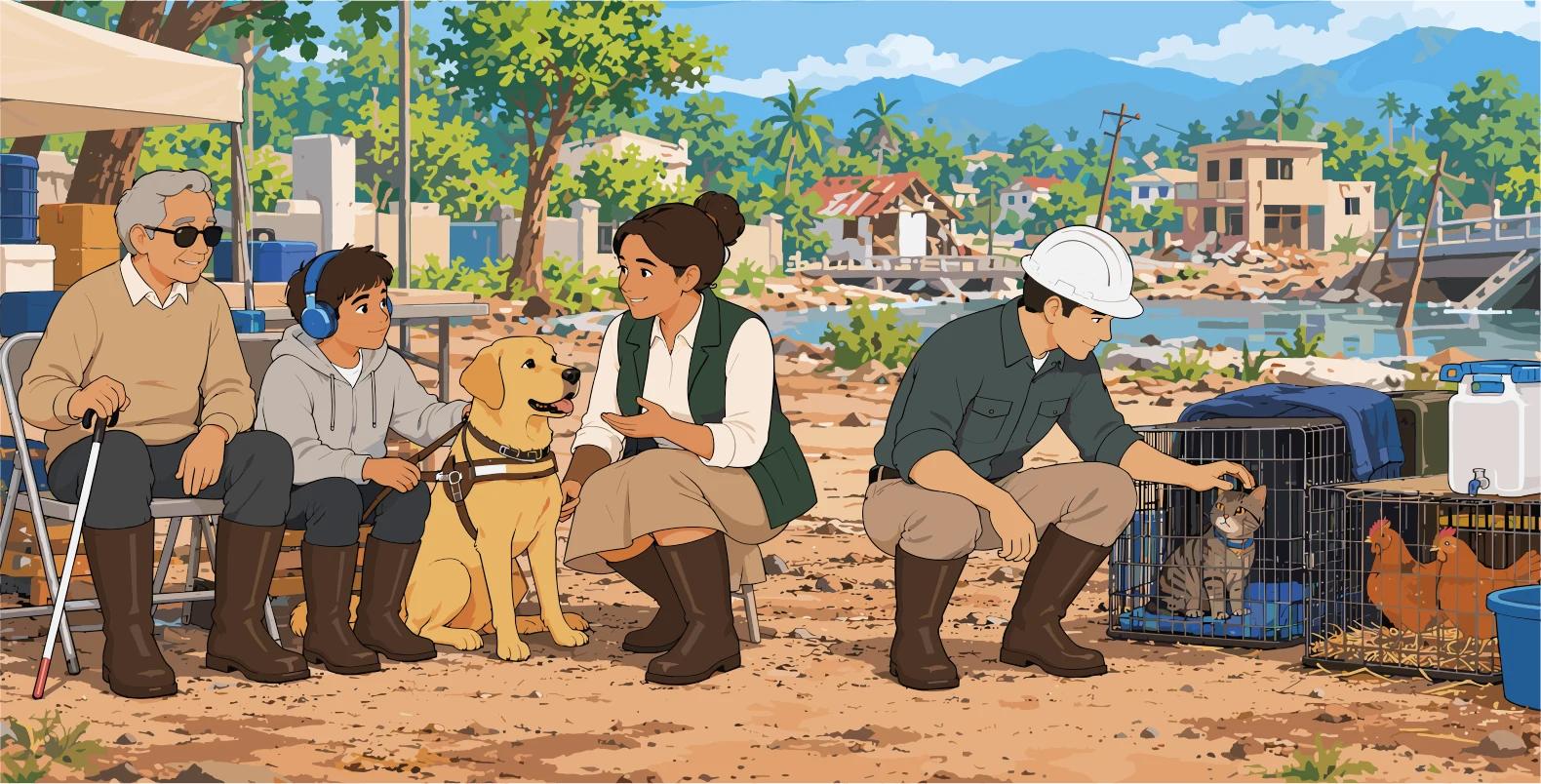
If the institution houses or receives animals:
- Keep them under control;
- provide safe water;
- prevent them from drinking floodwater, seawater or pooled water;
- keep them away from contaminated areas;
- prevent them from blocking routes;
- follow the rules of the shelter or meeting point.
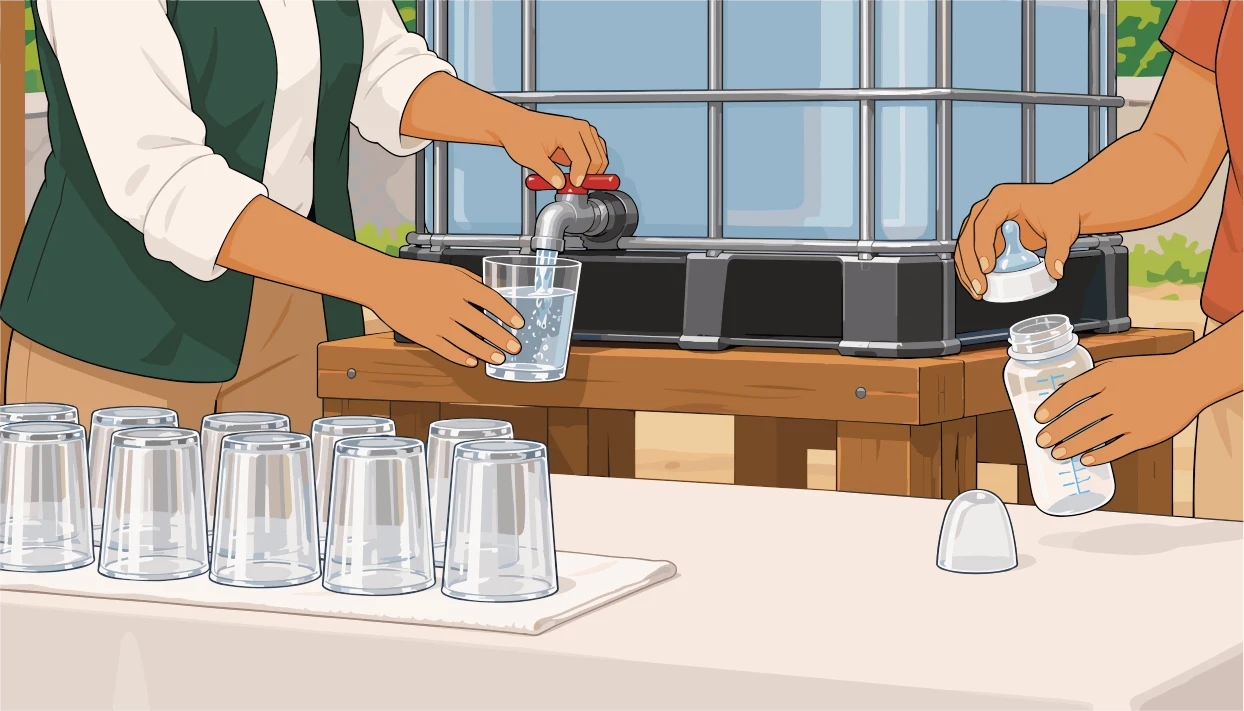
3.17Water for human consumption
After a tsunami, the water supply may have become contaminated.
It must not be automatically assumed that all tap water is unsafe, but neither should it be assumed safe without following the health guidance.
If there is a contamination warning:
- Use bottled water;
- or water properly treated according to the health instructions.
Use safe water for drinking and, according to health guidance, for:
- Preparing food,
- preparing infant formula,
- brushing teeth,
- making ice,
- washing utensils used for food.
3.18Food
Do not distribute food that has been exposed to conditions that compromise its safety.
Discard food that:
- Has been directly exposed to floodwater without adequate protection;
- has open or damaged packaging;
- shows signs of spoilage;
- has been left unrefrigerated for a period that compromises its safety.

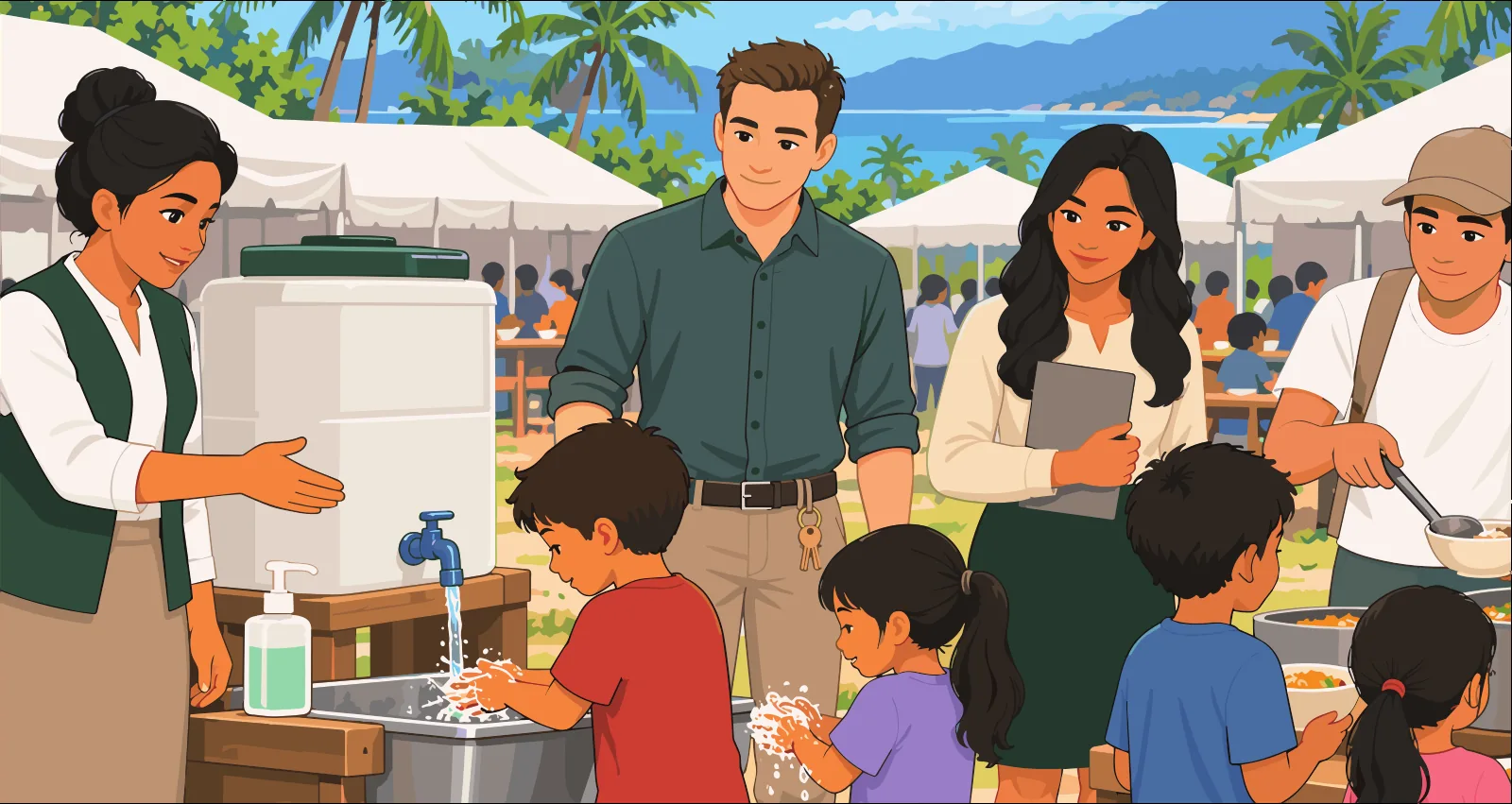
3.19Hygiene

At the meeting point or shelter, promote proper hand hygiene, especially:
- Before preparing food;
- before eating;
- after using the restroom;
- after changing diapers;
- after handling waste;
- after contact with contaminated objects.
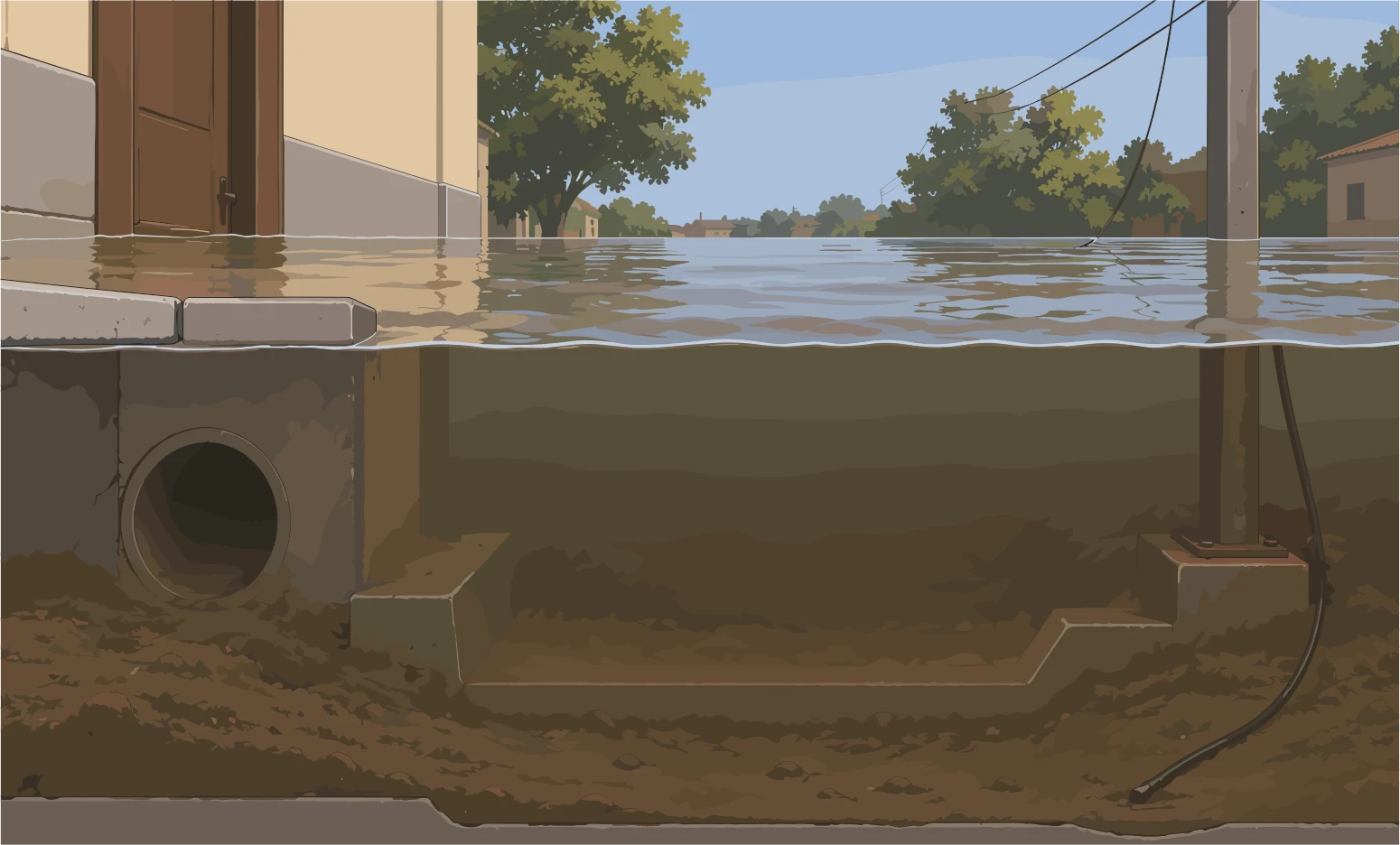
3.20Avoid floodwater and mud
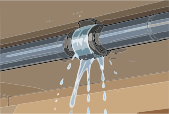
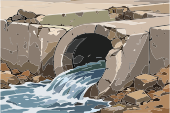
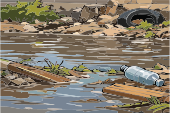
Water left behind by a tsunami may contain:
- wastewater,
- microorganisms,
- fuels,
- oils,
- pesticides,
- chemical products,
- metals,
- glass,
- sharp objects,
- construction materials.
It may also conceal:
- holes,
- open drains,
- changes in level,
- pointed objects,
- power lines.
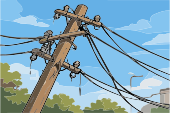
3.21Power lines and electrocution
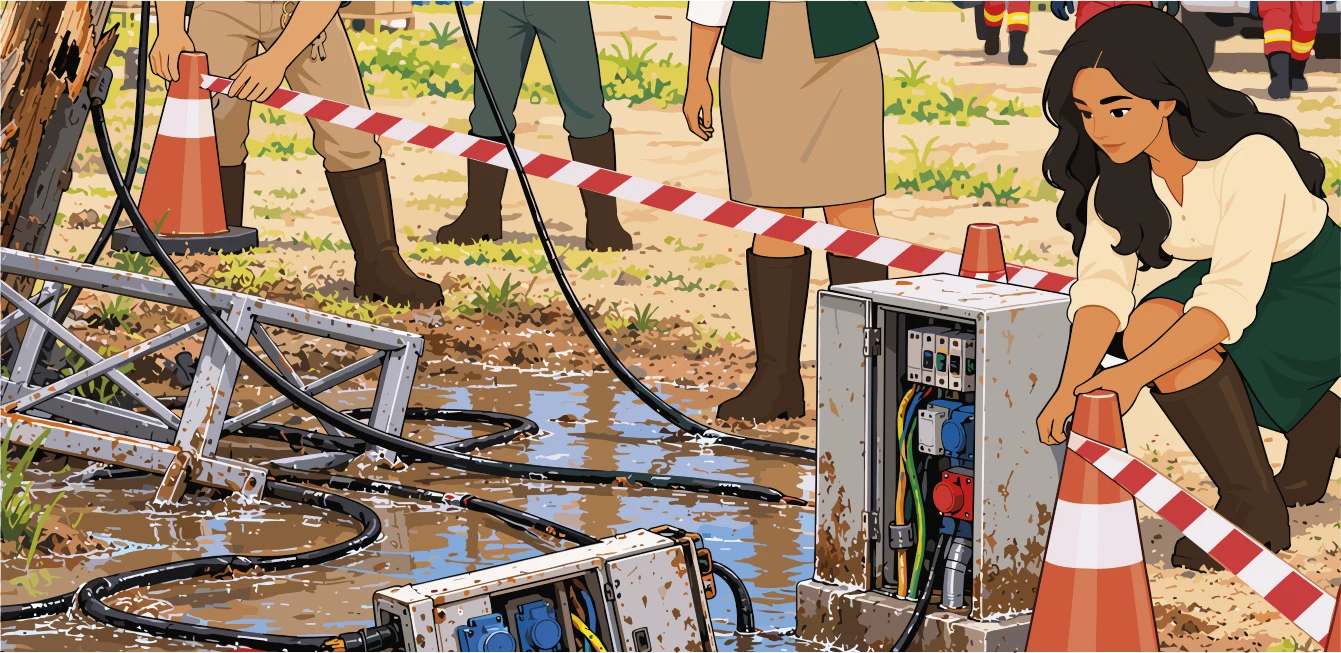
Treat every downed power line as dangerous.
Do not let anyone touch:
- power lines,
- objects in contact with power lines,
- damaged utility poles,
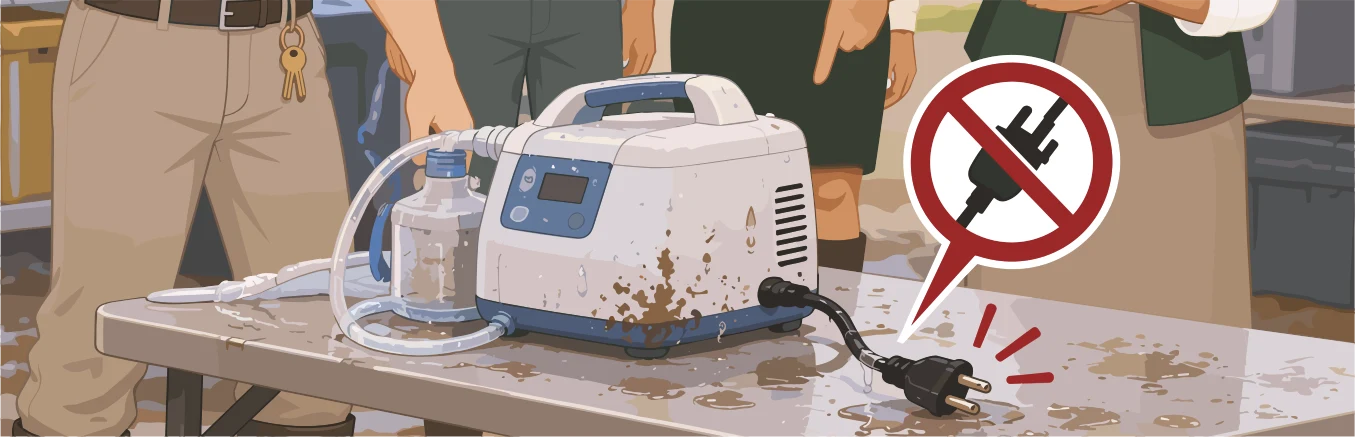
- wet electrical equipment,
- flooded electrical installations.
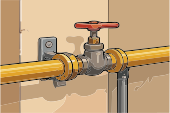
3.22Gas, fuels and fires
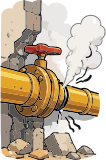
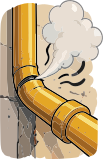
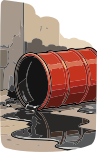
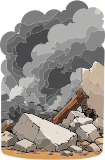
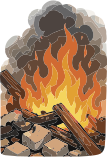
If there is:
- a smell of gas,
- the sound of a leak,
- spilled fuel,
- smoke,
- signs of fire. keep people away.
Do not allow:
- Smoking,
- lighting a flame,
- operating electrical switches in the area,
- making improvised inspections. Report any irregularity to the corresponding services.
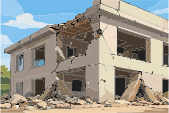
3.23Do not enter damaged buildings
A structure left standing is not necessarily safe. The earthquake, water, debris impacts, erosion, and aftershocks may have caused damage that is not visible.
Do not allow entry to:
- Recover belongings,
- retrieve documentation,
- look for equipment,
- take photographs,
- retrieve money,
- inspect offices,
- begin cleanup tasks.
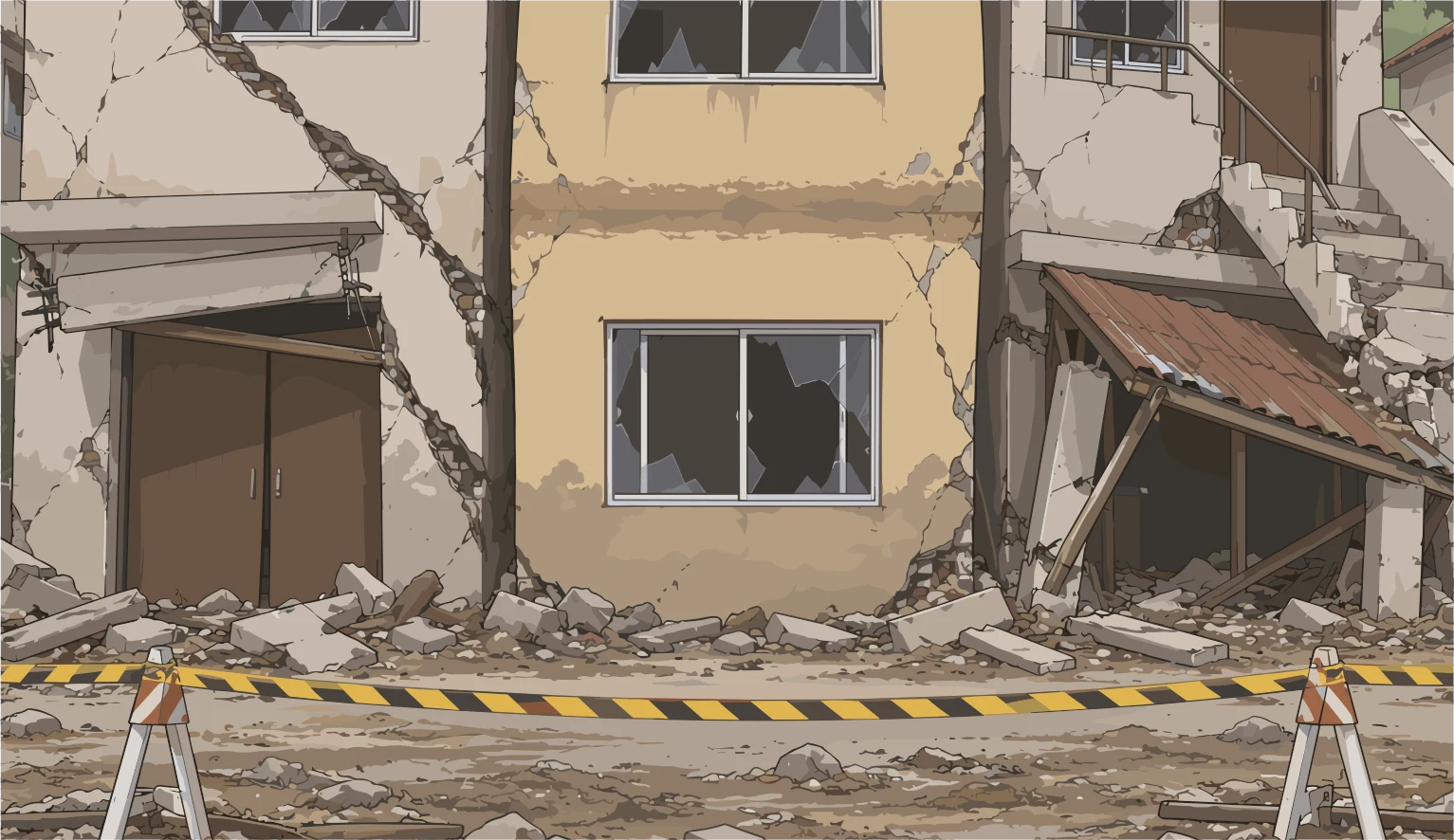
3.24Do not confuse: authorization to return to the area with authorization to occupy the building
The authorities allowing the return to a previously evacuated area does not automatically mean that each building is safe to be occupied.



Before using the premises again, consider possible:
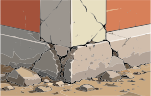
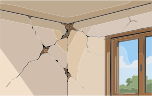
- Significant cracks,
- deformations,
- subsidence,
- damage to walls and ceilings,
- damage to stairs,
- wet electrical installations,
- gas leaks,
- contaminated water,
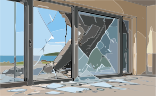
- broken glass,
- unstable heavy objects,
- impact damage,
- erosion around the foundations.
3.25Access control
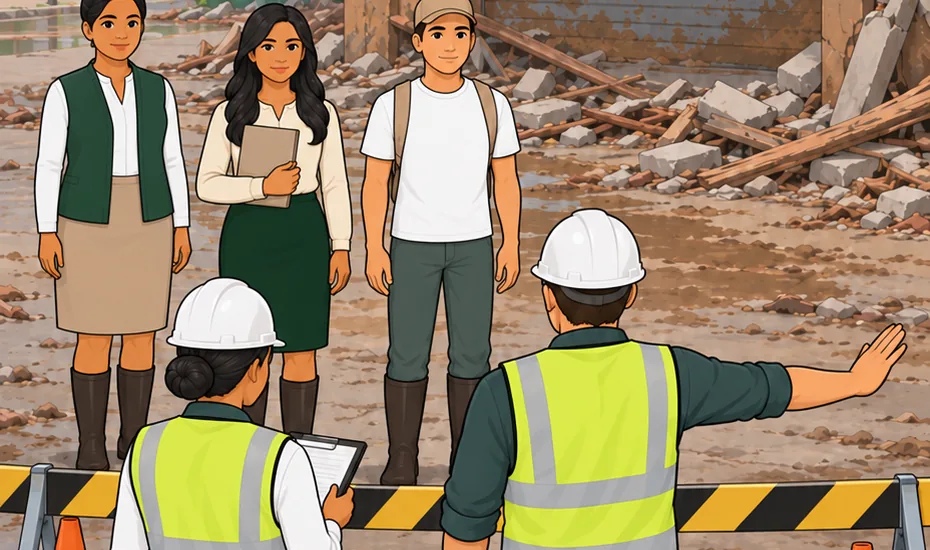
Once it is allowed to return to the area, control access to the premises where there are risks.
Prevent entry of:
- Unauthorized people,
- minors,
- visitors,
- volunteers,
- family members,
- members wishing to recover belongings, until conditions allow it. Use signage and barriers when appropriate.
3.26Inspecting the premises
The assessment must be carried out according to the nature and extent of the damage and by qualified people when appropriate.
Consider:
- structure,
- foundations,
- stairs,
- roofs,
- walls,
- glass,
- electricity,
- gas,
- water,
- sanitation,
- fire systems,
- exits,
- accessibility,
- communications,
- equipment,
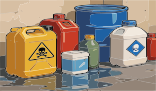
- hazardous substances,
- contamination.


3.27Do not resume activities prematurely
Being able to enter the building does not mean that normal activities can resume.

Before reopening, consider:
- Structural safety,
- electricity,
- gas,
- availability of safe water,
- sanitation,
- functioning restrooms,
- accessibility,
- emergency exits,
- communications,
- hygiene conditions,
- moisture or contamination,
- capacity to evacuate again,
- ability to respond to another emergency.

THE CONTINUITY OF ACTIVITIES MUST NEVER TAKE PRIORITY OVER SAFETY.
3.28Cleaning the premises
Cleanup after a tsunami can be a dangerous activity.
Before beginning:
- Identify the hazards,
- mark off areas,
- determine who may enter,
- establish the tasks,
- provide appropriate protective equipment,
- ensure supervision when appropriate.
Do not let the following take part in dangerous tasks:
- Children,
- people without adequate protection,
- people not trained for the specific task.
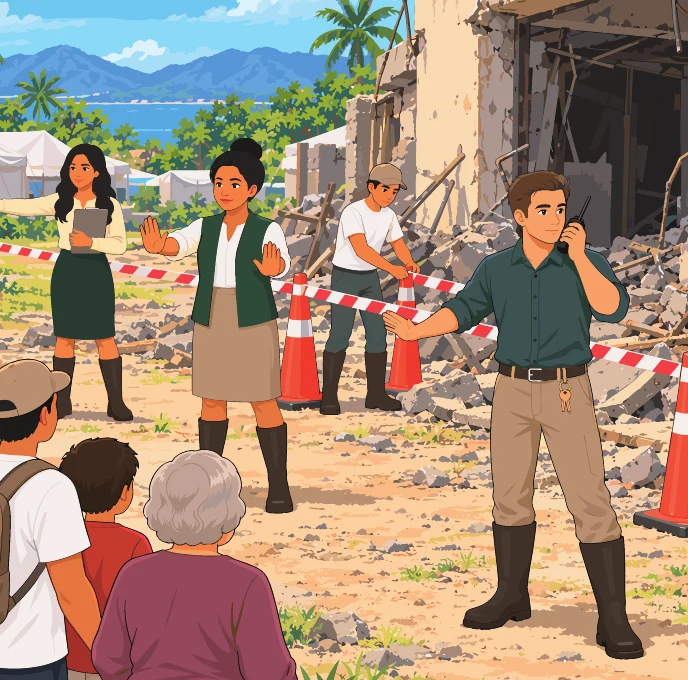
3.29Do not allow improvised technical work
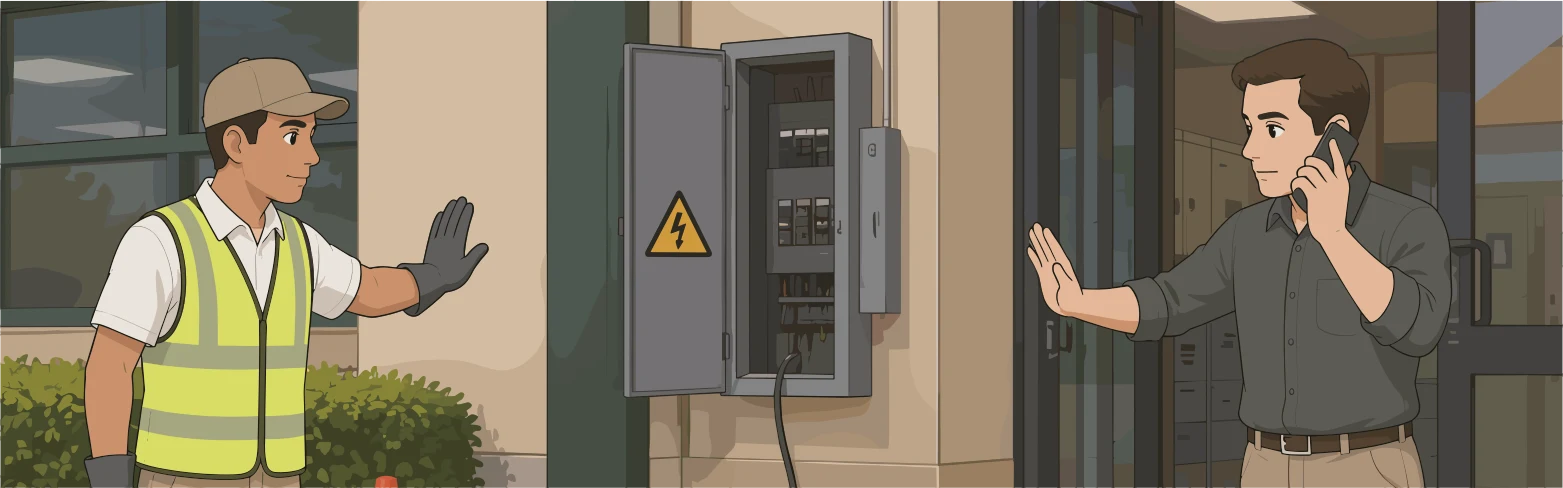
Volunteers or institution members must not take it upon themselves to handle:
- Electrical cables,
- electrical panels,
- gas installations,
- unfamiliar chemical substances,
- unstable structures,
- hazardous materials.
GOOD INTENTIONS DO NOT REPLACE TECHNICAL TRAINING.
3.30Protective equipment
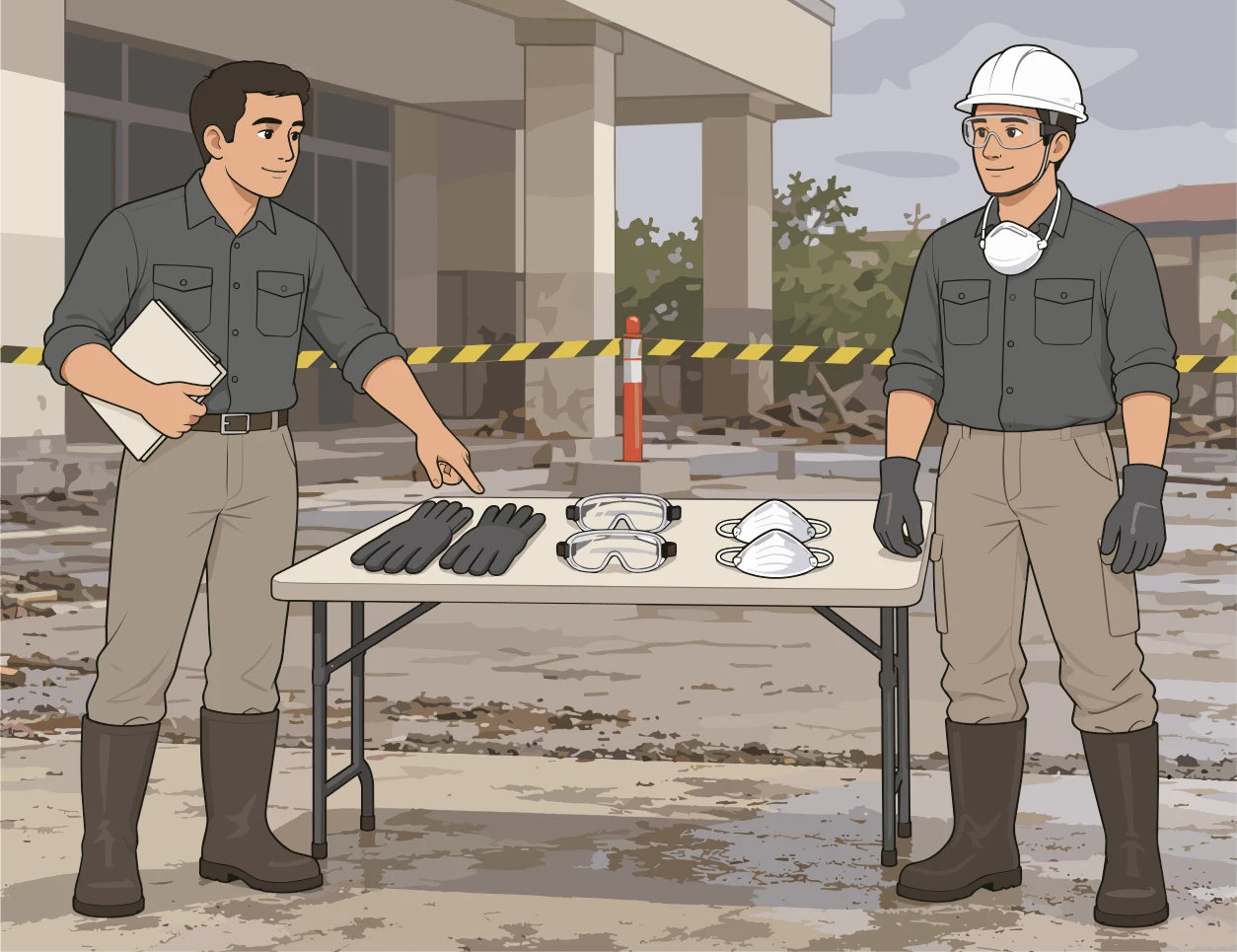
Depending on the tasks and existing risks, it may be necessary to use:
- Sturdy footwear,
- long pants,
- appropriate gloves,
- eye protection,
- respiratory protection suitable for certain tasks,
- other specific equipment.
Protective equipment must be chosen according to the actual risk and the task.
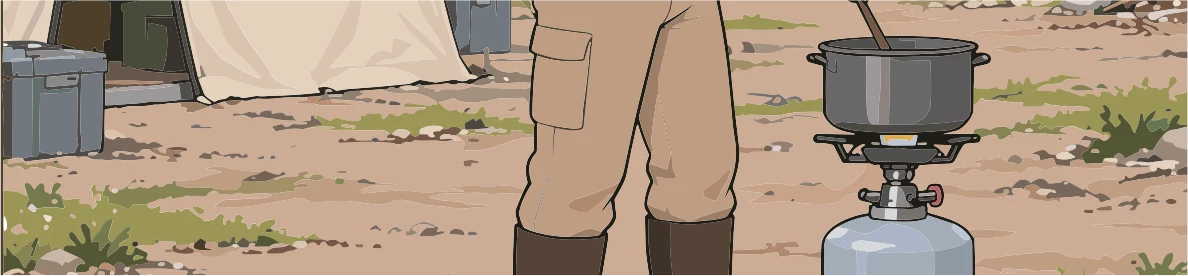
3.31Carbon monoxide
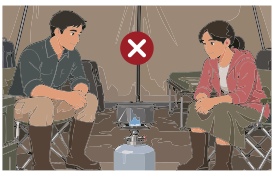
Power outages can lead to the use of generators or other fuel-burning equipment. These can produce carbon monoxide.
Never use:
- generators,
- grills,
- braziers,
- fuel stoves,
- engines, inside buildings, garages, basements, tents, closed shelters, or other spaces without adequate ventilation.
3.32Document the damage when it is safe to do so
Once access is allowed and doing so poses no danger, the institution may document:
- Structural damage,
- affected equipment,
- furniture,
- lost supplies,
- damaged documentation,
- compromised installations.
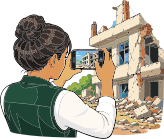
You may use:
- Photographs,
- videos,
- inventories,
- reports,
- other records.


This documentation may be needed for:
- Insurance,
- assistance,
- repairs,
- administration,
- institutional assessment.

NEVER ENTER AN UNSAFE AREA SOLELY TO DOCUMENT DAMAGE.
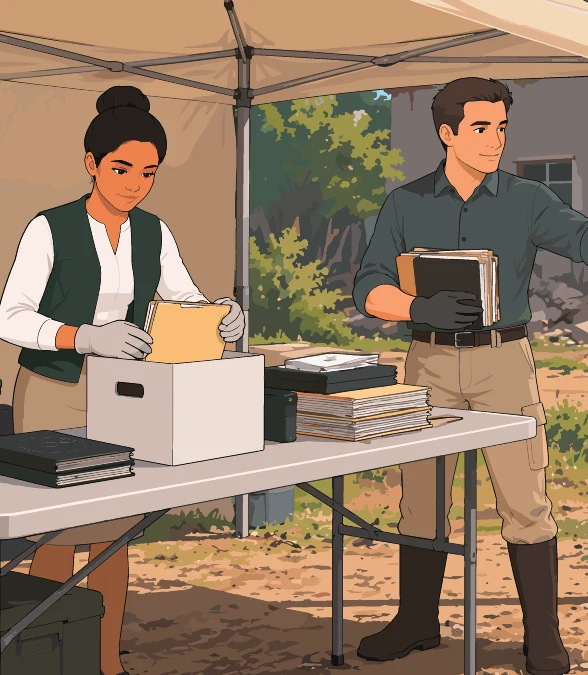
3.33Protect documentation and information
If institutional records were affected:
- Preserve what can be recovered when it is safe,
- protect personal information,
- protect confidential information,
- do not leave sensitive documents in public spaces,
- use the backup copies available,
- control access to recovered records.
Protecting information is important, but no document justifies entering a dangerous structure.
3.34Coordinate with the authorities
The institution must cooperate with the agencies responsible for the emergency.
When appropriate, report:
- Approximate number of people under its responsibility,
- injured people,
- missing people,
- medical needs,
- accessibility needs,
- special needs,
- the condition of the premises,
- resources the institution can contribute.
Respect:
- Movement restrictions,
- closures,
- evacuations,
- shelter instructions,
- health guidance,
- safety provisions.
3.35If the institution becomes an assistance point
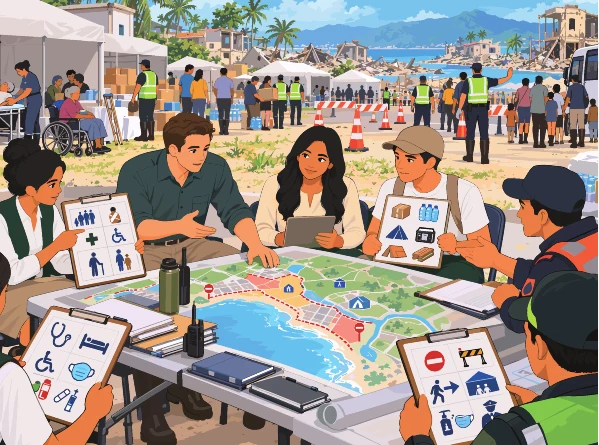
Some institutions may spontaneously begin receiving affected people.
Before taking on functions that exceed the planned role:
- Contact the authorities,
- determine the actual needs,
- assess the safety of the location,
- manage maximum capacity,
- preserve the exits,
- maintain accessibility,
- organize water and sanitation,
- record needs,
- avoid interfering with the official response.
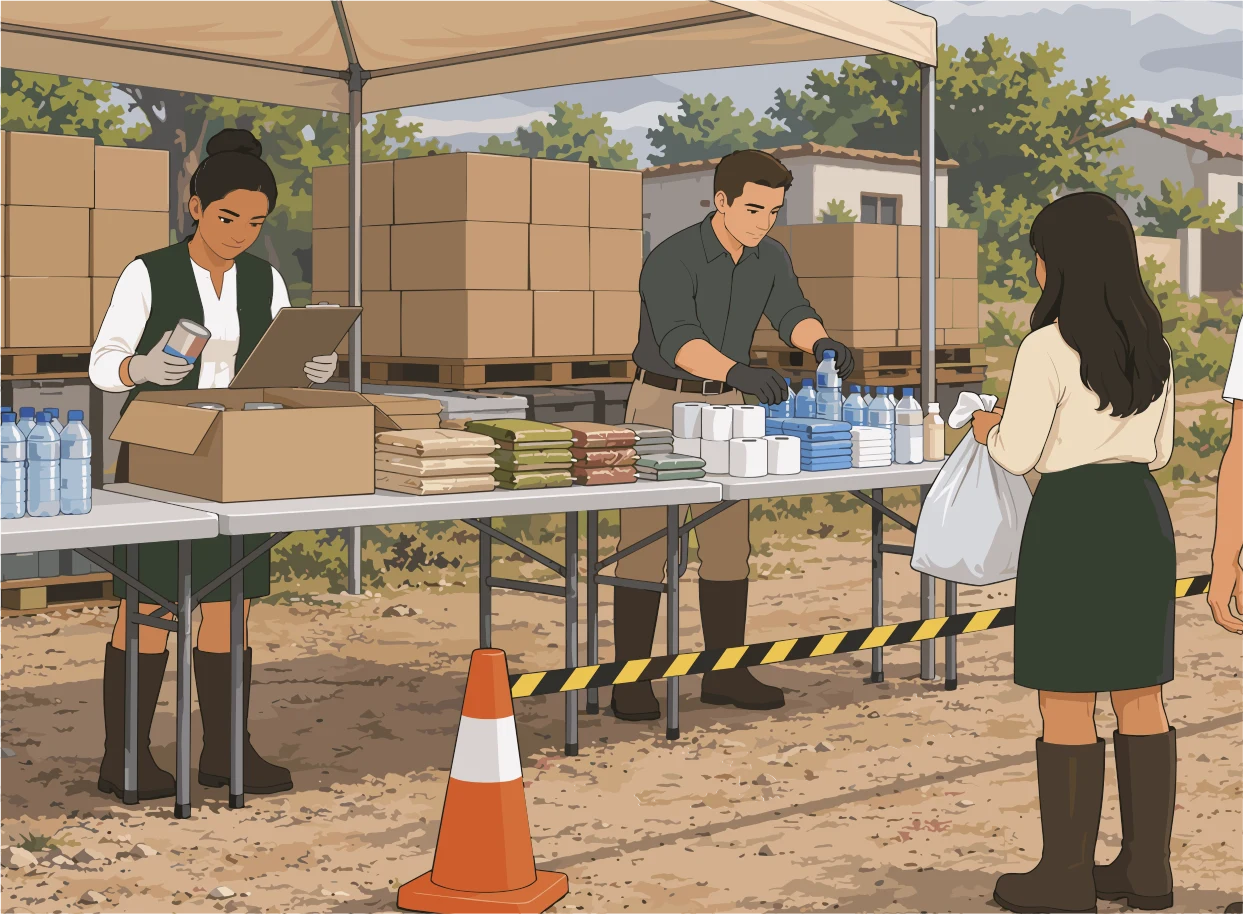
3.36Donations
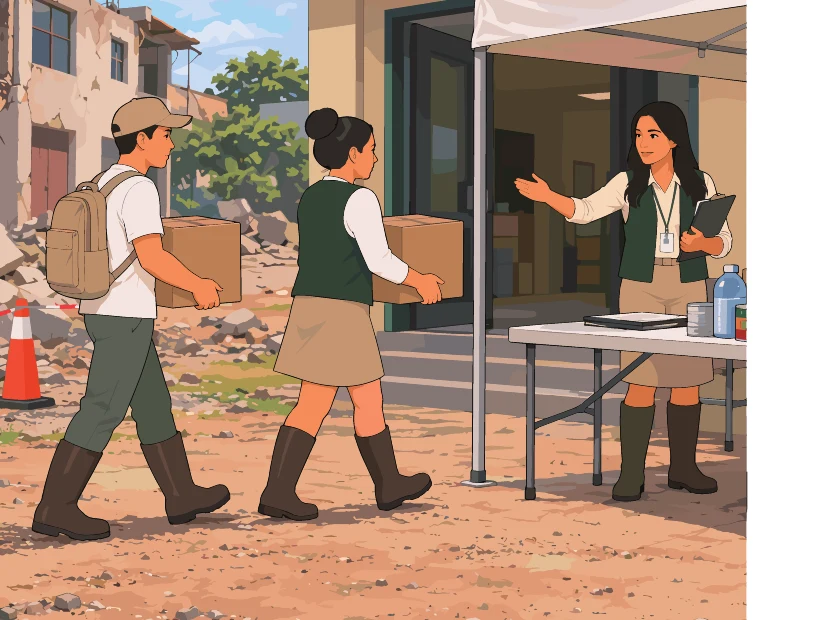
Before requesting or receiving donations:
- Determine which items are truly needed;
- coordinate with the responsible organizations;
- establish a receiving location;
- organize storage;
- sort the supplies;
- avoid unnecessary accumulation;
- check the safety of water, food, and health products.
3.37Volunteers
If the institution receives volunteers:
- Register them,
- identify their abilities,
- assign leads,
- determine roles,
- inform them of the risks,
- provide protection where appropriate,
- keep control over the areas they may access.
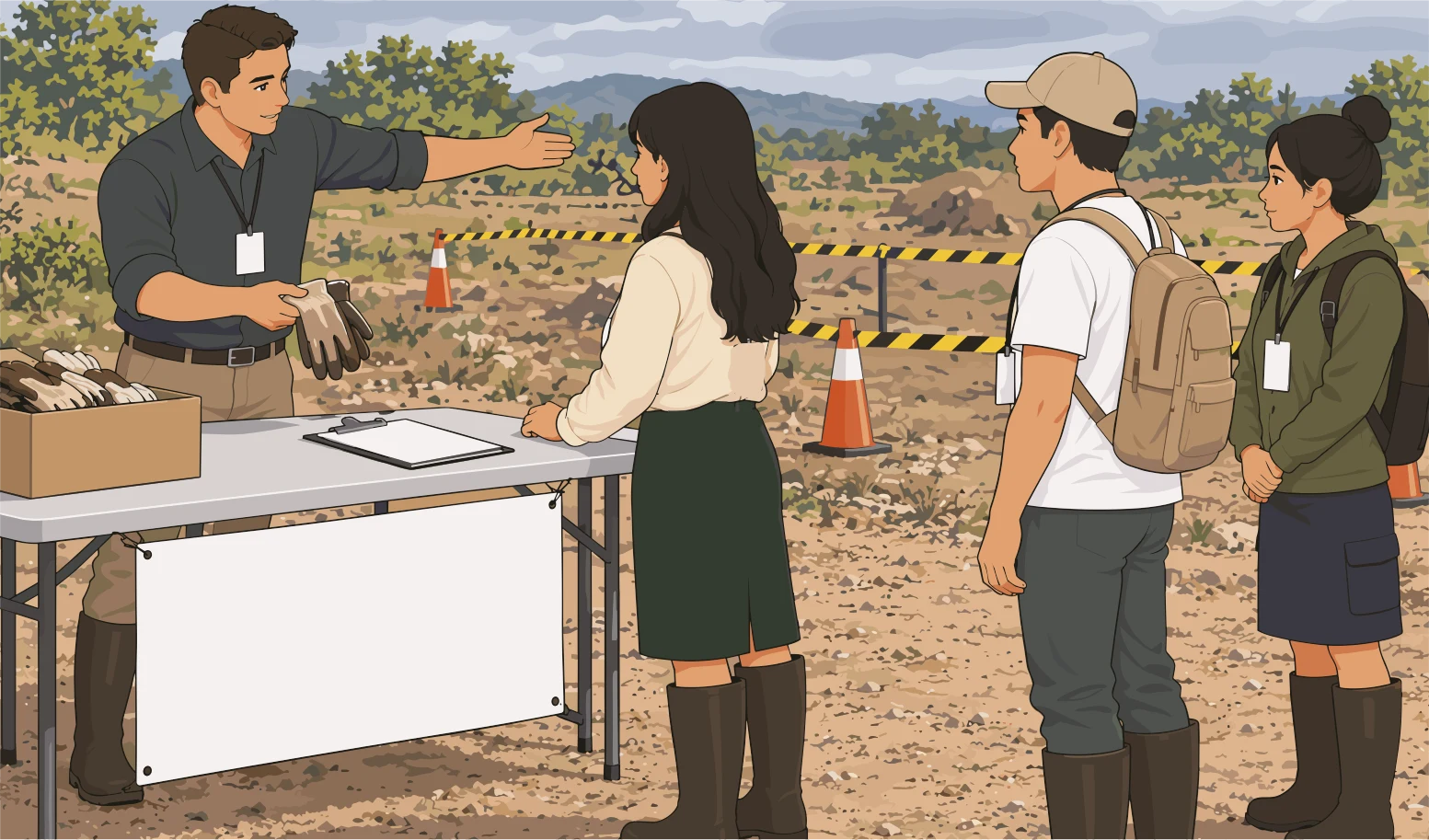
Assign roles according to:
- Training,
- experience,
- physical condition,
- existing risks.

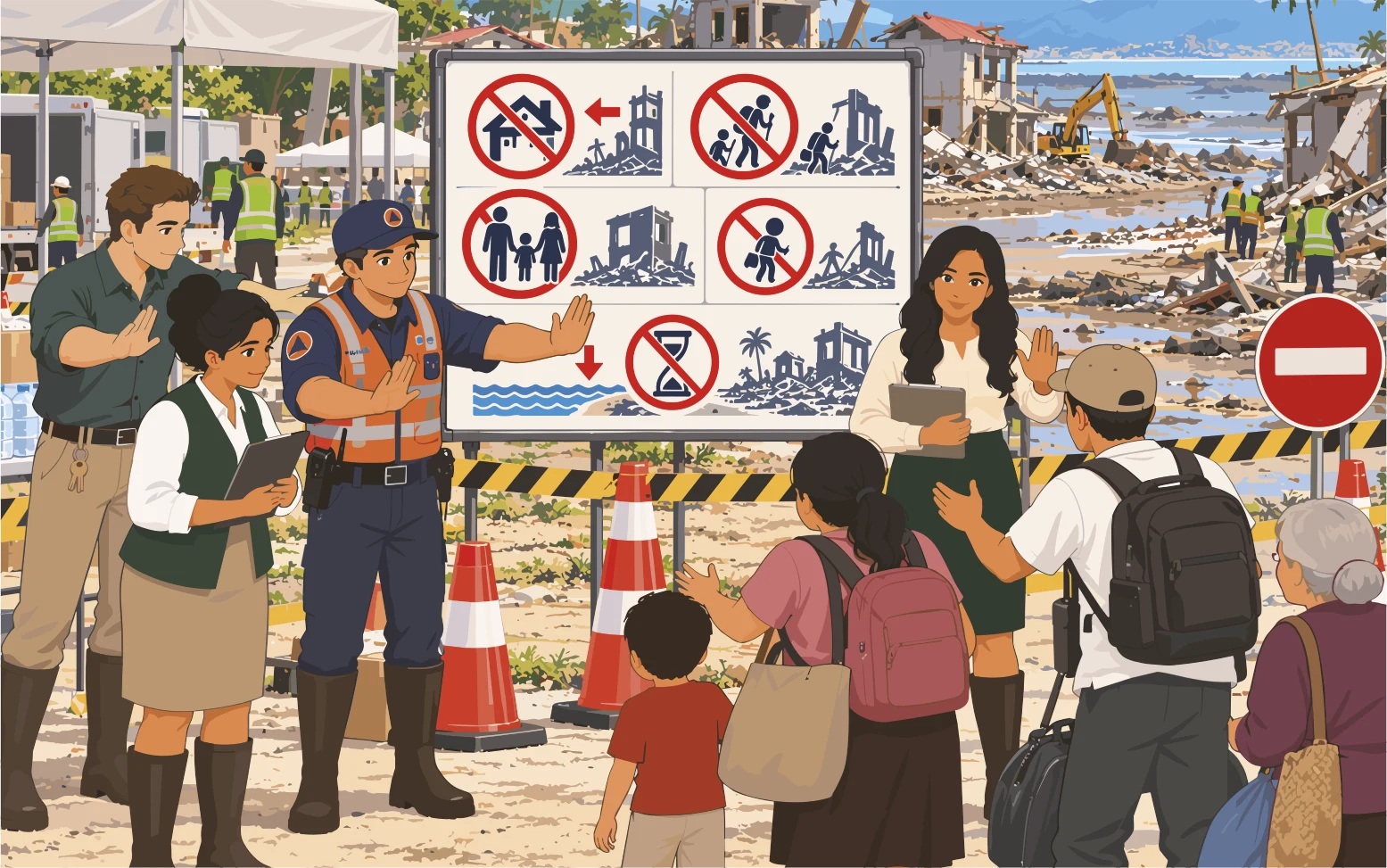
3.38Tasks that must not be assigned to untrained volunteers
Do not let untrained people carry out:
- Technical search and rescue,
- entry into unstable structures,
- electrical work,
- handling of gas,
- work with hazardous substances,
- medical procedures they are not trained for.
3.39Care for those who help as well
Institutional leads, volunteers, caregivers, and support teams may experience:
- Exhaustion,
- stress,
- fear,
- sadness,
- irritability,
- difficulty concentrating.
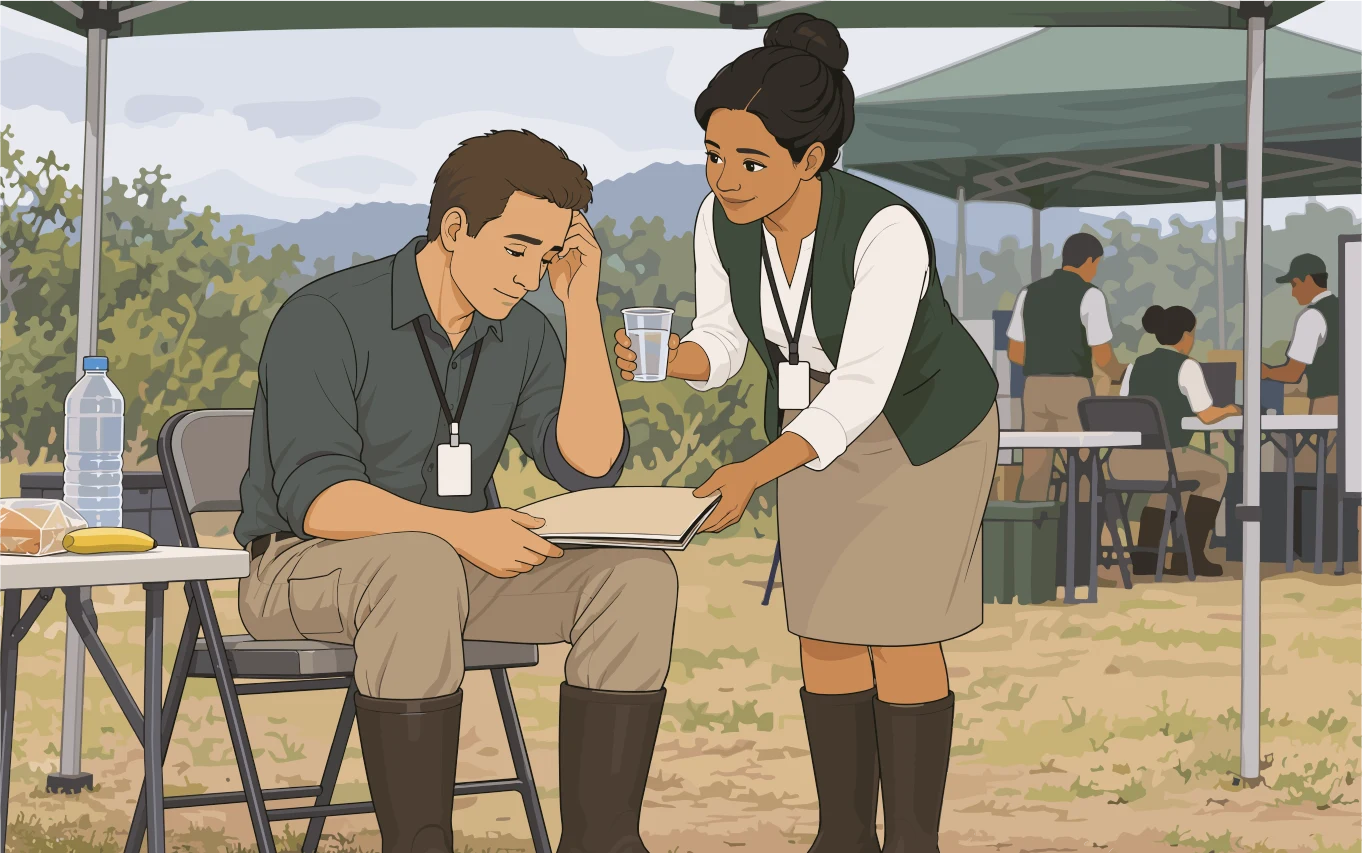
When circumstances allow:
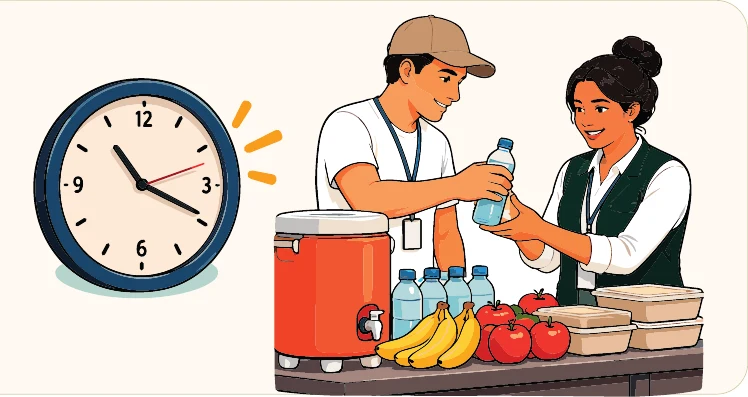
- Organize shift changes,
- set rest periods,
- distribute responsibilities,
- avoid excessive shifts,
- provide food and water,
- allow people to ask for help.
3.40Record decisions and needs
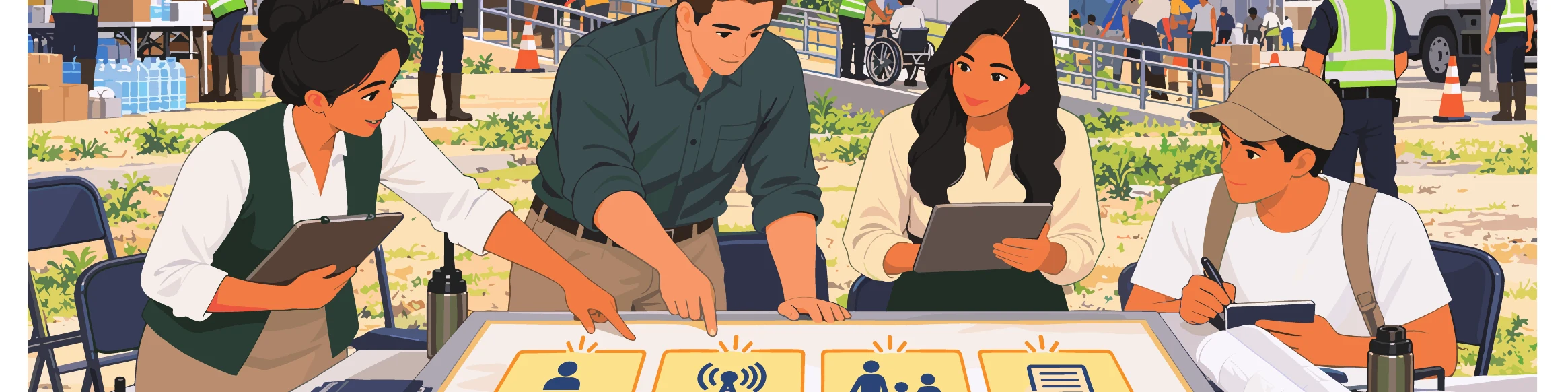
Once the immediate emergency has eased, record:
- People assisted,
- people reunited with family,
- people relocated,
- outstanding needs,
- supplies available,
- supplies used,
- damage identified,
- decisions made,
- official communications received,
- pending actions.
Keeping record helps continuity of the response and recovery.
However, no administrative task should interfere with an immediate need for safety or assistance.
3.41Institutional continuity
Once the immediate emergency is under control, determine which essential institutional functions must be maintained or restored.
Consider:
- Institutional leadership,
- communications,
- care of people under its responsibility,
- essential records,
- staff availability,
- alternative facilities,
- supplies,
- basic services,
- accessibility,
- security,
- external coordination.
3.42If the building cannot be used
Activate the alternatives provided in the institutional plan.
Depending on the characteristics of the organization, it may be necessary to:
- Temporarily relocate activities,
- use alternative facilities,
- suspend certain operations,
- set up a temporary administrative point,
- use remote arrangements where viable,
- inform members and family of the new location,
- coordinate with authorities or associated organizations.
3.43Gradual reopening
When conditions allow reopening to be considered, it can be done gradually.
Before receiving the public, members, students, athletes, congregants, users, workers, or visitors again, verify that:
- Access is safe,
- the available facilities can be used,
- essential services are working,
- restrooms are usable,
- there is safe water,
- the exits are operational,
- evacuation routes are available,
- there is adequate lighting,
- dangerous areas remain restricted,
- accessibility can be maintained,
- there is capacity to respond to a new emergency.
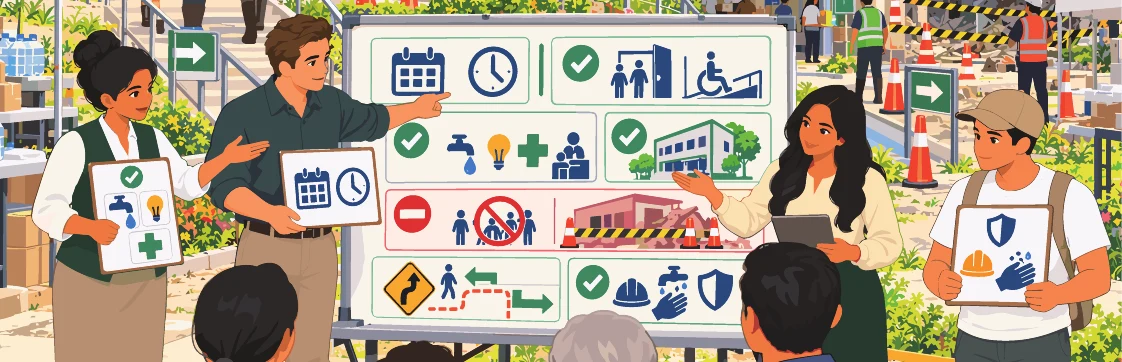
3.44Clearly announce the reopening
Communication must indicate:
- date,
- hours,
- cleared zones,
- restricted zones,
- available access points,
- services that are working,
- suspended activities,
- temporary changes,
- special safety measures.




3.45Review the plan after the emergency
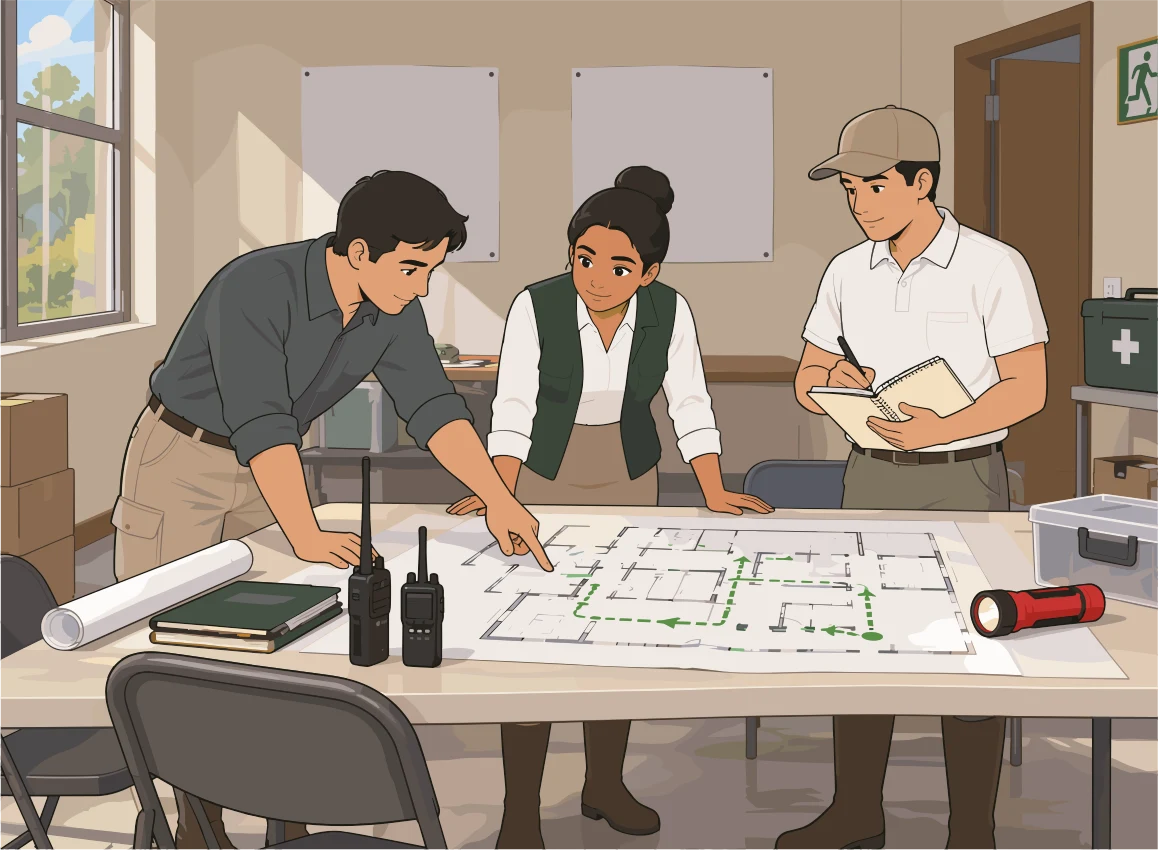
Once the situation stabilizes, the institution must evaluate its own response.
Analyze:
- How the alert was received,
- how long activation took,
- the chain of command's operation,
- clarity of communications,
- operability of the exits,
- route conditions,
- evacuation of groups,
- assistance to people with disabilities,
- handling of minors,
- head count,
- reunification,
- external communications,
- supplies,
- first aid,
- coordination with authorities,
- problems observed.
3.46Document lessons learned
Document:
- What worked,
- what didn’t work,
- which procedures were confusing,
- which resources were missing,
- which routes had problems,
- which operations had no one responsible,
- which communications failed,
- which needs had not been anticipated,
- what changes must be made.
Turn those conclusions into concrete actions.
3.47Update the institutional plan
After the evaluation:
- Correct procedures,
- update those responsible,
- modify routes where applicable,
- update contacts,
- restock supplies,
- replace damaged equipment,
- review inclusive procedures,
- review reunification,
- update communication systems,
- incorporate lessons learned.
A REAL EMERGENCY CAN REVEAL VULNERABILITIES THAT A DRILL HAD NOT DETECTED.
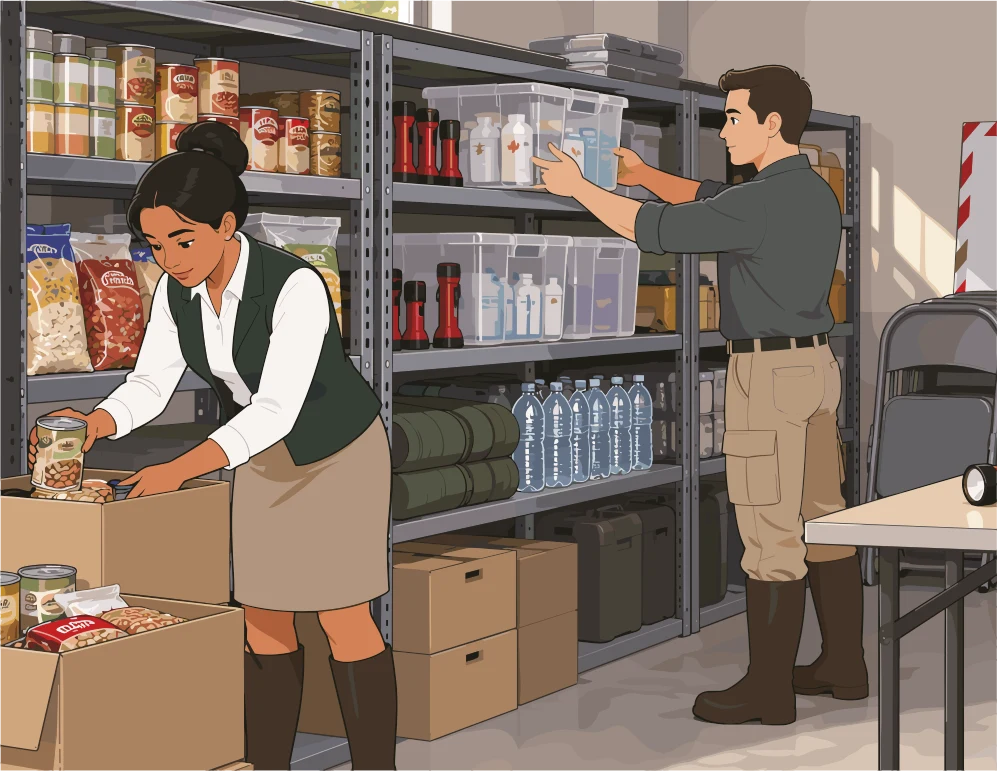
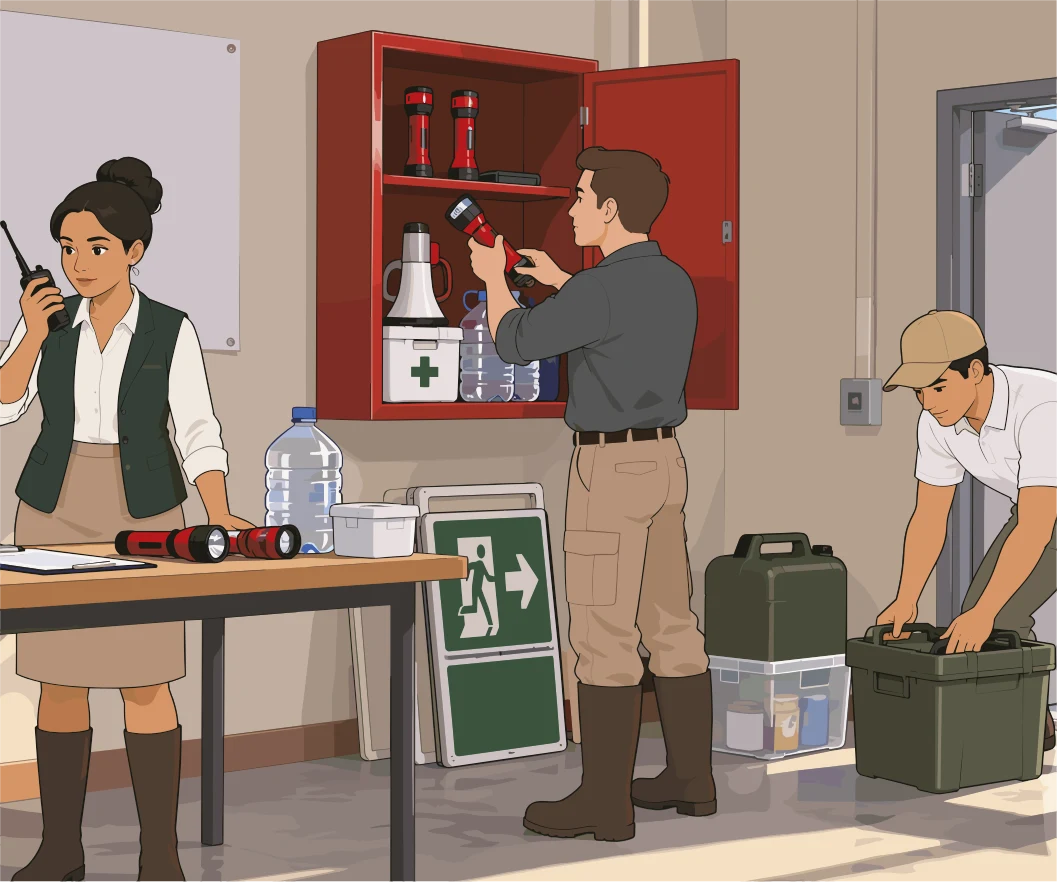
3.48Replenish resources used
Once conditions allow:
- Restock first aid kits,
- replace institutional medications when applicable,
- restock water,
- restock emergency food,
- recharge batteries,
- replace protective equipment,
- check radios and megaphones,
- replace damaged signage,
- check emergency lighting,
- restore documentation copies,
- replace used or deteriorated items.
THE INSTITUTION MUST PROGRESSIVELY RESTORE ITS CAPACITY TO RESPOND TO A NEW EMERGENCY.
3.49Do not assume another event cannot happen
After a disaster, the institution may remain temporarily more vulnerable because of:
- Damage,
- reduced staff,
- depleted supplies,
- blocked routes,
- deteriorated communications,
- temporary infrastructure.
Maintain the capacity to respond to:
- Aftershocks,
- new alerts,
- fires,
- medical emergencies,
- service failures,
- other incidents.
3.50Behaviors to avoid
After a tsunami:
- DO NOT authorize the return out of your own will.
- DO NOT interpret the water receding as the end of the emergency.
- DO NOT let people go back for belongings.
- DO NOT send staff to look for missing people.
- DO NOT allow improvised searches.
- DO NOT let family members enter restricted areas.
- DO NOT spread rumors.
- DO NOT make public the names of possible victims without confirmation.
- DO NOT let minors move around unsupervised.
- DO NOT allow entry into damaged buildings.
- DO NOT let anyone touch downed power lines.
- DO NOT allow improvised technical repairs.
- DO NOT allow contact with floodwater.
- DO NOT hand out any water or food if it cannot be confirmed to be safe to consume.
- DO NOT connect wet electrical equipment.
- DO NOT use generators indoors.
- DO NOT begin dangerous cleanup tasks without protection.
- DO NOT let volunteers carry out tasks they are not trained for.
- DO NOT resume activities just because the building is still standing.
- DO NOT confuse authorization to return to an area with authorization to occupy a building.
- DO NOT prioritize equipment, documents, or property over people’s safety.
3.51Institutional checklist: after a tsunami
After the evacuation, check:
- Are all people staying in a safe zone?
- Is the chain of command still active?
- Was the head count carried out?
- Were injured people identified?
- Were people who need assistance identified?
- Were people whose whereabouts are unknown recorded?
- Were the missing people reported to the authorities?
- Was sending people to carry out searches avoided?
- Are minors still under supervision?
- Is a controlled reunification under way?
- Are people with disabilities receiving the necessary assistance?
- Do accessible routes remain clear?
- Were medical needs and essential medications identified?
- Was equipment that depends on electricity identified?
- Is there safe water?
- Is the food being distributed safely?
- Are people being kept away from floodwater and debris?
- Is official information being received?
- Is institutional communication centralized?
- Is spreading rumors being avoided?
- Is premature return being prevented?
- Are restricted areas being respected?
- Do the premises remain closed until it is time to assess them?
- Is damage being assessed appropriately?
- Are cleanup tasks organized?
- Are volunteers only carrying out appropriate functions?
- Are decisions and needs being recorded?
- Were conditions assessed before any reopening?
- Will the institutional plan be updated afterward?
3.52Institutional recovery sequence
After a tsunami, the institution must follow a clear sequence:
1. PROTECT
Keep everyone out of the danger zone.
2. COUNT
Determine who is present and who is missing.
3. ASSIST
Identify those injured and people who need support.
4. INFORM
Maintain communication with the authorities and provide only verified information.
5. REUNIFY
Release minors and dependent people through controlled procedures.
6. WAIT
Do not authorize the return until the competent authorities allow it.
7. ASSESS
Determine whether the premises can be used safely.
8. RECOVER
Organize cleanup, repairs, supplies, and institutional continuity.
9. REOPEN
Resume activities only once there are sufficient safety conditions.
10. LEARN
Review the plan and correct the vulnerabilities detected.
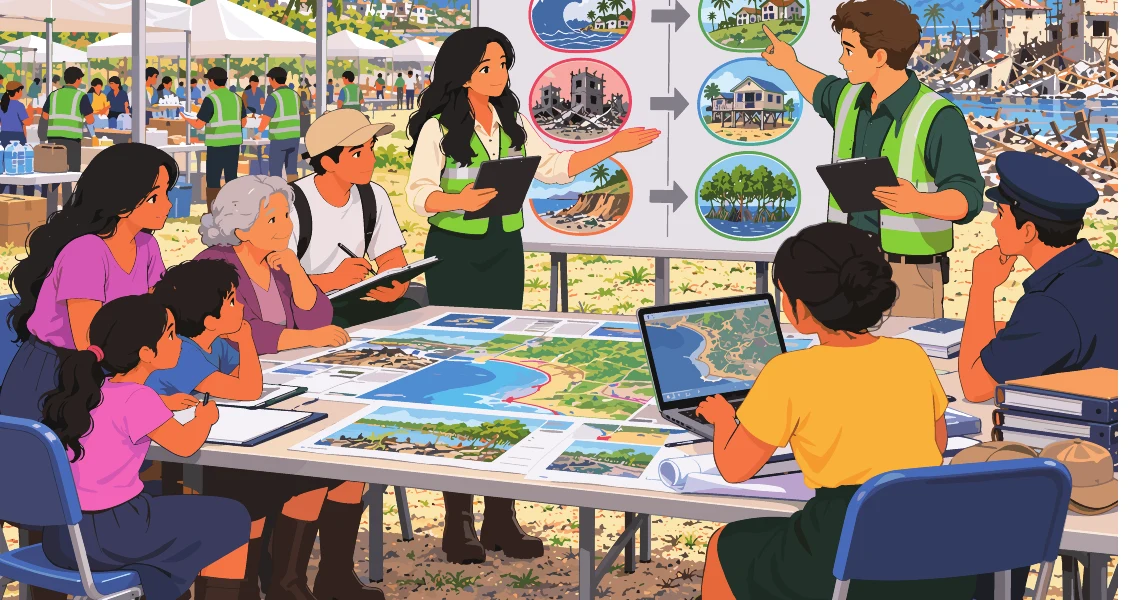
3.53Institutional principle of recovery
After a tsunami:
- FIRST, PROTECT PEOPLE.
- THEN, VERIFY WHO IS PRESENT AND WHO NEEDS HELP.
- NEXT, COORDINATE ASSISTANCE AND REUNIFICATION.
- ONLY WHEN THE AUTHORITIES ALLOW IT, ASSESS THE PREMISES AND THE DAMAGE.
- FINALLY, BEGIN AN ORGANIZED AND SAFE RECOVERY.
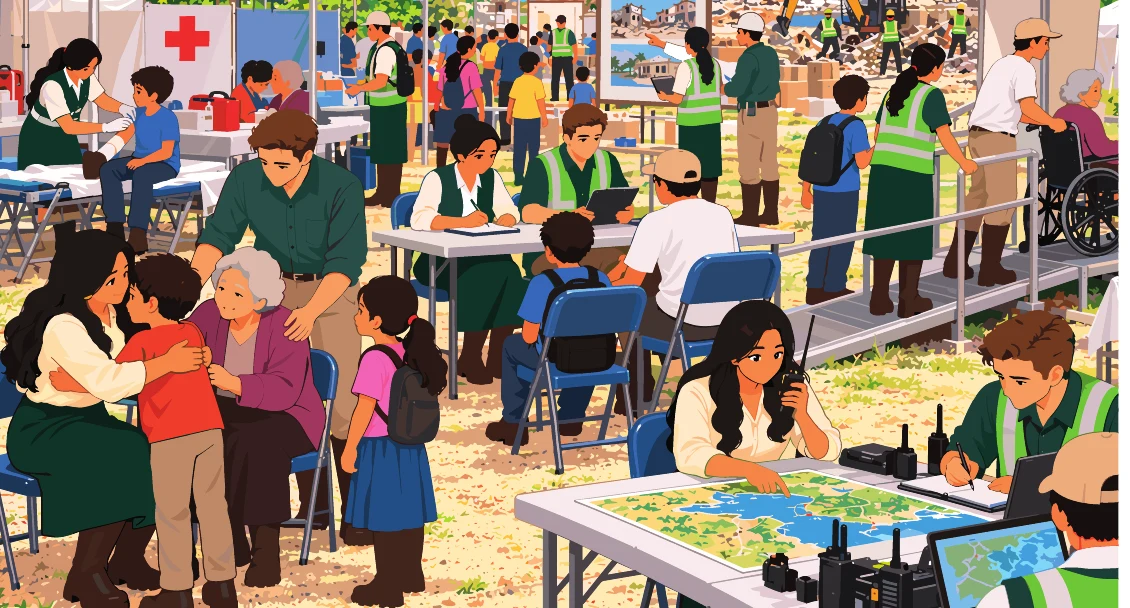
3.54Final message
After a tsunami, the institution remains responsible for organizing, protecting, and guiding the people who were under its care.
Evacuation may have ended.
THE EMERGENCY HAS NOT NECESSARILY ENDED.
- It is not the time to go back for belongings.
- It is not the time to send people to look for those missing.
- It is not the time to enter and inspect buildings out of your own will.
- It is not the time to spread unconfirmed information.
- It is not the time to begin improvised cleanup.
- It is not the time to reopen just to quickly resume activity.
It is time to:
- Keep people safe,
- preserve the organization,
- carry out the head count,
- assist those who need help,
- report missing people,
- facilitate reunification,
- maintain accessibility,
- follow official communications,
- prevent premature returns,
- wait for the corresponding authorizations,
- assess the premises,
- organize recovery,
- progressively restore institutional capabilities,
- learn from what happened.
AFTER A TSUNAMI: PROTECT, COUNT, ASSIST, INFORM, REUNIFY, ASSESS AND RECOVER.
DO NOT RETURN PREMATURELY. DO NOT IMPROVISE. DO NOT REOPEN UNTIL CONDITIONS ARE SAFE.
LIFE IS ALWAYS THE PRIORITY.
Downloads
© 2026 by Centro del Reino de Paz y Justicia is licensed under Creative Commons Attribution-NonCommercial-NoDerivatives 4.0 International (CC BY-NC-ND 4.0). To view a copy of this license, visit creativecommons.org/licenses/by-nc-nd/4.0.