
Institutional planning, prevention and preparedness
Advance preparation is one of the most effective tools for protecting life against a tsunami. In tsunamis of nearby origin, the time available to evacuate can be as little as a few minutes, and it is possible that the waves will arrive before an official alert is issued or received.
For an institution, organization or establishment that brings people together, this preparation takes on particular importance. During an emergency, workers, members of the organization, children, older adults, people with disabilities, suppliers, visitors, or people who are completely unaware of the risk and the evacuation routes may all be present at the same time.
For that reason, the institutional response cannot depend on improvisation, nor solely on the individual decisions of whoever happens to be present.
Every institution located in a zone susceptible to tsunamis must have an Institutional Tsunami Emergency and Evacuation Plan adapted to the characteristics of the establishment, its location, the number and type of occupants, the events carried out, and local conditions.

The objective of this phase is for the institution to have already determined:
- Whether the establishment is located within a threat zone
- when an evacuation must begin
- who has the authority to initiate it
- how everyone present will be alerted
- which routes must be used
- where to evacuate
- who will lead each sector or group
- who will assist people who need support
- how the head count will be conducted
- how communication will be maintained
- what will be done if the responsible leads are not present
- what will be done if a route is blocked
- how to proceed if communications stop working.
Fundamental principle: In the face of a tsunami threat, the institution's absolute priority is to protect life. No administrative procedure, object, document, equipment, vehicle, file, money or other property justifies delaying an evacuation.
 1.1
Determine the establishment's risk
Every institution located in a coastal area must determine in advance whether its premises lie within a zone susceptible to tsunami flooding.
You must not assume that an establishment is safe simply because it is a certain distance from the beach. Tsunamis can travel inland, move along rivers, estuaries, canals and other waterways, and affect sectors that do not directly face the sea.
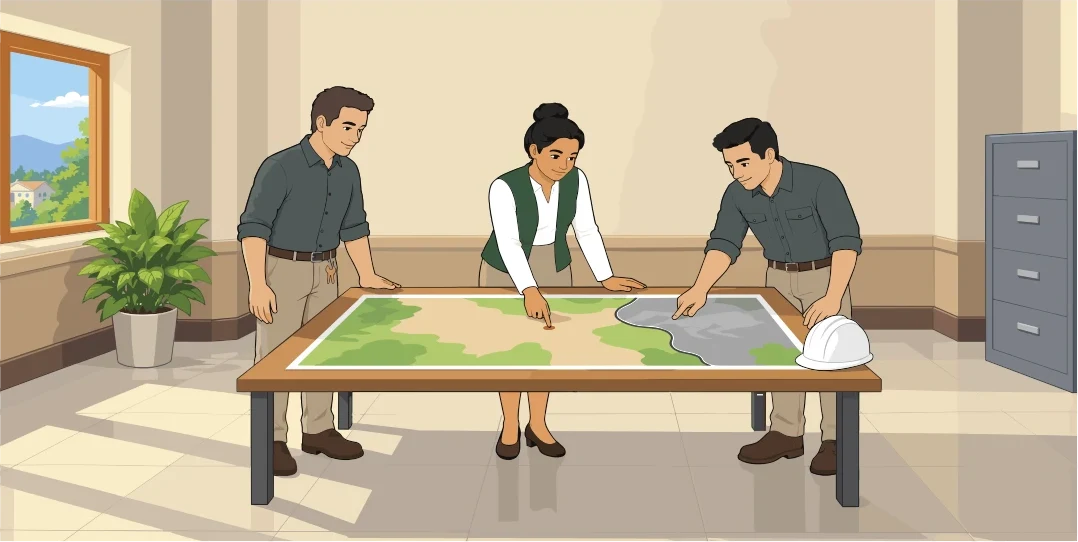
Consult the official maps
The institution must identify:
- The zones officially considered at risk of tsunami threat or flooding
- the boundaries of the evacuation zones
- the exact location of the establishment relative to those boundaries
- the official evacuation routes
- high ground or safe areas
- the meeting points established by the authorities
- the buildings or structures officially designated for vertical evacuation (where these exist)
- alternative routes available if the main route is blocked.
Maps, heights, routes and boundaries established by the local authorities must take priority over any general rule.
As an international reference for preparedness, where no local information is available, the goal may be to consider heading for a place approximately 30 meters above sea level, or as far inland as possible. This reference does not replace the official hazard and evacuation maps for each locality.
Assess the immediate surroundings
The people in charge at the institution must physically walk the planned routes. Identifying them on a desktop exercise is not enough. You must check:
- Which streets, paths or roads lead to safe areas
- which bridges, tunnels or narrow passages could become impassable
- where there are walls, poles, trees, signs, glass, facades or other elements susceptible to falling after an earthquake
- which sectors present a risk of collapsing or landslide
- which waterways should be avoided
- where crowd congestion or choke points could occur
- which obstacles would make it difficult for children, older adults or people with disabilities to move through
- which alternative routes can be used.
 1.2
Develop an institutional evacuation plan
The plan must be written, up to date, known to those with operational responsibilities, and able to be carried out even if the institution's highest senior authority is not present.

At a minimum, the following must be considered:
- Activation procedure
- chain of command
- leads and alternate roles
- internal alert system
- evacuation sectors and groups
- main and alternative routes
- safe points
- assistance procedures
- emergency equipment
- communications
- head count
- reunification (where applicable)
- coordination with authorities
- procedures for electrical and telecommunications failures.
 1.3
Establish a chain of command
The institution must determine who will direct the emergency response beforehand.
At a minimum, the following must be established:
- Overall evacuation leader
- alternate person for the overall lead
- sector leads
- alternates for sector leads
- leads for specific groups
- communications lead
- first aid lead
- emergency equipment lead
- leads for assisting people who need support
- lead for the head count at the safe zone.
No critical role should depend exclusively on a single person.
The emergency may occur when directors, managers, teachers, religious leaders, coaches or other usual leads are absent.
 1.4
Establish who can order the evacuation
The institution must define in advance who can initiate an evacuation and under what circumstances.
The procedure must not create an unnecessary delay by waiting for approval through the chain of command when there is a clear natural sign of a tsunami.
All staff must know the main natural signs:
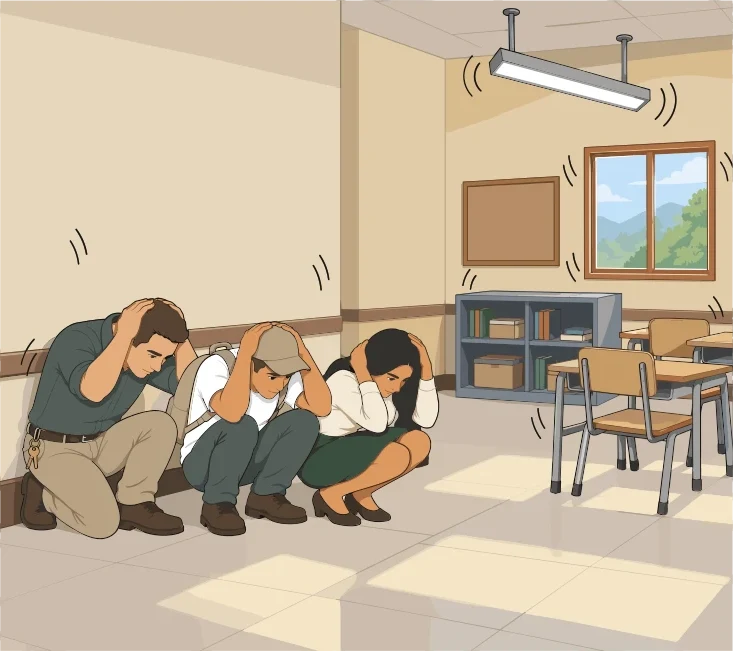
a strong or prolonged earthquake

a sudden, abnormal change in sea level
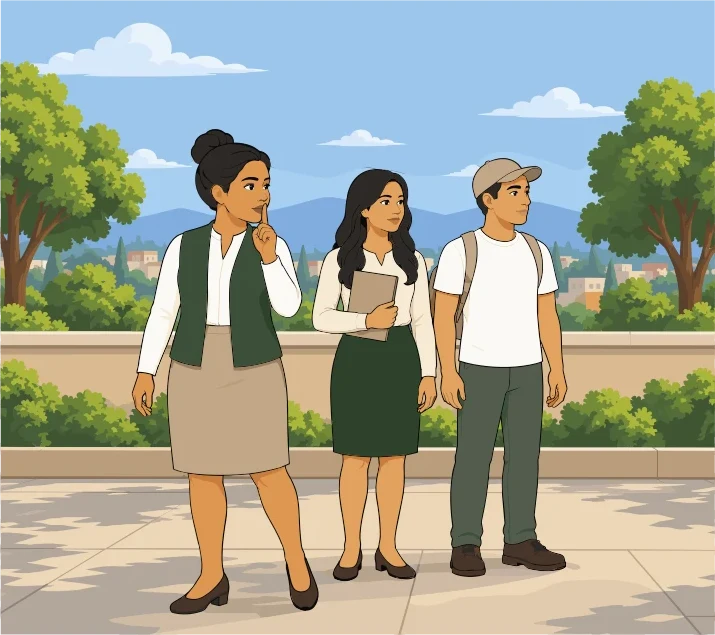
an unusual or intense roar coming from the ocean.
The institutional plan must allow for immediate action even when communications with authorities or superiors are not available.
 1.5
Plan an evacuation that is mainly on foot
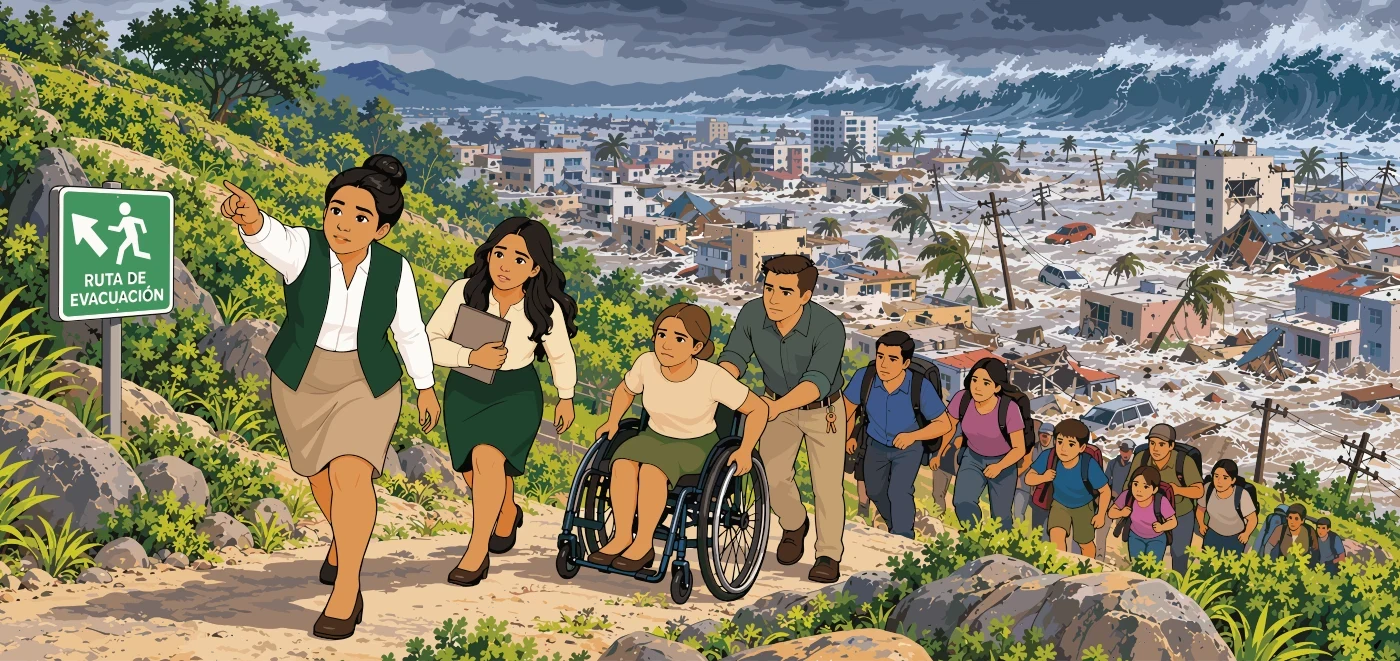
Planning must start from the assumption that evacuation on foot will be necessary. After an earthquake there may be damaged streets, debris, downed power lines, congestion, traffic lights out of service and blocked routes. The mass use of vehicles can cause traffic jams and make evacuation difficult.
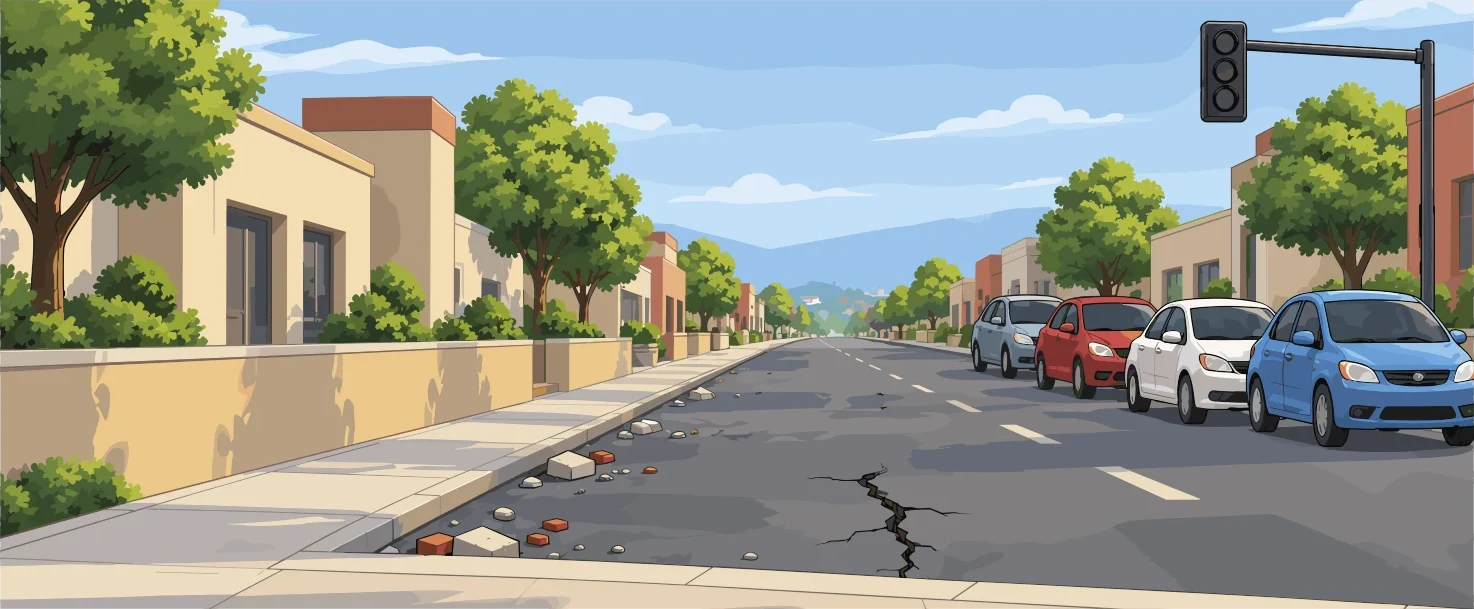
The institution must:
- Establish a main route
- have one or more alternative routes
- conduct a preliminary walk-through
- determine how much time the actual evacuation requires
- assess the movement capacity of the route
- identify points of possible congestion
- take into account the pace of people who need more time to move
- avoid a plan that depends exclusively on vehicles.
Vehicles should only be incorporated into the procedure when local conditions, the specific needs of certain individuals, or instructions from the authorities justify it.
 1.6
Plan vertical evacuation where applicable
Horizontal evacuation to high ground and out of the threatened area must be the top priority whenever it can be done in time.
Where high ground is not accessible, or there is not enough time, some localities have structures specifically assessed or designated for vertical evacuation.
The institution must know in advance:
- Which structures those are
- where they are located
- how to access them
- which stairs must be used
- which levels are established as refuge zones
- how many people can go to them
- how much time the route takes.
You should never wait for an emergency to decide where a vertical evacuation will take place.
 1.7
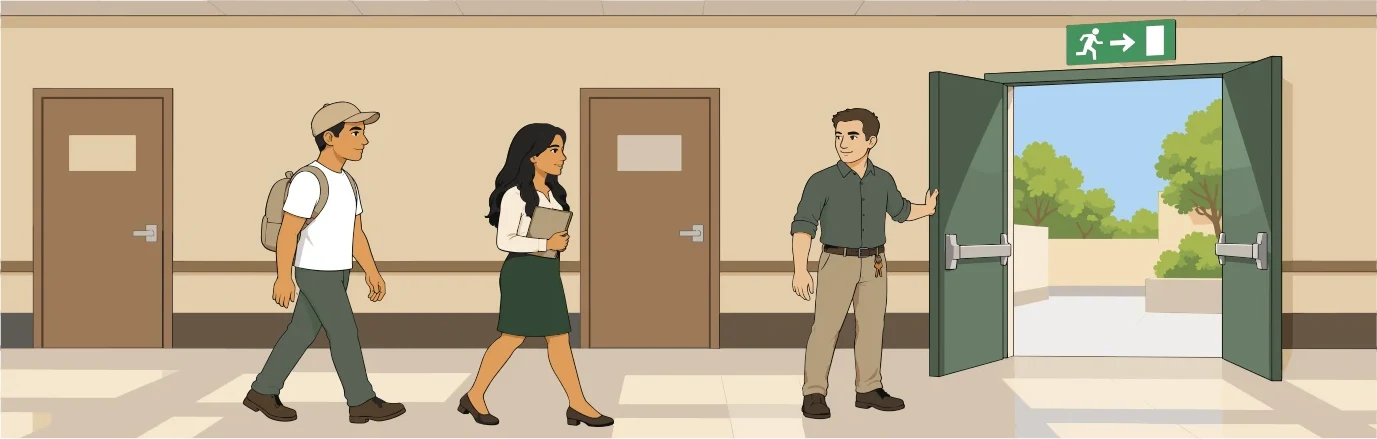
Install and maintain internal signage
People present must be able to quickly understand how to leave the establishment.
The institution must keep the following clearly marked:
- Exits
- emergency exits
- interior evacuation routes
- stairs
- direction toward the safe zone
- meeting point
- location of emergency equipment
- sectors that must not be used during an evacuation.
Where applicable, evacuation floor plans must be posted in visible locations.
Signage must be understandable to a person visiting the establishment for the first time.
Where the institution regularly receives people who do not understand the local language, signage using pictograms, universally recognizable symbols, or instructions in the necessary languages should be taken into consideration.
 1.8
Keep routes permanently clear
Evacuation routes are not storage spaces.
They must never be blocked with:
- boxes
- furniture
- chairs
- merchandise
- equipment
- materials
- sports items
- religious or ceremonial objects
- waste
- vehicles
- temporary structures
- any other item that reduces the capacity to move through the space.
 1.9
Know the official alert systems
The institution must know which systems the locality uses:
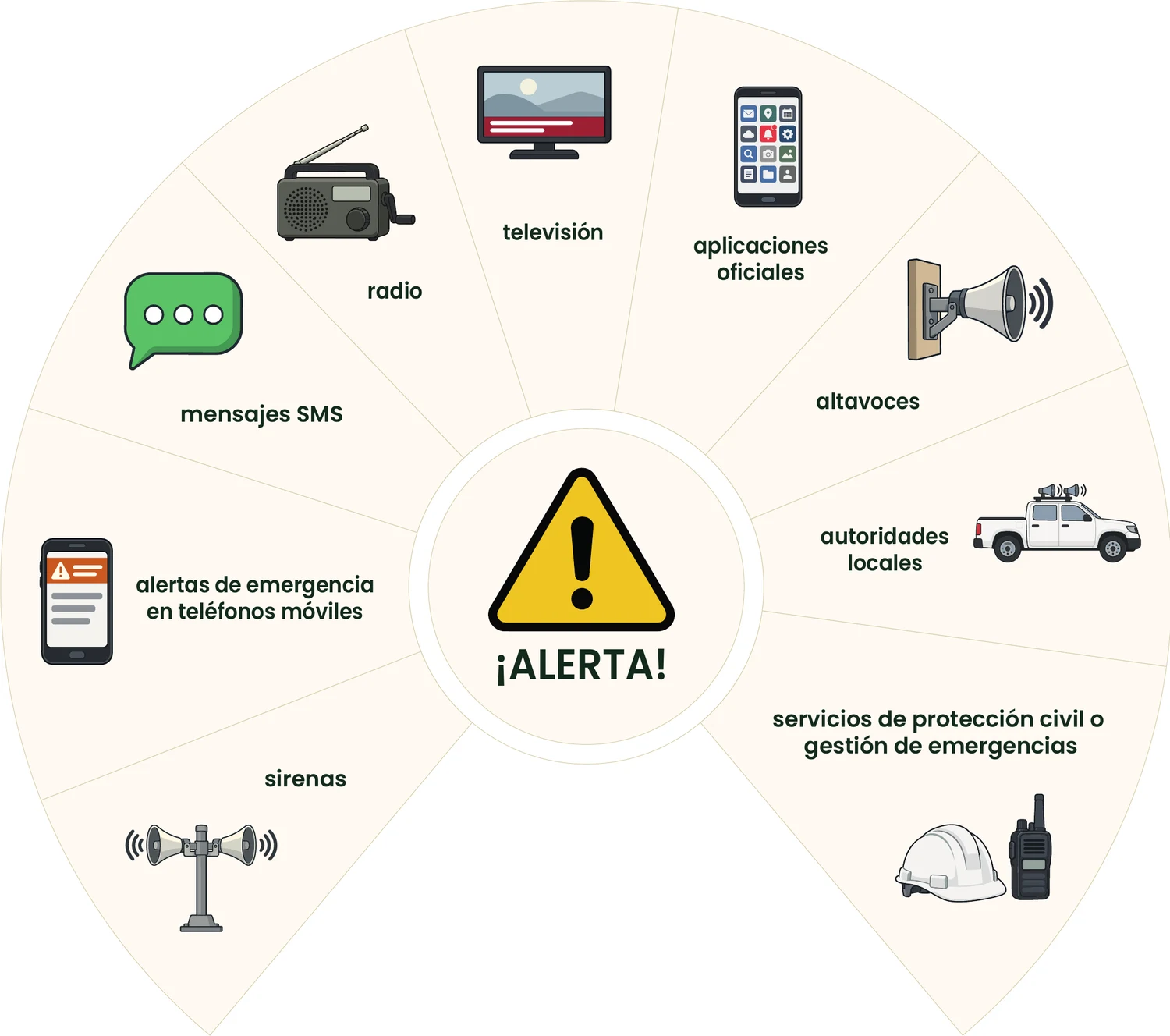
Where sirens exist, staff must know their signals and be able to distinguish periodic tests from a real alert.
The institution must have multiple channels of receiving information.
A battery-powered or hand-crank portable radio must be part of the institution's equipment, because electricity, internet and phone networks can fail or become overloaded.
 1.10
Establish an internal alert system
Receiving an alert is not enough: there must be a mechanism for immediately passing it on to everyone present.
Depending on the characteristics of the establishment, the following may be used:
- Alarms
- internal sirens
- PA systems
- loudspeakers
- visual signals
- internal messages
- direct notices
- vibration systems or other accessible mechanisms.
The system must be able to reach people who are in:
- restrooms
- offices
- classrooms
- halls
- storage areas
- changing rooms
- kitchens
- courtyards
- sports areas
- religious spaces
- outdoor sectors
- other normally occupied areas.
An alternative procedure must be planned in case of a power outage.
 1.11
Organize evacuation by sectors
In establishments with many occupants, evacuation must be organized in advance by sector, group or unit.
Each lead must know:
- Which people or sector they are responsible for
- which exit to use
- which route to follow
- which alternative route exists
- which safe zone to go to
- how to report an incident
- where they will carry out the head count.

 1.12
Know the establishment's capacity
The plan must take into account the maximum number and the characteristics of the people who may be present.
Evacuating the following, is not the same:
- An office with few adults
- a temple during a service
- a club during a children's activity
- an educational establishment
- a residence or activity center for older adults
- an institution with people with disabilities
- a community center
- an event with a large number of visitors.
The institution must assess its actual evacuation capacity, taking into account reasonably foreseeable maximum-occupancy conditions.
 1.13
Prepare staff
Everyone with responsibilities during an emergency must receive training in advance.
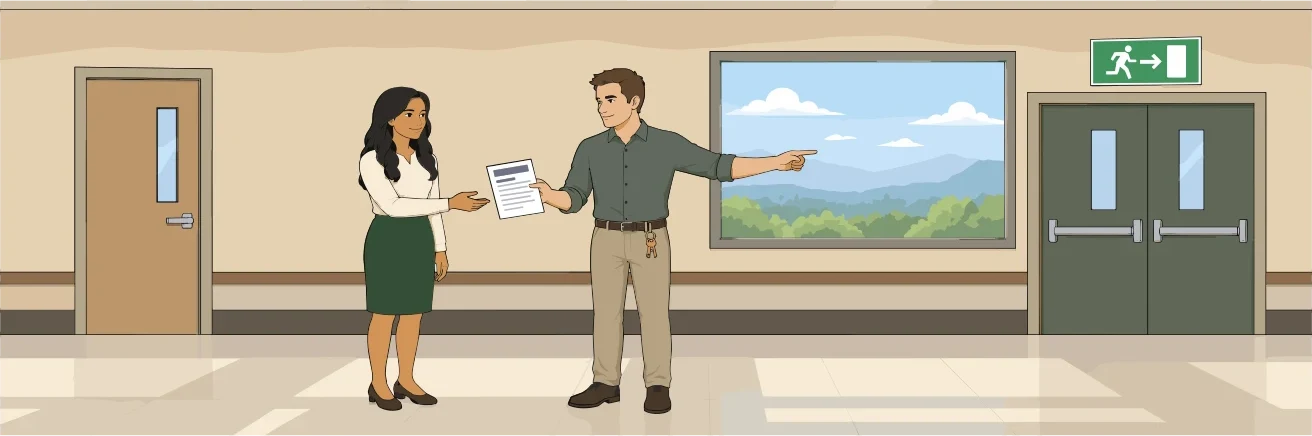
They must know:
- The tsunami risk
- the natural signs
- the official alerts
- the institutional plan
- their role
- the evacuation routes
- the alternative routes
- the safe point
- the communication procedures
- the head count procedure
- the planned assistance measures.
 1.14
Prepare visitors and people unfamiliar with the location
An institution cannot assume that everyone present knows the risk.
Hotels, churches, temples, clubs, community centers, educational institutions, associations, recreational establishments and organizations may receive people who are completely unfamiliar with the evacuation routes.
Therefore:
- Place evacuation floor plans in visible locations
- clearly mark the exits
- indicate the direction to the safe zone
- train those who greet or assist the public
- incorporate simple instructions
- consider the language needs of visitors
- include visitors in drills when possible.
The plan must work even when a significant proportion of the people present have never been in the establishment before.
 1.15
Plan assistance for people with disabilities
Planning must be inclusive. You must not wait for an emergency to decide how to evacuate a person with a disability or reduced mobility.
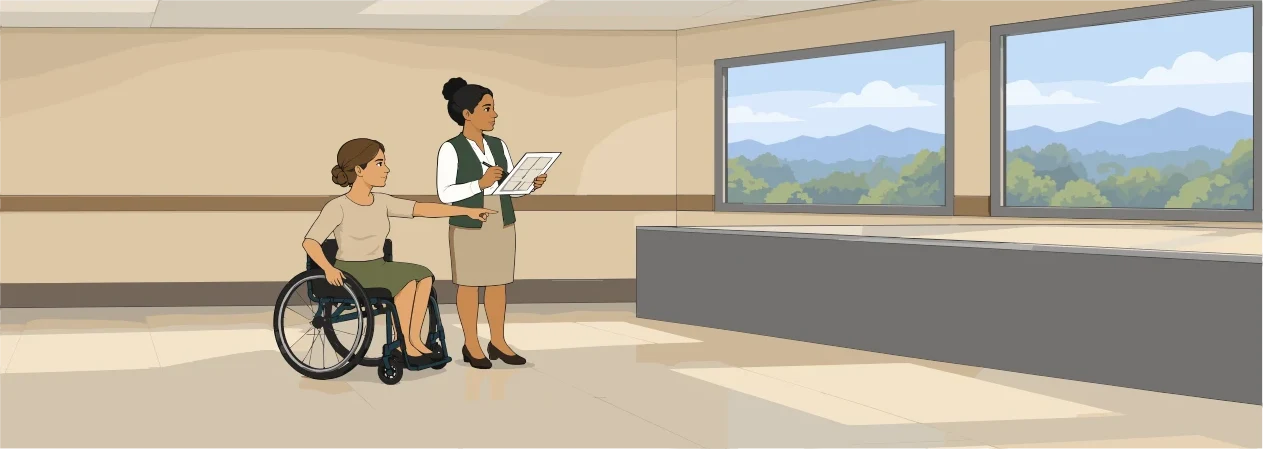
The institution must identify in advance:
- Accessible routes
- obstacles
- stairs
- changes in level
- slopes
- narrow doors
- sectors difficult to move through
- assistive devices needed
- staff trained to provide assistance.
Whenever possible, people with disabilities themselves should take part in planning the procedures that involve them.
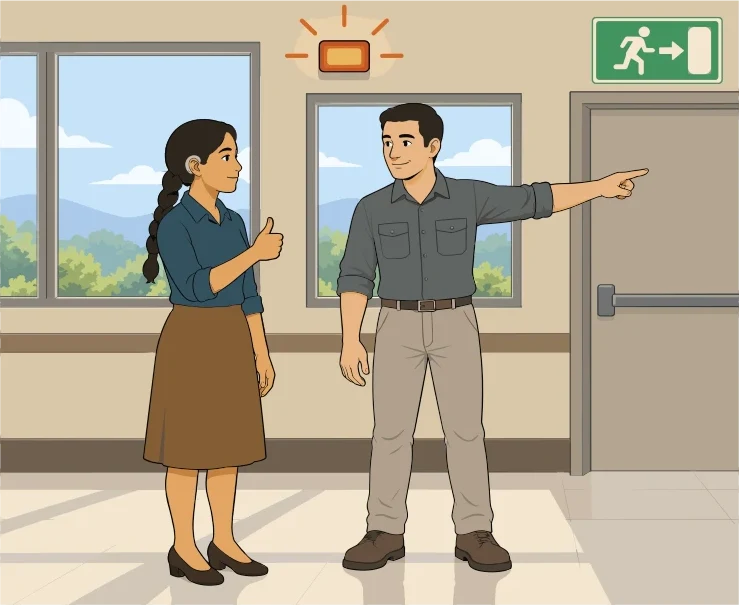
People with hearing impairments
The institutional alert system must have, when necessary, alternatives to signals that are exclusively auditory.
The following may be considered:
- Visual signals
- alarm lights
- vibration
- text messages
- adapted devices
- direct notice from previously assigned staff.
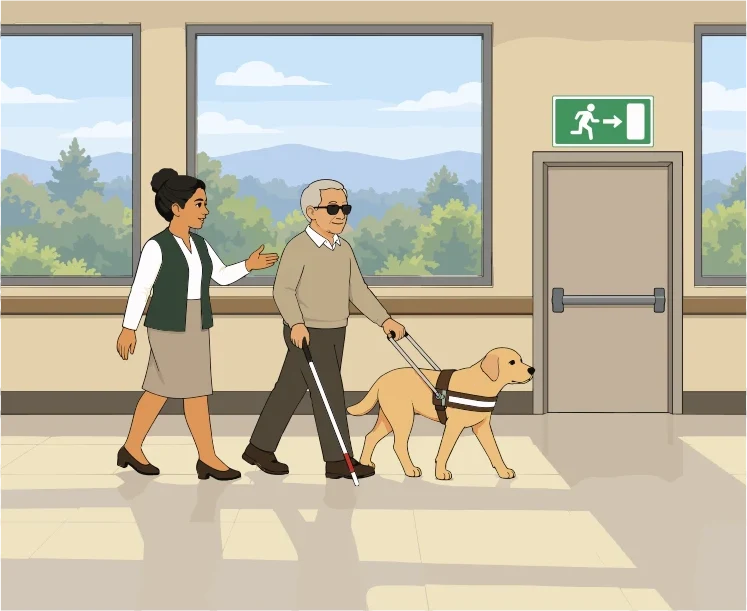
People with visual impairments
- Routes must be kept permanently clear.
- Designated leads must know the appropriate way to provide assistance.
- Where assistance dogs are present, their evacuation must be built into the institutional procedure.
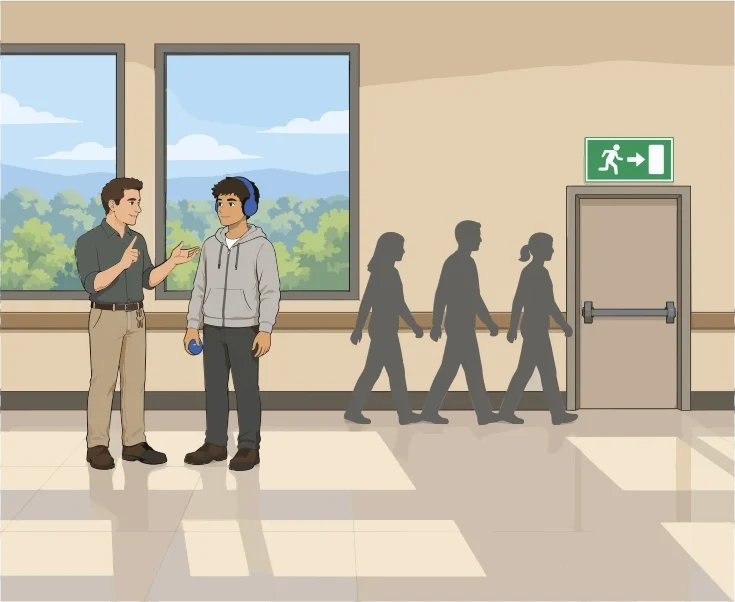
People with intellectual or cognitive disabilities or neurodivergent people
Where applicable, use:
- Short instructions
- pictograms
- visual sequences
- practical demonstrations
- previously rehearsed routines.
Preparation must allow each person to understand, as far as they are able to:
- What the alarm means
- who they must stay with
- where they must head to
- what they must do during the evacuation
- what will happen upon reaching the safe zone.
 1.16
Plan the evacuation of children and adolescents
Institutions with minors in their care must establish specific procedures.
Children must especially understand that:

They must stay with the group
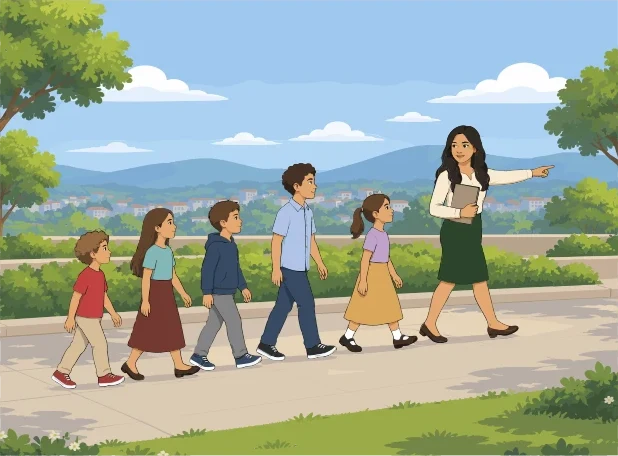
they must obey the responsible adult
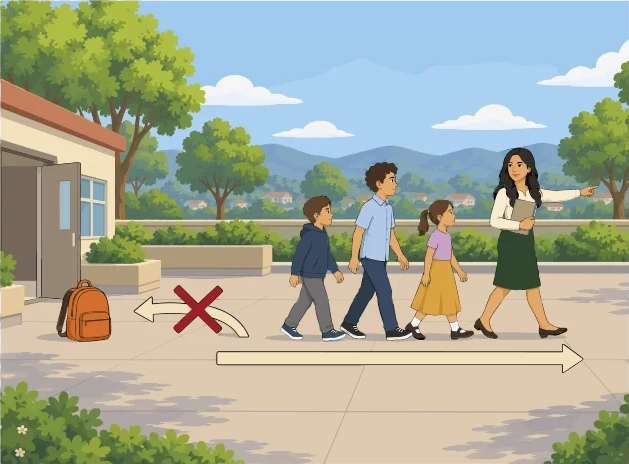
they must not go back for belongings

they must not try to look for their parents
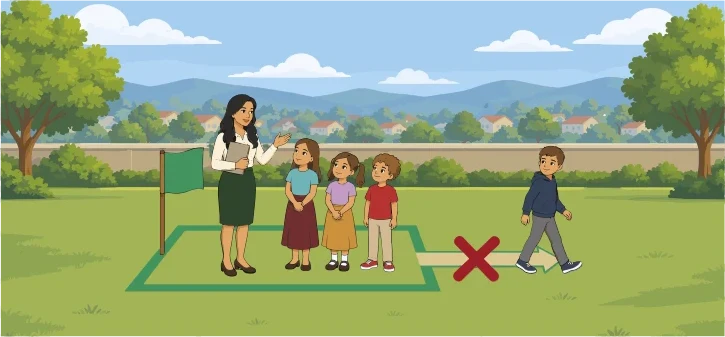
they must not leave a safe zone on their own.
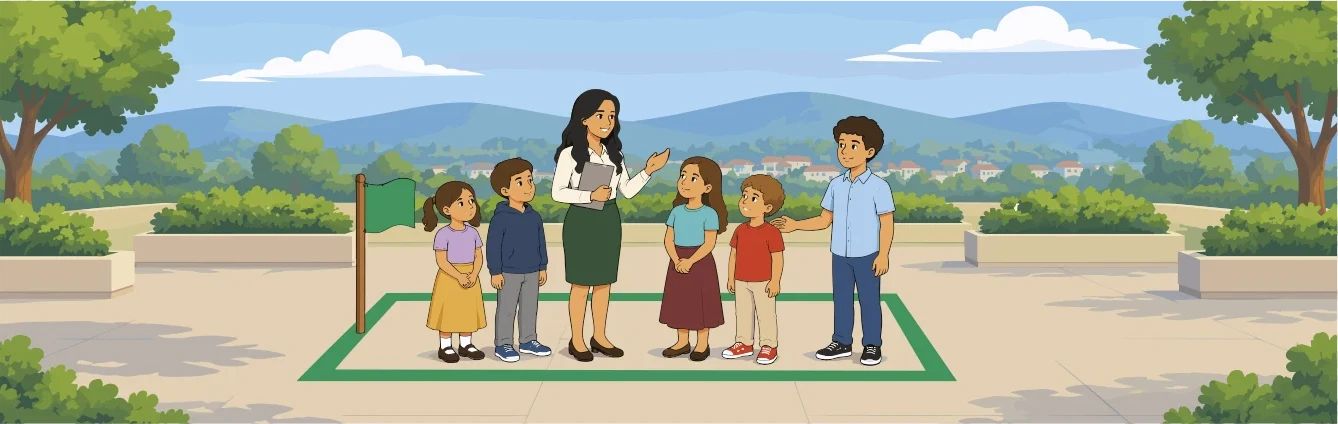
The plan must determine:
- Adults responsible for each group
- alternates
- method of identification
- head count procedure
- safe point
- family reunification procedure.
Parents or guardians must know the institutional procedure in advance.
 1.17
Plan the evacuation of babies and young children
Daycare centers, educational establishments, community centers, religious organizations, and any institution that may have babies or young children, must take into account that some of them will not be able to move on their own.
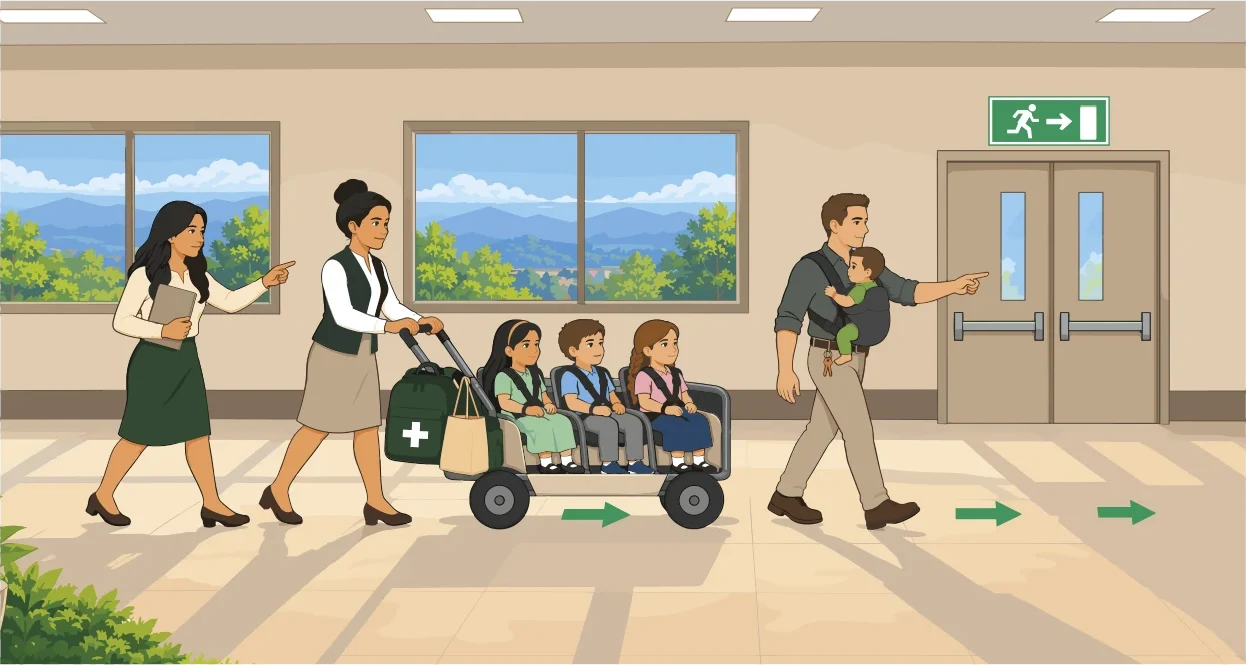
The plan must determine:
- Who will be responsible for moving them
- what system will be used
- what equipment will be needed
- how many adults are required
- how essential items will be carried
- how the identification and head count will be carried out.
The system must be tested during drills.
 1.18
Older adults and people who need assistance
Institutions that receive or house older adults must take into account that some may need more time to move, use mobility devices, require medications, or need assistance. Age alone does not imply incapacity.
Planning must be based on each person's actual needs, and determine:
- Who can evacuate independently
- who needs assistance
- which devices must accompany them
- which route is accessible
- how much time the movement requires
- how many people must provide help.
The time it takes must be confirmed through actual drills, not theoretical estimates.
 1.19
People with special medical needs
When an institution has in its care people who depend on medications, treatments, oxygen, electrical equipment or other medical devices, these needs must be built into the plan.
As applicable, the following should be considered:
- Essential medication
- information on dosage
- allergies
- batteries
- chargers
- suitable alternative power sources
- medical supplies
- basic instructions for third parties
- contact information for medical services.

Medications must be stored and administered in accordance with the corresponding guidelines.
 1.20
Prepare institutional emergency equipment
Equipment must be determined according to the:
- Number of people
- characteristics of the establishment
- activities carried out
- particular needs of the occupants
- local risks.
Consider having:
- First aid kits
- flashlights (including some head-mounted ones)
- spare batteries
- battery-powered or hand-crank AM/FM portable radio
- whistles
- charged power banks
- charging cables
- masks suitable for dusty environments
- gloves
- basic hygiene items
- emergency water
- thermal blankets
- sturdy bags
- protected copies of essential institutional information
- emergency lists and phone numbers
- specific items required by the institution's activities.
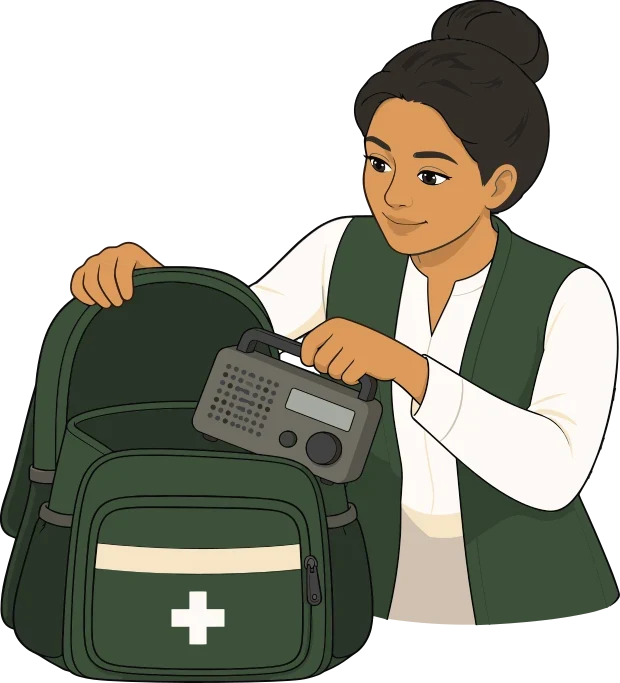
Equipment must remain accessible and be known to those in charge.
It must not be stored in a way that retrieving it would delay evacuation.
 1.21
Protect essential institutional information
The institution must have protected copies and, when possible, secure digital backups of the information essential for its future continuity.
This may include:
- contact information of those in charge
- emergency phone numbers
- insurance policies
- essential documentation
- critical inventories
- information needed to care for people under institutional responsibility
- information on essential suppliers
- emergency procedures.
The purpose of protecting information in advance is precisely to prevent anyone from trying to retrieve it during the evacuation.
 1.22
Prepare emergency communications
During a disaster there may be power outages, internet interruptions, phone network overload, antenna failures and lost devices. For that reason, the institutional system must have alternatives.
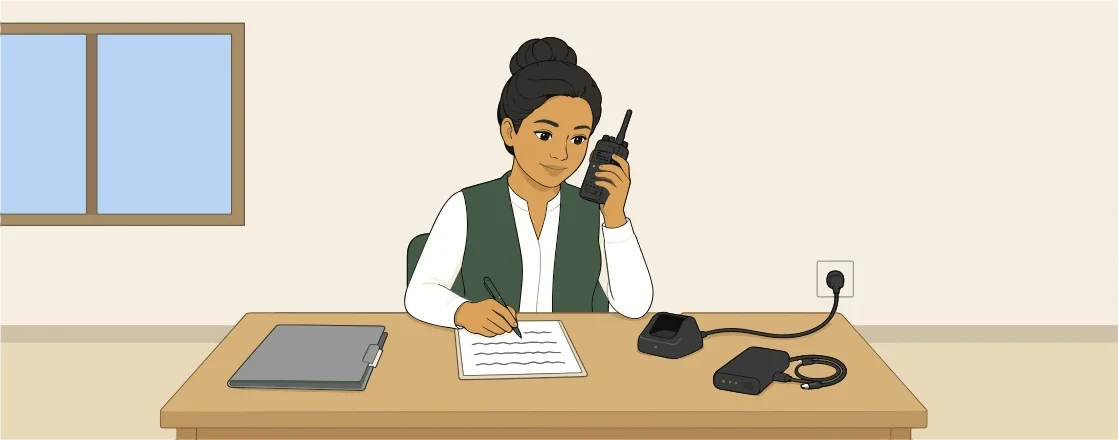
Establish in advance:
- Who communicates with the authorities
- who informs people internally
- which channels will be used
- which alternative channel exists
- which numbers must also be kept on paper
- how communication will take place from the safe zone
- who may issue information on behalf of the institution.
During an emergency, short, operational communications must be prioritized.
Rumors and unverified information must not be spread.
 1.23
Plan the head count
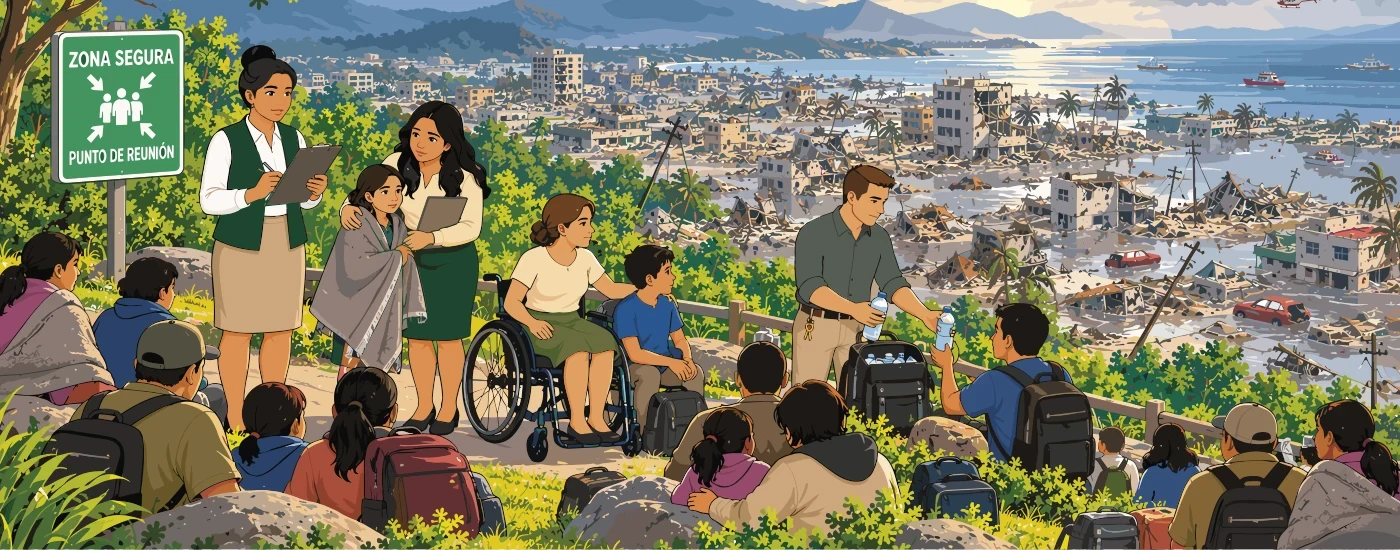
The institution must have a procedure that makes it possible to determine who has evacuated, once the safe zone has been reached.
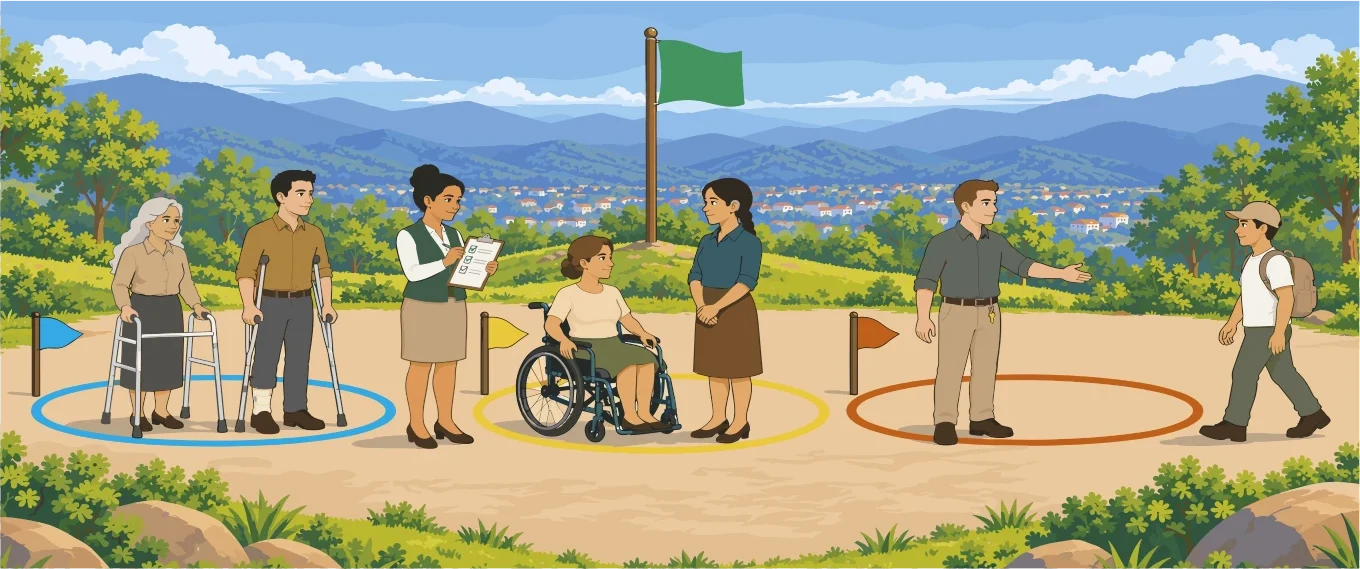
Depending on the characteristics of the establishment, the following may be used:
- Lists
- attendance records
- group rosters
- sector leads
- identification systems
- other suitable mechanisms.
The necessary lists must be readily accessible for quick transport.
The head count must be carried out at the safe zone, not before leaving the threatened area.
 1.24
Establish a safe meeting point
The point must be located outside the threat zone and must be compatible with the official plans. It must have a reasonable capacity for the expected number of people.
All leads must know:
- Its location
- the route to get there
- the alternative routes
- the place assigned to each group
- the head count procedure
- the rules for staying there.
An alternative point must be planned in case the main one is inaccessible.
 1.25
Plan family reunification
Institutions responsible for children, adolescents, dependent people, or other groups who will later need to reunite with family members must establish a reunification procedure.
Family members must know in advance:
- Where the institution will evacuate to
- where people will remain
- how information will be provided
- who may retrieve a minor or a dependent person
- what procedure will be followed if telecommunications stop working.

 1.26
Prepare the establishment for the earthquake that may precede the tsunami
In tsunamis of nearby origin, an earthquake can be the first sign of danger. For that reason, tsunami preparedness must include seismic safety measures.
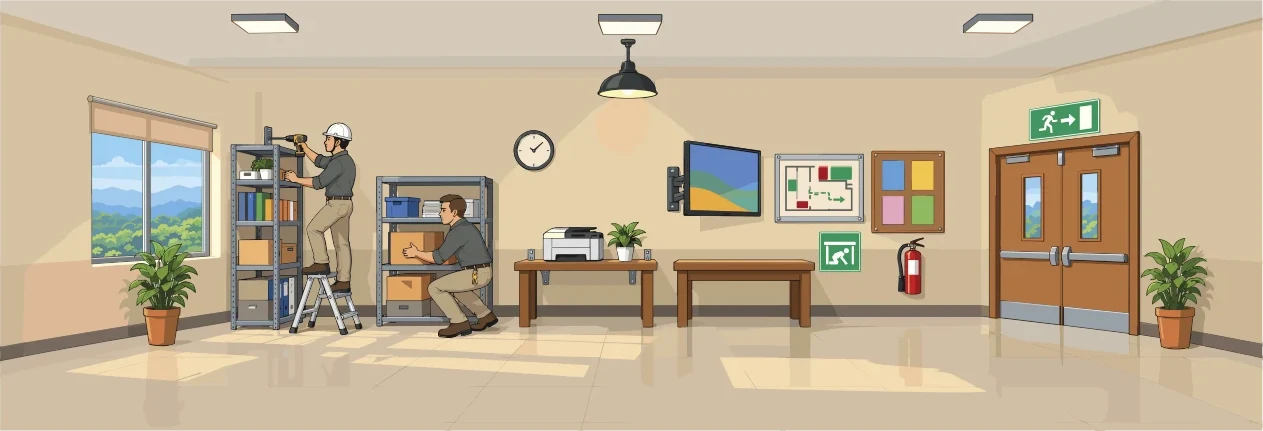
Before an emergency:
- Anchor tall furniture
- secure shelving
- fasten televisions and screens
- secure hanging objects
- keep heavy objects away from places where they could fall on people
- secure equipment that could shift
- keep exits clear
- identify suitable places to take cover during the shaking.
The goal is to prevent people from being injured or trapped before they can begin evacuating.
 1.27
Control hazardous substances and materials
Institutions that use fuels, chemical products, gases, cleaning substances or other potentially hazardous materials must store them in accordance with the corresponding safety rules.
They must not be placed in a way that could:
- Block an exit
- fall on people
- spill easily
- create additional risks during an earthquake
- prevent access to an evacuation route.
During an immediate tsunami threat, no one should delay their evacuation to protect facilities, shut off utilities, or control materials, unless an action can be carried out immediately, safely and without delaying evacuation.
 1.28
Prepare the evacuation
At night
Institutions that operate at night must ensure that the plan can be carried out without electric lighting.
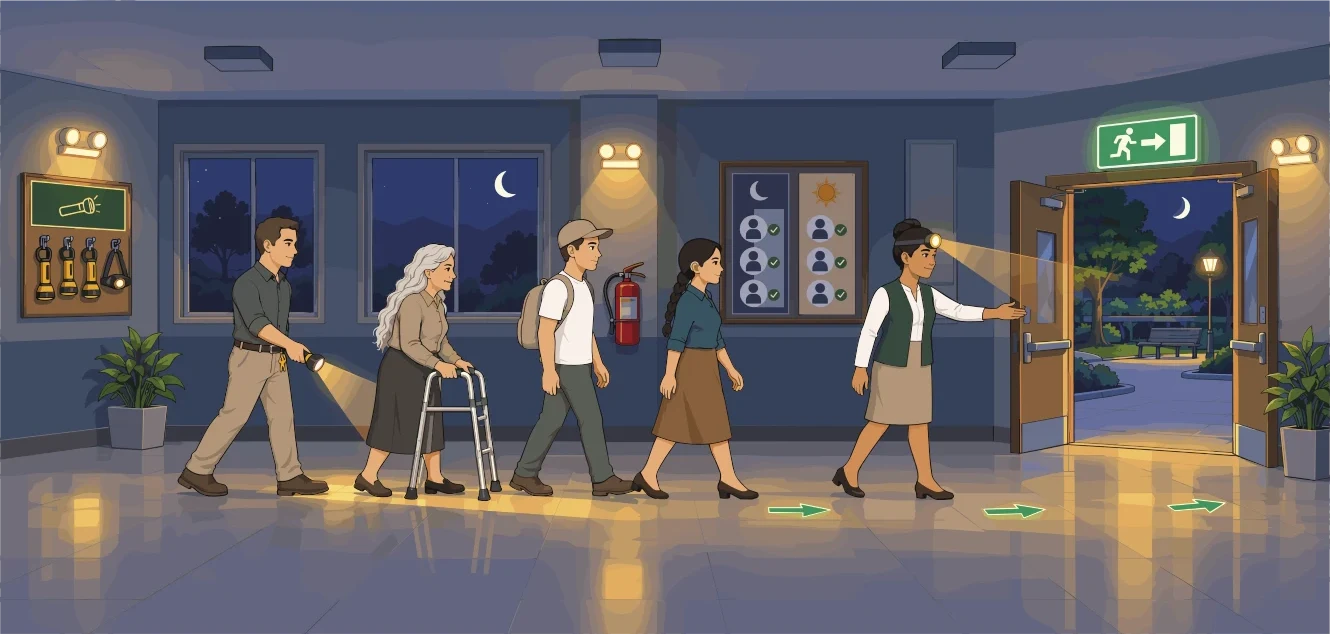
Must verify:
- Independent emergency lighting
- availability of flashlights
- visibility of signage
- accessibility of exits
- night staff's knowledge of the routes
- leads and alternates available during every shift.
A plan that only works during peak staffing hours is not sufficient.
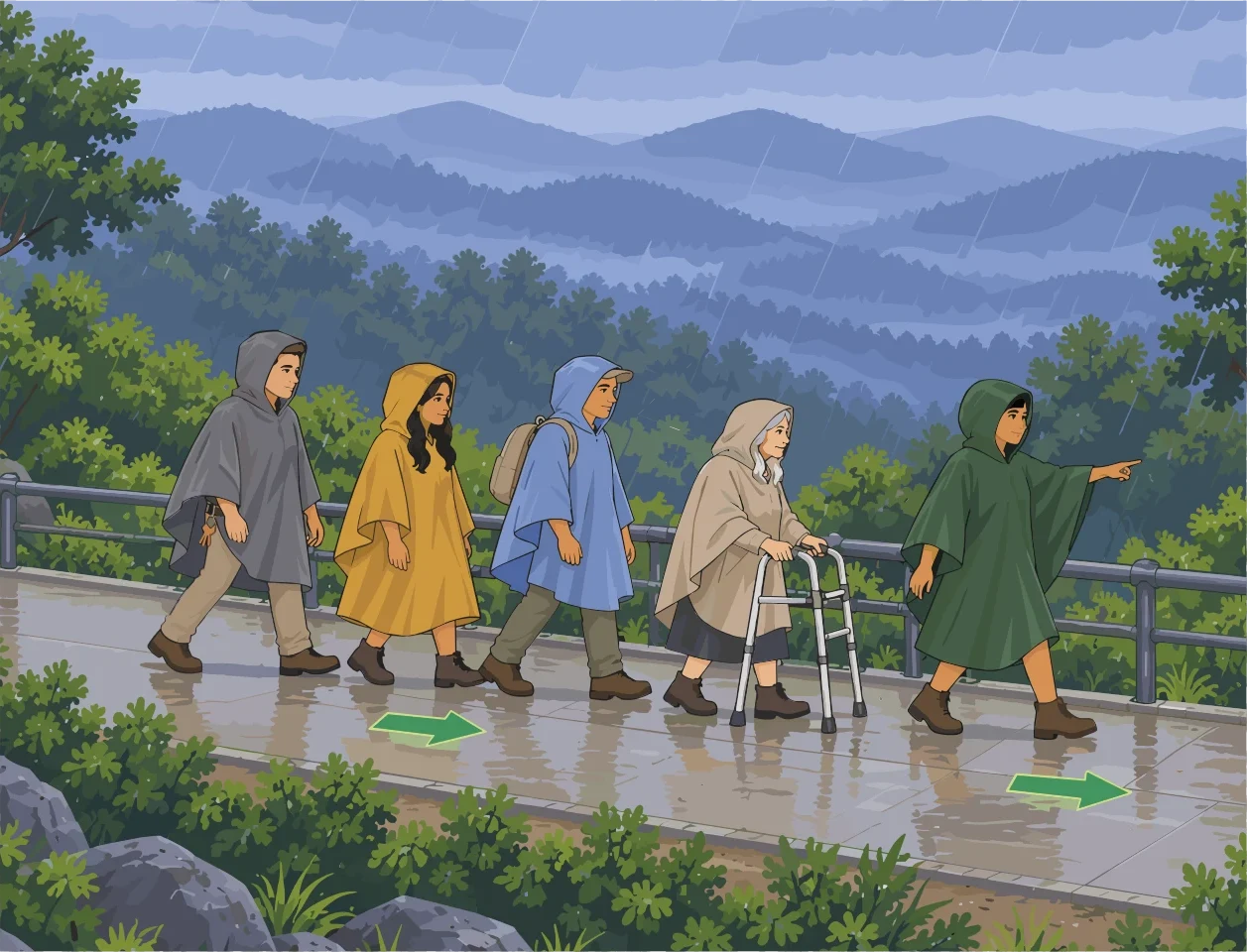
Under adverse weather conditions
Evacuation may take place in the rain, cold, wind, heat or other adverse conditions.
The institution must take into account the usual weather conditions of the region and have, where applicable, light-weight items available that do not hinder evacuation.
 1.29
Plan for the possible loss of utilities
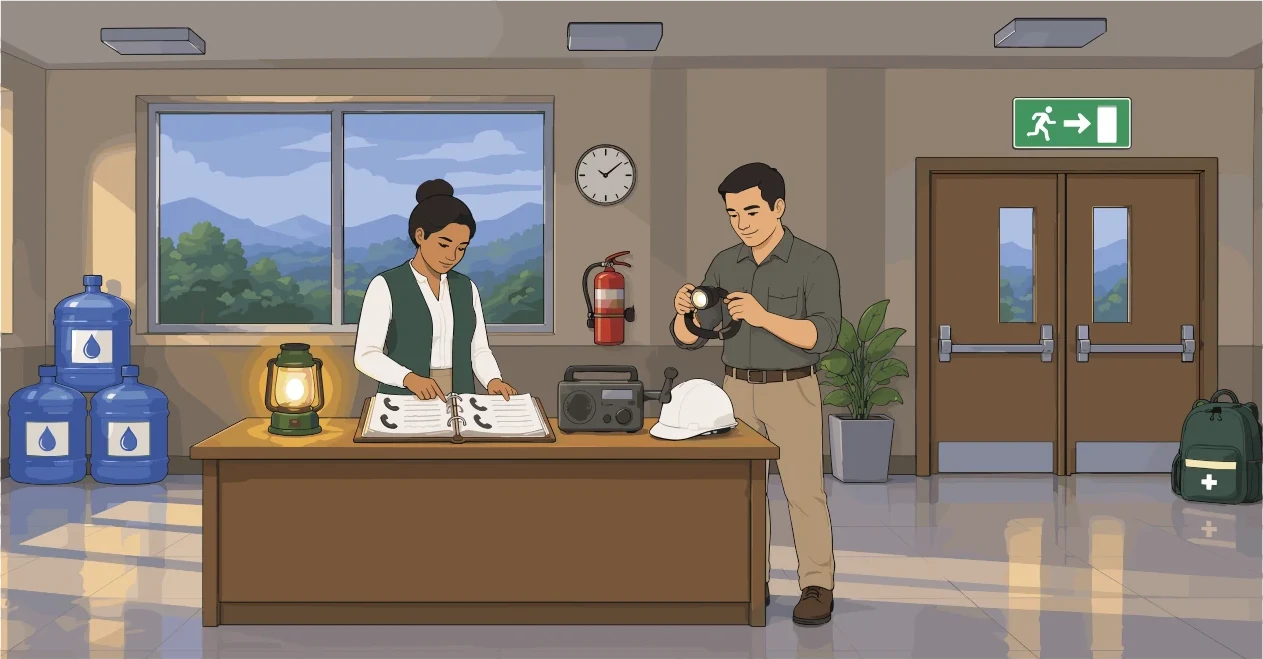
A tsunami can affect:
- electricity
- drinking water
- telecommunications
- transportation
- medical services
- sanitation systems
- electronic systems
- supply chains.
Institutional preparedness must address both immediate evacuation and essential needs during the first stages after the disaster.
However, supplies intended for the emergency must never become burdens that slow down the evacuation.
 1.30
Hold institutional drills
Theoretical preparation is not enough. Drills must be held periodically and must reproduce, under safe conditions, the problems that could arise during a real emergency.

They must make it possible to check:
- Alarm recognition
- reaction time
- total evacuation time
- alarm functionality
- understanding of instructions
- route capacity
- alternative route functionality
- group organization
- assistance to people who need support
- internal communication
- head count procedure
- safe point capacity
- performance of leads and alternates.
A "15-minute" evacuation target must not be set as a universal rule. The time available depends on the source of the tsunami, the topography, the distance, the routes, and local conditions.
The goal is to reach the safe zone within the evacuation time applicable to the locality, with the greatest possible margin.
Practice adverse scenarios
Drills must not be limited to the ideal scenario.
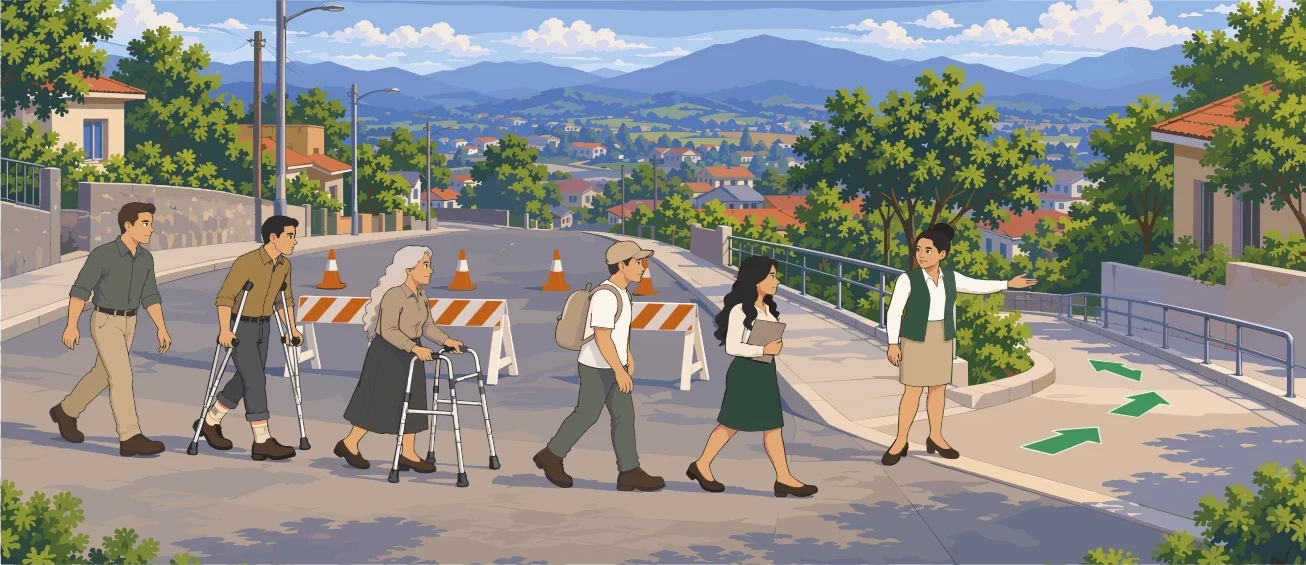
Drills should progressively introduce scenarios such as:
- Main route blocked
- main lead absent
- power outage
- lack of phone and internet service
- internal alarm partially out of service
- nighttime evacuation
- rain
- high occupancy
- visitors present
- assisting people with reduced mobility
- need to use an alternative route
- inability to access the planned meeting point.
The goal is not to make the exercise unnecessarily complicated, but to confirm that the plan still works when one of its components fails.
Evaluate each drill
Every drill must conclude with an evaluation.
You should determine:
- Did everyone recognize the alarm?
- Did everyone know what to do?
- Did the evacuation begin quickly?
- Did the chain of command work?
- Did the alternates perform their roles?
- Did any exit become congested?
- Did obstacles appear?
- Was the route adequate?
- Were people who needed assistance able to evacuate?
- Did the children stay with their groups?
- Did the communication system work?
- Was the head count able to be carried out?
- Did the safe point have enough capacity?
- What would happen if the route used was blocked?
 1.31
Keep the plan up-to-date
An outdated plan can stop being effective.
Review the plan periodically
It must be reviewed periodically, and whenever:
- The authorities or those in charge change
- the layout of the establishment is modified
- the number or characteristics of the occupants change
- new activities are added
- the evacuation routes are modified
- the authorities publish new maps
- local alert systems change
- new structures are built
- new accessibility needs are identified
- phone numbers or contacts change
- failures are detected during a drill
- a real emergency occurs that reveals shortcomings.
Every change must be communicated to those with responsibilities under the plan.
What must not be part of the institutional plan
Proper preparedness also requires identifying behaviors that must be avoided.
Do NOT plan to:
wait for a siren before evacuating
wait for a phone message
wait for the presence of the institution's most senior authority
require unnecessary approval through the chain of command in response to clear natural signs
go back for documents
retrieve money or property
move equipment
protect vehicles
depend exclusively on vehicles
use elevators as an essential part of a vertical evacuation
use routes that have never been checked
improvise the safe point
concentrate every critical role to a single person
send staff to look for people who should have already evacuated, if doing so means re-entering or remaining in danger
let visitors head to the coast to watch
delay the evacuation to complete administrative procedures.
 1.32
Institutional checklist: before a tsunami
Every institution located in a zone susceptible to a tsunami should be able to answer YES to the following questions:
- Do we know whether the establishment is within a threat zone?
- Do we know the official evacuation map?
- Do we know where the safe zone begins?
- Do we have an Institutional Tsunami Emergency and Evacuation Plan?
- Is there an overall lead?
- Is there an alternate?
- Does every critical role have an alternate?
- Do all leads know their roles?
- Do we know who can initiate an evacuation?
- Does the procedure allow action on natural signs without unnecessary delay?
- Do we recognize the natural signs of a tsunami?
- Do we know the official alert systems?
- Do we have an internal alert system?
- Does it work without electricity?
- Can the alarm be perceived by people with disabilities?
- Do we know the main route?
- Do we have alternative routes?
- Have the routes been physically walked?
- Do we know the actual evacuation time?
- Do the routes remain clear?
- Are the exits clearly marked?
- Can visitors understand where to evacuate to?
- Do we have procedures for children?
- Do we have procedures for older people?
- Do we have procedures for people with disabilities?
- Do we have procedures for people with medical needs?
- Do we know how to evacuate at maximum occupancy?
- Do we have a safe meeting point?
- Do we have an alternative meeting point?
- Is there a head-count procedure?
- Is there a reunification procedure, where applicable?
- Do we have alternative communication if phones fail?
- Do we have a radio independent of the power grid?
- Do we have institutional emergency equipment?
- Is it accessible?
- Has it been checked and is it operational?
- Are furniture and heavy objects secured?
- Would the routes still work after an earthquake?
- Can we evacuate at night?
- Can we evacuate under adverse weather conditions?
- Do we hold periodic drills?
- Do we evaluate every drill?
- Do we correct the failures found?
- Is the plan up to date?
- Does everyone understand that no piece of property justifies delaying an evacuation?
 1.33
Institutional decision rule
In a tsunami of nearby origin, there may not be enough time to receive, verify or wait for additional information.
For that reason, every institutional lead must know a simple rule before the emergency:
If the establishment is in a coastal area and a strong or prolonged earthquake is felt, a sudden and abnormal change in the sea is observed, or an unusual roar is heard coming from the ocean, proceed to:
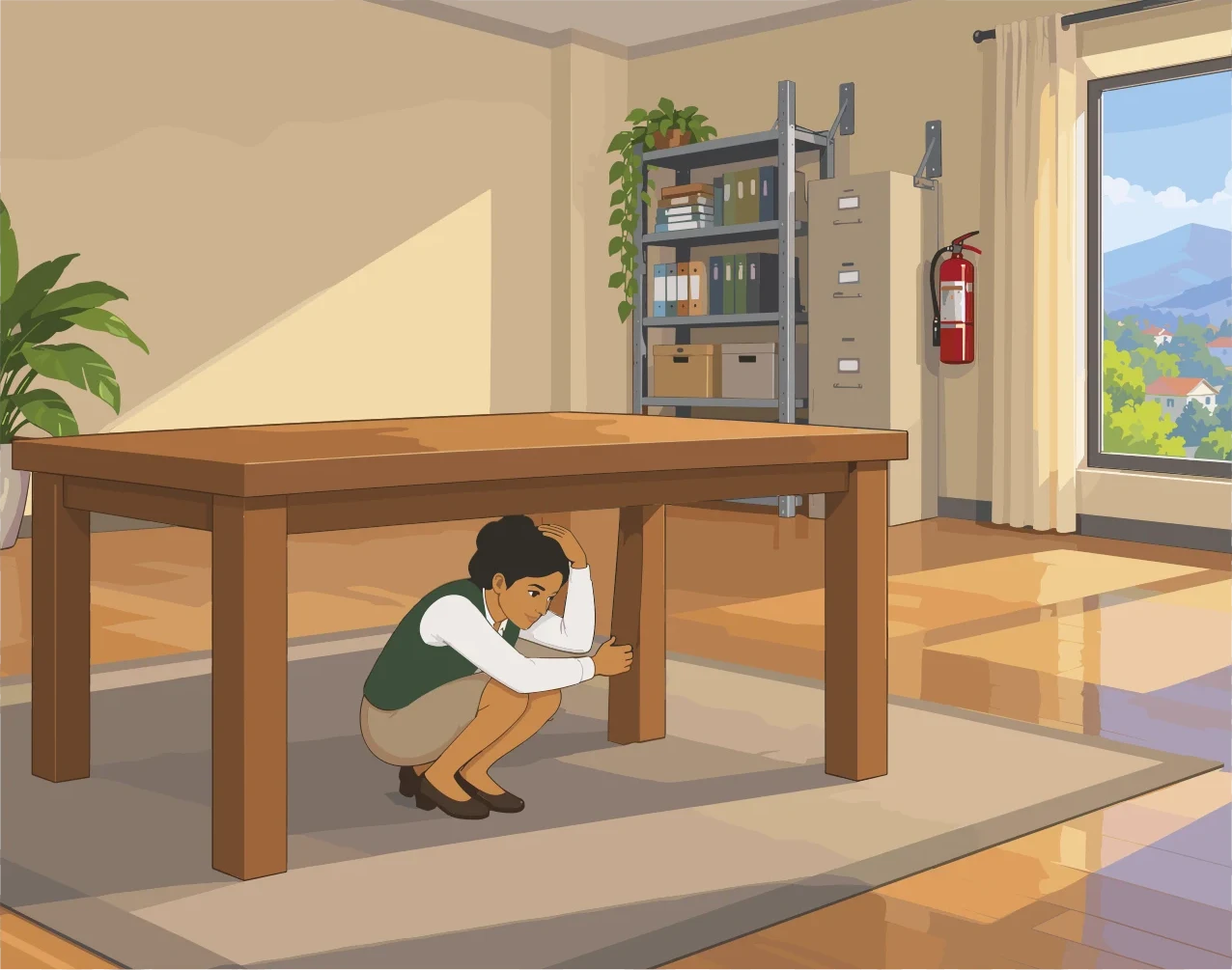
Protect yourself from the earthquake first.
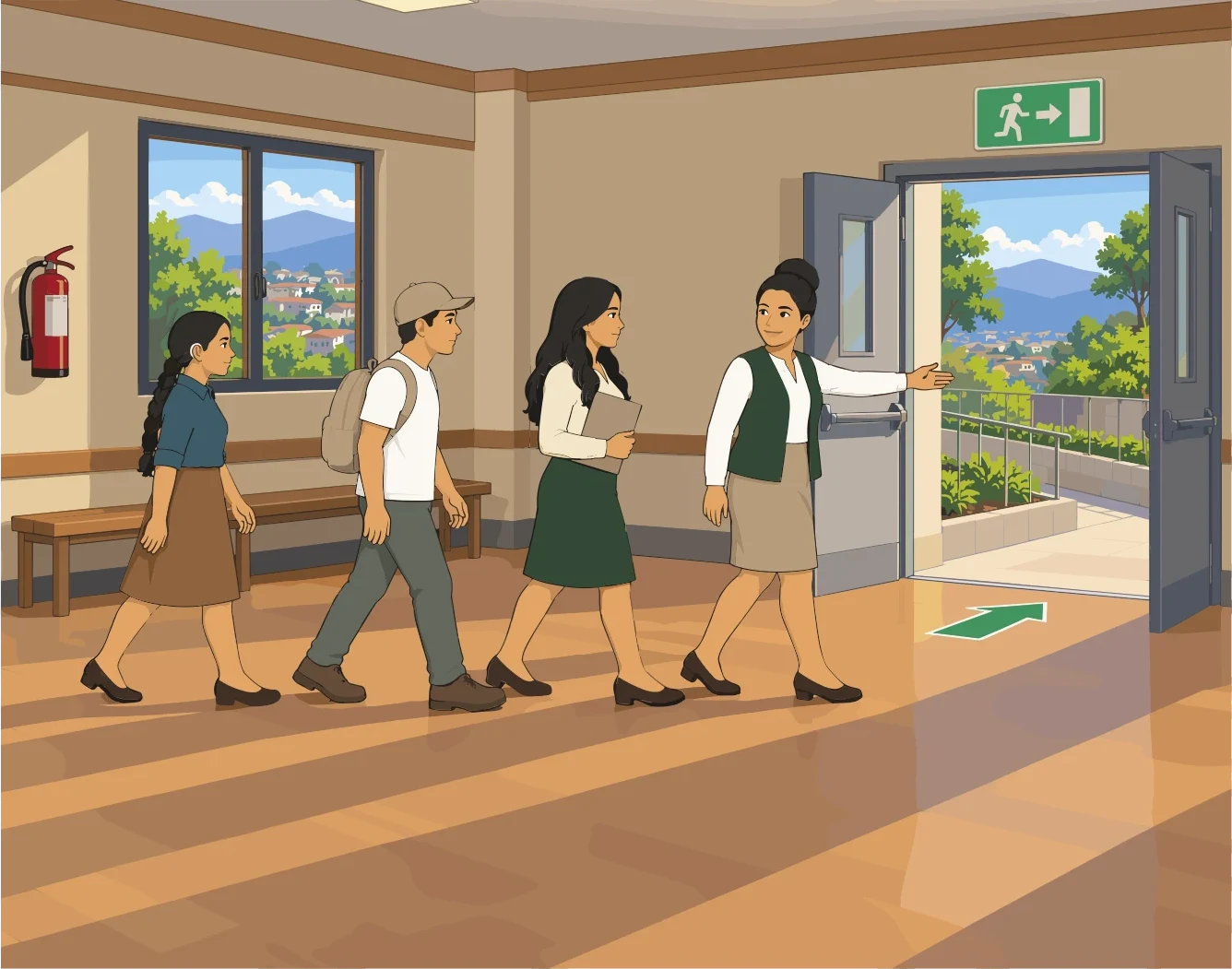
As soon as you can move safely, begin the evacuation.
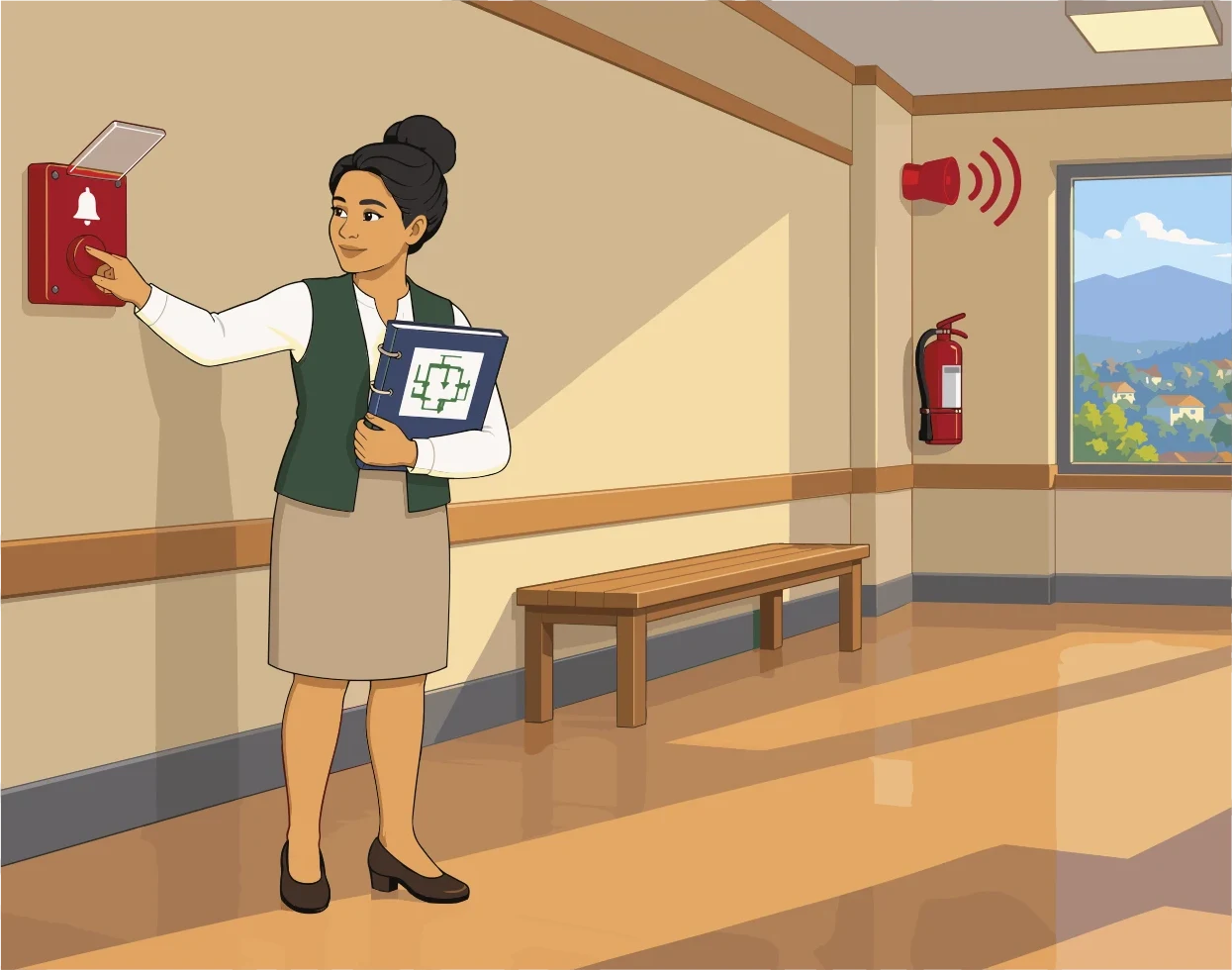
Activate the Institutional plan.
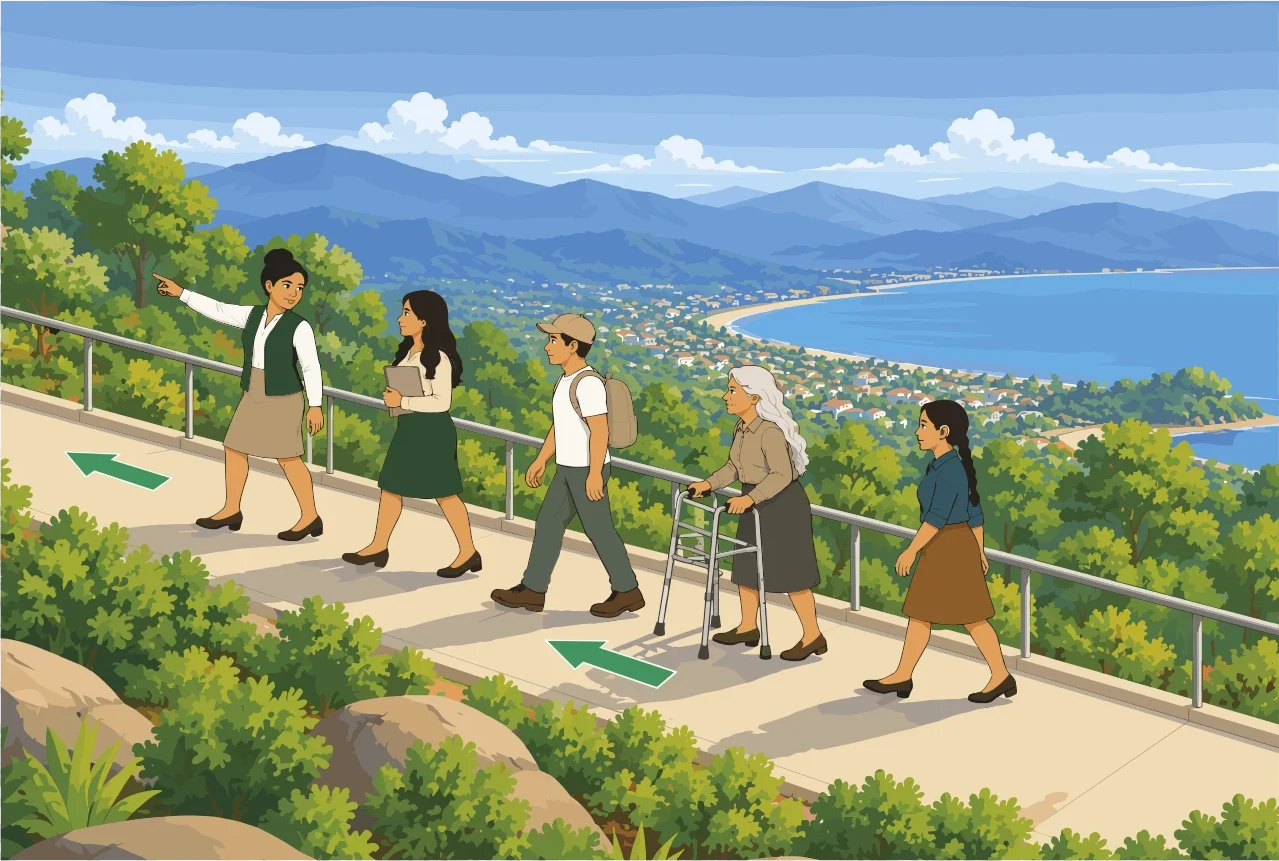
Move people away from the sea.
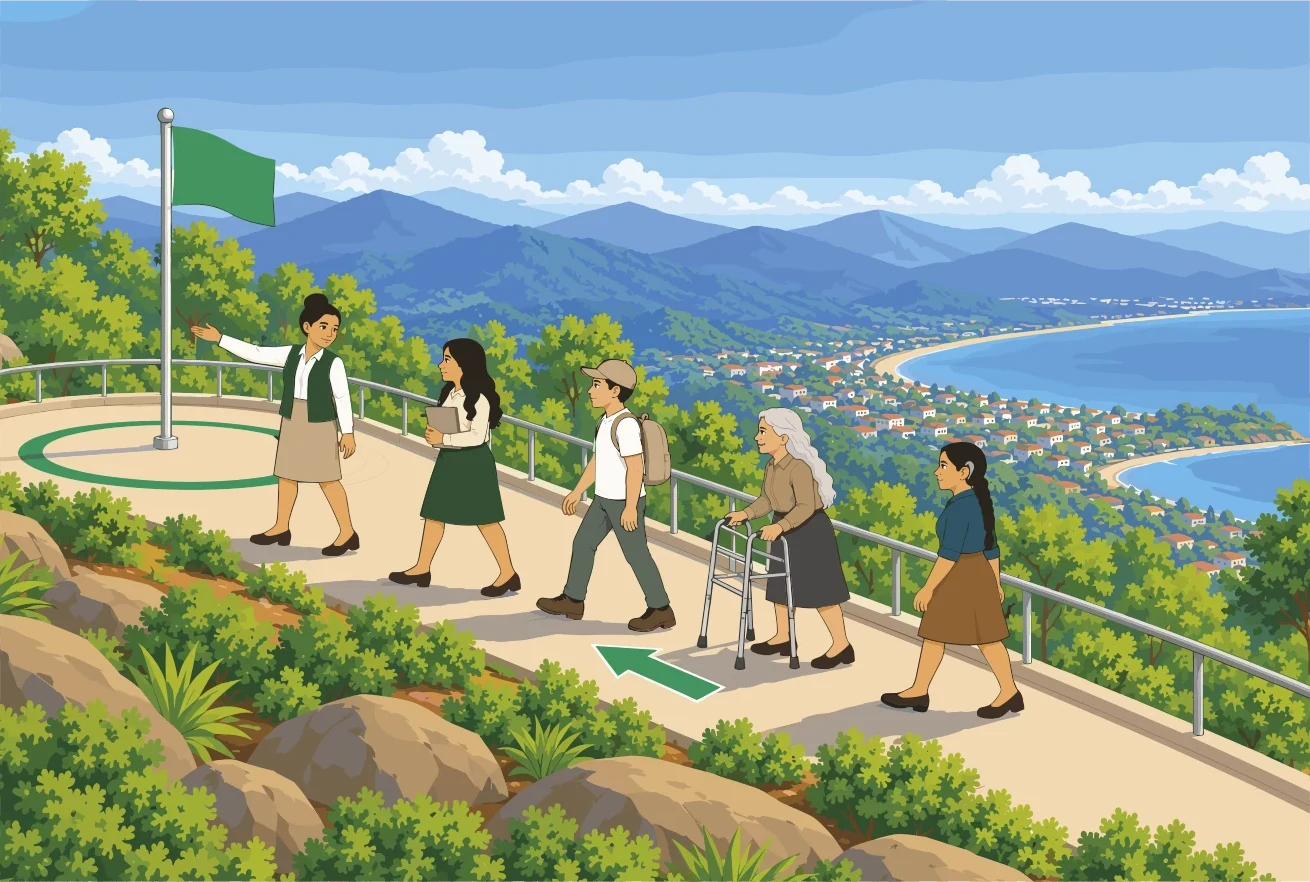
Direct people toward the established safe zone.

Do not wait to see the tsunami.
Do not delay the evacuation to protect property or complete administrative procedures.
Do not go back!
 1.34
Fundamental rules for every institution
1. KNOW THE RISK. Determine in advance whether the establishment is within a zone susceptible to a tsunami.
2. HAVE A WRITTEN, REHEARSED PLAN. An emergency is not the time to decide responsibilities and procedures.
3. ESTABLISH LEADS AND ALTERNATES. No critical role should depend on a single person.
4. RECOGNIZE THE NATURAL SIGNS. A strong or prolonged earthquake, a sudden and abnormal change in the sea, or an unusual roar coming from the ocean can mean danger.
5. DO NOT DEPEND EXCLUSIVELY ON AN OFFICIAL ALERT. A tsunami of nearby origin can arrive before a official warning is received.
6. KNOW THE ROUTES. Have a main route and alternatives.
7. PLAN MAINLY FOR AN EVACUATION ON FOOT. Vehicles can get stuck and block the roads.
8. PREPARE EVERYONE. Workers, members, children, older people, people with disabilities and visitors must all be accounted for.
9. KEEP THE EXITS CLEAR. A blocked route can turn an everyday shortcoming into a critical problem.
10. PRACTICE. The plan must be tested through drills.
11. EVALUATE AND CORRECT. Every failure identified must lead to a concrete improvement.
12. DO NOT RISK LIVES FOR PROPERTY. Documents, money, equipment, vehicles and facilities are replaceable.
13. FOLLOW THE AUTHORITIES' INSTRUCTIONS. Each locality's official maps, routes, evacuation zones and procedures take priority over general recommendations.
 1.35
Main goal of institutional preparedness
Institutional preparedness against a tsunami does not consist solely of having alarms, signs, first aid kits, or a document called an "emergency plan."
It consists of making all decisions IN ADVANCE that there will likely be no time to make during an emergency:
- Knowing whether the establishment is exposed
- knowing the danger signs
- knowing who initiates the evacuation
- knowing who takes command if the lead is missing
- knowing how to alert everyone
- knowing which exit to use
- knowing an alternate route
- knowing where to head to
- knowing who leads each group
- knowing who needs assistance
- knowing how to evacuate children
- knowing how to assist older people
- knowing how to assist people with disabilities
- knowing how to guide visitors
- knowing how to carry out the head count
- having the essential equipment available
- maintaining alternative communications
- knowing the safe point
- having practiced the entire procedure.
For that reason, every institution, organization, club, church, temple, association, educational establishment, community center, or space that brings people together within a zone susceptible to a tsunami must prepare, review, and practice its plan until the essential functions can be carried out even under pressure, with limited communications, and with the usual leads absent.

Before / during / after
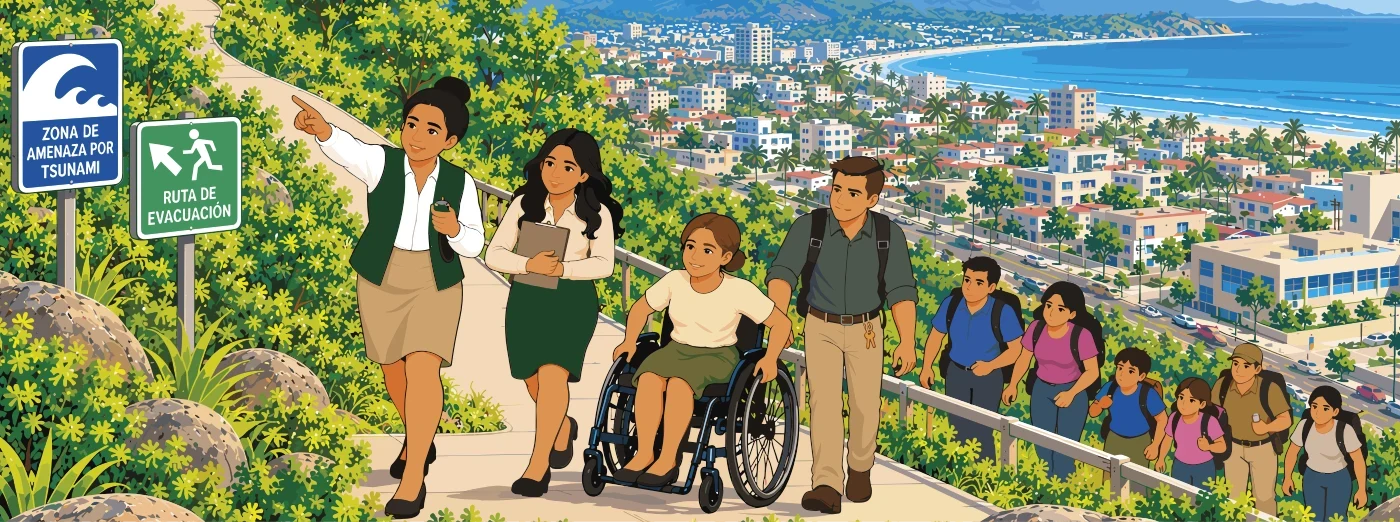
Official tsunami warning levels by country
Each country uses its own names for tsunami warning levels.
The table below brings together the names used by the official agencies of some countries in the Americas. It is a general reference and does not replace information from the authorities of each locality.
| COUNTRY (agency) | IT IS POSSIBLE (be ready to act) | DANGER AT THE BEACH (get out of the water) | IMMINENT OR UNDERWAY (evacuate) |
|---|---|---|---|
| U.S. — NWS · in English | Tsunami Watch | Tsunami Advisory | Tsunami Warning |
| U.S. and Puerto Rico — NWS · in Spanish | Vigilancia de tsunami | Advertencia de tsunami | Aviso de tsunami |
| Canada — English /French | Watch/veille | Advisory/avis | Warning/avertissement |
| Mexico — CAT-SEMAR | Boletín informativo | Alerta de tsunami | Alerta de tsunami |
| Chile — SHOA y SENAPRED | Informativo | Precaución | Alerta o Alarma |
| Peru — DHN | Alerta | — | Alarma |
| Ecuador — INOCAR | Estado de observación | — | Estado de advertencia |
| Colombia — DIMAR y UNGRD | Vigilancia | Advertencia | Alerta |
| Dominican Republic — COE | Alerta verde | Alerta amarilla | — |
Downloads
© 2026 by Kingdom of Peace and Justice Center is licensed under Creative Commons Attribution-NonCommercial-NoDerivatives 4.0 International (CC BY-NC-ND 4.0). To view a copy of this license, visit creativecommons.org/licenses/by-nc-nd/4.0.