Scope of this guide
This guide is intended for private institutions and non-governmental organizations that receive, gather or have people in their care or under their responsibility, including churches, temples and religious communities; sports and social clubs; civic associations; foundations; community centers; relief organizations; cultural bodies and other similar institutions.
Its aim is to provide practical recommendations so that their leadership, staff in charge, personnel and volunteers can prepare the premises, organize themselves in advance and act in an orderly way if an earthquake occurs while people are gathered on the site.
These recommendations are not intended for municipal, provincial or national agencies, security forces, fire departments, emergency services or other government bodies, which have their own specific authority, procedures and protocols.
Nor does this guide replace the safety, construction, evacuation, fire protection, accessibility or emergency standards established by the competent authorities. Each institution must adapt these recommendations to the characteristics of its building, its activities and the regulations in force in its jurisdiction.
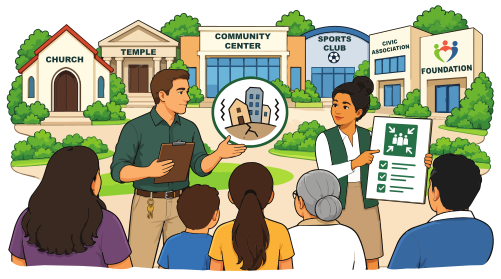
PHASE 1: BEFORE THE EARTHQUAKE
INSTITUTIONAL PREVENTION, MITIGATION AND PLANNING
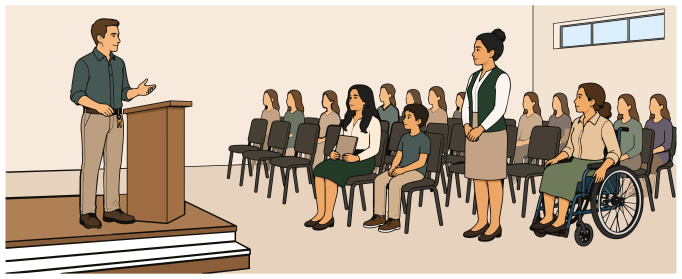
Advance preparation is essential in order to reduce injuries, avoid panic and allow an organized response.
When an earthquake occurs during an activity with large numbers of people, a disorderly reaction can create additional risks. Trying to evacuate in haste while the shaking continues can cause falls, pushing, crowding and blocked exits.
For that reason, every institution must prepare with a particularly demanding situation in mind:
What would happen if the earthquake began right now, with the premises occupied and an activity in full swing?

Planning must be done with that situation in mind, and not only for the times when the building is empty or has few people in it.
 1.1
1.1Preliminary assessment of the premises
Identifying indoor hazards
The institution's leadership should walk through the premises periodically and identify items that could become hazards during an earthquake. Pay particular attention to:
- cabinets
- bookcases
- tall display cases and shelving
- electronic equipment and screens
- televisions and monitors
- sound equipment
- suspended speakers
- projectors
- lamps and chandeliers
- ceiling fans
- paintings
- pictures
- mirrors
- heavy sculptures and decorative objects
- large glazed surfaces
- suspended ceilings and false ceilings
- signs
- items installed above stages
- sports equipment
- elevated tanks
- objects stored up high
- furniture that could shift or tip over
- heavy religious or ceremonial items
- temporary structures used during activities or celebrations
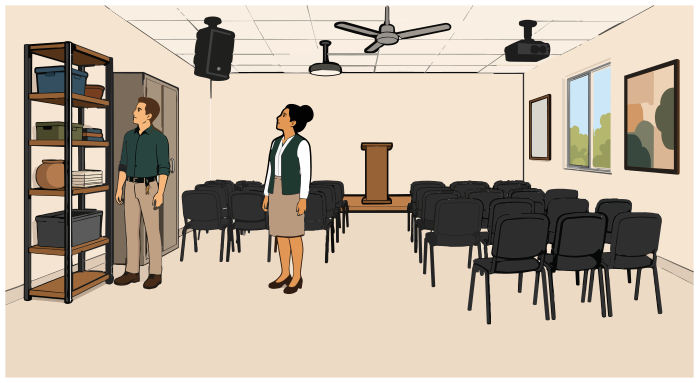
Some of the suspended items that must be correctly installed and secured:

Lamps

Fans

Sound equipment

Projectors
Particular attention must be paid to items located above places where large numbers of people habitually gather, such as church pews, auditoriums, meeting halls, dining rooms, stands, classrooms, gyms, stages and children's areas.
Glass and transparent surfaces

Large glazed surfaces can present a significant risk.
Where appropriate, safety film or other suitable systems may be used to reduce the scattering of fragments if they break.
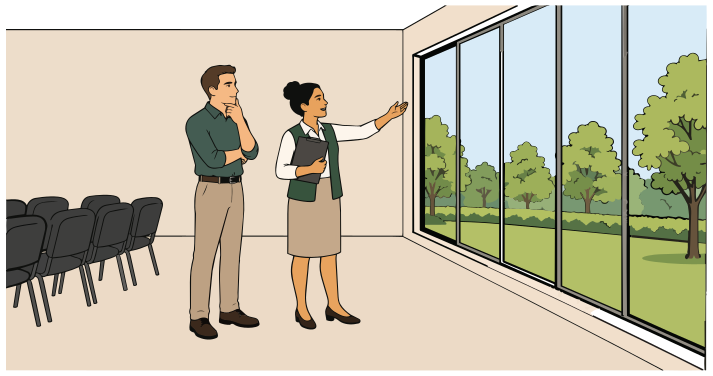
The institution should identify in advance:

Large windows

Glass doors

Display cases

Partitions

Mirrors

Glazed panels

Wherever the layout of the premises allows, avoid placing seating areas or points where people gather immediately next to large glazed surfaces.
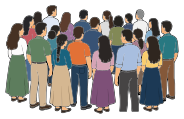
Exits, pathways and gathering spaces
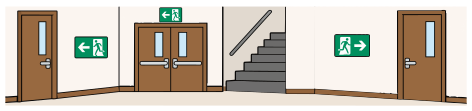
Keep exit routes clear at all times.

Hallways

Corridors
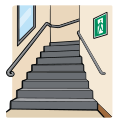
Stairs

Doors

Exits
Evacuation routes must not be used for storage: boxes, furniture, equipment, materials, merchandise, sports items, religious or ceremonial objects, extra chairs, waste, vehicles and anything else that could obstruct movement.
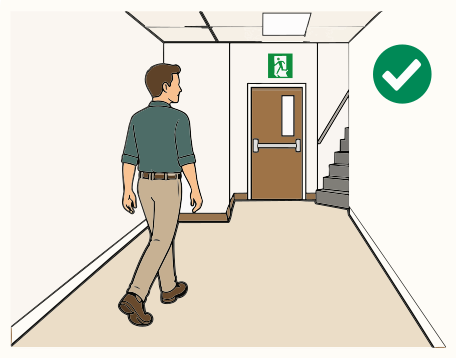
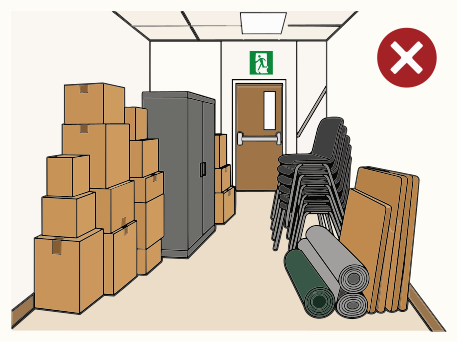
An exit that exists but is blocked, or difficult to use, can be useless during an emergency.
Doors and keys
The people in charge must know how the building's doors and exits work.
When an exit requires a key, that key must be kept somewhere immediately accessible and known to those in charge, without depending on tracking down one particular person.
The institution must avoid a situation where a single person is indispensable in order to open an exit.

Local regulations governing doors, emergency exits and opening systems must always be observed.


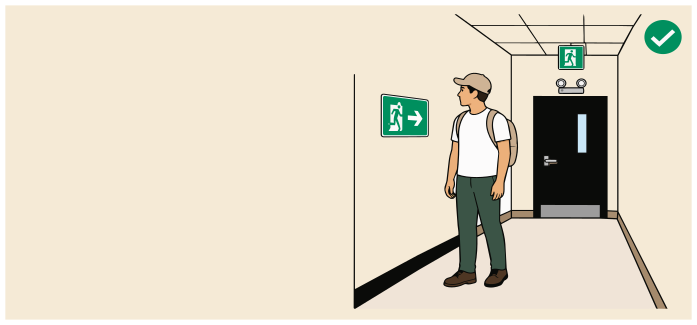

Signage
- Routes and exits must be clearly identified in accordance with the applicable regulations.
- The signage must also be recognizable to people visiting the premises for the first time.
- Where applicable, the institution must have emergency lighting that allows people to find their way in the event of a power outage.

 1.2
1.2Identifying outdoor hazards

Planning must not stop at the door of the premises.
Before deciding where to gather people after an earthquake, the hazards outside must be assessed.
Identify
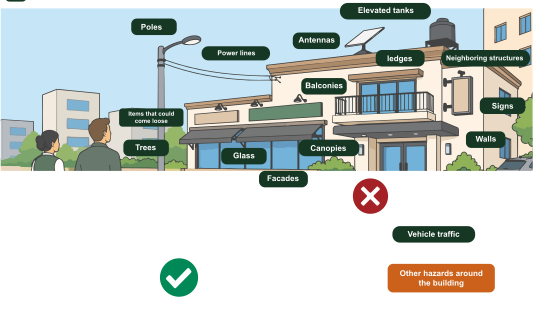
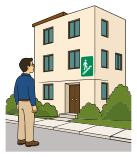
The sidewalk in front of the premises must not automatically be chosen as the meeting point.
After an earthquake, glass, cladding, masonry, signs, ledges and other parts of the facades can fall.

The institution must identify in advance one or more open, clear spaces that can be used as meeting points when evacuation becomes necessary.

 1.3
1.3Institutional action plan
Every institution that regularly gathers people must establish a basic emergency organization in advance. The plan must be:
Simple
Known
Workable

There is no point in setting up excessively complex procedures that nobody will remember when an emergency happens.
Person in overall charge
It must be decided in advance who will take on overall coordination in an emergency.
There must also be at least one alternate, because it cannot be assumed that the institution's most senior figure will be present when the earthquake occurs.
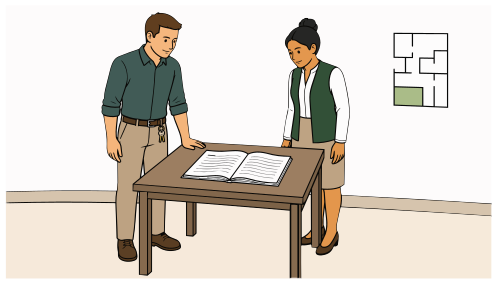
For example, depending on the institution, this role could fall to:
- institutional officer
- administrator
- coordinator
- premises manager
- safety officer
- religious leader
- activity leader
- coach or sports coordinator
What matters is not the job title, but that everyone knows in advance who coordinates the response when an emergency occurs.
 1.4
1.4Assigning responsibilities in advance
Every institution that regularly gathers people must establish a basic emergency organization in advance.
Overall coordination
Will be responsible for:
- assessing the situation once the shaking has stopped;
- ordering the planned actions;
- deciding on evacuation where appropriate;
- maintaining coordination among those in charge.
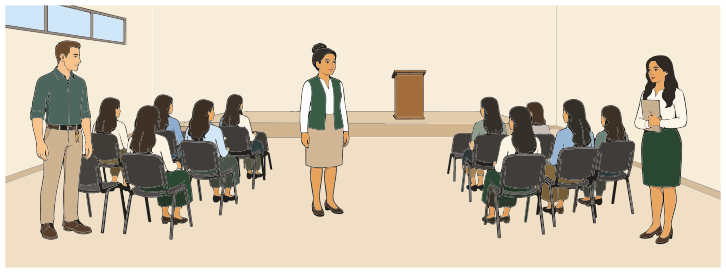
Area leads
- In large premises, leads may be designated for different areas, halls, floors or sections.
- Their role will be to guide the people in their area and pass on the established instructions.

Evacuation lead
Once the shaking has stopped, and when evacuation becomes necessary, will help direct an orderly exit using the planned routes that remain safe.

Utilities lead
After the earthquake, and only when it is safe to do so, will check the relevant installations. Must know in advance:

location of the main gas valve

main electrical panel

main water shut-off valve
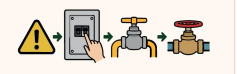
basic procedures for shutting off the supplies
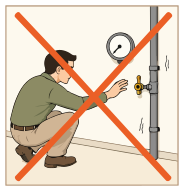
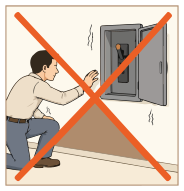
No one should move through the building during the earthquake to try to shut off the gas, cut the electricity or carry out these checks.
First aid leads
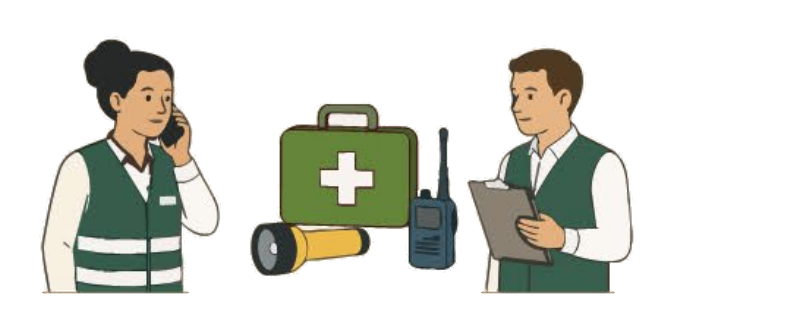
The institution should aim to have some people with formal training in first aid and cardiopulmonary resuscitation. Those in charge must know where the first aid kit and the available emergency equipment are kept.
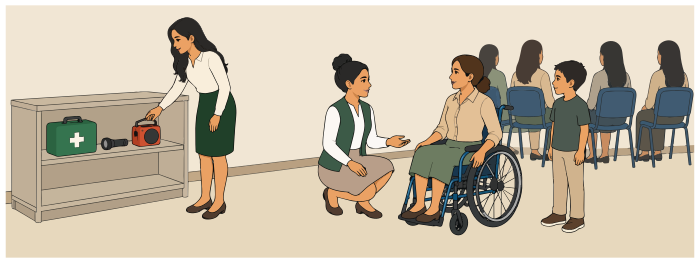
Leads for people who need assistance
It must be planned in advance who will help:
- young children
- older people
- people with reduced mobility
- people with disabilities
- injured people
- anyone who needs support in order to protect themselves or evacuate
Communications lead
- internal communications
- contact with emergency services
- passing information to family members where appropriate
- receiving and relaying official instructions
 1.5
1.5Avoiding dependence on a single person
An institution must not design its response on the assumption that particular people will necessarily be present.
Essential roles must have alternates.
Keys, first aid kits, communication equipment, emergency supplies and access to essential installations must be kept in places known to more than one authorized person.
Knowledge of the institutional plan must be shared.
 1.6
1.6Planning according to occupancy
Preparation must take into account the maximum attendance that can reasonably be expected, not merely the usual number of employees or staff.
A church may have few people present for much of the week and hundreds during a service.
A club may be practically empty at certain hours and full of children, families and athletes during a competition.
A community center can multiply its occupancy during certain activities.
For that reason, the institution should ask itself
- How many people can be on the premises at the same time?
- Where do they gather?
- What would happen if the earthquake began during the most heavily attended activity?
- Who would be in charge?
- How would instructions be passed on?
- Are there enough exit routes?
- Which areas present the greatest risks?
- Where would people take cover?
- How would an evacuation be organized afterward?
- Where would people gather?
- How would it be confirmed that no area was left unchecked once it is safe to do so?
 1.7
1.7People who do not know the building
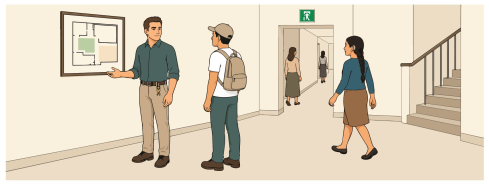
An important characteristic of churches, clubs, associations and community centers is that many of the people present may be visitors. It must not be assumed that they know:
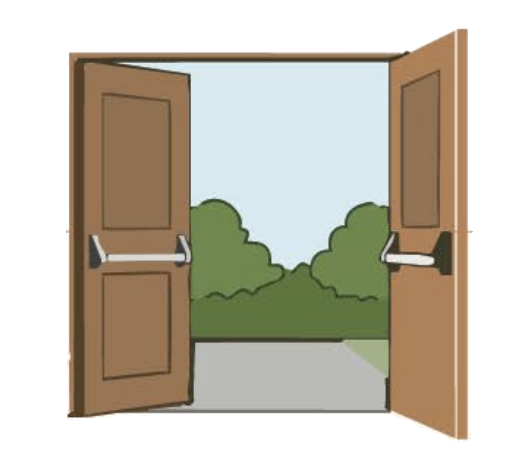
the exits,
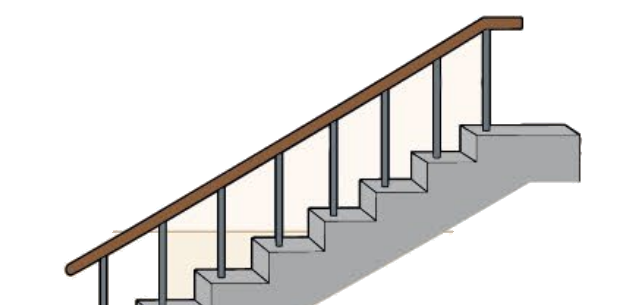
the stairs,
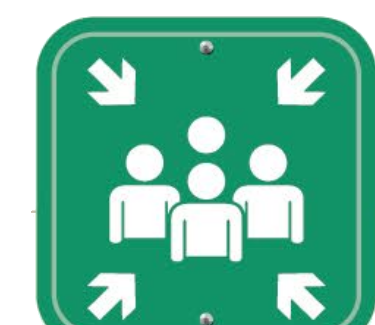
the meeting points,
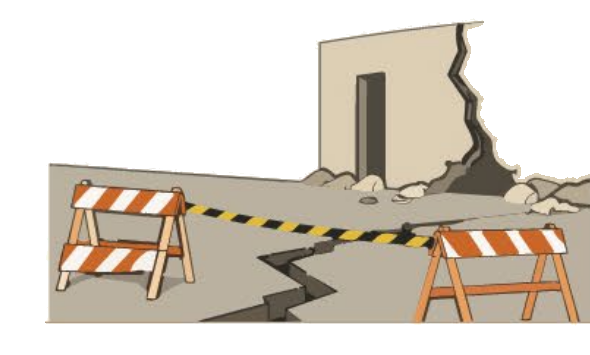
the risk areas,
the emergency procedures.
For that reason, during an emergency, identified staff, leadership, volunteers and helpers must take an active role in guiding people.

Instructions must be short, clear and consistent.
 1.8
1.8Systems for giving instructions
Where the premises have:
- a public address system,
- a sound system,
- loudspeakers,
- internal radios,
- other communication systems,
who may use them and what basic instructions should be given must be established in advance.
Power outages during an earthquake should be expected.
For that reason, the plan must not depend exclusively on electronic systems. Those in charge must be ready to give instructions verbally when necessary.
Contradictory orders must be avoided.
 1.9
1.9Preparing for children
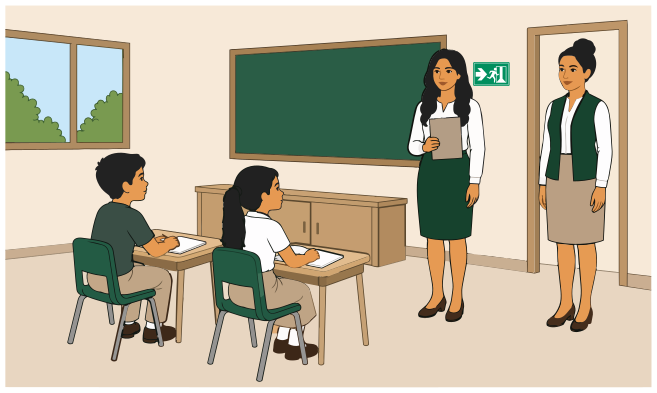
Institutions that receive children require specific planning.
Do not assume that children will respond to an emergency the same way adults do.
Coaches, teachers, coordinators, catechists, children's group leaders, volunteers and any other adults in charge must know in advance how to act.
It must be established:
- who stays with each group;
- who assists the children who need it;
- how the evacuation will be carried out afterward;
- where each group will gather;
- how the children's presence will be verified;
- how they will later be released to parents, guardians or those responsible, where applicable.
Fundamental principle
During the shaking, the priority is to protect children where they are and to stop them from running toward the exits in a disorderly way.
A hurried evacuation while the ground is still moving can expose them to falls, glass, falling objects and crowding.
 1.10
1.10People with disabilities and other assistance needs
The institution must anticipate the presence of people who may need additional assistance.
The routes used by people with wheelchairs, walkers, canes or other mobility devices must be kept clear.
Where applicable, the following should be taken into account:
- reduced mobility,
- visual disability,
- hearing disability,
- intellectual or cognitive disability,
- neurodivergent people,
- older people,
- people who require permanent or temporary assistance.
Planning must support autonomy and avoid separating a person unnecessarily from their assistive devices.
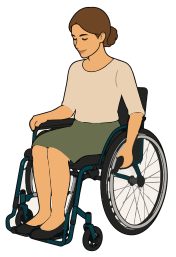
For people who use wheelchairs, the following can be applied during the shaking:
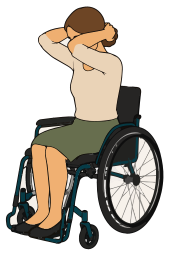
Lock
Cover
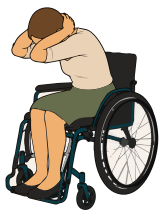
Hold on
Lock the wheels.
Protect your head and neck.
Lean forward when possible.
Hold on until the shaking stops.
Where visual, flashing or vibrating alert systems exist, they must be kept in working order.
 1.11
1.11Institutional emergency equipment and supplies
An institution with large numbers of people must not rely solely on the personal belongings of those who happen to be present.
Depending on its size, characteristics and activities, it must keep basic emergency items in places that are accessible and known to those in charge.

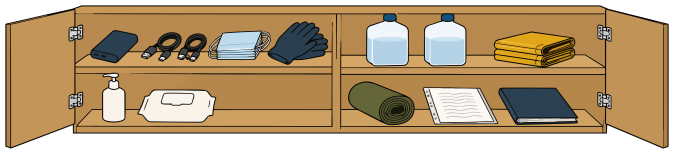
These may include:
- first aid kits,
- flashlights (preferably some head torches),
- spare batteries,
- battery-powered or hand-crank AM/FM portable radio,
- whistles,
- charged power banks,
- charging cables,
- masks suitable for dusty environments,
- gloves,
- basic hygiene items,
- emergency water,
- thermal blankets,
- heavy-duty bags,
- protected copies of essential institutional records,
- emergency lists and phone numbers,
- specific items needed for the institution's activities.

These items must be checked periodically.
Medications, food, batteries and any other products with expiration dates must be monitored and replaced when appropriate.
 1.12
1.12First aid
The institution must have first aid kits suited to its characteristics and to the usual number of people present.
First aid kits must be:
- clearly identified,
- kept in accessible places,
- kept fully stocked,
- checked periodically,
- known to those in charge.
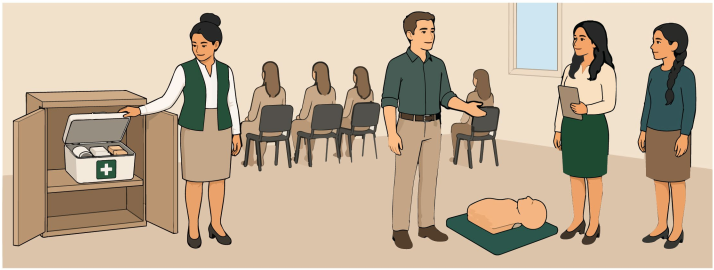
Members of the institution should receive formal training in:
- first aid,
- cardiopulmonary resuscitation,
- basic emergency response.
Having a first aid kit does not replace training.
 1.13
1.13Gas, electricity and water
Gas
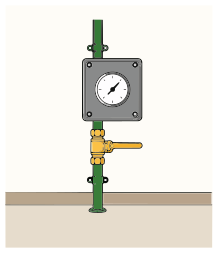
The people in charge must know the location of the main supply valve.
Access to it must be kept clear.
Appliances must be correctly installed and secured, and the connections must be appropriate.
No one should move through the premises during the earthquake to try to shut off the gas.
Once the shaking has stopped, and only if it is safe to do so, the installations will be checked. If there are signs of a leak, the supply must be shut off following the corresponding procedure.
Electricity
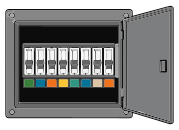
The main panel must be identified and its breakers kept correctly labeled.
The people in charge must know the procedure for shutting off the supply.
After the earthquake, if there is electrical damage and it can be done safely, the electricity must be shut off.
Water
The location of the main shut-off valve must be known and access to it kept clear.
After an earthquake, the instructions of the competent authorities regarding the safety of the supply must be followed.

 1.14
1.14Drills and training
The institutional plan must be practiced. Drills reveal problems that can go unnoticed on paper.
Different situations should be practiced; for example:
- earthquake with a large crowd present;
- activity with children;
- power outage;
- usual exit blocked;
- presence of a person with reduced mobility;
- a particular area being unusable;
- need to use an alternative route.
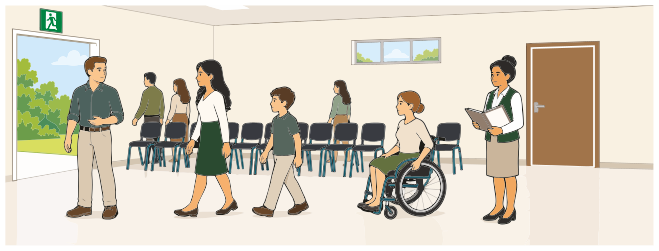
Drills should also serve to check whether:
- responsibilities are clear;
- routes remain clear;
- the people in charge know their roles;
- the communication systems work;
- the meeting points are suitable;
- there are accessibility problems;
- the procedure could cause crowding.
The aim of a drill is not to complete it quickly, but to learn to act correctly and to find the flaws before a real emergency.
Phase 2: During the earthquake
 2.1
2.1Fundamental principle
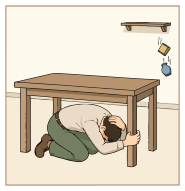
When the shaking begins, the immediate priority is to protect people from falls and from objects that could come loose, shift or break. In general terms:
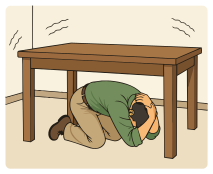
Drop
Get down immediately to reduce the risk of being knocked over.
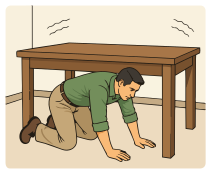
Cover
Protect your head and neck in particular. When possible, get under a sturdy table or desk.
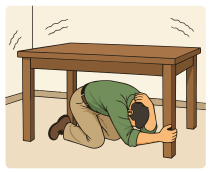
Hold on
Stay holding on to whatever is protecting you until the shaking stops.
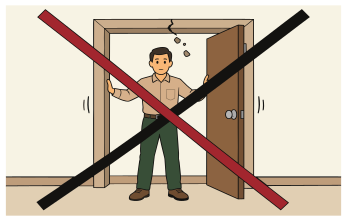
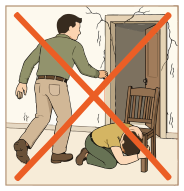
Door frames are not automatically safe places. In older houses the frames could be the only thing left standing because of how solidly they were built, but in modern construction they are not structurally strong.
 2.2
2.2Do not order a mass evacuation while it is shaking
This principle must be known to all of the institution's leadership and staff in charge.

A general rush toward the doors must not be triggered while the shaking continues.
In premises occupied by large numbers of people, trying to evacuate all at once during the earthquake can cause:
- pushing,
- falls,
- people being trampled,
- blocked doorways,
- crowding,
- exposure to glass,
- exposure to falling objects,
- loss of control of children,
- groups becoming separated,
- additional injuries.
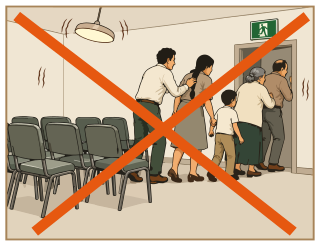
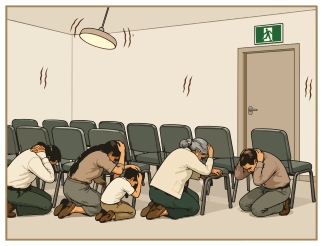
The general instruction must be:
PROTECT YOURSELF FIRST.
EVACUATE AFTER THE SHAKING, WHEN IT IS NECESSARY AND SAFE TO DO SO.
 2.3
2.3Conduct of those in charge during the shaking
Leadership, staff in charge, helpers and personnel should try to keep instructions simple and consistent. When circumstances allow, they should call out:
"Drop – cover – hold on."
"Protect your head and neck."
"Get away from the glass."
"Do not run toward the exits."
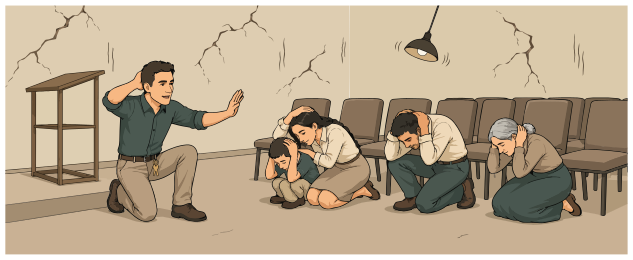
During the earthquake:
- do not use elevators;
- do not run toward the stairs;
- do not move around unnecessarily;
- stay away from windows and glass;
- protect yourself from objects that could fall;
- do not try to shut off the gas;
- do not try to cut the electricity;
- do not unnecessarily leave children or people who depend on your assistance in order to attempt other tasks.
 2.4
2.4People in spaces without tables or desks
In churches, temples, gyms, halls, auditoriums and other large spaces, there may be no sturdy tables available.
In those cases
- drop down so you are not knocked over;
- protect your head and neck with your arms;
- stay away from windows;
- move away, when you can do so without exposing yourself to greater risk, from items that could fall;
- stay protected until the shaking stops.
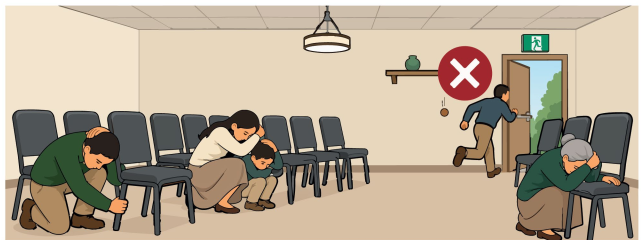
Do not run across the hall looking for an exit while the earthquake continues.
 2.5
2.5People outdoors
Those already outdoors should stay where they are or move, when they can do so safely, toward an open, clear space.
Stay away from:
- buildings,
- facades,
- cornices,
- walls,
- glass,
- poles,
- power lines,
- trees,
- signs,
- antennas,
- structures,
- objects that could fall.
Phase 3: After the earthquake
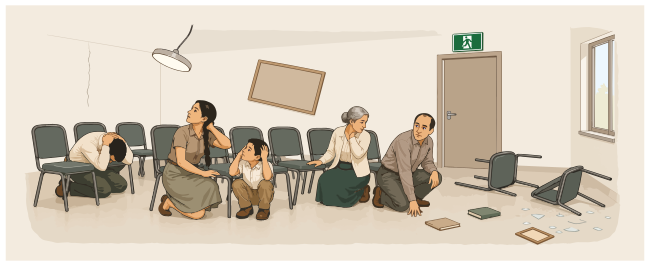
3.1Do not rush immediately
When the shaking stops, those in charge must quickly assess conditions.
There may be:
- fallen objects,
- broken glass,
- electrical cables,
- structural damage,
- fires,
- gas leaks,
- injured people,
- blocked exits,
- aftershocks.

The possibility of further shaking must be expected.
 3.2
3.2Assessing the need to evacuate
Evacuation may be necessary in the case of:
- visible damage;
- fire;
- smell or signs of a gas leak;
- electrical risk;
- items falling or becoming unstable;
- instructions from the authorities;
- any other condition that makes it unsafe to remain on the premises.

- Evacuation must be carried out using the routes that remain safe.
- Do not use elevators.
- If an exit is damaged or hazardous, use the planned alternative when it is safe.
 3.3
3.3Orderly evacuation
When evacuation is decided:
- give clear instructions;
- avoid unnecessary shouting;
- do not allow running;
- avoid pushing;
- keep groups of children together;
- assist anyone who needs help;
- use the planned safe routes;
- direct people toward the established meeting point;
- keep them away from facades and other hazards.
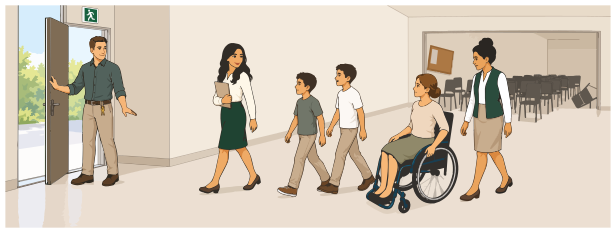
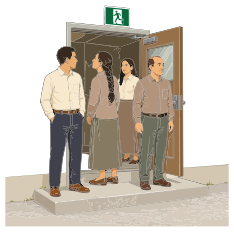
People must not stop immediately in front of the exit doors, because they could block the evacuation of those coming behind them.
 3.4
3.4Children after the earthquake
Children must remain under supervision. Where groups have been organized in advance, each leader must keep their group together during the evacuation and at the meeting point.
The children's presence must be verified against the available records. Children must not be allowed to go back into the building alone to look for backpacks, phones, toys, clothing or other belongings.
When they are later to be released to their families or guardians, the institution must do so through an organized procedure that avoids any loss of control or confusion.
 3.5
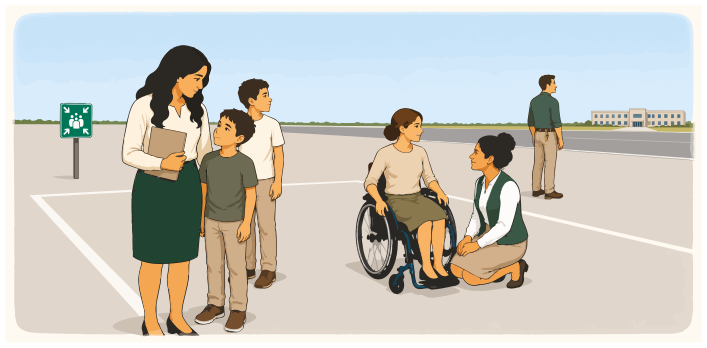
3.5Meeting point
Once evacuated, people must head for the meeting point established in advance.
The location should, as far as possible, be:
- away from buildings;
- away from facades;
- away from walls;
- away from poles and cables;
- away from trees or objects that could fall;
- clear of the routes needed by emergency vehicles.
An alternative meeting point may also be established, for use when the main location proves unsafe or inaccessible.
 3.6
3.6Accounting for people
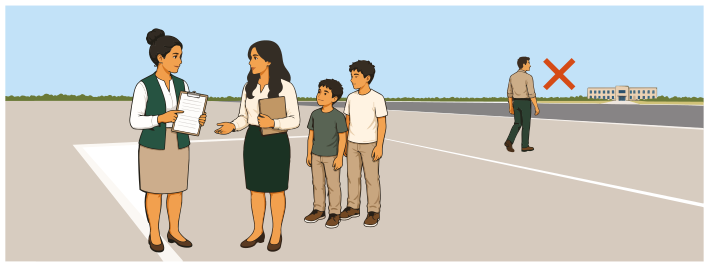
Where the nature of the activity makes it possible to know who was present (for example, children's groups, sports teams, staff, volunteers, residents or registered participants), a head count must be carried out at the meeting point.
Each person in charge must report immediately if anyone is missing.
However: no one should go back into a potentially dangerous building on their own initiative to look for a missing person. The information about those cases must be reported to the emergency services.
 3.7
3.7Injured people
People with first aid training may provide assistance within the limits of their training and provided conditions are safe.
Calling for professional assistance must be the priority whenever it is needed.
Seriously injured people must not be moved unnecessarily, unless remaining where they are represents a greater immediate hazard.
3.8Fires, gas and electricity
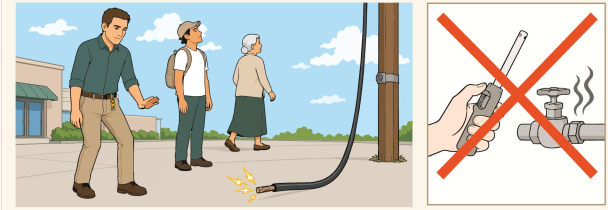
After the shaking, stay alert to:
- smell of gas,
- smoke,
- fire,
- sparks,
- fallen cables,
- damaged electrical equipment,
- unusual sounds coming from the installations.

Do not light matches, lighters, candles or other flames if a gas leak is suspected. Do not handle damaged utility systems unless conditions are safe to do so. The people designated in advance may shut off the supplies where appropriate and where it is safe.
3.9Aftershocks

- Aftershocks can occur after an earthquake.
- People must stay ready to protect themselves again.
If shaking begins again:
DROP – COVER – HOLD ON
Do not let the fact that a first earthquake has happened create the false impression that the danger is over.
 3.10
3.10Do not re-enter automatically
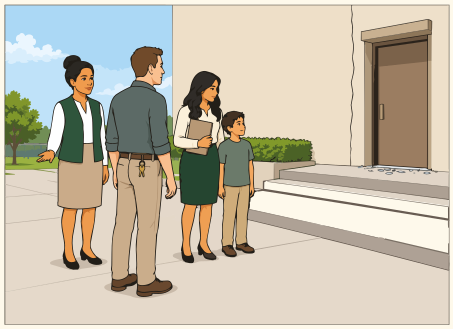
After evacuating premises, re-entry must not be ordered simply because the shaking has stopped. If there is damage, doubt about the safety of the building, or instructions from the authorities, people must stay outside.
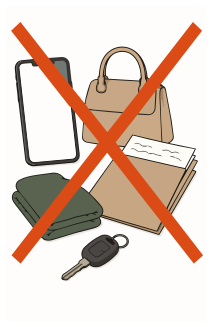
Do not allow members, attendees, children, volunteers or staff to go back in merely to retrieve:
- phones,
- bags,
- documents,
- clothing,
- vehicles,
- personal belongings.
People's safety takes priority over property.
 3.11
3.11Communication after the earthquake
Communications must be used responsibly. When networks are congested, short text messages can be more practical than long calls.
The institution should aim to:
- get information from official sources;
- avoid spreading rumors;
- pass on verified instructions;
- state clearly where the evacuated people are, where appropriate;
- keep the means of communication available for situations that require them.

Social media and messaging services can be useful, but they must not replace official emergency instructions.
 3.12
3.12Coordination with the emergency services
When firefighters, medical services, security forces, civil protection or other competent authorities intervene, the institution must make their work easier.
The institutional lead must be ready to report, when possible:
- what happened;
- the approximate number of people present;
- whether there are injured people;
- whether anyone may be missing;
- where they were last seen;
- the presence of children or people requiring assistance;
- possible gas leaks;
- electrical hazards;
- fires;
- damaged areas;
- hazardous substances present on the premises.
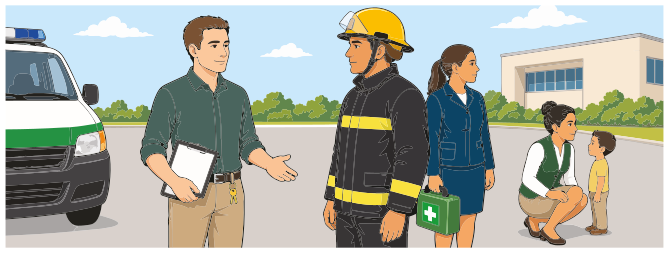
Once the competent authorities take charge, their instructions must be followed.
 3.13
3.13Reviewing the plan afterward
After an earthquake, a drill or an emergency, the institution must review how it performed.
Ask
- Did people know what to do?
- Did those in charge know their roles?
- Were the instructions clear?
- Were there attempts to run toward the exits?
- Did crowding occur?
- Was any exit blocked?
- Did the emergency lighting work?
- Was it possible to assist children and people with disabilities properly?
- Did the communications work?
- Was the meeting point suitable?
- Were the first aid kits and equipment available?
- Were there hazards that had not been identified beforehand?

Any shortcomings found must be corrected.
An emergency plan should be treated as a procedure subject to ongoing review and improvement.
Remember
Institutional preparation begins BEFORE the earthquake.
A church, temple, club, association, foundation, community center or any organization that receives people has a particular responsibility: to prepare not only to protect the building, but to organize and guide whoever may be inside when the shaking begins.
- Secure objects that could fall.
- Keep routes and exits clear.
- Identify indoor and outdoor hazards.
- Designate leads and alternates.
- Prepare first aid kits and emergency supplies.
- Give particular thought to children, older people, people with disabilities and anyone who needs assistance.
- Establish meeting points.
- Train those in charge, staff and volunteers.
- Hold drills.
And above all, everyone in charge must know and be able to pass on one simple action when the shaking begins:
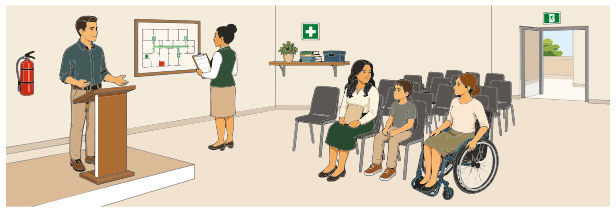
Drop – Cover – Hold on
- Do not trigger a mass evacuation while it is shaking.
- Protect yourself first.
- Once the shaking has stopped, assess the situation and evacuate in an orderly way when it is necessary and safe to do so.
- A prepared institution can reduce risk, prevent disorder and better protect the people in its care.
Downloads
© 2026 by Centro del Reino de Paz y Justicia is licensed under Creative Commons Attribution-NonCommercial-NoDerivatives 4.0 International (CC BY-NC-ND 4.0). To view a copy of this license, visit creativecommons.org/licenses/by-nc-nd/4.0.