
Phase 2: During — Response, evacuation and protection of life
GUIDE FOR PEOPLE, FAMILIES AND COMMUNITIES
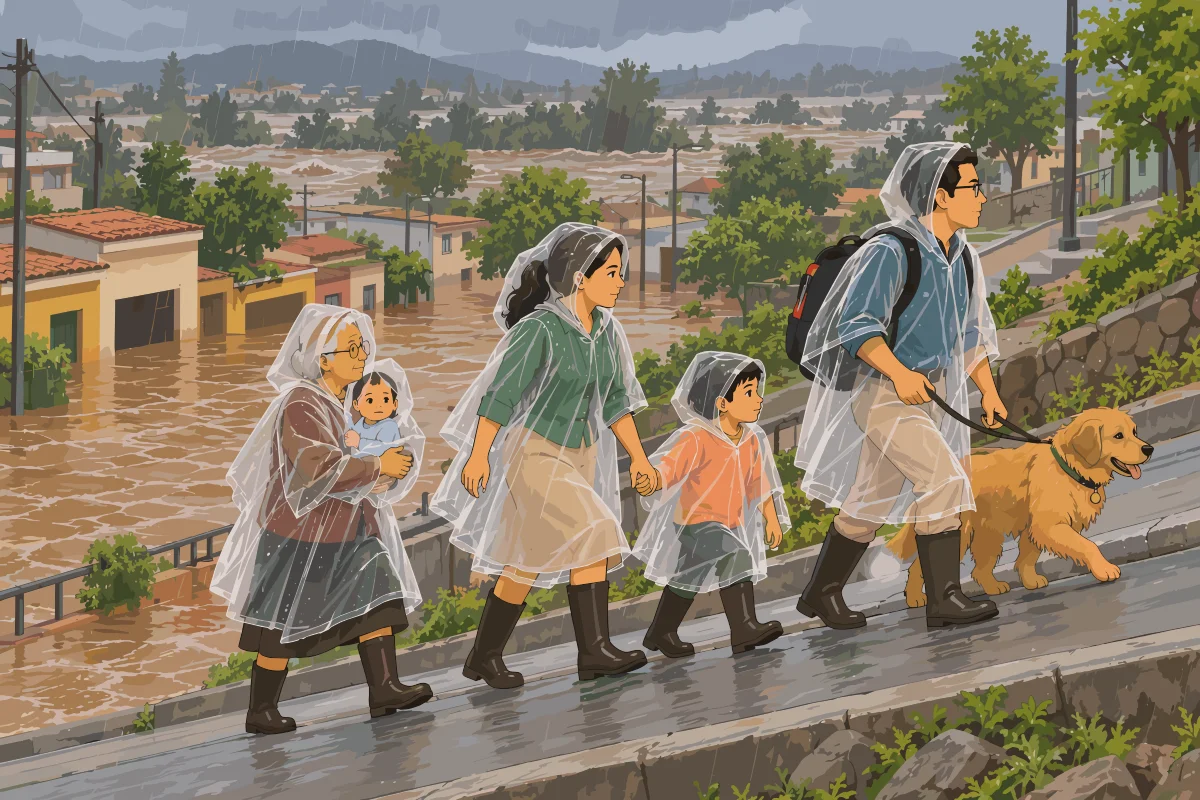
During a flood, the absolute priority is to protect life.
Conditions can change quickly. A street that appears passable can turn into a dangerous current; a familiar road may have lost part of its surface; the water may be hiding wells, ditches, open manholes, power lines, glass, metal, and other hazards.
In addition, floodwater must be considered potentially contaminated.
For these reasons, decisions must be made in advance and by following the instructions of the competent authorities.
2.1THE ALERT AND THE DECISION TO EVACUATE
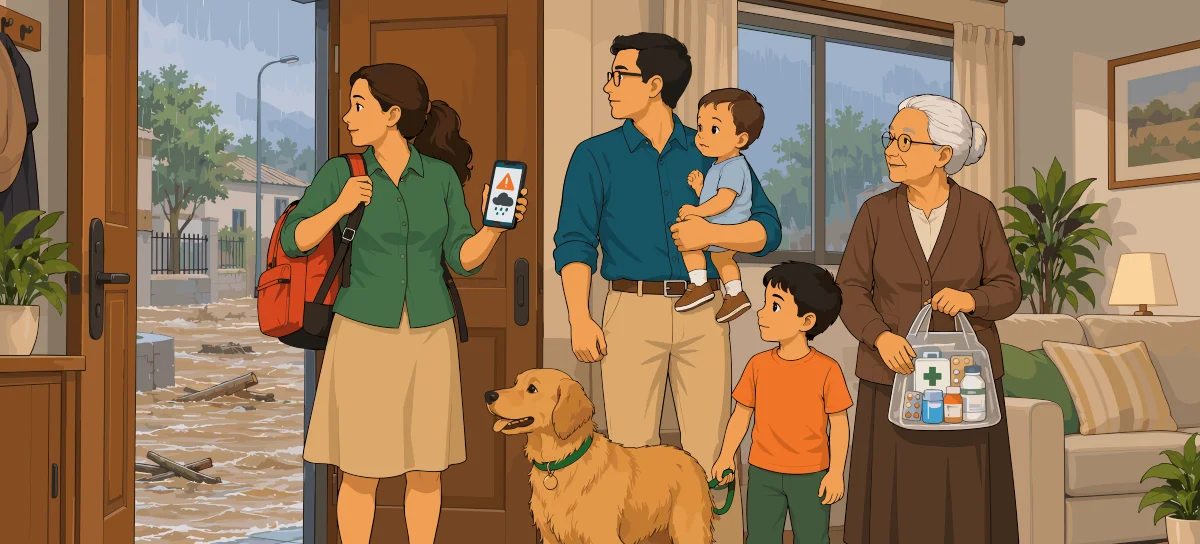
When there is an official warning about a flood that could affect the area:
- Stay informed through official sources
- gather the people in your care
- bring the emergency backpack
- keep essential medications available
- prepare babies, children, and people who need assistance
- secure pets for transportation
- activate previously established support networks
- get ready to evacuate immediately.
Do not wait to:
- watch the water approach
- finish protecting furniture
- move valuables
- move vehicles
- look for belongings
- protect crops
- carry out tasks that would delay your departure.
The goal is to carry out a preventive evacuation, not to end up depending on an emergency rescue.
2.2HOW TO COMMUNICATE AN ALERT
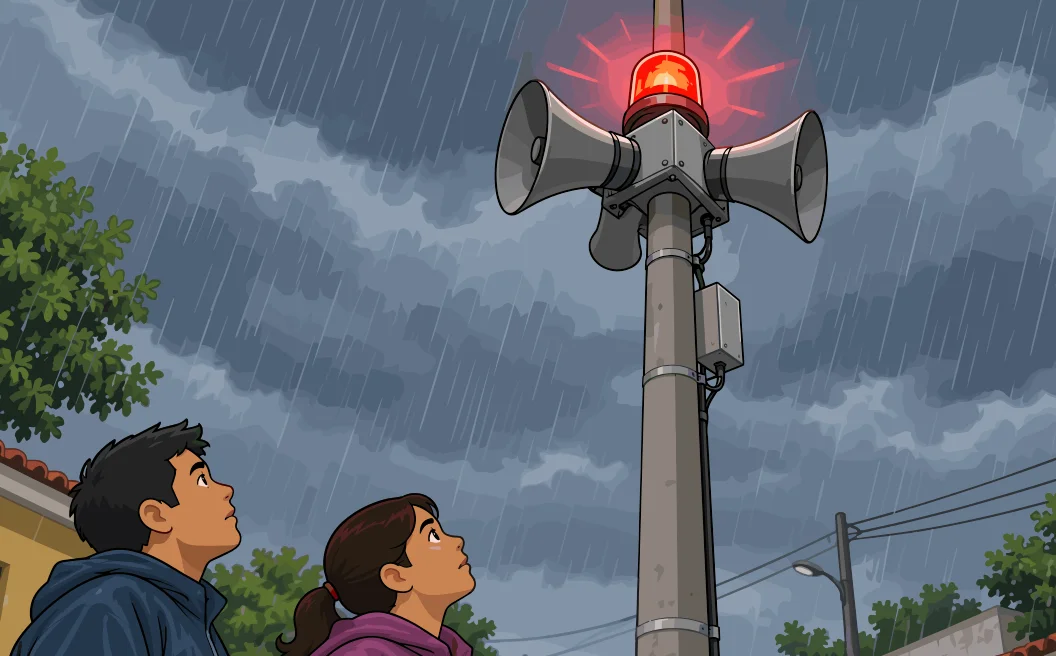
A community or organization must not depend on a single communication system.
Depending on the means available, these may be combined:
- sirens
- loudspeakers
- text messages
- phone calls
- messaging apps
- radio
- in-person announcements
- visual signals
- official alert systems.
Information must be short, unmistakable, and accessible.
When an evacuation is communicated, the following should be stated, whenever the information is available:
- What is happening
- which area is affected
- who must evacuate
- where to head
- which routes should be used
- which routes should be avoided
- what instructions the authorities have issued.


2.3FUNDAMENTAL RULES DURING A FLOOD
OBEY EVACUATION ORDERS
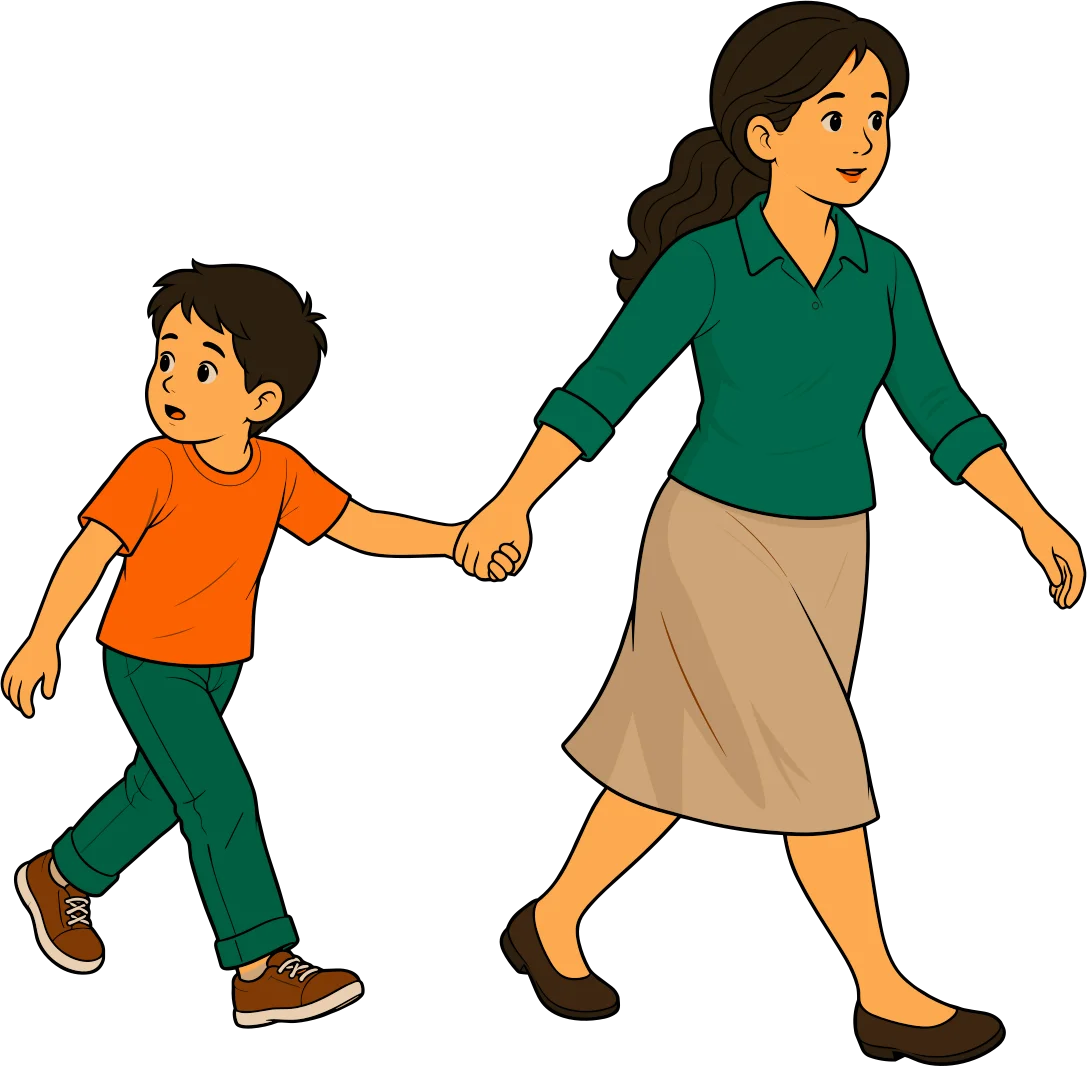
When the authorities tell you to evacuate, do so immediately.
Do not return until the competent authorities indicate that it is safe to do so.
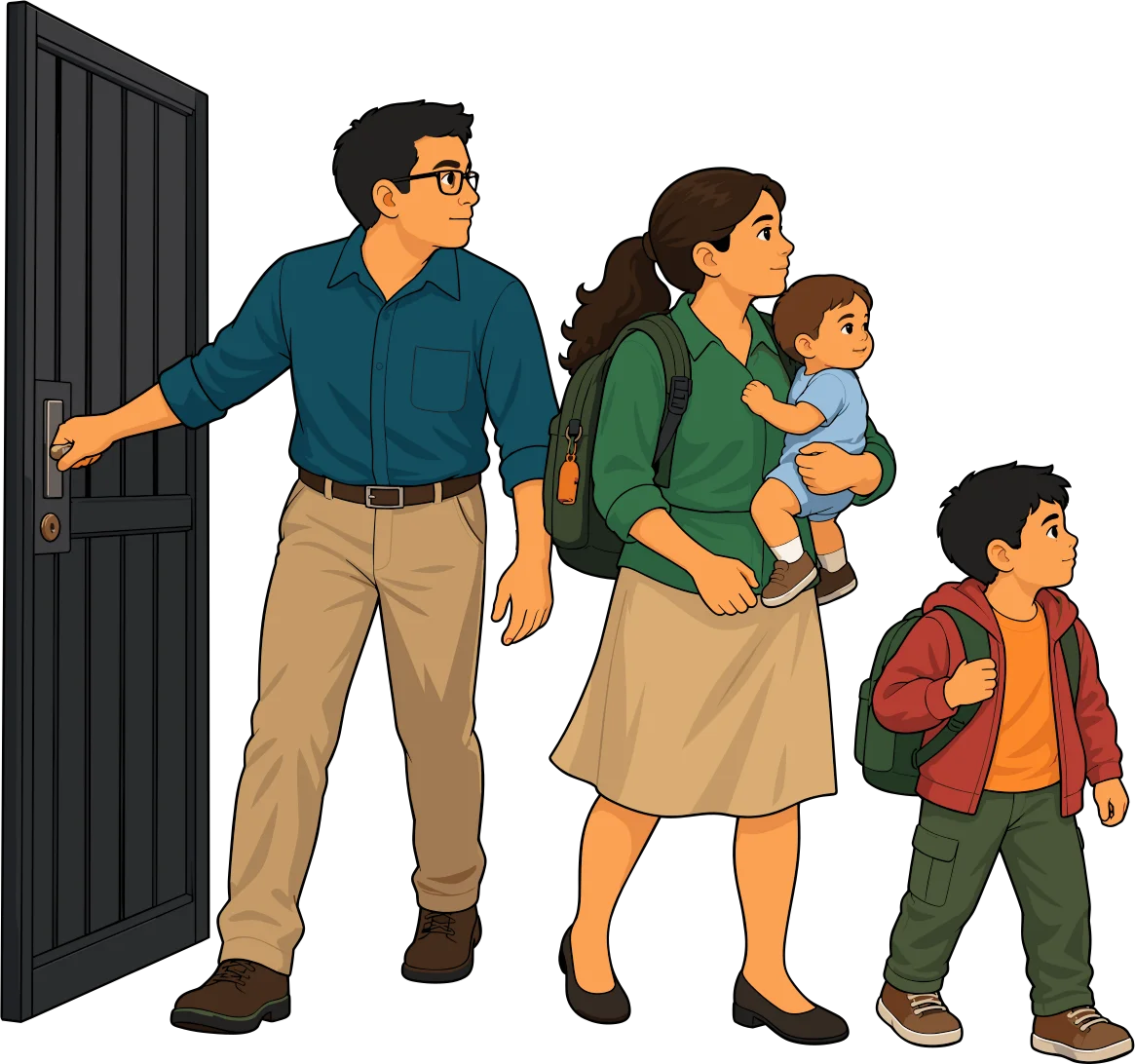
HEAD FOR A SAFE AREA
Use the previously established routes and follow the official instructions
If a route is flooded, blocked, or presents unsafe conditions, do not try to cross it.
Look for a safe alternative.
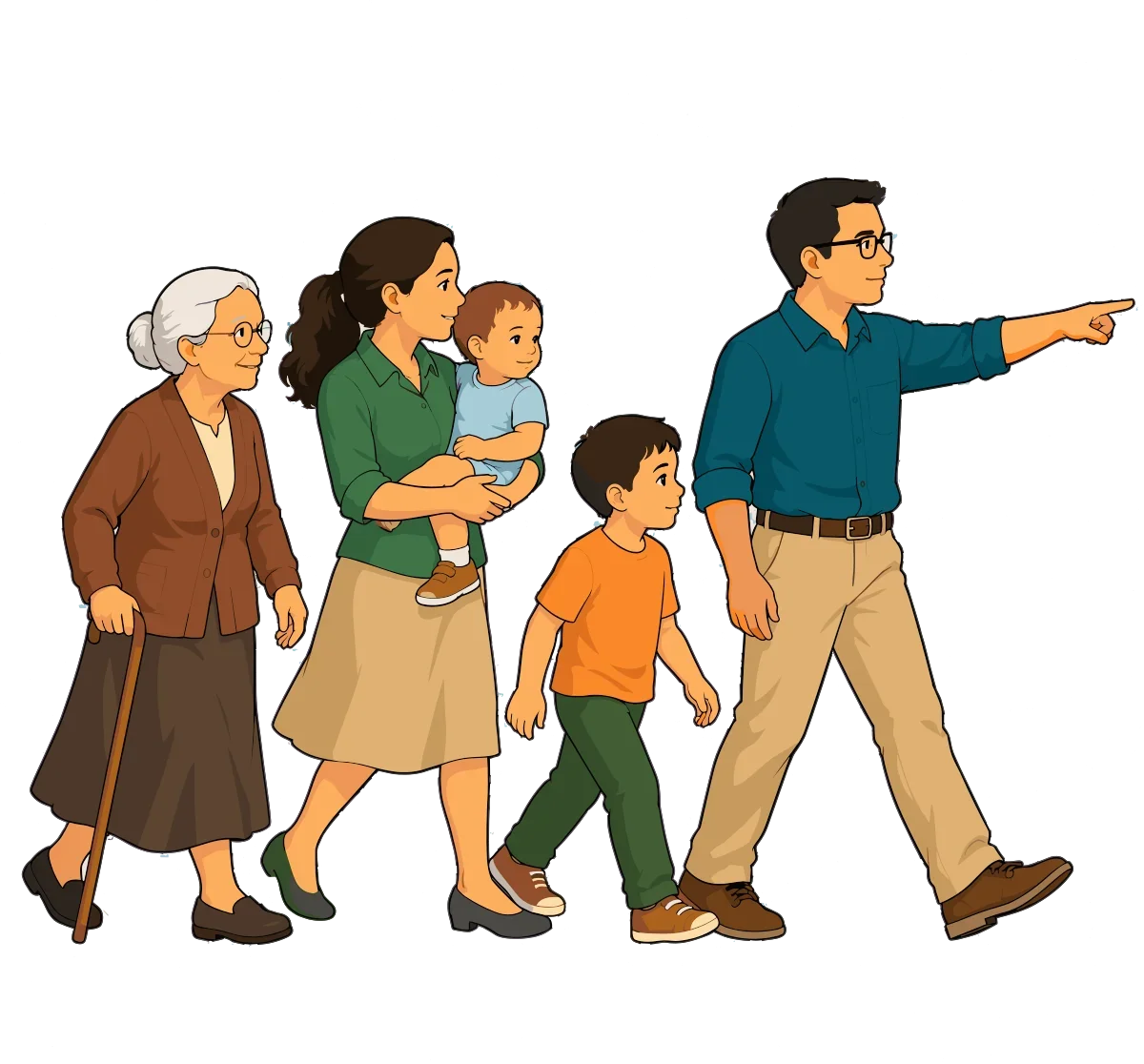
DO NOT ENTER FLOODWATER
As a general rule:
Do not walk, swim, or drive through floodwater.
It is not possible to reliably determine whether an area is safe just by looking at the apparent depth.
The water can:
- Move with great speed
- rise suddenly
- hide uneven surfaces
- cover open manholes
- hide ditches or wells
- have washed away part of the road
- contain sharp objects
- be contaminated
- be electrically charged from electrical installations.
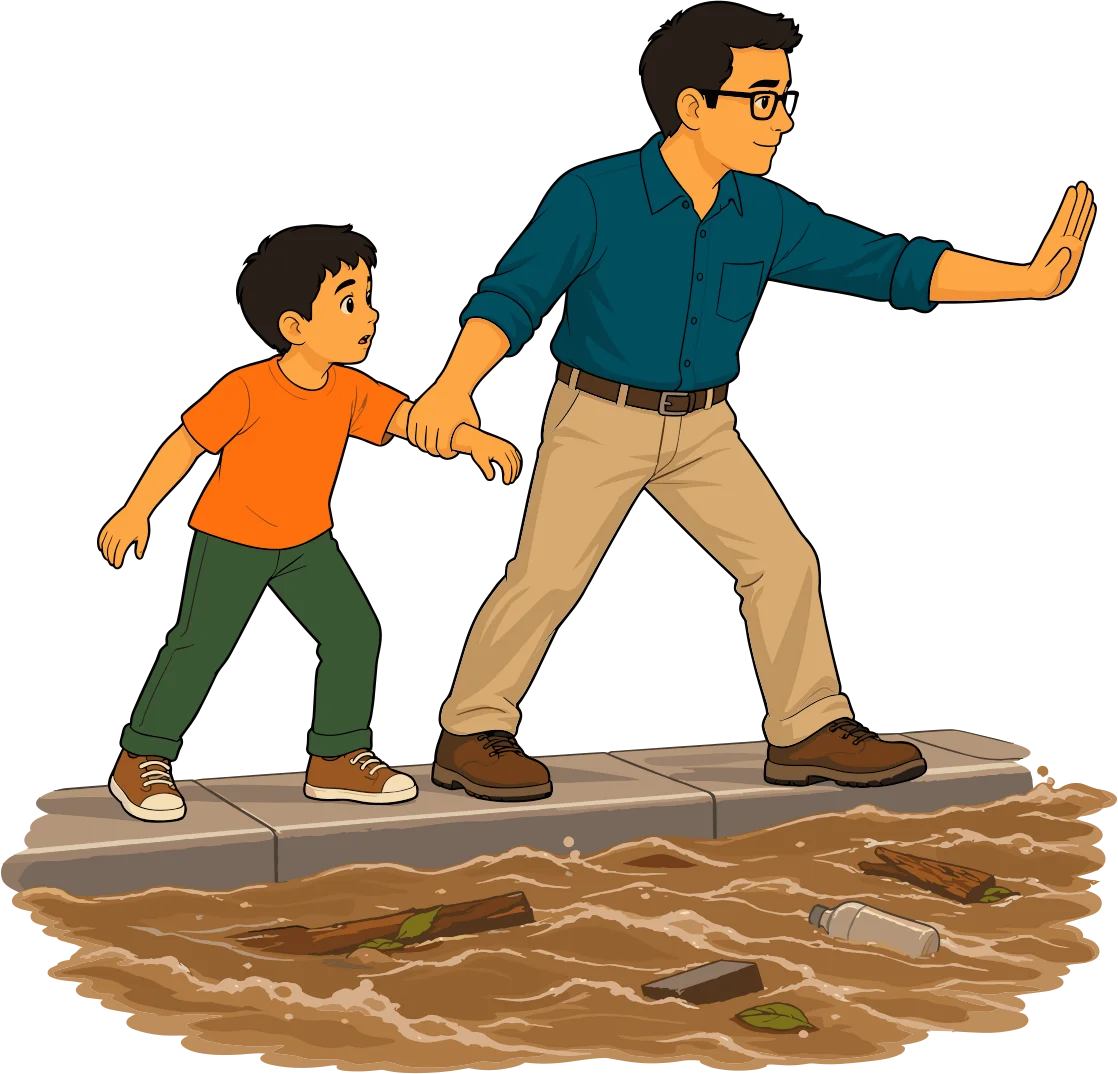
STAY AWAY FROM ELECTRICITY
Do not go near:
- fallen power line
- damaged poles
- transformers
- electrical panels that the water has reached
- flooded electrical installations
- objects that could be electrically charged.
Never touch a fallen power line.
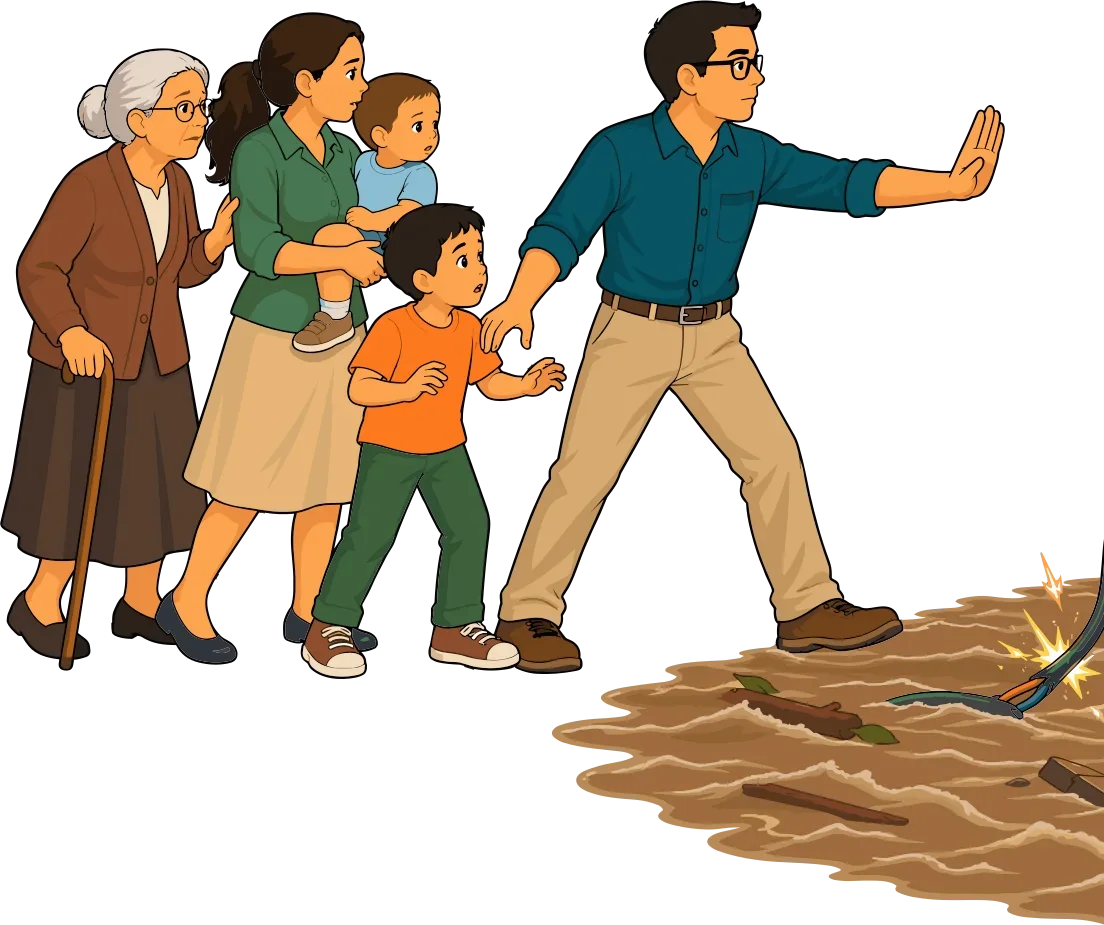
DO NOT GO BACK FOR BELONGINGS
Once an evacuation has begun, do not go back to look for:
- documents
- money
- animals
- vehicles
- phones
- clothing
- photographs
- forgotten medications (unless the authorities determine a safe way to recover them)
- other belongings.
No object justifies exposing yourself to the flood again.
2.4SHUTTING OFF ELECTRICITY, GAS AND OTHER SERVICES
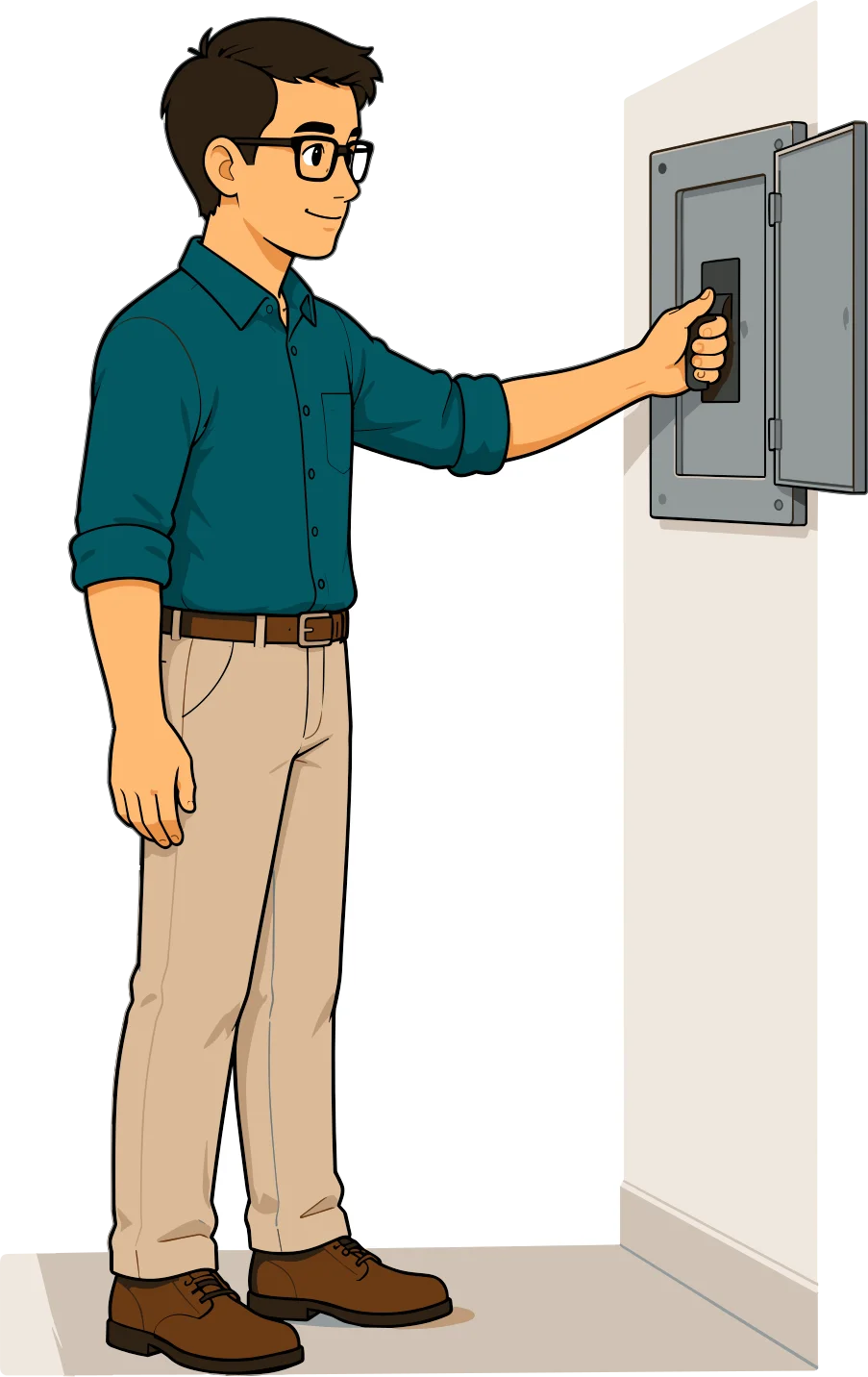
If there is enough time before evacuating and the authorities or the emergency plan indicate shutting off certain services, do so only if it can be done safely.
Do not try to handle the electrical panel if:
- there is water nearby
- the floor is wet
- you are wet
- you would need to enter a flooded area
- there are affected cables or electrical equipment
- you do not know how to carry out the procedure.
Move away and report the situation to the emergency services or the responsible utility company.
The same principle applies to gas: if there is a gas smell, damaged equipment, or any unsafe condition, move away from the area and request specialized assistance.
2.5FLASH FLOODS
A flash flood can develop in minutes and produce extremely dangerous currents.
It can happen even when it is not raining heavily where you are, because of rainfall that took place upstream.
If you receive a flash flood alert or notice that the water is rising quickly:
- Leave low-lying areas immediately
- move away from rivers, streams, canals, and channels
- do not stay under bridges
- do not try to watch the rising water from its banks
- do not cross low-water crossings, fords, or bridges covered by water
- head for high, safe ground, following the official instructions.

2.6IF EVACUATION IS STILL POSSIBLE
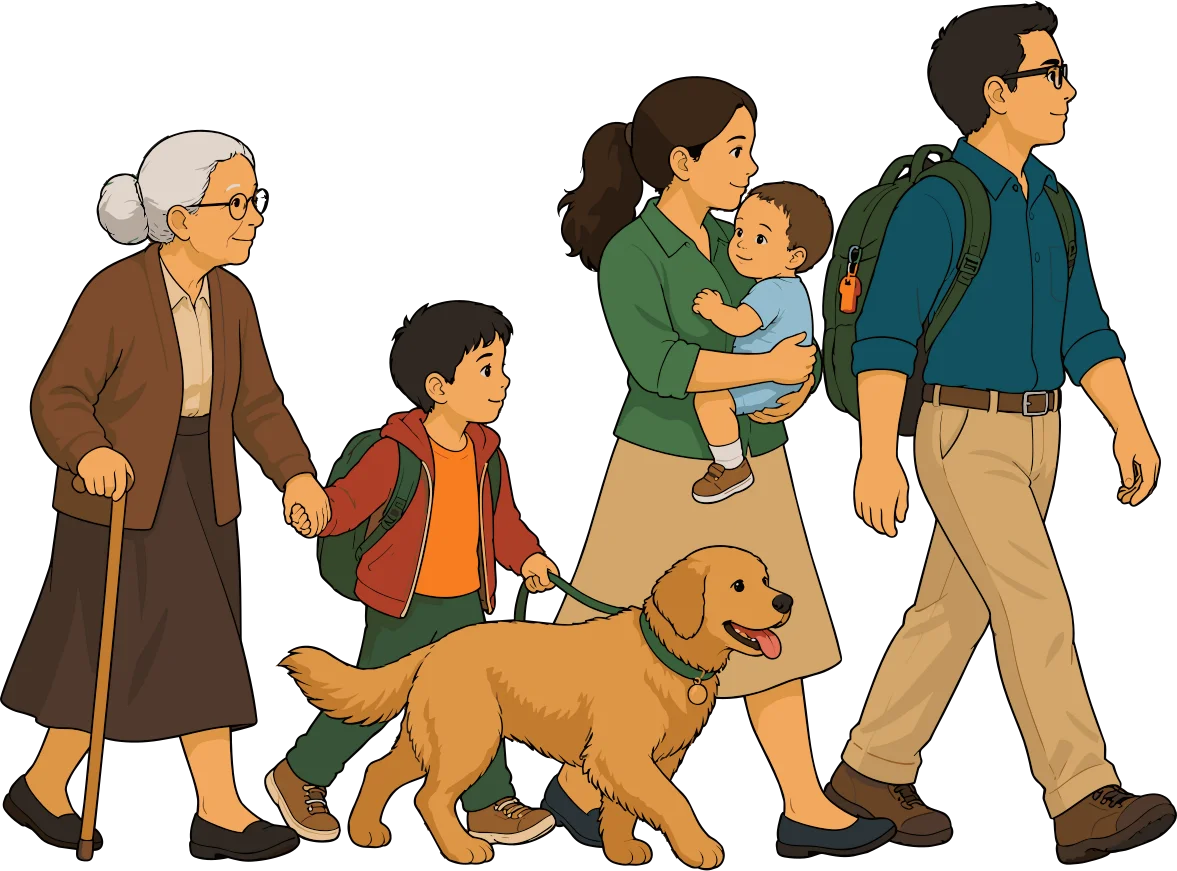
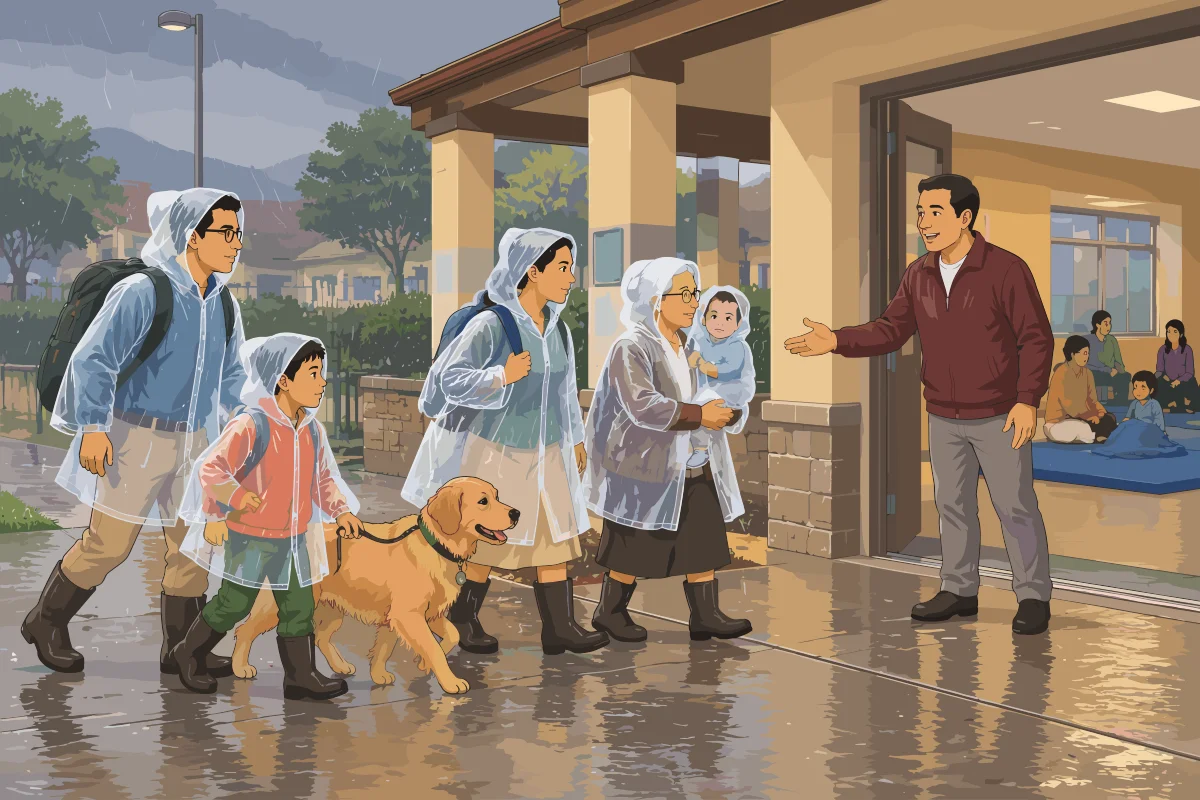
If you must leave a home or building:
- Take only what is essential
- wear closed, sturdy footwear
- keep your hands free whenever possible
- bring the emergency backpack if it is immediately available
- keep the members of the group together
- help those who need assistance
- secure pets
- follow the indicated route.
2.7IF YOU ARE TRAPPED INSIDE A BUILDING
If the water prevents a safe evacuation, do not try to cross it to get out on your own.
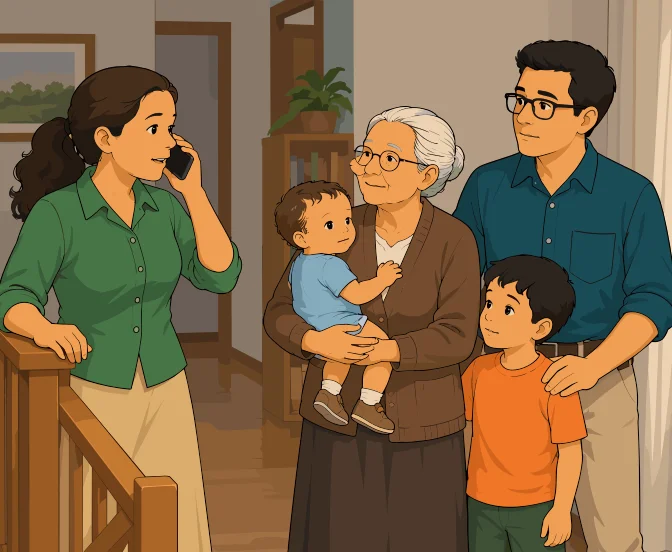
Contact the emergency services and provide:
- your location (as exact as possible)
- the number of people present
- the presence of children
- the presence of older adults
- the presence of people with disabilities
- the presence of people who are sick or injured
- any immediate danger.
Move to a safe upper level if you can do so without crossing water or exposing yourself to other hazards.
Stay away from:
- electrical installations
- windows under water pressure
- structurally damaged sections
- rooms where you could become trapped by rising water.
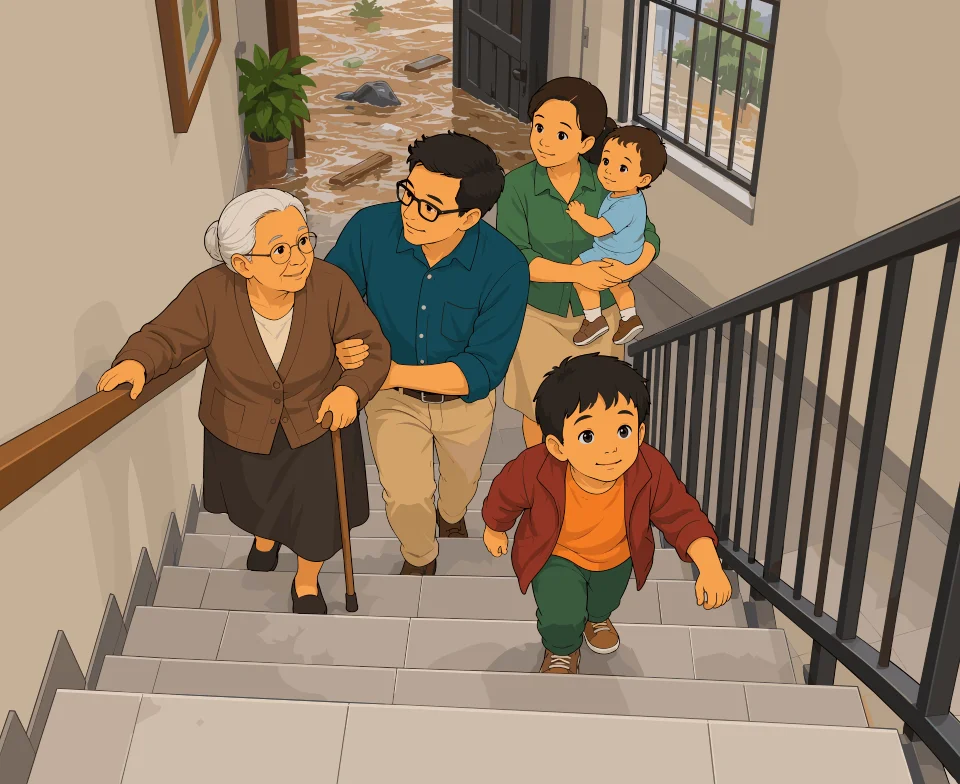
If the water keeps rising, look for higher levels.
2.8IF YOU MUST WAIT FOR RESCUE FROM A HIGH PART OF THE BUILDING
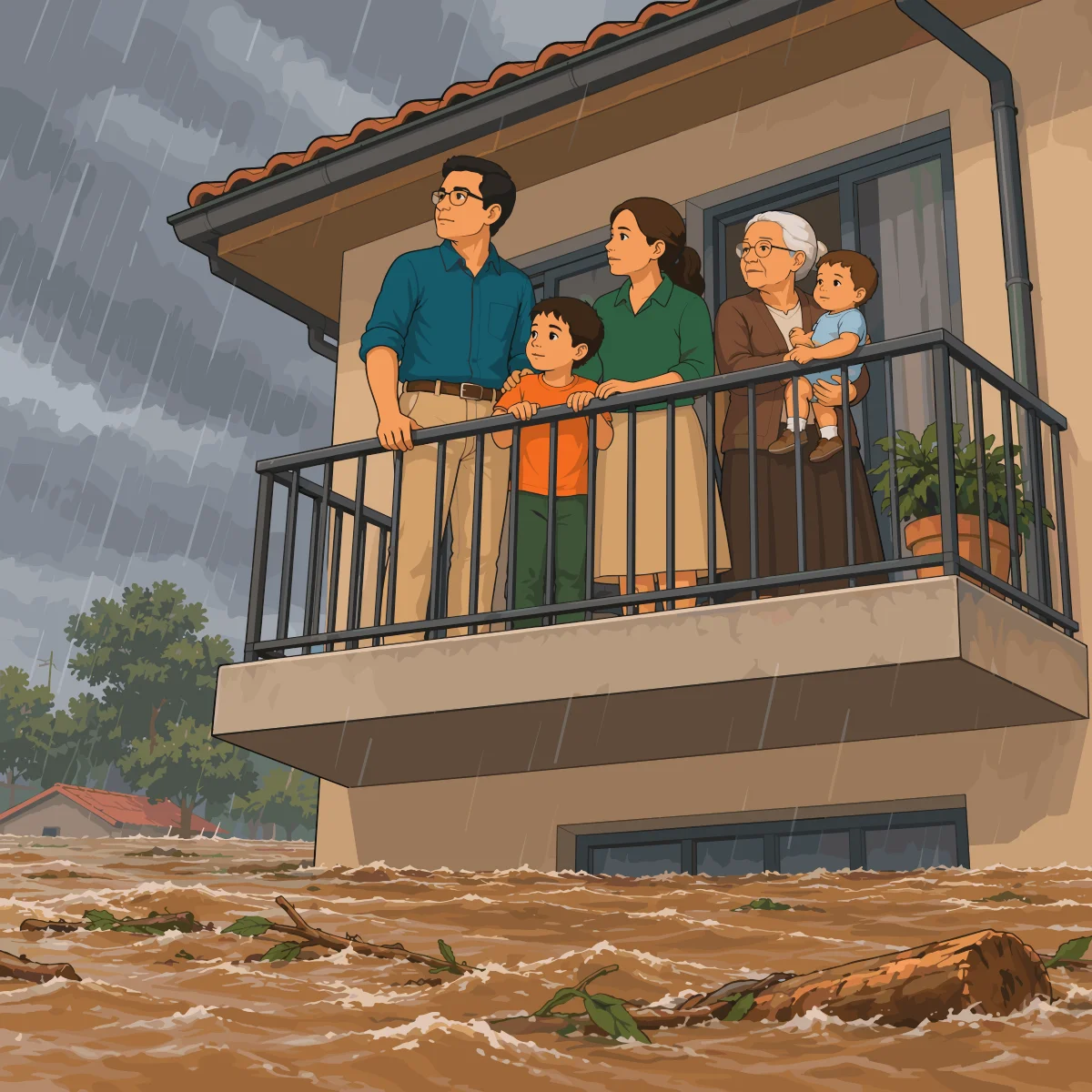
If the flood has made evacuation impossible and you must wait for assistance:
- Stay at the highest safe point you can reach
- report your location
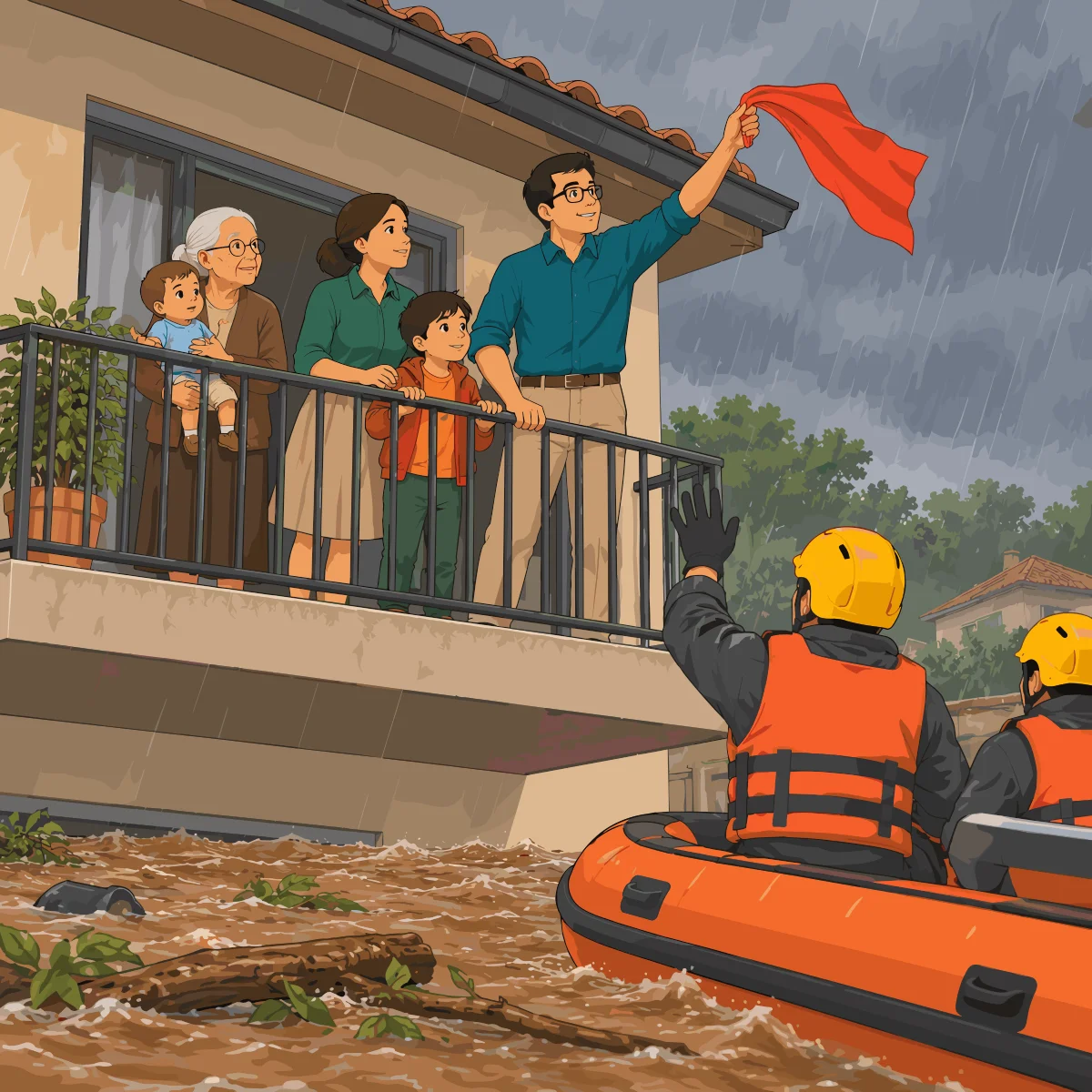
- stay visible to rescuers
- conserve your phone battery
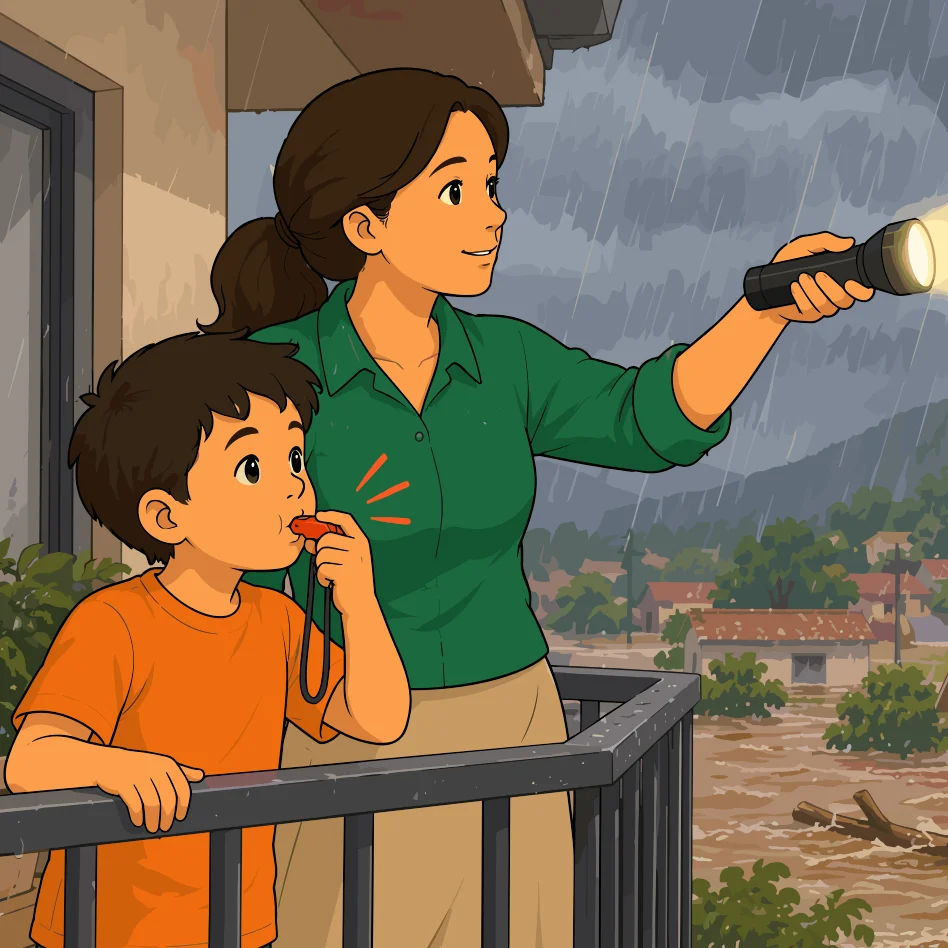
- use whistles, lights, or other available signaling devices
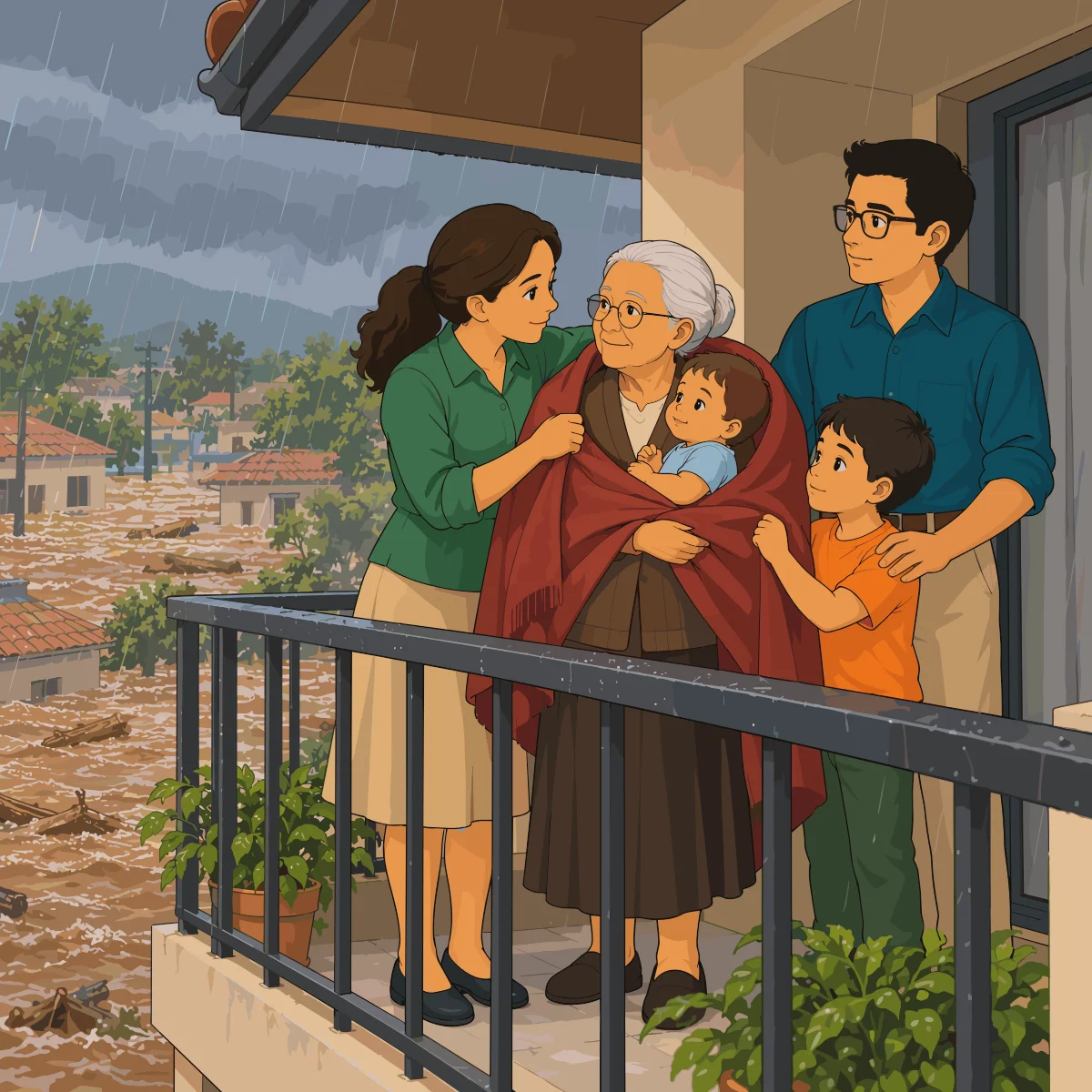
- protect people from exposure to cold, rain, wind
- keep members of the group together
- follow the instructions of the emergency services.
ROOFS
Climbing onto a roof is a last resort, used only when the water keeps rising and there is no other safe location inside the building.
Roofs can be:
- wet
- slippery
- weakened
- sloped
- structurally damaged
- exposed to wind, rain, and objects carried by the wind.
For that reason, do not walk on them unnecessarily.
If a person reaches a roof, they should stay in a stable, visible position and wait for instructions from the rescue teams.
Children and people who need assistance must remain under direct supervision and away from edges or unstable surfaces.
2.9IF YOU ARE TRAPPED IN AN ATTIC OR CRAWL SPACE
Prevention should keep a person from ending up in a closed space with no way out.
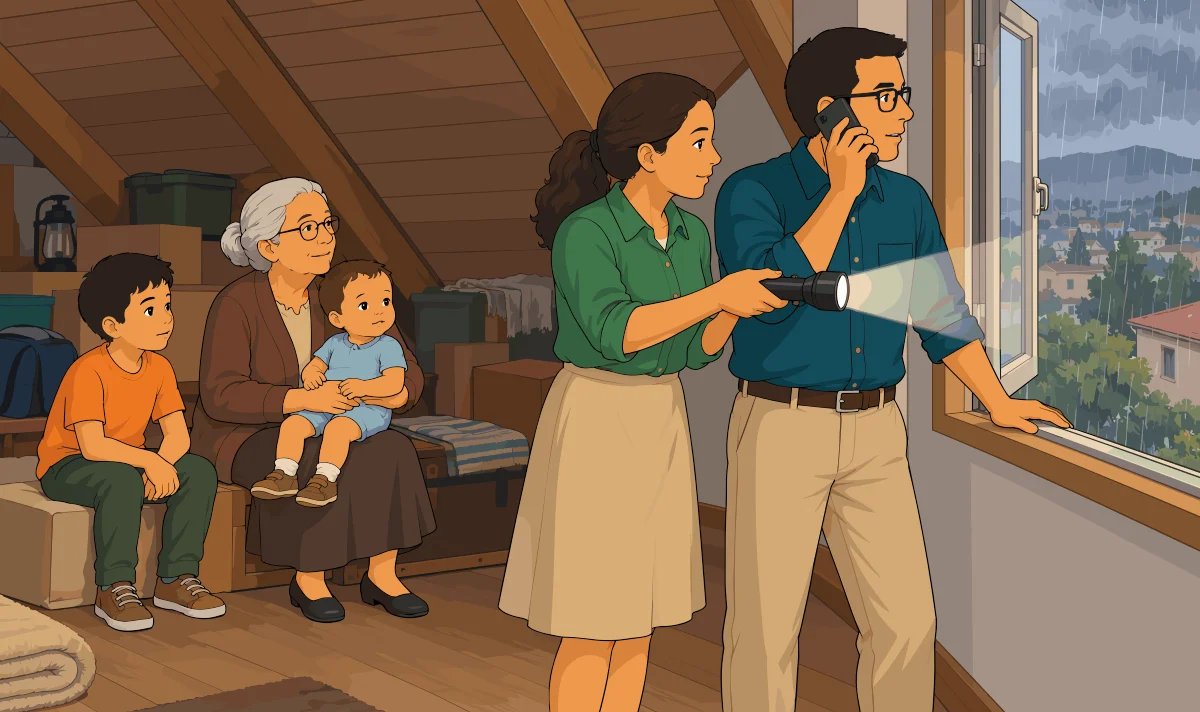
If, despite that, rising water threatens to trap you in an attic or crawl space:
- Contact the emergency services immediately
- indicate your exact location within the home
- signal to make it easier to locate you
- look for an exit to the outside that can be used without creating a greater risk.
Breaking structural elements or roofing can cause:
- serious cuts
- falls
- partial collapse
- contact with electrical installations
- falling materials
- other hazards.
In homes located in areas of extreme, recurring flooding, vertical evacuation alternatives or emergency exits should be assessed before an emergency with the relevant authorities and professionals.
2.10COMMUNICATION WHILE WAITING FOR HELP
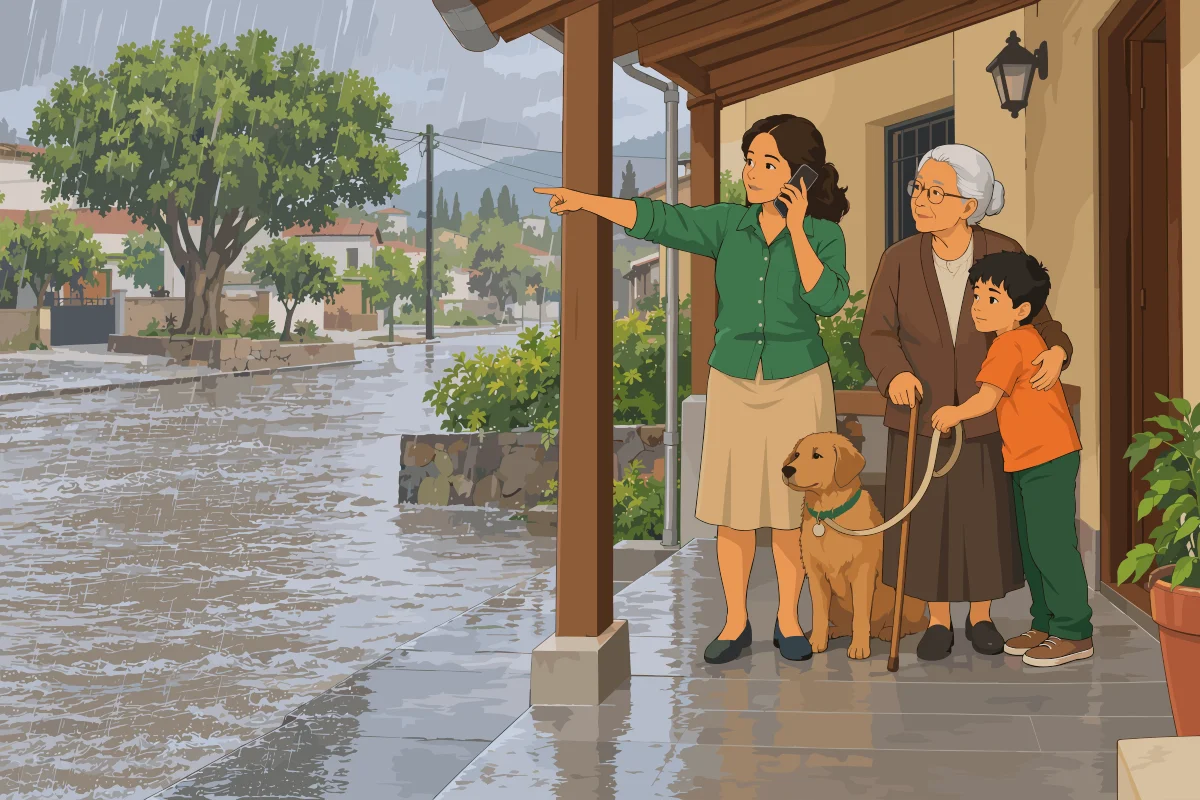
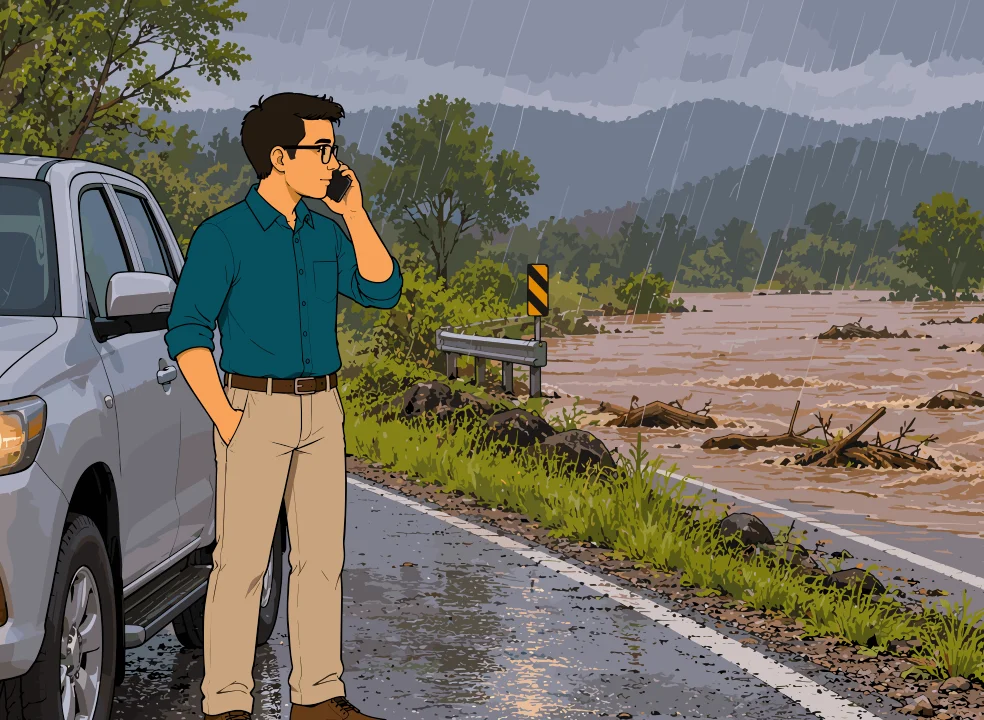
If you have a phone:
- Contact the corresponding emergency number (9-1-1 in the U.S., Puerto Rico, and Canada, or the local number in other countries)
- clearly report where you are
- indicate how many people need help
- describe the immediate conditions
- report any injuries or people who need special assistance
- follow the instructions you receive.
After requesting help:
- Reduce unnecessary phone use
- turn on power-saving mode
- lower the screen brightness
- conserve external batteries
- keep the device available to receive emergency communications.
2.11SIGNALING TO HELP YOUR RESCUE

When you need to make it easier to be located, you can use available items such as:
- flashlights
- whistles
- visible clothing or fabric
- light signals
- the means specifically indicated by the emergency services.
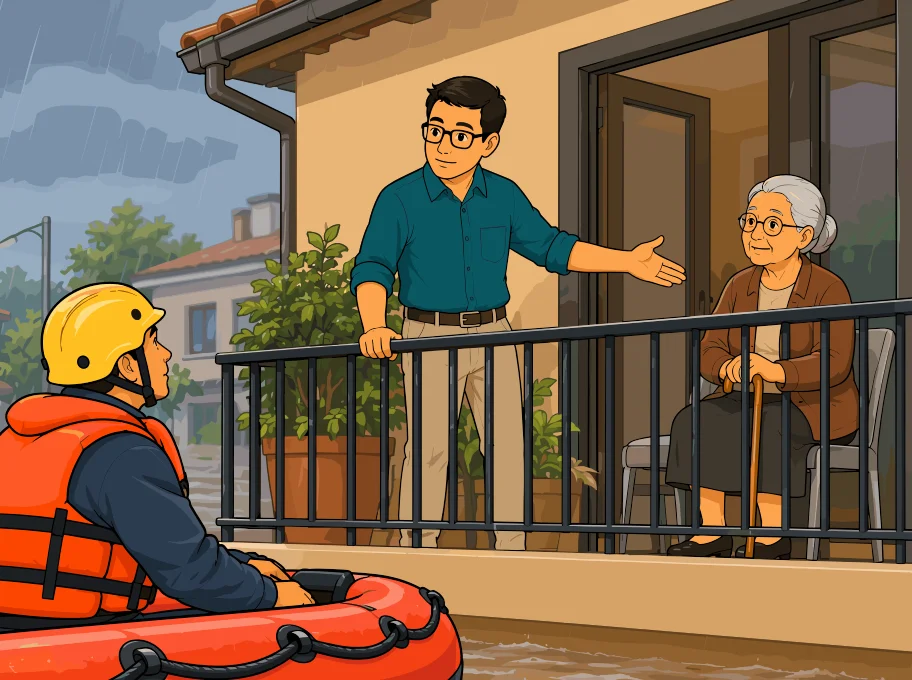
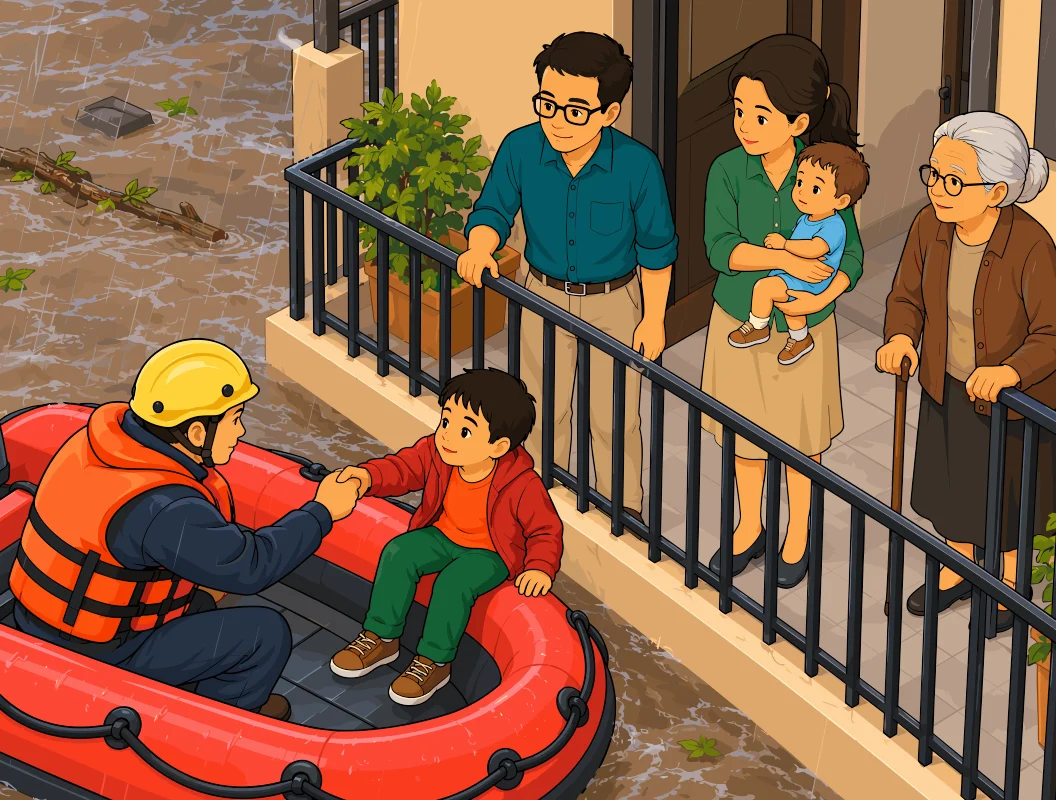
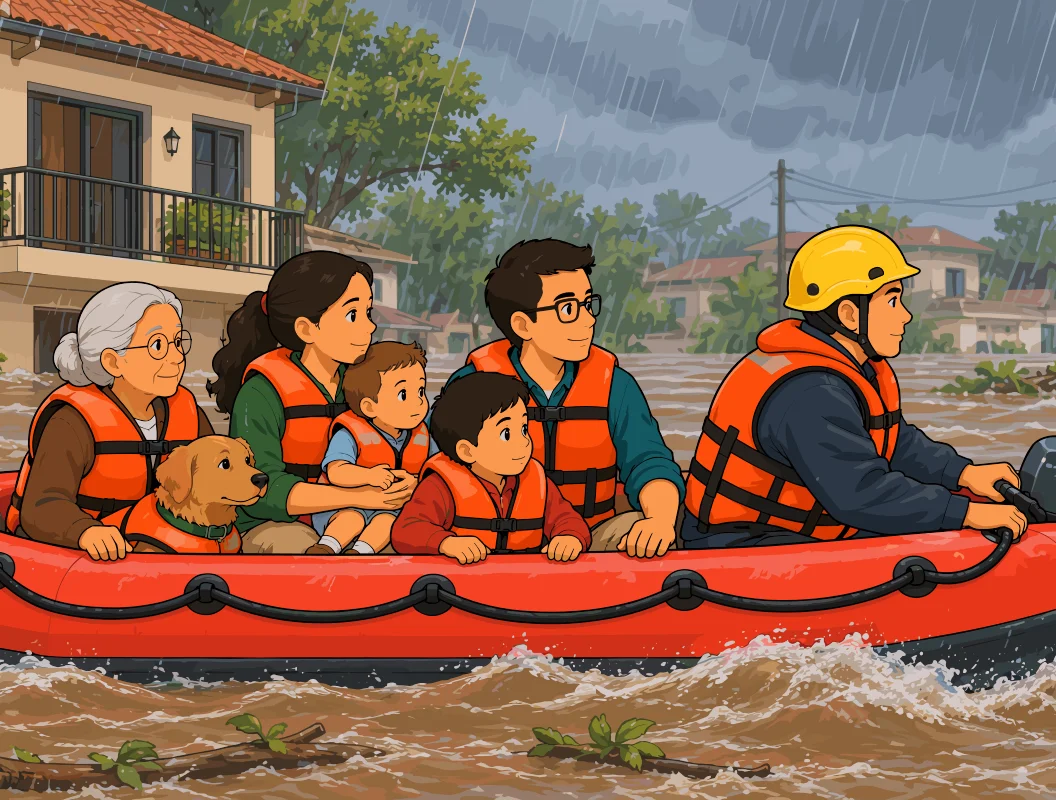
2.12WHEN RESCUERS ARRIVE
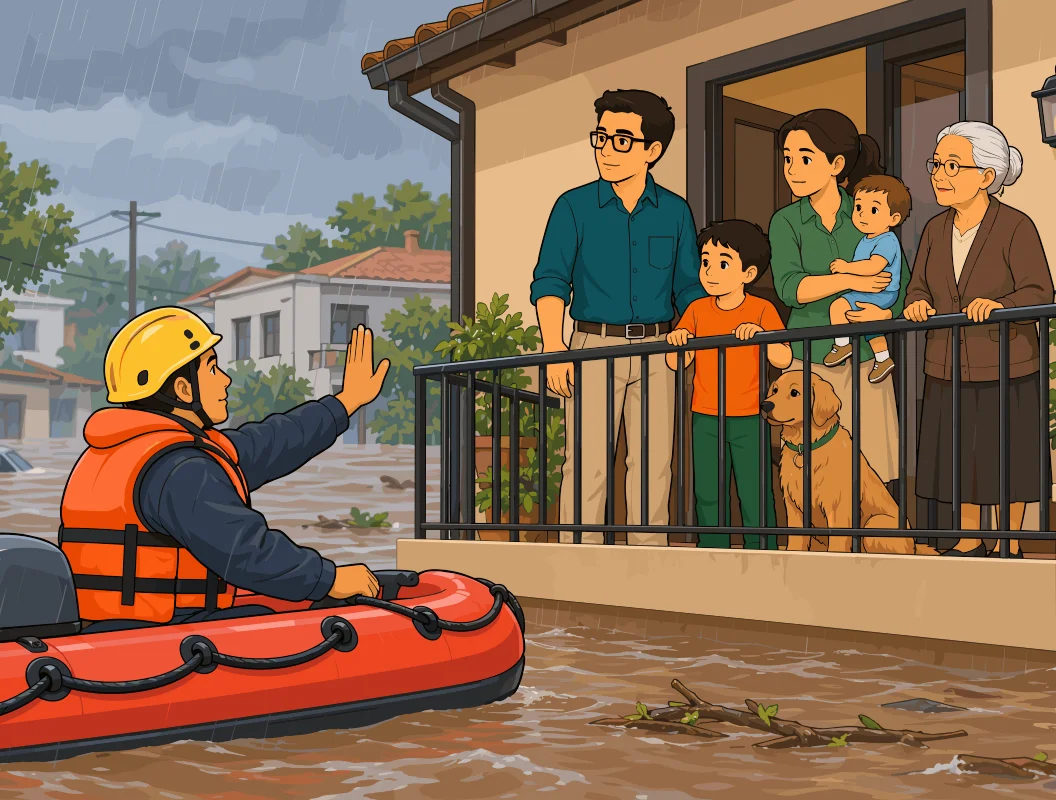
Emergency teams will determine how to carry out the rescue based on the existing conditions.
When they arrive:
- Stay calm
- identify yourself
- immediately report any injured people or those who need assistance
- follow instructions exactly
- do not jump toward a boat
- do not approach an aircraft
- do not interfere with rescue equipment, ropes, or devices
- do not bring bulky luggage unless authorized.
2.13BABIES AND CHILDREN
Minors require constant supervision.
During an evacuation:
- Keep them with a responsible adult
- do not let them walk, play, or remain in floodwater
- do not let them go near drains, canals, rivers, or currents
- carry babies safely
- keep their food and essential medications available
- keep their identification and family information with you.
If a child becomes separated from those responsible for them:
- Notify the authorities or those in charge of the evacuation center immediately
- provide name, age, description, a recent photograph if available, and where they were last seen
- indicate any medical or communication needs
- remain available for reunification.
EMOTIONAL SUPPORT
Children may experience fear, confusion, or distress.
Adults should:
- Speak in a calm voice
- briefly explain what is happening
- give simple instructions
- keep them with familiar people whenever possible
- avoid unnecessarily exposing them to traumatic images
- let them keep a comfort item if one is available and it does not hinder the evacuation.

Simple phrases such as: “We’re going to stay together and follow the rescuers’ instructions” can provide reassurance without hiding the situation.
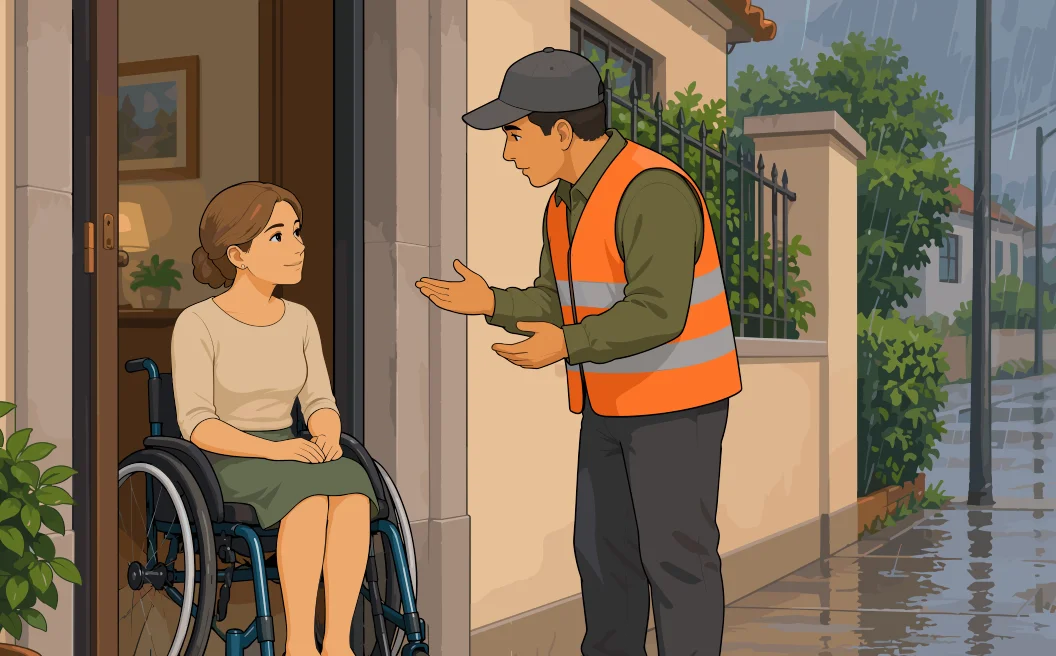
2.14PEOPLE WITH DISABILITIES AND OTHER SPECIFIC SUPPORT NEEDS
It must not be assumed that everyone with the same disability needs the same kind of assistance.
Ask, when possible: “How can I help you?” Respect the person’s own instructions.
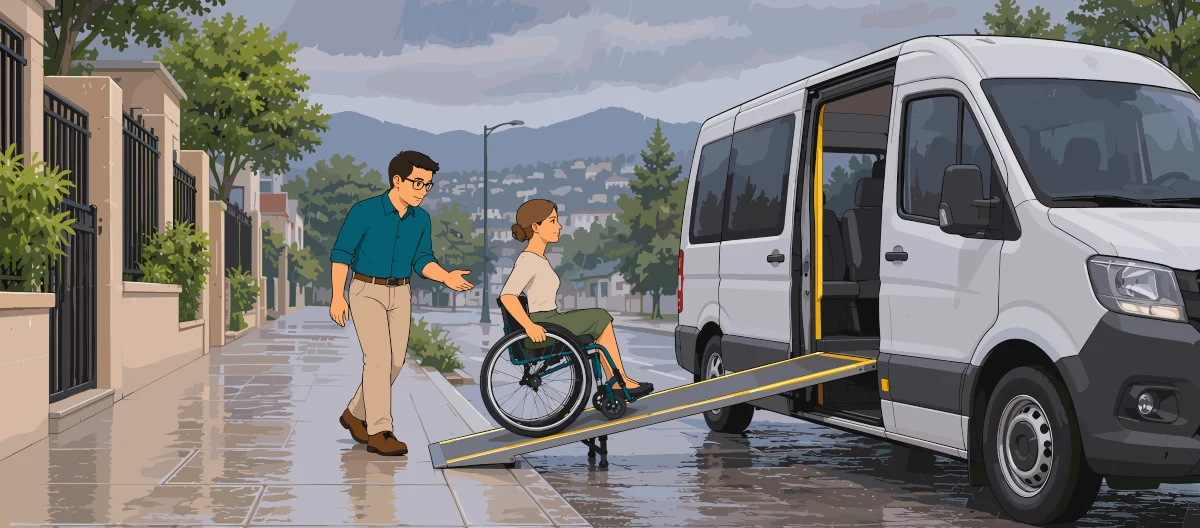
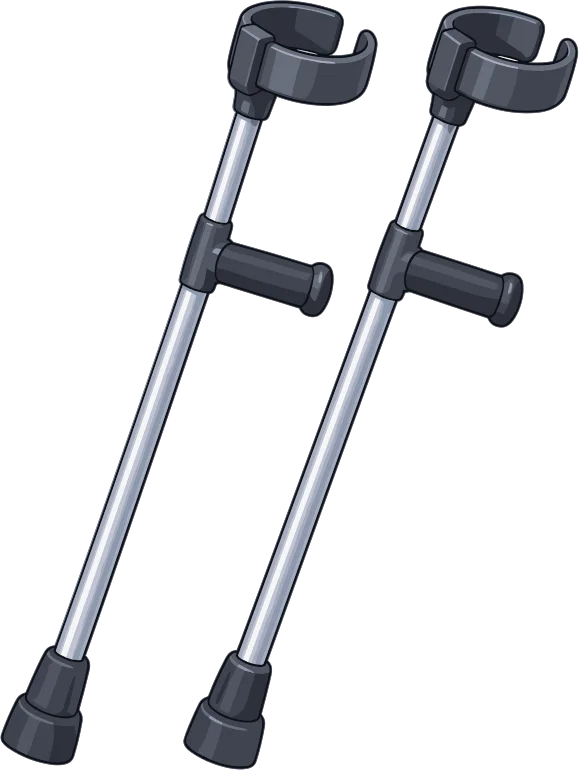
1 PEOPLE WITH REDUCED MOBILITY
- Use the previously established accessible routes
- keep mobility devices available
- do not physically lift or move a person without need or without knowing the safe way to do it
- request specialized assistance when the evacuation exceeds the capabilities of those present.
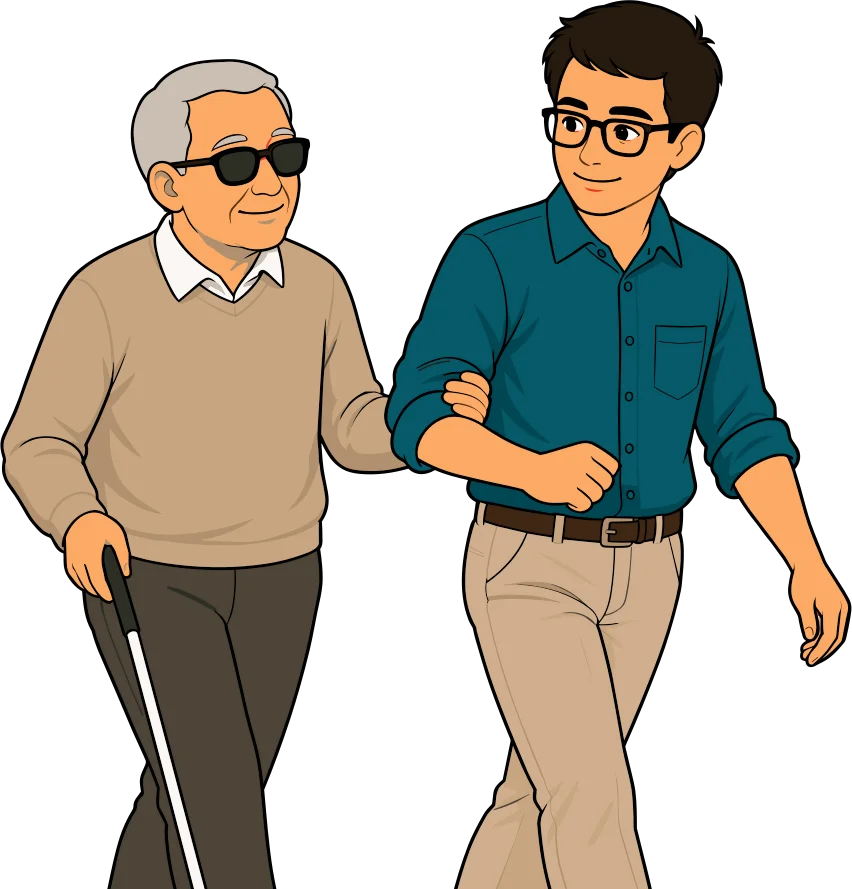
2 PEOPLE WITH VISUAL IMPAIRMENTS
Identify yourself and explain:
- Who you are
- what is happening
- where you are headed
- what obstacles exist.
If the person requests physical guidance, let them say how they prefer it.
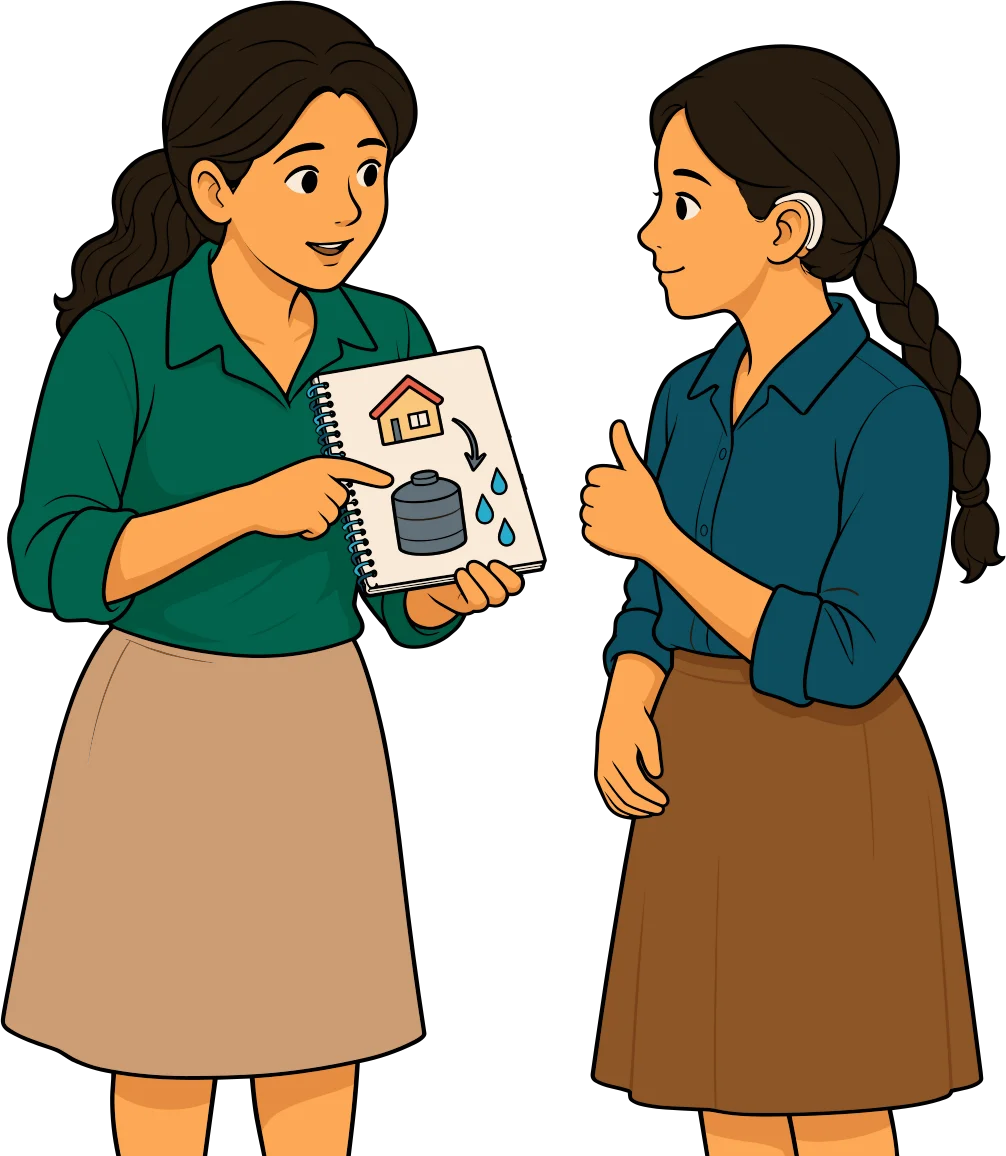
3 DEAF PEOPLE OR PEOPLE WITH HEARING IMPAIRMENTS
Use as appropriate:
- written messages
- gestures
- visual systems
- phone
- communication apps
- an interpreter (when available)
- the person’s usual communication system.
4 PEOPLE WITH INTELLECTUAL OR COGNITIVE DISABILITIES, OR WITH DIFFICULTIES UNDERSTANDING
Use:
- short sentences
- specific instructions
- one instruction at a time
- simple language
- repetition when necessary.

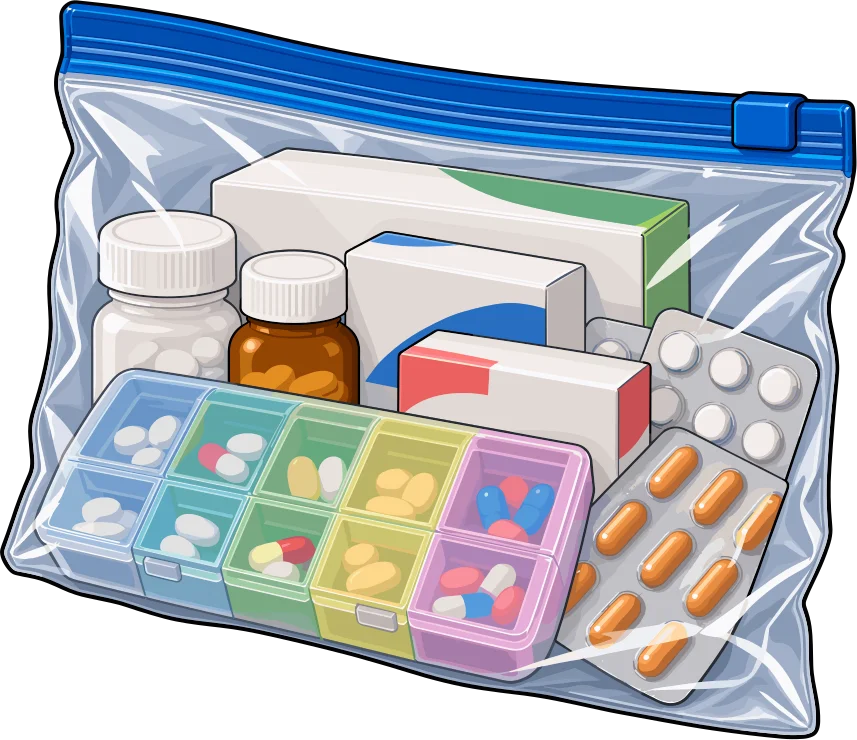
5 DEVICES AND MEDICATIONS
Whenever they can be carried without compromising the evacuation, bring:
- essential medications
- medical devices
- batteries
- chargers
- mobility aids
- communication aids
- relevant documentation.

6 PEOPLE WHO DEPEND ON ELECTRICAL EQUIPMENT
Some people use:
- oxygen concentrators
- respirators
- pumps
- feeding equipment
- mobility devices
- other equipment that depends on electricity.
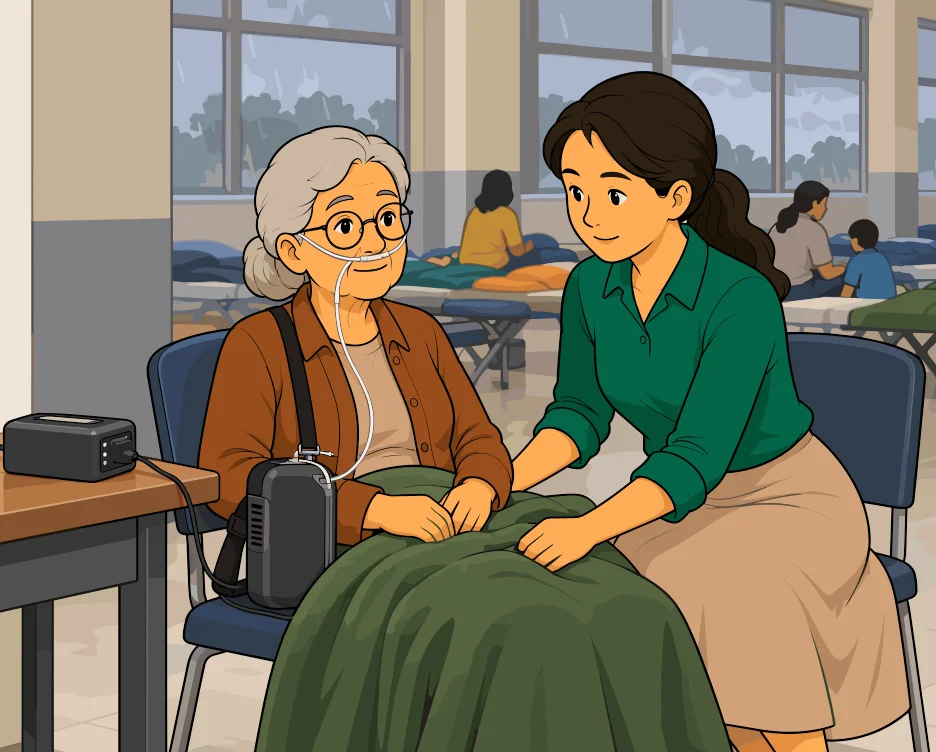
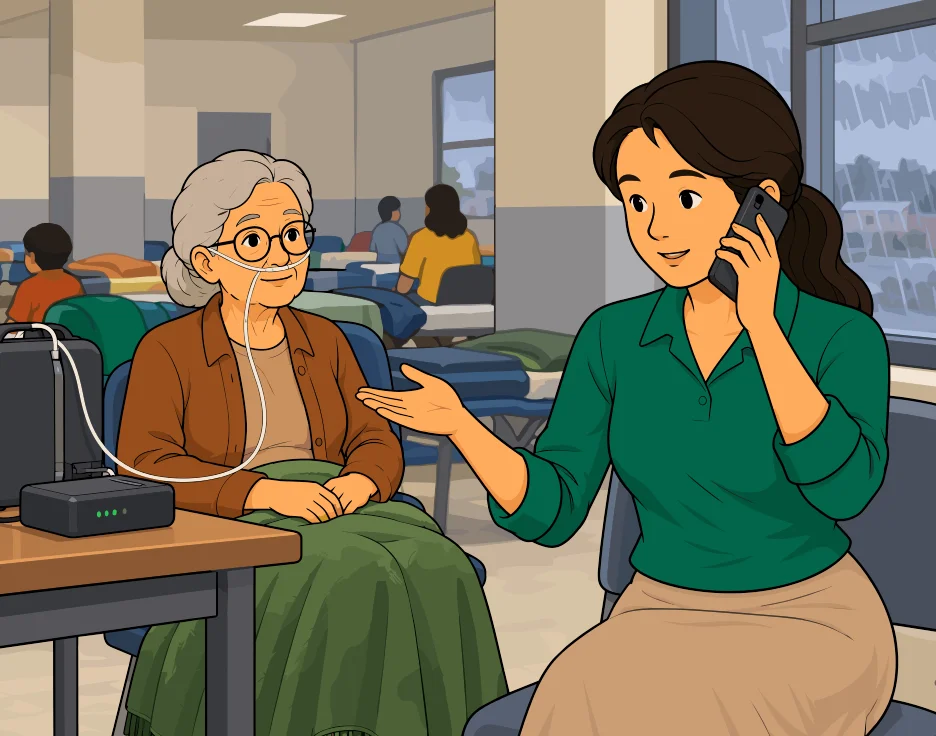
Report the emergency services if a person depends on a device with limited battery life.
2.15PETS
If the evacuation can be carried out safely, pets must accompany those responsible for them according to the plan already established.
Use:
- suitable carriers
- leashes
- harnesses
- secure containment systems.
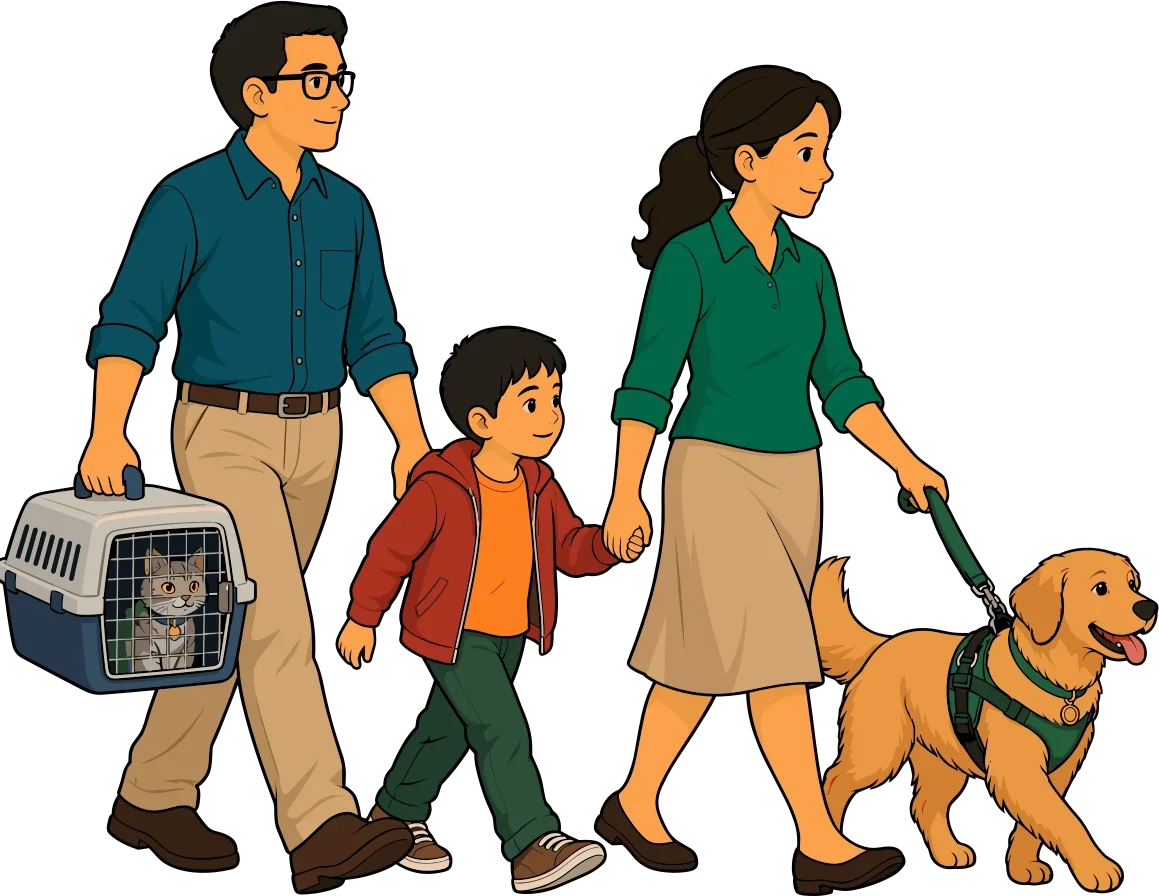
Do not let pets:
- swim in floodwater
- drink it
- roam freely
- interfere with rescue operations.
If an animal comes into contact with contaminated water, keep it from licking its coat excessively, and when possible and safe, clean it afterward with safe water.
2.16WATER, FOOD AND CONTAMINATION
Floodwater can contain:
- wastewater
- microorganisms
- fuels
- agrochemicals
- waste
- metals
- sharp objects
- other hazardous substances.
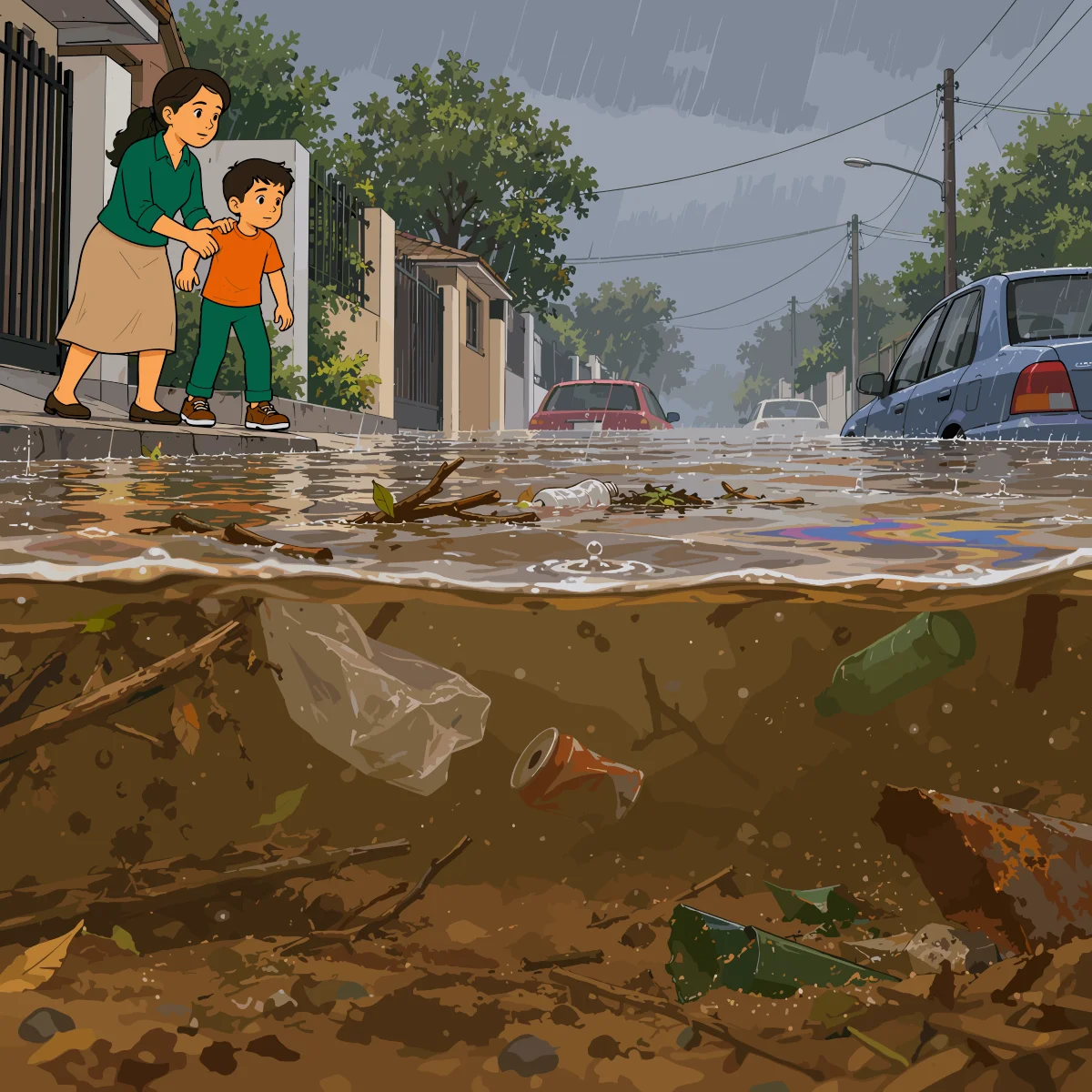
For that reason:
- Do not drink it
- do not use it to prepare food
- do not let children play in it
- avoid contact whenever possible
- follow the authorities’ instructions regarding the safety of drinking water.
2.17HYPOTHERMIA AND EXPOSURE
A wet person can lose body heat even when the surroundings do not seem extremely cold.
While waiting for help:
- Seek shelter from wind and rain
- remove wet clothing when you can replace it with dry clothing and doing so does not create greater exposure
- use blankets, dry clothing, or available protective items
- keep babies, children, elderly people, and sick people especially protected
- stay alert for changes in consciousness, intense shivering, confusion, or physical deterioration.

2.18IF YOU ARE INSIDE A VEHICLE
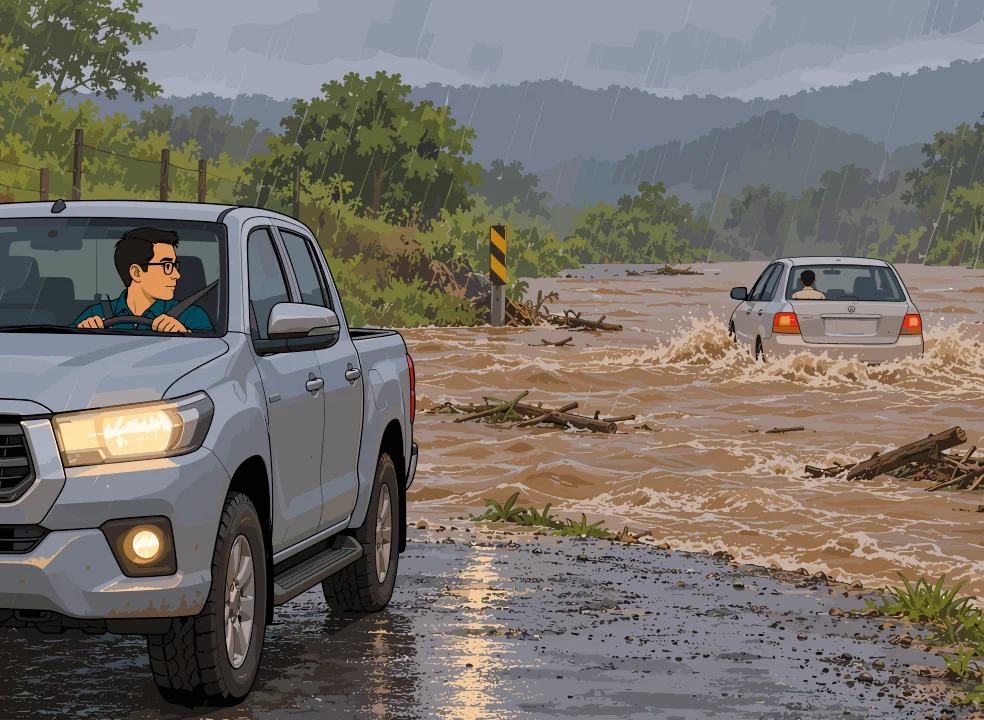
The best protection is not to drive a vehicle onto a flooded road.
Do not rely on:
- the size of the vehicle
- four-wheel drive
- the height of a truck
- a tractor
- prior knowledge of the road
- the apparent shallowness of the water.
IF THE VEHICLE BECOMES SURROUNDED OR TRAPPED BY WATER
The appropriate action depends on the speed of the water, its depth, the stability of the vehicle, the possibility of getting out, and the instructions of the emergency services.
If the water rises around the vehicle, leave it and head for higher ground only if you can do so safely.
If you can contact emergency services, report your location and follow their instructions.
If there is immediate danger to life, prioritize escaping that danger toward a safer location when you can do so without entering a current that poses a greater risk.
2.19BRIDGES, LOW-WATER CROSSINGS, FORDS, AND RURAL ROADS
During rising water:
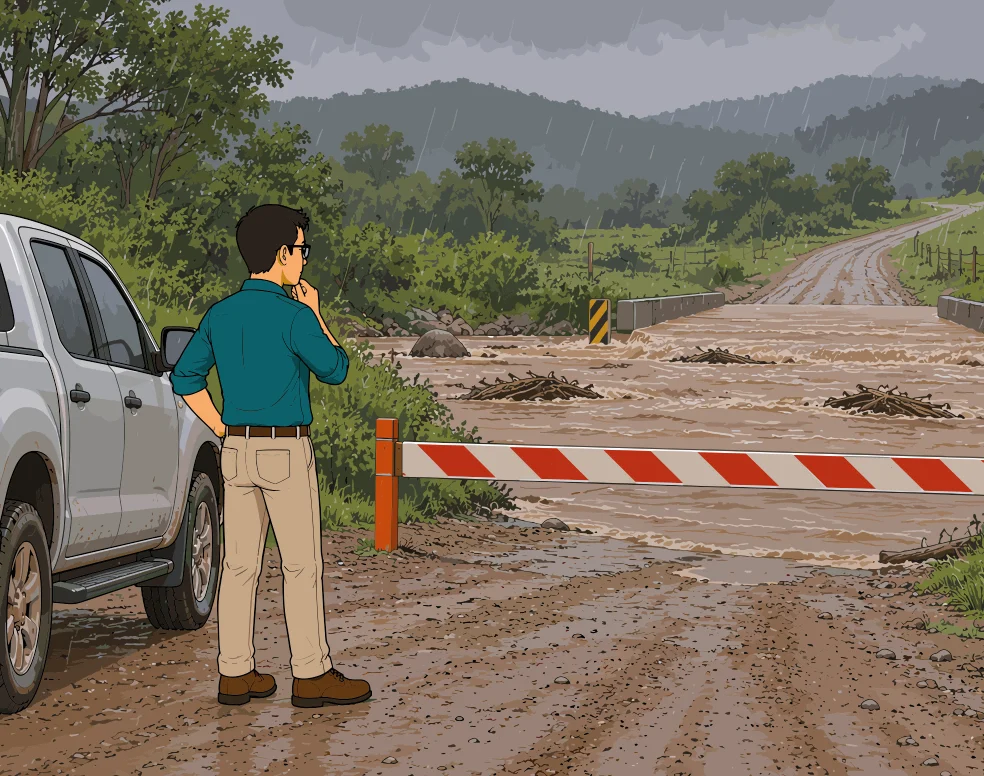
- Do not cross bridges covered by water
- do not cross flooded low-water crossings or fords
- do not drive alongside overflowing channels
- do not use roads the authorities have closed
- do not remove barriers or signage to continue the trip.
In rural areas, familiarity with a road does not guarantee its safety during a flood.
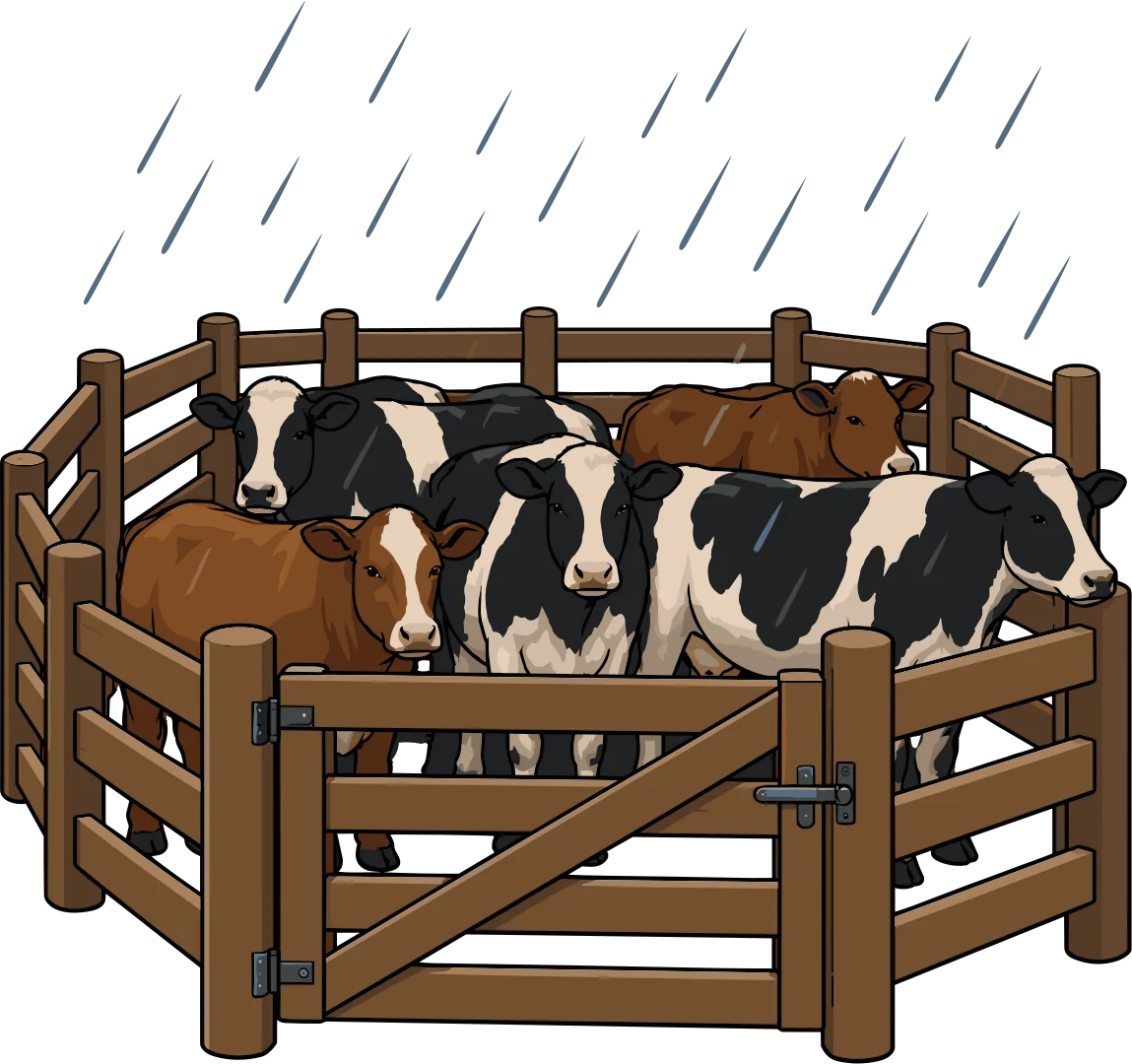
2.20LIVESTOCK AND PRODUCTION ANIMALS
Evacuating livestock should have been carried out during the preventive stage, before the water turns moving them into a dangerous activity.
During a flood, human life remains the priority
IF A SAFE ROUTE STILL EXISTS
Moving animals should only continue when:
- no water is crossing the route
- conditions are safe
- there is enough time
- the people in charge are not put at risk
- the movement can be carried out according to the already established plan.

DO NOT APPLY UNIVERSAL EVACUATION ORDERS BY SPECIES
There is no order that works for every operation, so standard approaches such as “large livestock first, then small livestock” should not be treated as a general rule.
Priority will depend on:
- species
- number of animals
- vulnerability
- facilities
- means of transportation
- time available
- roads
- weather conditions
- characteristics of the operation.
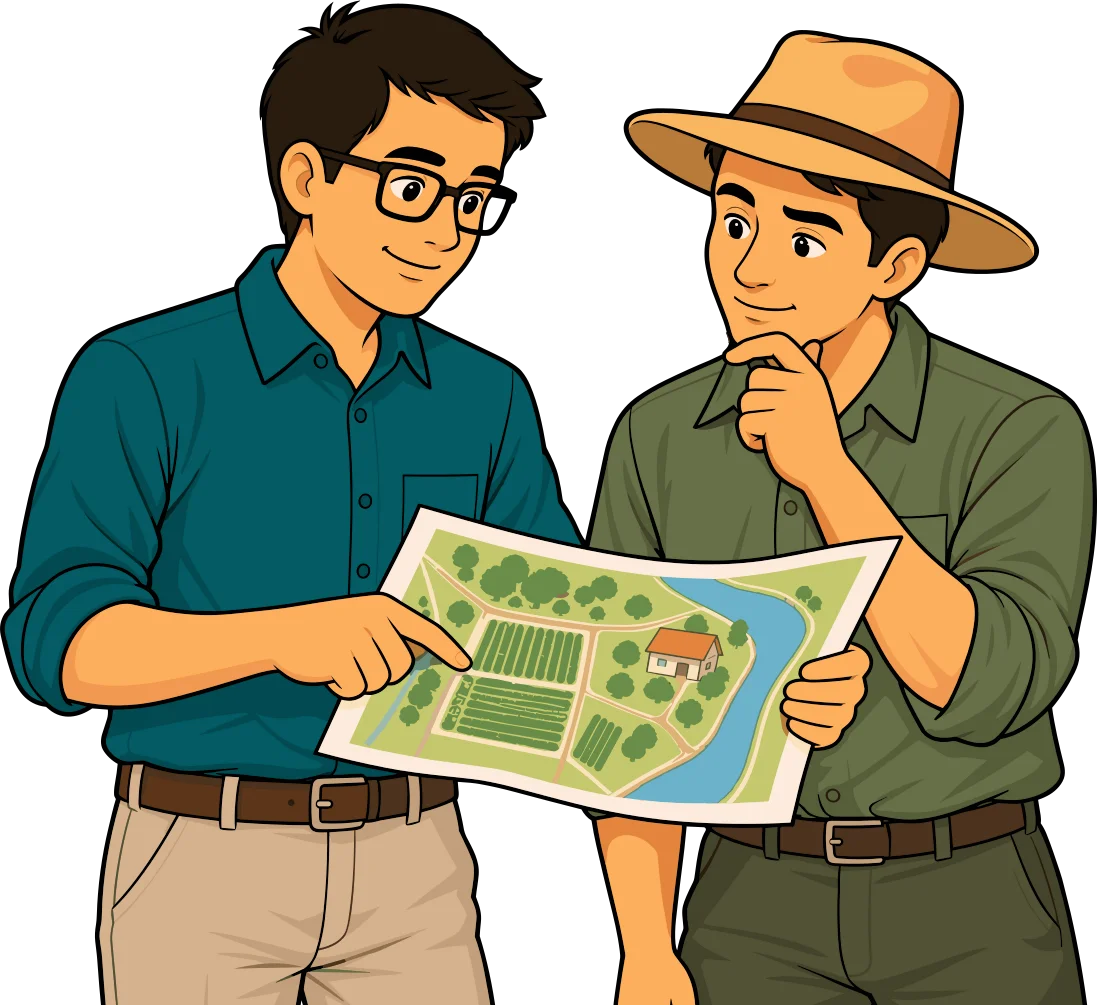
These priorities should have been determined in advance.
RELEASING ANIMALS
Releasing animals must not be treated as an automatic rule.
Opening pens or fences can send animals into:
- roads
- bodies of water
- urban areas
- electrified areas
- neighboring properties
- even more dangerous places.
The decision must be part, whenever possible, of a rural emergency plan prepared in advance with local guidance.
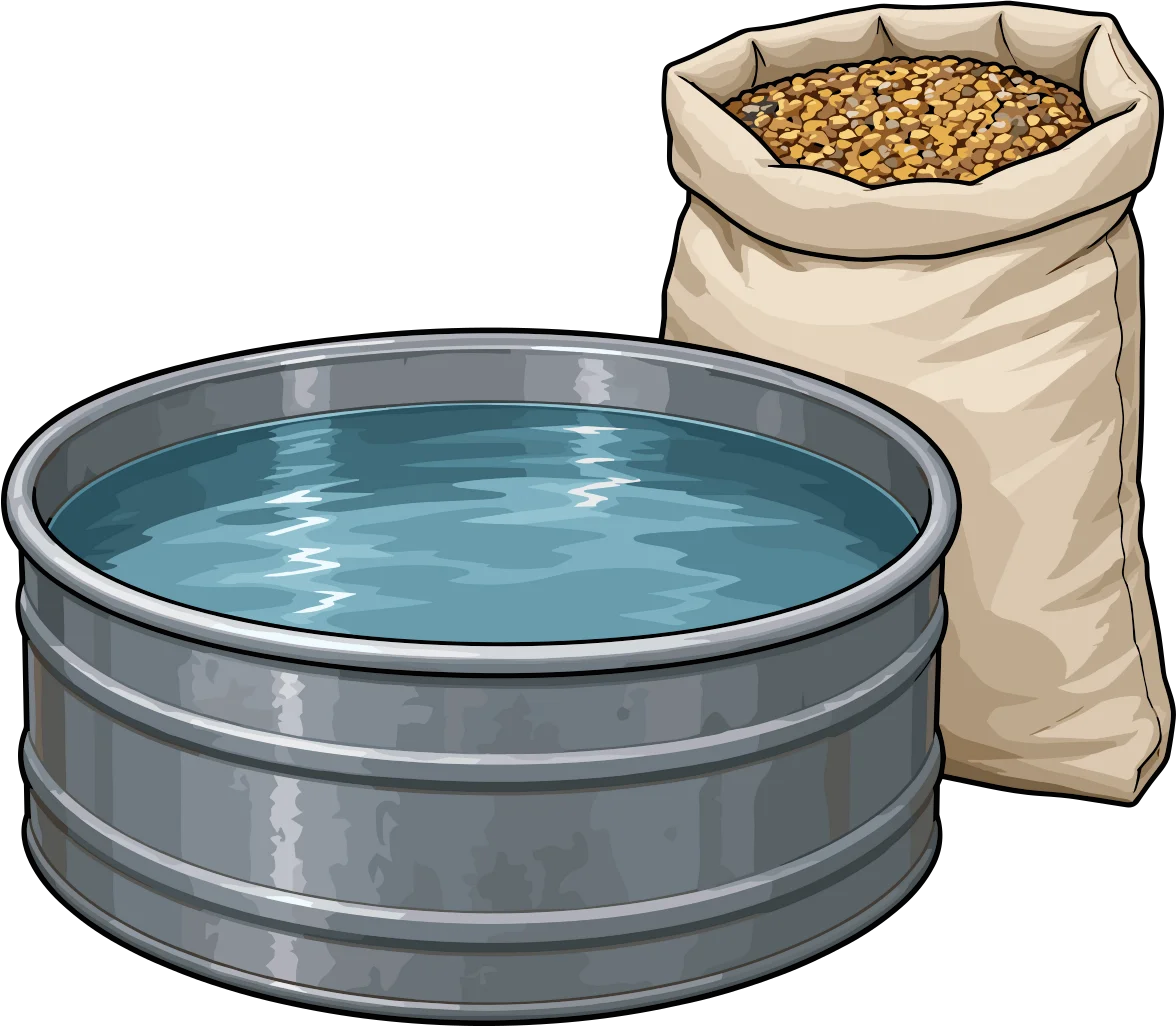
WATER AND FEED
Animals must not deliberately be given floodwater to drink
When they remain isolated in a safe place, use the water and feed reserves protected in advance.
2.21INSTITUTIONS, TEMPLES, CLUBS, ASSOCIATIONS AND COMMUNITY CENTERS
When a flood occurs while people are inside an institution, the plan already in place must be activated immediately.
Those in charge must:
- Confirm the official information
- activate the communication system
- clearly indicate whether evacuation is required
- direct people toward the safe exits
- assist those who need help
- prevent entry into flooded areas
- avoid crowding
- carry out a head count of evacuated people
- immediately report missing people
- maintain communication with the authorities.
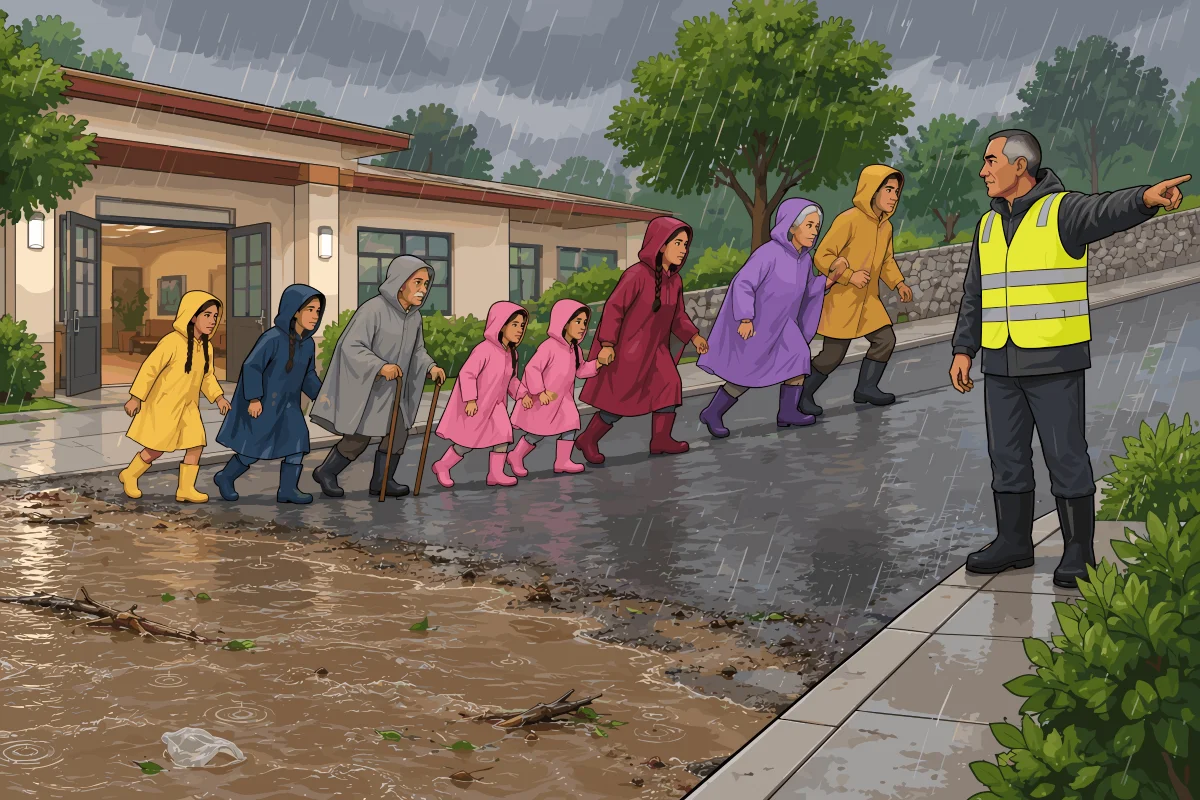
Those in charge must inform the emergency teams and provide the last known location.
2.22WHAT MUST NOT BE DONE DURING A FLOOD
During a flood:
- Do not ignore an evacuation order.
- Do not wait for the water to arrive before deciding to leave.
- Do not deliberately walk through floodwater.
- Do not drive through flooded streets or roads.
- Do not cross rivers, streams, canals, low-water crossings, or fords during rising water.
- Do not go near rivers, canals, or bridges to watch or photograph the rising water.
- Do not stay under bridges.
- Do not touch fallen power lines.
- Do not handle wet or flooded electrical installations.
- Do not enter flooded basements.
- Do not let children play in the water.
- Do not drink floodwater.
- Do not eat food that has been in contact with it.
- Do not go back to look for personal belongings.
- Do not risk your life to rescue vehicles, belongings, or animals.
- Do not improvise rescues if specialized teams are already working.
- Do not spread rumors or information from an unknown source.
- Do not return to an evacuated area until you receive authorization.

2.23TEN ESSENTIAL RULES DURING A FLOOD
- Evacuate when told to do so. Do not wait for the water to arrive.
- Head for a safe place. Use the established routes and follow the official instructions.
- Do not enter floodwater. Neither on foot nor by driving.
- Stay away from electricity. Water can hide deadly electrical hazards.
- If you are trapped, find a high location and request help. Do not try to cross a current to escape.
- Give special protection to those who need assistance. Children, older adults, people with disabilities, and sick people may need additional support.
- Maintain communication. Report your location and save your battery.
- Consider floodwater contaminated. Avoid drinking it or coming into contact with it.
- Follow the rescuers’ instructions. Do not improvise maneuvers that could put other people at risk.
- Life comes first. Do not risk a life to save belongings, vehicles, or animals.
CONCLUSION
During a flood, acting early can make the difference between a safe evacuation and an extreme rescue situation.
Do not wait to personally confirm how serious a warning is.
Do not try to cross water whose behavior and depth you do not know.
Do not go back for belongings, and do not let protecting property delay an evacuation.
If your exit is no longer safe, find a high location, report your position, and follow the instructions of the emergency services.
Help those who need assistance without exposing yourself to a danger that could turn you into a victim as well.
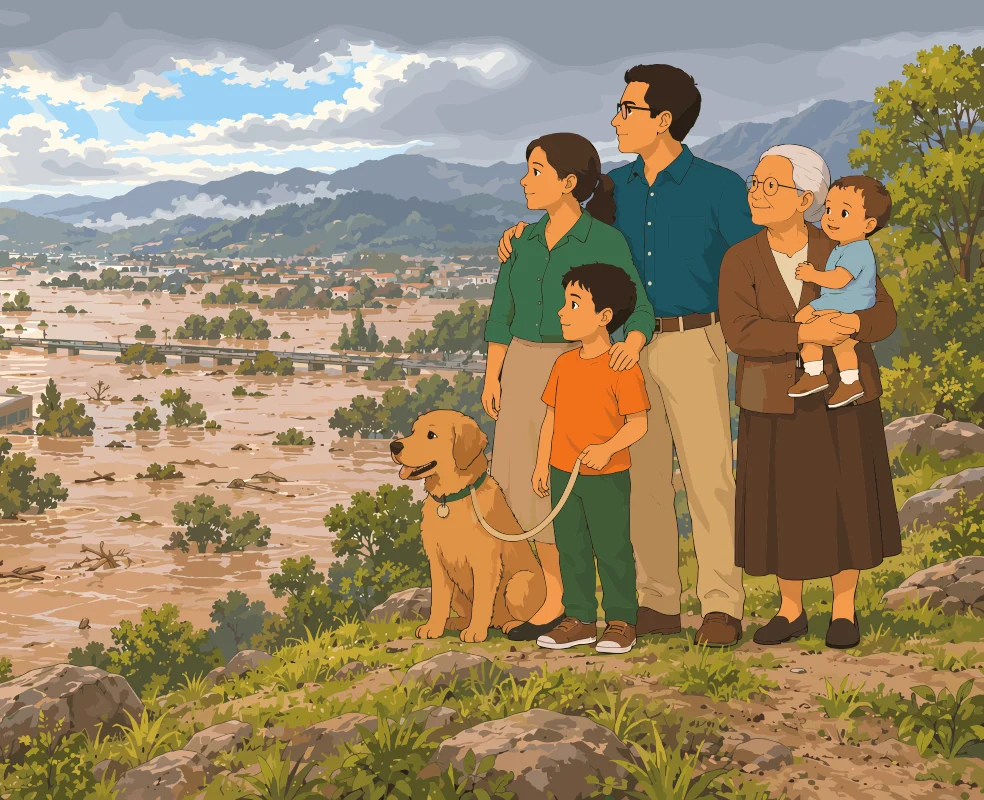
During a flood, there is only one absolute priority: protect life.
Downloads
© 2026 by Kingdom of Peace and Justice Center is licensed under Creative Commons Attribution-NonCommercial-NoDerivatives 4.0 International (CC BY-NC-ND 4.0). To view a copy of this license, visit creativecommons.org/licenses/by-nc-nd/4.0.