Phase 1: Before — Prevention, mitigation, and planning
Advance preparation is the phase in which the population can adopt the greatest number of measures aimed at reducing their vulnerability and risk of injury.
A properly prepared home, workplace, or community space significantly reduces the risks associated with falling objects, broken glass, damage to utility systems, and blocked exit routes.
1.1Mitigation measures in the home and workplace
Securing the environment
Many injuries during moderate or strong earthquakes are caused by objects that fall, shift, break, or tip over. For this reason, it is essential to reduce these risks in advance.
Securing tall and heavy furniture
- Mechanical anchoring: cabinets, bookcases, display cases, and office organizers must be firmly secured to structurally sound wall elements using appropriate anchoring systems, such as metal brackets and suitable screws. Common nails alone should not be used.
- Weight distribution: place heavy books, encyclopedias, dishware, files, and other heavier objects on the lower shelves. Reserve the upper areas for light objects or soft decorations.
Practical application: safe anchoring of furniture and weight distribution

Anchored bookcase (correct)
Secure furniture to the wall with suitable metal brackets and screws. This prevents it from tipping over during an earthquake.

Unanchored bookcase (incorrect)
During an earthquake, unsecured furniture can tip over and cause serious injuries and property damage.
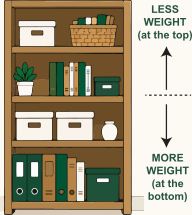
Proper weight distribution (correct)
Place light objects on the upper shelves and heavier ones on the lower shelves for greater stability.
Keys and exit routes

Keep emergency exit keys in a fixed location that is immediately accessible and known to all household members. Avoid relying on keys being permanently left in the locks.
Safety of electronic devices and screens

Television screens, computer monitors, and sound equipment should be secured to their bases or to the wall using appropriate anchoring systems that prevent them from falling or shifting.
Protection of glass and glass surfaces

- Windows, large mirrors, and glass partitions can be covered with suitable safety film to reduce the scattering of fragments if they break.
- Avoid placing beds, armchairs, and commonly used areas immediately next to large glass surfaces.
Hanging objects

- Ceiling fans, lamps, and chandeliers must have secure and appropriate anchoring systems.
- Avoid placing heavy pictures, mirrors, shelves, or other objects that could fall directly above beds, sofas, or places where people spend long periods of time.
Antennas and roof-mounted elements

- Antennas, panels, tanks, outdoor equipment, and other elements installed on roofs or elevated structures must have adequate structural anchoring.
- The installation and anchoring of these elements must be done correctly and, when applicable, evaluated by qualified personnel. Improvised anchoring can turn them into dangerous objects during an earthquake.
Hazardous substances
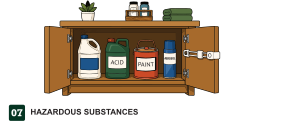
Household or industrial chemical products (such as bleach, acids, paints, pesticides, and aerosols) should be stored in low, secure cabinets, preferably equipped with systems that prevent the doors from opening accidentally during shaking.
- Secure all tall and heavy furniture to the wall or floor.
- Periodically check the anchors and condition of your home.
- Organize and keep your spaces safe and clear.
1.2Utility systems and essential services
Damage to gas, electrical, and water systems can cause fires, leaks, flooding, and other hazards after an earthquake.
Gas and fuels
- Identify the main gas supply valve and make sure responsible adults know how to shut it off.
- Keep access to the valve clear.
- When applicable, use approved flexible connections sustainable for appliances.
- Appliances must be correctly installed and secured.

Important
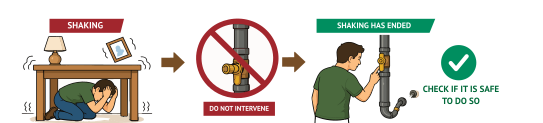
During the earthquake, do NOT move around the house to shut off the gas.
After the shaking stops
Once the shaking has ended, and only if it is safe to do so, check the utility systems. Shut off the gas if there are signs of a leak.
Electrical system
- Identify the main electrical panel.
- Keep the breakers properly labeled.
- Make sure responsible adults know the procedure for shutting off the power supply.

Drinking water
- Identify the main water shut-off valve.
- Keep its access free of obstacles.
- After an earthquake, follow the authorities' instructions regarding the safety of the water supply.

- Identify all gas valves.
- Identify the main electrical panel.
- Identify the main water shut-off valve.
1.3Family or community emergency plan
Identifying risks within the home
Identify risks, safe zones, and exit routes.


Attention
Doorframes are not automatically safe places. In older houses, the frame might have been the only thing left standing due to the solidity of its construction, but in modern buildings they are not structurally strong.

Also identify the places where you can properly follow the protective action:
DROP

COVER

HOLD ON

Whenever possible, protect yourself under a sturdy table or desk.
Outdoor hazards
Identify in advance the hazards that exist around the home, building, school, or workplace.

Objects that could fall
- ledges
- signs
- antennas
Infrastructure (watch out for)
- poles
- power lines
- walls
Surroundings (avoid areas near)
- poles
- facades
- trees
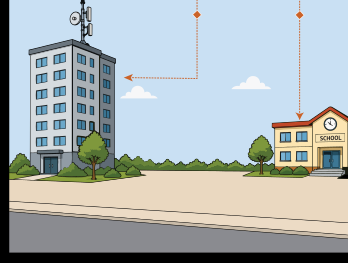
Open, clear space
Determine in advance which open, clear spaces could be used after the shaking stops.
A plan established in advance allows for organized action during an emergency.
- Check your home periodically.
- Discuss the plan with all household members.
Assigning responsibilities
Before an emergency, each member should know what their responsibility will be.
Evacuation lead
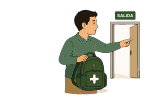
Will take the emergency backpack and, once the shaking has ended, will guide the group along the planned route when evacuation is necessary.
Safety lead
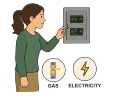
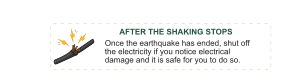
Once the shaking has ended, and only if it is safe to do so, will check the utility systems. Will shut off the gas if there are signs of a leak and cut the electricity if electrical damage is observed.
Lead for people who need assistance

Will help infants, children, older adults, people with disabilities, and other people who require support.
Pets

Also decide who will be responsible for the pets.
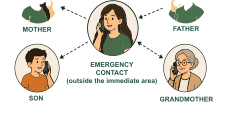
Communication
- Choose a family member or trusted person who lives outside the immediate area as an emergency contact.
- All family members should know or carry a written note of that person's phone number.
- After the earthquake, when possible, send brief messages stating your condition and location.
Communicate effectively

Text message
When networks are congested, text messages can be useful.

Phone call
Use it when possible, but networks may be overloaded.
Meeting points
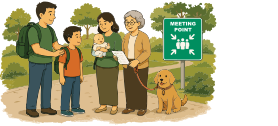
- Immediate meeting point: a safe, clear location near the home.
- Alternative meeting point: a park, sports field, plaza, or other open space agreed upon in advance, to be used if the residential area is not safe or cannot be used.
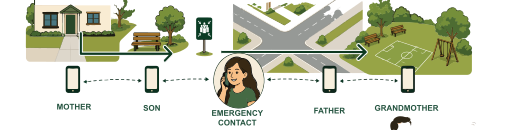
A plan works best when everyone knows what to do, how to communicate, and where to meet.

1.4Backpack and emergency supplies
The emergency backpack should allow quick access to essential items during an evacuation. In addition to the portable backpack, it's a good idea to keep emergency supplies at home.
The backpack should be sturdy, comfortable to carry, and kept in a known, accessible location. The number and distribution of backpacks will depend on the number of household members and the physical capacity of those who will carry them.
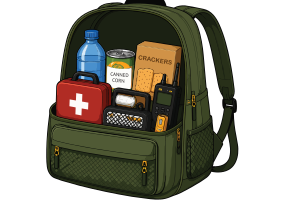
Water and food
Water
As a general guideline, prepare approximately 4 liters of water per person per day, covering drinking and basic needs, for a minimum of three days in case of evacuation.
Because of the weight of water, differentiate between:

The water that can reasonably be carried in a backpack.


The emergency supply kept at home.
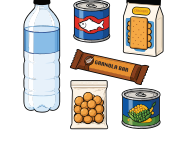
Non-perishable food
Include food that is easy to eat and store, such as:
- canned goods;
- easy-open food products;
- cereal bars;
- nuts and dried fruit;
- crackers/cookies;
- other non-perishable foods suited to the family's needs.
Consider allergies, intolerances, and special dietary needs.

For infants and young children, include formula, baby food, and other specific supplies needed.

For pets, also include suitable food.
First aid kit and health
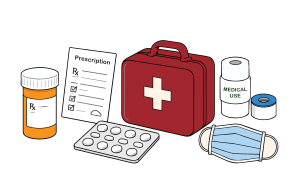
Include:
- regularly used medications;
- copies of necessary prescriptions or medical instructions;
- sterile gauze;
- bandages;
- medical adhesive tape;
- antiseptic;
- basic first aid supplies;
- masks suitable for dusty environments;
- other specific supplies needed for household members.

People who depend on essential medications should, when possible and in accordance with the relevant instructions, plan for a sufficient supply for several days.
Tools, lighting, and communication
Flashlight

Preferably use a headlamp, which keeps your hands free. Hand-crank flashlights can also be used. If battery-powered, keep spare batteries properly stored.
Portable radio

Keep a battery- or hand-crank-powered AM/FM portable radio to receive official information when mobile phone networks or the internet are down or congested.
Tools

Multi-purpose tools suitable for emergencies can be included, always stored safely and out of children's reach.
Whistle

Include a whistle that allows you to signal without needing to shout for extended periods.
Portable battery

Keep a charged power bank and the corresponding cables for mobile phones.

Hygiene and sanitary items
Include:

Wet wipes

Hand sanitizer gel

Soap

Toilet paper

Toothbrush and toothpaste

Menstrual hygiene products when needed

Sealable bags for items
Wet wipes and hand sanitizer allow for temporary basic hygiene when it's not possible to wash properly with soap and water, but they should not be considered equivalent substitutes for handwashing.

Clothing, warm gear, and documentation
Include:

Thermal blanket

A change of clothes

Weather-appropriate warm clothing

Raincoat when applicable

Closed, sturdy footwear

Copies of important documents protected against water

Contact information

Small-denomination cash

Duplicates of necessary keys
Tips for organizing the backpack
Location
Store it in a location that is accessible and known to all household members.

Weight
The backpack should never be so heavy that it hinders a safe evacuation.


Periodic check
Periodically check:

- water
- food
- medications
- batteries
- portable charger
- documentation
- clothing
- the specific needs of children, people with disabilities, and pets.
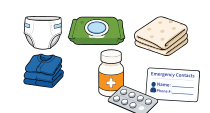
1.5Preparing babies and children
Households with babies or children should adapt their preparations to their specific needs.
Include as applicable:
- diapers
- wipes
- infant formula
- bottles and necessary utensils
- baby food
- medications
- extra clothing
- blanket
- hygiene items
- identification and emergency contacts

Additionally
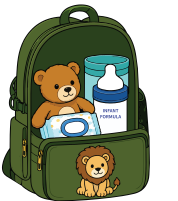
Include a small toy, stuffed animal, or comfort object, and simple activities that can help keep the child occupied and reduce their anxiety.

Child's own backpack
Children who have sufficient age, development, and physical capacity may have their own lightweight backpack. There should be no universal age at which a child is expected to carry their own backpack: the weight should be adapted individually and should never hinder their mobility, balance, or ability to evacuate.


1.6Drills and training
Practice periodically what to do during an earthquake and how to act afterward.
Drills can cover different situations:

Earthquake at night

Power outage

Usual exit blocked

Need to assist a vulnerable person

Presence of pets

All household members should know the exit routes and meeting points.

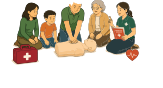
First aid
It is advisable for family or community members to receive formal training in first aid and cardiopulmonary resuscitation.
1.7Essential behavior during the earthquake
All advance preparation should include practicing the action to take once the shaking begins.
DROP – COVER – HOLD ON

DROP
Get down to the ground immediately to avoid being knocked over.

COVER
Protect your head and neck especially. Whenever possible, get under a sturdy table or desk.

HOLD ON
Remain holding on to the object protecting you until the shaking stops.
During the earthquake
Do not run for the exit while the ground is shaking.

Do not use elevators.

Do not automatically seek shelter in doorframes.


Protect yourself from windows, glass, and objects that could fall.

Do not move around the home unnecessarily.

Do not try to shut off the gas or electricity while the shaking continues.


If you are outdoors
Stay where you are, or move — when you can do so safely — to an open, clear space, away from buildings, facades, ledges, glass, poles, power lines, trees, signs, and other objects that could fall.

1.8Nighttime home preparedness
In seismically active areas, it's important to permanently maintain conditions that allow for a safe reaction during the night.
Bedroom

Avoid placing heavy objects above the head of the bed.
Avoid leaving toys, shoes, cables, bags, or other objects that could cause falls.
Keep a pair of closed, sturdy shoes next to the bed.
Keep a flashlight within reach.
If you wear glasses, always keep them in an accessible, known location.
Keep the area around the bed and walkways free of obstacles.
Hallways and exits

- Keep hallways free of obstacles.
- Do not block doors or exit routes.
- Keep the keys needed for exits in a fixed location, immediately accessible and known to everyone.
- When possible, use emergency lighting that works during a power outage.
Kitchen and utility areas

- Keep cabinets and cupboards properly closed.
- Use appropriate restraint systems when necessary.
- Do not leave hazardous appliances unnecessarily plugged in or running unsupervised.

It is not necessary to shut off the gas supply every night as a general earthquake precaution.
Prevention should focus on keeping installations safe, connections appropriate, appliances properly secured, and knowing the location and operation of the shut-off valves.

Personal preparedness

Keep your phone charged and accessible.

Enable the official alerts available in your area.

Keep the emergency backpack in its designated location.

Make sure everyone knows where it is.
1.9Preparation for pets
Advance preparation makes it easier to protect and recover pets after an emergency.
Identification

Tag
Dogs and cats should have identification and up-to-date contact information.

Microchip
When available, consider microchipping and keep the associated information up to date.

Photographs
Keep recent photos of the pet on your phone and, preferably, a copy together with your emergency documentation.

Pet emergency kit
Include:

Enough food for several days

Water

Portable bowls

Necessary medications

Veterinary documentation

Hygiene items

Waste bags

Species-specific items
Transport

Carrier. Keep the carrier in an easily accessible location. Get the animal used to it in advance to reduce stress during an emergency.

Leash and harness. Always keep them in a fixed, accessible location, preferably near the emergency kit.

Familiar object. You can include a blanket, toy, or familiar item that helps reduce the animal's stress.
Safe environment

Identify the places where the pet tends to hide when it feels afraid.
Avoid placing over those spots:

Heavy shelves

Mirrors

Pictures

Objects that could fall

Once the shaking has ended, and when it is safe to do so, check on the pet before opening doors to the outside, since a frightened animal may try to escape.

1.10People with disabilities (PWD)

Preparation should promote autonomy, adapt the environment to each person's particular needs, and establish support networks in advance.
During an earthquake, the priority is to protect yourself immediately where you are and evacuate afterward, once the shaking has stopped, when conditions so require.

Adapting the home

Accessible routes: keep completely clear the routes used by people with wheelchairs, walkers, canes, or other mobility devices.
Bedrooms. Keep beds away from:

Windows

Mirrors

Tall furniture

Heavy pictures

Other objects that could fall
Support network
Arrange in advance a network of family members, neighbors, coworkers, or other trusted people who can check on the person with a disability and provide assistance after the earthquake.

The network should know:
- the person's specific needs;
- the location of essential medications and devices;
- the accessible routes;
- the procedures agreed upon in advance;
- when applicable and appropriate, set up secure means to allow support people access to the home.
Specialized backpack
In addition to the general items, include the specific supplies the person needs.

Medications

Keep essential medications and the information needed for their use.
Important information

Include a water-protected card with the information needed to provide assistance, such as:
- name,
- support needs,
- allergies,
- medications,
- emergency contacts,
- other relevant information.
Assistive devices

Include, as applicable:
- spare batteries,
- chargers,
- hearing aid supplies,
- items related to mobility devices,
- alternative means of communication,
- other essential supplies.
04 · Preparation by specific need
People with reduced mobility. If you use a wheelchair:
LOCK – COVER – HOLD ON

LOCK
Engage the wheel locks.

COVER
Protect your head and neck.

HOLD ON
Lean forward when possible. Hold on until the shaking stops.
Keep canes, crutches, walkers, and other mobility devices always accessible.

People with visual impairments

- Keep an orderly and predictable arrangement of furniture.
- Report any change in the location of objects.
- Practice the emergency routes and procedures in advance with the support network.
- After the earthquake, keep in mind that fallen objects may have altered familiar routes.
People with hearing impairments


When available, use visual, light-based, or vibrating alert systems.
Keep alternative means of communication available, such as:

Mobile phone

Paper or notebook

Pencil, marker, or crayon

Whiteboard
People with cognitive or intellectual disabilities, or neurodivergent people

Prepare the person in advance using methods suited to their needs, such as:
- pictograms;
- visual instructions;
- social stories;
- gradual drills;
- repetition of simple routines.
Items that help reduce stress can be added to the backpack, such as:

Headphones

Toys and comfort objects

Sensory objects
Drills should be carried out gradually and in an adapted way, avoiding unnecessarily causing fear, distress, or sensory overload.
Important
Prepare with other systems adapted to the needs of the person.
✓Remember
Preparation begins BEFORE the earthquake. Secure objects that could fall. Keep routes clear. Prepare water, food, medications, and essential items. Organize your family or community. Identify the risks. Practice regularly.
And, above all, everyone must know and practice what to do when the shaking begins:
DROP – COVER – HOLD ON

DROP
Get down to the ground immediately.

COVER
Protect your head and neck.

HOLD ON
Hold on until the shaking stops.
Do not run for the exit while it is shaking. Protect yourself first. Evacuate after the shaking stops when necessary and safe to do so.
Downloads
© 2026 by Centro del Reino de Paz y Justicia is licensed under Creative Commons Attribution-NonCommercial-NoDerivatives 4.0 International (CC BY-NC-ND 4.0). To view a copy of this license, visit creativecommons.org/licenses/by-nc-nd/4.0.